Thai
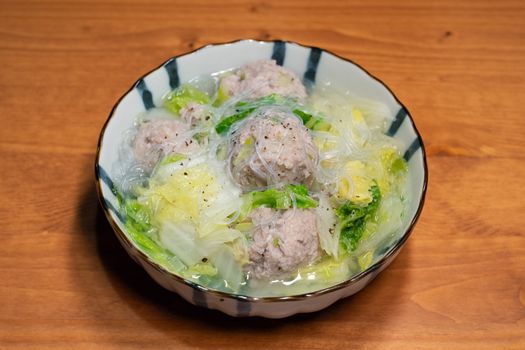
Glass Noodle Soup (Gaeng Jued Woon Sen)
The diets react (see scores below)
Common Ingredients
- glass noodles
- ground pork
- Napa cabbage
- tofu
- scallions
- garlic
- white pepper
- soy sauce
Specific recipes may vary.
Incompatible with 7 of 11 diets
Diet Ratings
Glass noodles (woon sen) are the primary incompatibility here. Despite being translucent and sometimes mistaken for a low-carb option, glass noodles are made from mung bean starch and contain approximately 30-35g of net carbs per 50g dry serving. A standard bowl of this soup would easily contain 50-70g+ of net carbs from the noodles alone, blowing through the entire daily keto carb budget in a single dish. The remaining ingredients — ground pork, Napa cabbage, tofu, scallions, garlic, and soy sauce — are largely keto-compatible in the quantities used, but they cannot offset the massive carb load from the glass noodles. This dish is fundamentally structured around the noodles and cannot be considered keto-friendly in its standard form.
This dish contains ground pork as the primary protein, which is a direct animal product and categorically excluded from a vegan diet. All other ingredients — glass noodles, Napa cabbage, tofu, scallions, garlic, white pepper, and soy sauce — are plant-based, but the inclusion of pork makes the dish non-vegan. A vegan adaptation would be straightforward by simply omitting the pork or substituting with additional tofu or mushrooms.
Glass Noodle Soup (Gaeng Jued Woon Sen) contains multiple non-paleo ingredients that disqualify it. Glass noodles (woon sen) are made from mung bean starch, placing them in the legume-derived category — excluded from paleo. Tofu is a soy-based legume product, strictly forbidden on paleo. Soy sauce contains both soy (legume) and wheat (grain), two major paleo exclusions. Added salt is also discouraged. The base broth with ground pork, Napa cabbage, scallions, garlic, and white pepper would otherwise be paleo-friendly, but the combination of glass noodles, tofu, and soy sauce makes this dish clearly non-compliant with no meaningful gray area.
This Thai glass noodle soup contains several elements that conflict with Mediterranean diet principles. Ground pork is the primary protein — red meat is limited to a few times per month in the Mediterranean diet. Glass noodles are made from mung bean starch and are refined/processed with a high glycemic load and minimal fiber, not equivalent to whole grains. Soy sauce is a highly processed, high-sodium condiment not part of the Mediterranean tradition. On the positive side, the dish includes tofu (a legume-derived protein), Napa cabbage, scallions, and garlic — all plant-forward ingredients that align well. However, the combination of pork as primary protein and refined glass noodles as the starch base pushes this into 'avoid' territory. If pork were replaced with seafood or tofu entirely, and noodles swapped for a whole grain option, this could shift significantly.
Some Mediterranean diet interpreters might rate this 'caution' rather than 'avoid', noting that pork is consumed in certain Mediterranean regions (e.g., Southern Italy, Spain) in modest amounts within a broadly plant-rich meal, and that the generous vegetables and tofu offset the less compliant elements.
Glass Noodle Soup (Gaeng Jued Woon Sen) is almost entirely incompatible with the carnivore diet. The dish contains numerous plant-derived and processed ingredients that are strictly excluded: glass noodles (made from mung bean or sweet potato starch), Napa cabbage, tofu (soy-based), scallions, garlic, white pepper, and soy sauce (fermented soy — a legume). While ground pork is the only carnivore-approved ingredient, it is a minor component swimming in a broth built on plant-based aromatics and thickened with plant starches. Soy sauce also typically contains wheat. This dish represents the opposite of carnivore eating — a plant-forward Asian soup with a small amount of meat as a supporting ingredient rather than the foundation.
This dish contains multiple Whole30-excluded ingredients. Glass noodles (mung bean starch noodles) are a form of noodles/pasta, which are explicitly excluded under the 'no recreating baked goods/junk food' rule that bans pasta and noodles. Tofu is made from soy, which is a legume and strictly excluded. Soy sauce contains both soy (legume) and wheat (grain), both of which are excluded — coconut aminos would be the compliant substitute. These three violations make this dish clearly non-compliant in its traditional form.
This dish contains two significant high-FODMAP ingredients that make it unsuitable during the elimination phase. Garlic is one of the highest-FODMAP foods tested by Monash University, containing high levels of fructans even in very small amounts — there is no safe serving size during elimination. Scallions (green onions) are dose-dependent: the green tops are low-FODMAP but the white bulb portions are high in fructans. In a soup like this, garlic is typically used as a base flavoring where its fructans leach directly into the broth, making the entire dish high-FODMAP regardless of portion size. The remaining ingredients are generally low-FODMAP: glass noodles (mung bean vermicelli) are low-FODMAP, ground pork is low-FODMAP, Napa cabbage is low-FODMAP at standard servings (up to 75g per Monash), firm tofu is low-FODMAP, soy sauce (tamari-style or small amounts) is generally low-FODMAP, and white pepper is low-FODMAP. However, the garlic alone disqualifies this dish during elimination phase unless it is substituted with garlic-infused oil and the garlic cloves removed before serving.
Glass Noodle Soup (Gaeng Jued Woon Sen) contains several DASH-friendly components — Napa cabbage, tofu, scallions, and garlic are excellent vegetables/plant proteins aligned with DASH principles. However, the dish raises concerns in a few areas. Soy sauce is the primary concern: a single tablespoon contains roughly 900–1,000mg of sodium, and this soup likely uses multiple tablespoons, potentially pushing the dish close to or over the daily DASH sodium limit (1,500–2,300mg) in a single serving. Ground pork is a red meat, which DASH limits due to its saturated fat content — lean ground pork (93%+ lean) is more acceptable but still not the preferred protein. Glass noodles are refined starch with minimal fiber, unlike the whole grains DASH emphasizes. On the positive side, the broth-based preparation avoids added oils, and the tofu and vegetables add potassium, magnesium, and plant protein. This dish can be adapted to fit DASH better by using low-sodium soy sauce or tamari, substituting ground chicken or turkey for pork, and increasing the vegetable-to-noodle ratio.
NIH DASH guidelines explicitly limit red meat and high-sodium condiments like soy sauce; however, updated clinical interpretations note that lean pork in small portions within an overall balanced diet may be acceptable, and some DASH practitioners focus on total dietary sodium patterns rather than single-dish exclusions — a smaller portion of this soup with low-sodium soy sauce could fit within daily DASH targets.
Glass Noodle Soup (Gaeng Jued Woon Sen) is a light, broth-based Thai soup with a moderately mixed Zone profile. The dish has positive Zone elements — Napa cabbage is a favorable low-glycemic vegetable, tofu provides Zone-compatible vegetarian protein, scallions and garlic add polyphenols, and the broth-based preparation keeps fat low. However, glass noodles (made from mung bean starch) are a moderate-to-high glycemic carbohydrate source with low fiber, making them 'unfavorable' in Zone terminology — they count as dense carb blocks with little nutritional advantage. Ground pork, while providing adequate protein, is fattier than Zone-ideal lean proteins like skinless chicken or fish. The dish also lacks a meaningful monounsaturated fat source. On the positive side, the soup format naturally limits portion density and the inclusion of tofu and cabbage helps balance the macros. With careful portioning — reducing glass noodle volume significantly, using leaner pork or replacing with chicken, and perhaps adding a side of avocado — this dish can be made Zone-compatible, but as typically prepared it skews carb-heavy with moderate saturated fat.
Some Zone practitioners note that mung bean glass noodles, despite their higher glycemic index, have a relatively modest glycemic load in small portions typical of Thai soups, and that the vegetable and tofu content makes this dish more Zone-friendly than comparable noodle dishes. Sears' later writings also show more tolerance for traditional whole-food carbohydrate sources in anti-inflammatory contexts when paired with adequate protein and polyphenol-rich ingredients like garlic.
Glass Noodle Soup (Gaeng Jued Woon Sen) is a light, broth-based dish with a mixed anti-inflammatory profile. On the positive side, it contains tofu (a whole soy food explicitly emphasized in anti-inflammatory frameworks), Napa cabbage (a cruciferous vegetable with antioxidants and anti-inflammatory glucosinolates), garlic (well-documented anti-inflammatory allicin), scallions (quercetin, flavonoids), and white pepper (piperine, similar to black pepper in supporting curcumin bioavailability and mild anti-inflammatory activity). The broth-based, low-fat preparation method is favorable. Glass noodles (mung bean starch) are gluten-free and have a lower glycemic impact than wheat-based noodles, making them more acceptable than refined wheat pasta, though they are still a refined starch with limited fiber. The primary concern is ground pork, which is classified in the 'limit' category as red meat — it contributes saturated fat and arachidonic acid, both associated with increased inflammatory markers at high intake. Soy sauce adds sodium, which can be a concern in large quantities but isn't directly pro-inflammatory. Overall, this is a light dish where the pro-inflammatory element (pork) is moderated by being ground and used in a soup context (typically in small amounts) alongside genuinely anti-inflammatory vegetables and tofu. It lands in caution territory — acceptable in moderation, especially if the pork portion is small relative to vegetables and tofu.
Some anti-inflammatory practitioners would rate this more favorably, arguing that the pork quantity in a broth soup is modest and overshadowed by the strongly beneficial garlic, cabbage, and tofu content — Dr. Weil's framework permits lean meats sparingly, and ground pork in soup skims fat into broth. Conversely, stricter anti-inflammatory or AIP-aligned practitioners might flag the refined glass noodles (high glycemic load, minimal fiber) and soy sauce (processed, high sodium) as additional concerns beyond the pork.
Glass Noodle Soup (Gaeng Jued Woon Sen) is a light, broth-based Thai soup that has several GLP-1-friendly qualities but falls short in a few areas. On the positive side, it is broth-based (easy to digest, high water content, supports hydration), low in fat, gentle on the stomach, and contains tofu and ground pork which contribute meaningful protein. Napa cabbage adds fiber and micronutrients at very low calorie cost. Garlic, scallions, soy sauce, and white pepper are mild seasonings that are generally well-tolerated. However, glass noodles (mung bean starch) are essentially refined starch — low in protein, very low in fiber, and high in fast-digesting carbohydrates, making them nutritionally thin and similar in effect to white rice or white pasta. The protein contribution from a typical home or restaurant serving is moderate at best (roughly 15-20g depending on pork and tofu quantity), and may fall short of the 20-30g per meal protein target without deliberate portioning. The dish does not raise significant GLP-1 side effect concerns given its light, low-fat, non-greasy, non-spicy profile. Scored a 6: solid GLP-1 tolerance profile but limited protein density and near-zero fiber from the noodle base hold it back from an approve.
Some GLP-1-focused dietitians would rate this higher, noting that broth-based soups are among the most GLP-1-tolerable meal formats and that protein content is easily boosted by increasing pork or tofu portions. Others would flag the glass noodle base more critically, arguing that refined starch with minimal fiber contributes empty calories in a context where every bite must be nutritionally justified for patients eating significantly reduced volumes.
*See how scores were generated at our methodology page.
Nutritional profile
Six traits that cut across every diet.
Fiber & Plants
How much whole-plant food and fiber it delivers.
Healthy Fats
The quality of its fats (unsaturated, omega-3).
Whole / Unprocessed
How close it is to its natural, unprocessed form.
Gut Gentle
How easy it is on digestion (low FODMAP, few irritants).
Low Glycemic
How little it spikes your blood sugar.
Protein Density
How much protein it packs per calorie.
Controversy Index
Higher controversy = more disagreement between diets.
Diet-Specific Tips
 DASH — 5/10
View tips
- Soy sauce is high in sodium (~900–1,000mg per tablespoon), posing significant risk of exceeding DASH sodium limits
- Ground pork is a red meat, which DASH recommends limiting due to saturated fat content
- Tofu is an excellent plant-based protein well-aligned with DASH
- Napa cabbage, scallions, and garlic contribute vegetables, potassium, and beneficial micronutrients
- Glass noodles are refined carbohydrates with low fiber — whole grain noodles would be preferred
- Broth-based preparation avoids added oils and saturated fat from frying
- Low-sodium soy sauce substitution would significantly improve the DASH compatibility of this dish
 Zone — 5/10
View tips
- Glass noodles are 'unfavorable' Zone carbs — moderate-to-high glycemic, low fiber, dense carb blocks
- Ground pork is a moderate Zone protein — acceptable but fattier than ideal lean choices like chicken breast or fish
- Napa cabbage is a favorable low-glycemic Zone vegetable contributing useful carb blocks with fiber
- Tofu adds Zone-compatible vegetarian protein and helps balance the protein block requirement
- Broth-based preparation keeps overall fat low but lacks a monounsaturated fat source
- Garlic, scallions, and white pepper contribute anti-inflammatory polyphenols consistent with Sears' later Zone focus
- Soy sauce adds sodium but minimal macronutrient impact on Zone ratios
- Dish can be Zone-adjusted by reducing noodle quantity and substituting leaner protein
 Anti-Inflammatory — 5/10
View tips
- Ground pork is red meat — 'limit' category due to saturated fat and arachidonic acid
- Tofu is a whole soy food — explicitly emphasized as anti-inflammatory
- Garlic provides allicin and organosulfur compounds with well-documented anti-inflammatory effects
- Napa cabbage is a cruciferous vegetable rich in antioxidants and glucosinolates
- Glass noodles (mung bean starch) are lower glycemic than wheat noodles but are still refined starch with minimal fiber
- Broth-based, low-fat cooking method is favorable
- White pepper contains piperine with mild anti-inflammatory properties
- Soy sauce contributes sodium but is not directly pro-inflammatory at culinary doses
- Light, vegetable-forward soup format mitigates the pork's impact relative to a pork-centered dish
 GLP-1 Friendly — 6/10
View tips
- Broth-based format is ideal for GLP-1 patients — easy to digest, high water content, gentle on slowed gastric emptying
- Glass noodles are refined starch with negligible protein and fiber — nutritionally thin and a weak base for a high-nutrient-density meal
- Ground pork and tofu together provide moderate protein, but typical serving may not reliably hit the 20-30g per meal target
- Napa cabbage adds fiber, vitamins, and bulk at very low calorie cost — a GLP-1-positive ingredient
- Low fat profile reduces risk of nausea, bloating, and reflux — a key GLP-1 side effect concern
- White pepper and soy sauce are mild and generally well-tolerated; no high-spice or carbonation concerns
- Easily modifiable: swapping glass noodles for shirataki noodles or reducing noodle volume and increasing tofu/pork would significantly improve GLP-1 suitability