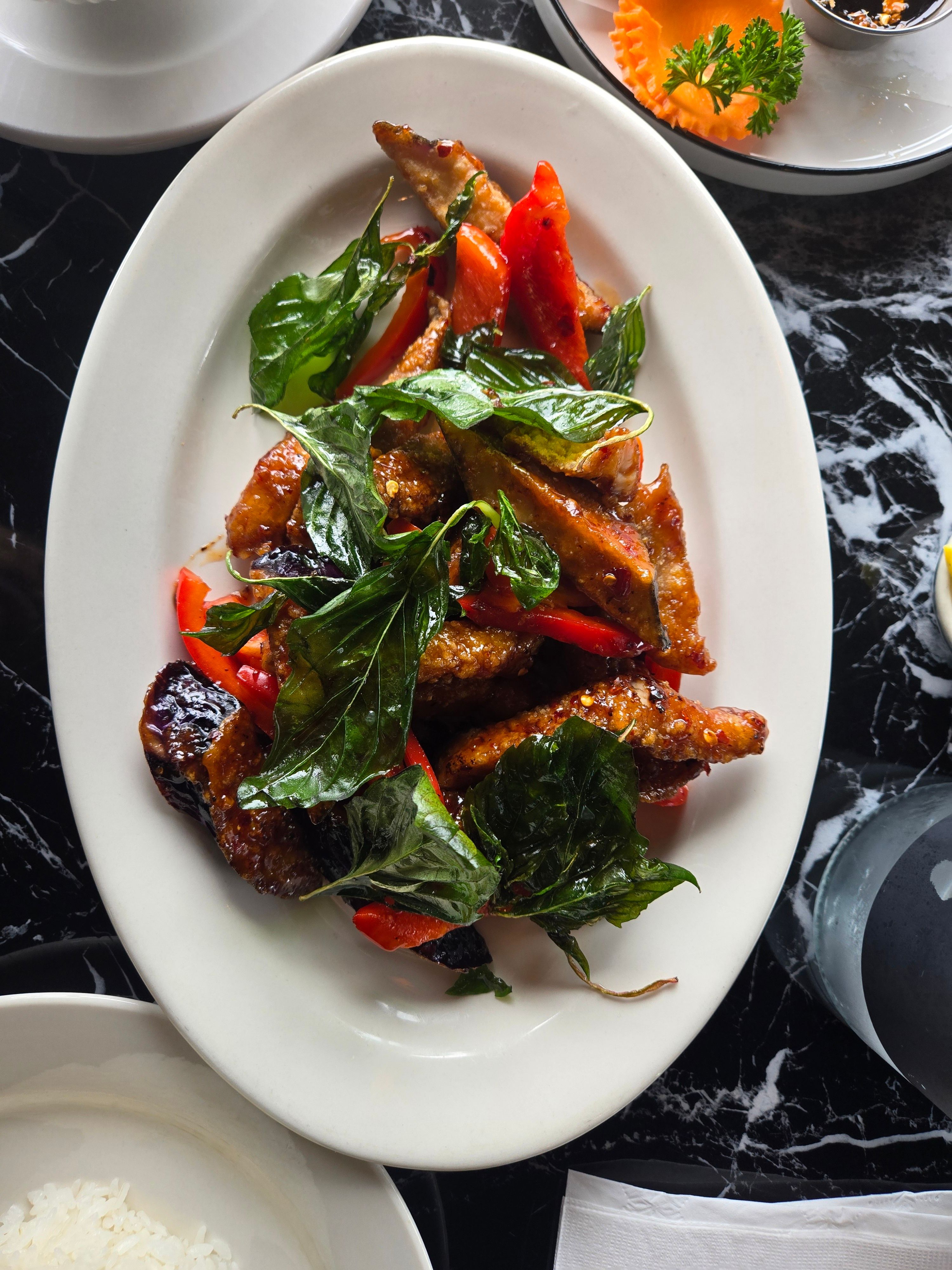
Photo: Kevin Early / Pexels
Thai
Thai Grilled Chicken (Gai Yang)
The diets react (see scores below)
Common Ingredients
- chicken
- lemongrass
- garlic
- fish sauce
- cilantro root
- white pepper
- soy sauce
- palm sugar
Specific recipes may vary.
Incompatible with 5 of 11 diets
Diet Ratings
Thai Grilled Chicken (Gai Yang) is built around a keto-friendly protein base (chicken), but the marinade contains two significant concerns: palm sugar and soy sauce. Palm sugar is a direct added sugar that raises blood glucose and can disrupt ketosis, especially if used generously as is traditional. Soy sauce adds a small but non-trivial carb load and contains wheat (grains). The remaining marinade ingredients — lemongrass, garlic, fish sauce, cilantro root, and white pepper — are used in small quantities and contribute minimal net carbs. The dish is not inherently keto-incompatible, but as traditionally prepared, the palm sugar marinade makes it a caution-level food. A keto-adapted version substituting a sugar-free sweetener and coconut aminos for soy sauce would comfortably earn an approve rating.
Strict keto practitioners argue that any dish containing palm sugar or wheat-based soy sauce should be rated 'avoid' regardless of portion size, as even small amounts of sugar can spike insulin and break ketosis in metabolically sensitive individuals. They would recommend only eating a fully modified version with zero-sugar substitutes.
Thai Grilled Chicken (Gai Yang) is unequivocally non-vegan. The dish contains two distinct animal-derived ingredients: chicken (poultry, a direct animal product) and fish sauce (made from fermented fish). Both are explicitly excluded under all vegan standards. The remaining ingredients — lemongrass, garlic, cilantro root, white pepper, soy sauce, and palm sugar — are plant-based, but the presence of chicken and fish sauce makes this dish entirely incompatible with a vegan diet.
Thai Grilled Chicken (Gai Yang) contains two clear paleo violations: soy sauce (a soy-based, grain-fermented condiment — both legume and grain-derived) and palm sugar (a refined/processed sugar). The base protein (chicken) and aromatics (lemongrass, garlic, cilantro root, white pepper) are fully paleo-approved. Fish sauce is a gray area — traditional fish sauce contains only fish and salt, with salt being technically excluded from strict paleo, but most paleo practitioners accept it in small amounts as a condiment. However, the soy sauce alone is a definitive disqualifier, as soy is a legume and the fermentation process involves wheat. Palm sugar adds another violation as a refined sugar. The dish as traditionally prepared cannot be considered paleo-compatible without substituting coconut aminos for soy sauce and omitting or replacing the palm sugar with a small amount of a paleo-accepted sweetener like raw honey.
Thai Grilled Chicken (Gai Yang) is built around lean grilled chicken, which aligns reasonably well with Mediterranean principles — poultry is acceptable in moderate amounts. The aromatics (lemongrass, garlic, cilantro root) are wholesome and would be at home in a Mediterranean kitchen. However, several ingredients raise concerns: palm sugar adds refined/concentrated sugar, fish sauce and soy sauce introduce significant sodium and are not traditional Mediterranean condiments, and the overall flavor profile is distinctly non-Mediterranean. The dish contains no olive oil, no legumes, and no whole grains. It is a relatively clean, whole-food preparation of poultry, which keeps it out of the 'avoid' category, but the added sugar and high-sodium sauces push it away from a clean 'caution' as well.
Some Mediterranean diet practitioners take a broader 'dietary pattern' view, arguing that a lean grilled protein with herbs and aromatics — regardless of regional spicing — is compatible with the spirit of the diet. Under this interpretation, the dish could be scored higher, with the suggestion to reduce palm sugar and soy sauce to minimize added sugar and sodium.
Thai Grilled Chicken (Gai Yang) is heavily incompatible with the carnivore diet. While the chicken itself is an acceptable animal protein, the marinade is loaded with plant-based and processed ingredients that are strictly excluded. Lemongrass, garlic, cilantro root, and white pepper are all plant-derived aromatics/spices. Soy sauce is a fermented legume product (soy) and also typically contains wheat. Palm sugar is a concentrated plant-based sugar. Fish sauce, while animal-derived, often contains added sugar. Only the chicken and possibly the fish sauce (if pure) would pass carnivore scrutiny — the majority of this dish's flavor profile is built entirely on excluded ingredients.
This dish contains two excluded ingredients: soy sauce (a soy/legume product) and palm sugar (an added sugar). Both are explicitly prohibited on Whole30. Soy sauce cannot be substituted by assumption — coconut aminos would be the compliant swap. Palm sugar is a caloric sweetener and falls squarely under the added sugar exclusion. The remaining ingredients (chicken, lemongrass, garlic, fish sauce, cilantro root, white pepper) are all Whole30-compliant, so the dish could be made compliant with substitutions, but as described it must be avoided.
Thai Grilled Chicken (Gai Yang) contains two high-FODMAP ingredients that are standard and non-negotiable in this dish: garlic and soy sauce. Garlic is one of the highest-FODMAP foods tested by Monash University, containing significant fructans even in tiny amounts — there is no safe serving size during elimination. Traditional soy sauce (not tamari) contains wheat and is therefore high in fructans as well. While chicken, lemongrass (in small amounts), fish sauce, cilantro root, white pepper, and palm sugar are generally low-FODMAP or used in trace quantities, the garlic alone makes this dish unsafe during the elimination phase. The dish cannot be evaluated as a modified version — as traditionally prepared, it must be avoided.
Thai Grilled Chicken (Gai Yang) has a mixed DASH profile. On the positive side, chicken is a lean protein explicitly approved by DASH guidelines, and the aromatic ingredients (lemongrass, garlic, cilantro root, white pepper) are low-sodium, nutrient-rich additions that align well with DASH. However, the marinade relies on both fish sauce and soy sauce, which are high-sodium condiments — even modest amounts can contribute several hundred milligrams of sodium per serving, pushing the dish toward or beyond DASH sodium targets. Palm sugar, a tropical-derived sweetener, adds modest amounts of added sugar. Palm sugar is also derived from the palm plant, and while it is not the same as palm kernel or coconut oil, its inclusion alongside soy sauce and fish sauce makes this dish one that requires portion control and preparation awareness. Compared to a plain grilled chicken breast, this dish is borderline acceptable rather than a core DASH food. If prepared with low-sodium soy sauce and reduced fish sauce, the score would improve meaningfully.
NIH DASH guidelines flag high-sodium condiments like fish sauce and soy sauce as problematic, particularly for the low-sodium DASH variant (≤1,500mg/day). However, some updated DASH-oriented dietitians note that when these condiments are used as marinades (where much is discarded) rather than as sauces poured over food, the actual sodium absorbed per serving may be substantially lower, making moderate consumption more acceptable within a daily sodium budget.
Thai Grilled Chicken (Gai Yang) is a strong Zone-compatible protein source. The base ingredient — grilled chicken — is exactly the lean protein Dr. Sears recommends, providing roughly 7g protein per ounce with minimal saturated fat. The aromatics (lemongrass, garlic, cilantro root, white pepper) contribute negligible macros and are rich in polyphenols, aligning well with Sears' anti-inflammatory emphasis. Fish sauce and soy sauce add sodium but minimal caloric impact. The main Zone concern is palm sugar, a high-glycemic sweetener used in the marinade. However, the quantity per serving is typically small (1-2 tsp spread across multiple portions), contributing only a modest glycemic load — likely 3-6g net carbs from the marinade per serving. This makes it a manageable 'unfavorable' carb addition rather than a disqualifying one. The dish is best paired with Zone-favorable carbs (steamed vegetables, a small portion of cucumber salad) and a monounsaturated fat source (avocado, a drizzle of olive oil, or a few macadamia nuts) to complete the 40/30/30 block structure. As a protein anchor for a Zone meal, this dish scores very well.
Some Zone practitioners would flag the palm sugar and soy sauce as making this dish 'unfavorable' and downgrade it to a caution rating, particularly for those following stricter early-Zone protocols that emphasize eliminating all added sugars. Dr. Sears' later writings (The Anti-Inflammation Zone) place greater emphasis on the overall anti-inflammatory profile of meals, under which the polyphenol-rich aromatics and lean protein could offset the minor palm sugar concern — supporting the approve rating.
Thai Grilled Chicken (Gai Yang) has a mixed anti-inflammatory profile. On the positive side, the marinade is rich in anti-inflammatory herbs and aromatics: lemongrass contains citral and other compounds with documented anti-inflammatory activity, garlic provides allicin and organosulfur compounds that reduce CRP and IL-6, white pepper contains piperine (which enhances bioavailability of other anti-inflammatory compounds), and cilantro root offers antioxidant flavonoids. Grilling is a relatively clean cooking method that doesn't add inflammatory fats. Lean chicken, while not emphasized on anti-inflammatory protocols, is a moderate-tier protein — far preferable to red meat. The concerns are the palm sugar (a form of added sugar, though used in small amounts as a marinade ingredient rather than a sweetener-forward application) and soy sauce (high sodium, typically refined, though not a core inflammatory trigger at typical usage levels). Fish sauce contributes sodium but also umami without meaningful inflammatory impact at culinary doses. Palm sugar is a saturated-fat-containing plant product when referring to palm oil, but palm sugar specifically is a sweetener derived from palm sap — its glycemic impact is lower than refined sugar, but it still counts as added sugar under anti-inflammatory guidelines. Overall, this is a herb-forward lean protein dish with modest but real anti-inflammatory credentials, held back by added sugar and high sodium rather than any strongly pro-inflammatory ingredients.
Some anti-inflammatory practitioners would score this more favorably, noting that the herb-to-protein ratio is high and the added sugar from palm sugar in a marinade is minimal per serving, effectively making this a clean, whole-food dish; Dr. Weil's framework would likely place moderate poultry with aromatics in the acceptable range without significant reservation. Conversely, stricter anti-inflammatory protocols may flag both the soy sauce (refined, high-sodium, potentially allergenic) and any added sugar as unnecessary inflammatory contributors.
Thai Grilled Chicken (Gai Yang) is an excellent GLP-1-friendly dish. Grilled chicken is a lean, high-protein source that supports the critical muscle-preservation goal during GLP-1-assisted weight loss. The marinade ingredients — lemongrass, garlic, cilantro root, white pepper, fish sauce, and soy sauce — are used in small quantities and add flavor without meaningful fat or calories. The palm sugar introduces a modest amount of added sugar, but the quantity per serving is typically low (1-2 teaspoons across a whole batch). Grilling is one of the best cooking methods for GLP-1 patients: it avoids added fat and produces a lean, easily digestible protein. The dish is naturally low in fiber, so it should be paired with a fiber-rich side (steamed vegetables, a legume-based salad, or brown rice) to meet daily fiber targets.
The sodium content from fish sauce and soy sauce combined can be significant, and some GLP-1 clinicians flag high-sodium foods for patients with comorbid hypertension or fluid retention — a common profile in this population. A minority of practitioners also note that palm sugar, while small in quantity here, contributes to added sugar intake that should be tracked cumulatively across the day.
*See how scores were generated at our methodology page.
Nutritional profile
Six traits that cut across every diet.
Fiber & Plants
How much whole-plant food and fiber it delivers.
Healthy Fats
The quality of its fats (unsaturated, omega-3).
Whole / Unprocessed
How close it is to its natural, unprocessed form.
Gut Gentle
How easy it is on digestion (low FODMAP, few irritants).
Low Glycemic
How little it spikes your blood sugar.
Protein Density
How much protein it packs per calorie.
Controversy Index
Higher controversy = more disagreement between diets.
Diet-Specific Tips
 Keto — 5/10
View tips
- Palm sugar is an added sugar that directly threatens ketosis
- Soy sauce contains wheat (a grain) and adds additional carbs
- Chicken is an excellent keto protein source
- Lemongrass, garlic, fish sauce, and white pepper contribute negligible net carbs
- Traditional preparation likely coats the chicken in a sugar-heavy marinade, increasing carb load
- A keto-modified version with sugar-free sweetener and coconut aminos would be fully compatible
 Mediterranean — 5/10
View tips
- Chicken (poultry) is acceptable in moderation per Mediterranean guidelines
- Grilling is a healthy preparation method with no added fats
- Palm sugar adds unwanted refined/added sugar
- Fish sauce and soy sauce contribute high sodium, not traditional Mediterranean ingredients
- No olive oil, whole grains, or legumes present
- Aromatic herbs and garlic are nutritionally positive
 DASH — 5/10
View tips
- Lean grilled chicken is a DASH-approved protein source
- Fish sauce is very high in sodium (up to 1,400mg per tablespoon) — a primary concern
- Soy sauce adds additional sodium; low-sodium soy sauce would improve the rating
- Lemongrass, garlic, and cilantro root are DASH-friendly aromatics with no sodium concerns
- Palm sugar contributes added sugar, though in small amounts typical of marinades
- Grilling method is preferred over frying, aligning with DASH low-fat cooking guidance
- Sodium load depends heavily on marinade quantity and preparation method
 Zone — 8/10
View tips
- Lean grilled chicken is an ideal Zone protein block (~7g protein per block)
- Lemongrass, garlic, and cilantro root are polyphenol-rich aromatics with negligible glycemic impact
- Palm sugar is a high-glycemic 'unfavorable' carb but used in small marinade quantities per serving
- Fish sauce and soy sauce add sodium but do not meaningfully disrupt Zone macro ratios
- Dish needs pairing with additional Zone-favorable carbs and monounsaturated fat to complete a full Zone meal
- Overall anti-inflammatory profile is strong due to aromatic ingredients and lean protein base
 Anti-Inflammatory — 6/10
View tips
- Lean chicken protein — moderate tier, acceptable on anti-inflammatory diet
- Lemongrass and garlic provide meaningful anti-inflammatory phytochemicals
- White pepper contributes piperine, which has documented anti-inflammatory and bioavailability-enhancing properties
- Palm sugar = added sugar, a category to limit under anti-inflammatory guidelines
- Soy sauce adds sodium and is a refined condiment, though not a major inflammatory driver at culinary doses
- No seed oils, trans fats, or processed additives
- Grilling is a healthy, low-fat cooking method
- Overall herb-forward marinade with good polyphenol contribution
 GLP-1 Friendly — 8/10
View tips
- High lean protein from grilled chicken — supports muscle preservation and satiety
- Grilling method avoids added fat and supports easy digestibility
- Marinade ingredients are low-calorie and non-problematic in typical quantities
- Palm sugar adds minor sugar load — negligible per serving but worth tracking
- Naturally low in fiber — requires fiber-rich accompaniments to meet daily targets
- Moderate-to-high sodium from fish sauce and soy sauce — relevant for patients with hypertension
- Small portion friendly — works well as part of a 4-5 small meal daily structure