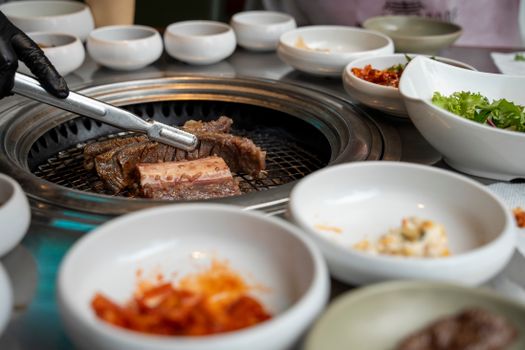
Korean
Korean BBQ Short Ribs (Galbi)
The diets react (see scores below)
Common Ingredients
- beef short ribs
- soy sauce
- sesame oil
- garlic
- Asian pear
- scallions
- sugar
- sesame seeds
Specific recipes may vary.
Incompatible with 8 of 11 diets
Diet Ratings
Korean BBQ Short Ribs (Galbi) are fundamentally incompatible with ketogenic eating in their traditional form. The marinade contains explicit added sugar as a listed ingredient, plus Asian pear — which is used as both a sweetener and tenderizer and contributes significant natural sugars (fructose). Soy sauce also adds a small but non-trivial carb load. Combined, the marinade ingredients can easily push net carbs to 15-25g per serving, with the sugar and pear making this a zero-tolerance violation under strict keto rules. The base protein (beef short ribs) is itself excellent for keto — high fat, zero carbs — but the traditional marinade disqualifies the dish as prepared. A keto-adapted version could substitute erythritol for sugar, omit or minimize the pear, and use coconut aminos for soy sauce, but that would be a fundamentally different recipe.
Korean BBQ Short Ribs (Galbi) are fundamentally incompatible with a vegan diet. The primary ingredient is beef short ribs, which is animal flesh and a direct violation of the core vegan principle of excluding all animal products. There is no ambiguity here — this dish is built around a mammalian meat product. The remaining ingredients (soy sauce, sesame oil, garlic, Asian pear, scallions, sugar, sesame seeds) are all plant-based, but they serve only as a marinade for the animal protein and do not alter the overall verdict in any way.
Korean BBQ Short Ribs (Galbi) contains multiple non-paleo ingredients that disqualify it. Soy sauce is a processed legume-based product (fermented soy) and also contains wheat, making it doubly non-paleo. Sesame oil is a seed oil, which is explicitly excluded from the paleo diet. Refined sugar is a prohibited ingredient. While the base protein (beef short ribs) is paleo-approved, and garlic, Asian pear, scallions, and sesame seeds are all paleo-friendly, the marinade as a whole is fundamentally incompatible with paleo principles. This dish cannot be considered paleo in its traditional form without a significant reformulation of the marinade.
Korean BBQ Short Ribs (Galbi) are fundamentally incompatible with Mediterranean diet principles. Beef short ribs are a high-saturated-fat red meat, which the Mediterranean diet limits to just a few times per month. The marinade compounds the issue with added sugar, and soy sauce represents a processed, high-sodium condiment not used in traditional Mediterranean cooking. Sesame oil, while a plant-based fat, is not the canonical Mediterranean fat (extra virgin olive oil). The dish contains no vegetables, legumes, whole grains, or other plant-forward components. As a red meat-centered, sugar-marinated preparation from a non-Mediterranean culinary tradition, it scores very low on compatibility.
Korean BBQ Short Ribs (Galbi) are built around an excellent carnivore base — beef short ribs — but the traditional marinade is loaded with carnivore-incompatible ingredients. Soy sauce is a fermented soy/wheat product (both plant-derived), sesame oil is a plant oil, garlic and scallions are vegetables, Asian pear is a fruit, sugar is a refined plant carbohydrate, and sesame seeds are seeds. Every single marinade ingredient violates carnivore principles. The beef itself is fine, but as prepared this dish is essentially a plant-based marinade delivery vehicle wrapped around beef. There is no version of this dish as described that qualifies as carnivore-compatible without a complete reformulation of the marinade.
Korean BBQ Short Ribs (Galbi) contain two clearly excluded ingredients: soy sauce (soy is a legume and explicitly banned on Whole30) and sugar (added sugar is explicitly excluded). These are not edge cases or ambiguous inclusions — both are directly prohibited by the official Whole30 rules. To make a compliant version, soy sauce would need to be replaced with coconut aminos, and sugar would need to be omitted entirely (the Asian pear provides natural sweetness that can partially compensate). The remaining ingredients — beef short ribs, sesame oil, garlic, Asian pear, scallions, and sesame seeds — are all Whole30-compatible.
Korean BBQ Short Ribs (Galbi) contain multiple high-FODMAP ingredients that make this dish unsuitable during the elimination phase. Garlic is one of the highest-fructan foods tested by Monash University and is a definitive avoid. Scallions (green onion bulbs/white parts) are high in fructans — though the green tops are low-FODMAP, traditional Galbi marinade uses the whole scallion or the white portion. Asian pear contains excess fructose and polyols (sorbitol) and is high-FODMAP. Soy sauce in typical marinade quantities may also contribute fructans depending on the brand and amount used. The beef itself, sesame oil, sesame seeds, and sugar are all low-FODMAP, but the multiple high-FODMAP ingredients in the marinade make this dish a clear avoid without significant recipe modification.
Korean BBQ Short Ribs (Galbi) present multiple significant conflicts with DASH diet principles. Beef short ribs are a fatty red meat high in saturated fat, which DASH explicitly limits. The soy sauce marinade introduces very high sodium levels — a single tablespoon of regular soy sauce contains ~900-1,000mg sodium, and marinades for galbi typically use several tablespoons, pushing this dish well beyond DASH sodium thresholds (either the 2,300mg/day standard or 1,500mg/day low-sodium target) in a single serving. Added sugar further conflicts with DASH guidelines. The combination of high saturated fat from short ribs, high sodium from soy sauce, and added sugar makes this dish fundamentally incompatible with DASH eating patterns. Garlic, scallions, sesame seeds, and Asian pear are DASH-positive ingredients, but they do not offset the core nutritional issues.
Korean BBQ Short Ribs (Galbi) present several Zone Diet challenges. Beef short ribs are a fatty cut with significant saturated fat content, which conflicts with Zone's preference for lean proteins — though they do provide adequate protein per serving. The marinade contains added sugar and soy sauce (which adds sodium and minor carbs), and the Asian pear contributes natural sugars that raise the glycemic load. Sesame oil is a polyunsaturated omega-6 fat, not the preferred monounsaturated fat (olive oil, avocado), and in larger quantities works against the anti-inflammatory goals Sears emphasizes in his later writings. On the positive side, garlic and scallions are Zone-favorable polyphenol-rich vegetables, sesame seeds provide some beneficial fats, and the dish is not nutritionally empty. The dish can technically be incorporated into a Zone meal with careful portioning — a modest 3-oz serving alongside non-starchy vegetables — but the fat profile (high saturated fat from the ribs, omega-6 sesame oil) and sugar in the marinade make it an 'unfavorable' Zone protein source requiring active balancing.
Some Zone practitioners focus primarily on the protein block contribution and accept short ribs as an occasional protein source, arguing that the sugar in a marinade is diluted across multiple servings and the pear and garlic provide meaningful polyphenols. Sears' later anti-inflammatory framework (The OmegaRx Zone) would particularly flag the omega-6 sesame oil and saturated fat as concerns, whereas earlier Zone texts focused mainly on the carb-to-protein block ratio, in which context this dish might score slightly higher.
Korean BBQ Short Ribs (Galbi) present a mixed anti-inflammatory profile. On the negative side, beef short ribs are a fatty cut of red meat — high in saturated fat and arachidonic acid, both associated with pro-inflammatory signaling. Added sugar is a clear inflammatory concern, and soy sauce contributes significant sodium. High-heat grilling/charring of red meat can also produce advanced glycation end-products (AGEs) and heterocyclic amines, both of which are linked to increased inflammatory markers. On the positive side, garlic is a well-established anti-inflammatory ingredient (allicin, quercetin), sesame oil contains sesamin and sesamol with antioxidant properties, and scallions contribute polyphenols. Asian pear provides natural enzymes (actinidin-like proteases) and some antioxidants. Overall, this is a flavorful dish with meaningful anti-inflammatory contributors in the marinade, but the foundation — fatty red meat with added sugar and high-heat cooking — anchors it firmly in the 'caution' zone. Occasional consumption is acceptable; it should not be a dietary staple for someone following anti-inflammatory principles.
Some anti-inflammatory practitioners following a more flexible Mediterranean-adjacent framework (e.g., Dr. Weil's pyramid) would note that red meat in moderate, infrequent portions is not strictly prohibited and that the garlic, sesame, and fermented soy components (soy sauce) add meaningful anti-inflammatory value. However, stricter anti-inflammatory and AIP-leaning protocols would flag not only the red meat but also soy sauce (potential soy sensitivity, high sodium) and added sugar as disqualifying concerns.
Korean BBQ short ribs (galbi) deliver meaningful protein from beef but come with significant drawbacks for GLP-1 patients. Short ribs are one of the fattiest cuts of beef — a typical 3-4 oz serving can contain 20-30g of fat, much of it saturated, which is known to worsen GLP-1 side effects like nausea, bloating, and reflux due to slowed gastric emptying. The marinade adds sugar (glycemic load concern and empty calories) and sesame oil (additional fat, though unsaturated). Garlic and scallions are nutritionally positive and tolerated well by most. The dish is low in fiber and relatively calorie-dense per bite. That said, galbi is typically served in small pieces, which suits small-portion eating patterns, and the protein content is real and substantial. Occasional consumption of a modest 2-3 rib portion is not disqualifying, but this is not a recommended regular staple for GLP-1 patients.
Some GLP-1-focused dietitians accept lean cuts of beef in moderation as a high-quality complete protein source, and would permit galbi occasionally if portion size is tightly controlled (2-3 ribs) and the meal is otherwise low-fat. Others categorically steer patients away from fatty red meat cuts like short ribs due to the high saturated fat content consistently correlating with worsened GI side effects and poor nutrient density per calorie in a reduced-appetite context.
*See how scores were generated at our methodology page.
Nutritional profile
Six traits that cut across every diet.
Fiber & Plants
How much whole-plant food and fiber it delivers.
Healthy Fats
The quality of its fats (unsaturated, omega-3).
Whole / Unprocessed
How close it is to its natural, unprocessed form.
Gut Gentle
How easy it is on digestion (low FODMAP, few irritants).
Low Glycemic
How little it spikes your blood sugar.
Protein Density
How much protein it packs per calorie.
Controversy Index
Higher controversy = more disagreement between diets.
Diet-Specific Tips
 Zone — 4/10
View tips
- Beef short ribs are a high-fat, high-saturated-fat cut — not a lean Zone protein source
- Marinade sugar and soy sauce add glycemic load and unfavorable carbohydrates
- Sesame oil is omega-6 dominant, conflicting with Zone's anti-inflammatory and monounsaturated fat preferences
- Garlic, scallions, and Asian pear provide polyphenols and low-GI carbohydrates that partially support Zone goals
- Dish can be portioned to fit Zone blocks but requires careful serving size control and vegetable pairing
- Overall macro ratio is skewed toward fat and calories, requiring active compensation in the full meal
 Anti-Inflammatory — 4/10
View tips
- Beef short ribs are high in saturated fat and arachidonic acid — pro-inflammatory at regular consumption
- Added sugar is a clear anti-inflammatory concern
- High-heat grilling produces AGEs and heterocyclic amines
- Garlic is a potent anti-inflammatory ingredient (allicin, quercetin)
- Sesame oil provides antioxidants (sesamin, sesamol) and some omega-6, best in moderation
- Soy sauce adds sodium and processed condiment load, though fermented soy has some anti-inflammatory properties
- Scallions and Asian pear contribute polyphenols and antioxidants
- Dish is acceptable occasionally but not suitable as a frequent anti-inflammatory staple
 GLP-1 Friendly — 4/10
View tips
- High saturated fat content from short rib cut worsens nausea and reflux on GLP-1 medications
- Moderate-to-good protein content per serving, but fat-to-protein ratio is unfavorable
- Marinade contains added sugar, contributing empty calories in a low-appetite context
- No meaningful fiber content
- Sesame oil adds unsaturated fat but also increases overall fat load
- Small bite-sized portions suit GLP-1 eating patterns
- Not a lean protein source — poor nutrient density per calorie compared to chicken, fish, or legumes