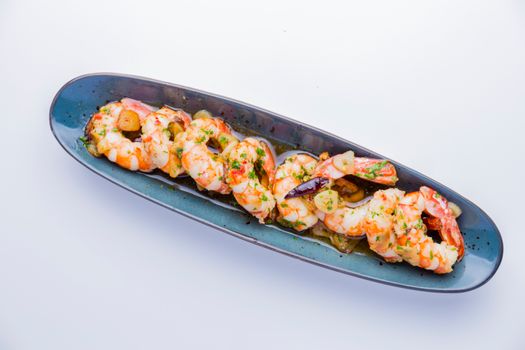
Photo: Isaac Quesada / Pexels
Spanish
Gambas al Ajillo
The diets react (see scores below)
Common Ingredients
- shrimp
- garlic
- olive oil
- dried chiles
- sherry
- parsley
- paprika
- salt
Specific recipes may vary.
Incompatible with 3 of 11 diets
Diet Ratings
Gambas al Ajillo is an excellent keto-friendly dish. Shrimp is a lean, high-quality protein with virtually zero carbs. Olive oil provides healthy monounsaturated fats and makes up the bulk of the dish. Garlic, dried chiles, paprika, and parsley contribute negligible net carbs in typical cooking quantities. The primary concern is the dry sherry, which contains a small amount of residual sugar and carbohydrates; however, the quantity used in a standard serving is modest (a few tablespoons split across multiple portions), contributing roughly 1-2g net carbs per serving. Overall net carbs remain well within keto limits, and the olive oil base aligns perfectly with high-fat keto macros.
Some strict keto practitioners flag any alcohol-based ingredient, including dry sherry, as problematic — not only for its minor carb contribution but because alcohol temporarily halts fat oxidation and may stall ketosis even in small amounts. These adherents would recommend omitting the sherry or substituting with bone broth.
Gambas al Ajillo is fundamentally a shrimp dish. Shrimp are seafood — an animal product — and are unambiguously excluded from a vegan diet. There is no plant-based substitution possible while keeping the dish as described. The remaining ingredients (garlic, olive oil, dried chiles, sherry, parsley, paprika, salt) are all plant-derived and vegan-compatible, but the primary protein ingredient makes this dish entirely incompatible with veganism.
Gambas al Ajillo is nearly paleo-compliant but is disqualified by two clear violations: added salt and sherry (an alcoholic wine fortified with grape spirits, making it a processed/alcoholic ingredient). Shrimp, garlic, olive oil, dried chiles, parsley, and paprika are all paleo-approved. However, salt is explicitly excluded from strict paleo (no added salt rule), and sherry is an alcohol — which falls in the caution category at best, but as a fortified, processed wine used as a cooking ingredient rather than consumed in moderation, it pushes this dish further into non-compliant territory. Without the salt and sherry, this dish would be a strong approve (score 8-9).
Gambas al Ajillo is an exemplary Mediterranean dish. Shrimp is a lean seafood that aligns perfectly with the Mediterranean diet's recommendation of fish and seafood 2-3 times per week. Extra virgin olive oil is the primary fat and the backbone of this dish, used generously as the cooking medium. Garlic, parsley, and paprika are classic Mediterranean aromatics and spices. Dried chiles add flavor without nutritional concern. Sherry is used in a small culinary quantity, which is consistent with traditional Spanish and broader Mediterranean cooking. The dish is whole, minimally processed, and contains no refined grains, added sugars, or saturated fat sources. It is a textbook example of Spanish coastal Mediterranean cuisine.
Gambas al Ajillo is fundamentally incompatible with the carnivore diet. While shrimp is a carnivore-approved seafood, the dish is built around multiple plant-derived ingredients that are strictly excluded. Olive oil is a plant-based oil; garlic, dried chiles, parsley, and paprika are all plant foods; and sherry is an alcohol derived from grapes. Salt is the only other ingredient that passes carnivore standards. The ratio of plant-based to animal-based components makes this dish an 'avoid' despite the acceptable protein source. Even the most liberal carnivore practitioners who permit spices and coffee would still reject olive oil, sherry, and the volume of plant ingredients here.
Gambas al Ajillo is a classic Spanish garlic shrimp dish whose ingredients are almost entirely Whole30-compliant. Shrimp, garlic, olive oil, dried chiles, parsley, paprika, and salt are all whole, unprocessed foods explicitly allowed on the program. Sherry vinegar (or dry sherry wine used as a cooking ingredient) falls under the explicitly permitted vinegar/wine category — the official Whole30 rules allow sherry vinegar and cooking wines such as red wine and sherry. All ingredients align cleanly with Whole30 guidelines, making this an excellent compliant option.
Gambas al Ajillo is a classic Spanish dish where the primary FODMAP concern is garlic. The shrimp, olive oil, dried chiles, parsley, paprika, and salt are all low-FODMAP and safe during elimination. Sherry (dry) is low-FODMAP at typical cooking quantities. The critical issue is garlic: whole garlic cloves are high-FODMAP due to fructans and would make this dish a clear 'avoid' if cooked traditionally with cloves. However, if prepared using garlic-infused olive oil (where garlic is removed before serving), the dish becomes low-FODMAP because fructans are water-soluble and do not transfer into oil. Traditional restaurant preparation almost always includes actual garlic pieces that remain in the dish, meaning most real-world servings of Gambas al Ajillo are high-FODMAP. The ambiguity in preparation method drives a 'caution' verdict — the dish CAN be made low-FODMAP with modification, but as typically served it is not safe during elimination phase.
Monash University confirms garlic-infused oil is low-FODMAP, which would make a modified version of this dish safe. However, clinical FODMAP practitioners and elimination phase guidelines strongly advise avoiding any dish where garlic cloves are present or where oil has been cooked with garlic for extended periods, as cross-contamination risk is high — most restaurant versions of Gambas al Ajillo should be avoided during elimination.
Gambas al Ajillo aligns reasonably well with DASH principles in several ways: shrimp is a lean, low-fat protein rich in potassium and magnesium; olive oil is a DASH-approved unsaturated fat; and garlic, parsley, paprika, and dried chiles are all DASH-friendly aromatics. However, a few factors prevent a full approval. Shrimp is naturally moderately high in sodium (roughly 200-300mg per 3oz serving) and cholesterol, which historically gave DASH practitioners pause. The dish is also cooked with a notable amount of olive oil, which, while heart-healthy, is calorie-dense and DASH recommends limiting added fats to 2-3 servings/day. The added salt is a direct DASH concern — preparation-level sodium control is critical, and restaurant or traditional versions can push this dish into higher sodium territory. Sherry adds a small amount of sugar and alcohol, neither emphasized by DASH. As a moderate-portion snack prepared at home with minimal added salt and a measured amount of olive oil, this dish can fit within DASH guidelines, but it requires portion and sodium discipline.
NIH DASH guidelines historically flagged shrimp due to its cholesterol content and moderate natural sodium, recommending limited intake; however, updated clinical interpretations following the removal of the dietary cholesterol cap in the 2020-2025 Dietary Guidelines increasingly view shrimp as an acceptable lean protein within DASH, provided sodium additions are controlled.
Gambas al Ajillo is a strong Zone-compatible dish. Shrimp is an excellent lean protein source — low in fat, high in quality protein, making it easy to hit Zone protein blocks without excess calories. Olive oil is the quintessential Zone fat, providing monounsaturated fatty acids that align perfectly with Sears' anti-inflammatory fat recommendations. Garlic, parsley, and paprika contribute polyphenols and anti-inflammatory compounds that Sears explicitly champions in his later writings. Dried chiles add minimal carb load and beneficial polyphenols. Sherry adds a small amount of carbohydrate (mostly burned off in cooking) that is negligible at typical cooking quantities. The primary challenge is that this dish is essentially protein + fat with very little carbohydrate, meaning it needs to be paired with a low-glycemic carbohydrate source (e.g., a side salad, roasted vegetables, or a small portion of legumes) to achieve the 40/30/30 Zone ratio. As a standalone snack component, it covers the protein and fat blocks beautifully, requiring only a carb complement to complete a Zone-balanced snack or meal.
Gambas al Ajillo is a strong anti-inflammatory dish overall. Shrimp provides lean protein and contains astaxanthin, a potent carotenoid antioxidant, along with modest omega-3 fatty acids. Garlic is one of the most well-supported anti-inflammatory foods, rich in allicin and organosulfur compounds that suppress inflammatory cytokines. Extra virgin olive oil — a cornerstone of the anti-inflammatory framework — delivers oleocanthal with COX-inhibiting properties analogous to ibuprofen. Dried chiles contribute capsaicin, which has demonstrated anti-inflammatory effects in research. Paprika adds antioxidant carotenoids. Parsley provides flavonoids and vitamin C. Sherry (a fortified wine) is the one ingredient warranting mild caution: it contains some polyphenols but is alcohol-based and not red wine, so it doesn't receive the conditional approval that moderate red wine does under Dr. Weil's framework. However, the quantity used in cooking is small and much of the alcohol evaporates. Overall, this dish exemplifies Mediterranean-style eating — a diet broadly associated with reduced CRP and inflammatory markers in epidemiological research.
While shrimp is generally well-regarded in anti-inflammatory diets, some practitioners note that shrimp has a higher omega-6 to omega-3 ratio than fatty fish and contains arachidonic acid, which is a precursor to pro-inflammatory eicosanoids. The AIP and some stricter anti-inflammatory protocols also caution against shellfish due to potential reactivity in autoimmune populations, though mainstream anti-inflammatory authorities including Dr. Weil consider shrimp acceptable.
Gambas al Ajillo is a shrimp-based tapas dish with a solid nutritional foundation — shrimp is a lean, high-protein, low-calorie protein source that fits GLP-1 dietary priorities well. However, the dish is prepared in a generous amount of olive oil, which is an unsaturated fat and preferred over saturated fats, but still calorie-dense and moderately high in fat per serving. The olive oil volume in a traditional preparation can be substantial (often 3-4 tablespoons), which increases fat load and calorie density significantly for a small-appetite patient. Sherry adds a small amount of alcohol, which is flagged for GLP-1 patients due to empty calories, though the quantity used in cooking is minimal and most alcohol burns off. Dried chiles and paprika introduce mild spice, which is generally tolerable but could worsen reflux or nausea in sensitive GLP-1 patients. Parsley and garlic contribute micronutrients and anti-inflammatory compounds. Fiber content is negligible. As a tapas snack portion (small serving), the dish can work well — shrimp delivers 15-20g protein in a modest serving, and olive oil in moderation is acceptable. The main concerns are oil volume, minimal fiber, trace alcohol from sherry, and mild spice irritation risk.
Some GLP-1 dietitians view this dish favorably as a high-protein, Mediterranean-style option where olive oil's unsaturated fat profile is deemed acceptable in small tapas portions; others caution that the oil-heavy preparation method raises the fat load beyond what GLP-1 patients with nausea or slowed gastric emptying can comfortably tolerate, and recommend requesting a lighter oil preparation.
*See how scores were generated at our methodology page.
Nutritional profile
Six traits that cut across every diet.
Fiber & Plants
How much whole-plant food and fiber it delivers.
Healthy Fats
The quality of its fats (unsaturated, omega-3).
Whole / Unprocessed
How close it is to its natural, unprocessed form.
Gut Gentle
How easy it is on digestion (low FODMAP, few irritants).
Low Glycemic
How little it spikes your blood sugar.
Protein Density
How much protein it packs per calorie.
Controversy Index
Higher controversy = more disagreement between diets.
Diet-Specific Tips
 Keto — 8/10
View tips
- Shrimp is zero-carb, high-quality protein — ideal for keto
- Olive oil as the primary fat aligns with keto macro targets
- Dry sherry adds minimal carbs per serving (~1-2g net carbs) but is a mild concern for strict adherents
- Garlic, chiles, paprika, and parsley contribute negligible net carbs at typical cooking quantities
- Dish is whole, unprocessed, and free from grains, added sugars, or starchy ingredients
- High fat-to-protein ratio is well-suited to keto macros
 Mediterranean — 9/10
View tips
- Shrimp is a lean, high-protein seafood strongly encouraged 2-3 times weekly
- Extra virgin olive oil is the primary and only fat source
- All ingredients are whole, unprocessed, and traditionally Mediterranean
- Garlic, parsley, paprika, and dried chiles are classic Mediterranean flavor builders
- Sherry used in small culinary quantity, consistent with Spanish Mediterranean tradition
- No refined grains, added sugars, or problematic saturated fats present
 Whole30 — 9/10
View tips
- Shrimp is a fully compliant Whole30 protein
- Olive oil is an approved natural fat
- Garlic, dried chiles, parsley, and paprika are compliant herbs and spices
- Salt is explicitly allowed on Whole30
- Sherry is explicitly listed as an approved vinegar/wine ingredient on Whole30
- No excluded ingredients (no grains, legumes, dairy, added sugar, or other disallowed items)
 Low-FODMAP — 5/10
View tips
- Garlic cloves are high-FODMAP due to fructans — the primary risk in this dish
- Garlic-infused oil is low-FODMAP (fructans are water-soluble, not fat-soluble) — preparation method is critical
- Shrimp is low-FODMAP and safe at standard servings
- Dry sherry is low-FODMAP at cooking quantities (small amounts used)
- Dried chiles, parsley, paprika, and salt are all low-FODMAP
- Traditional restaurant preparation typically includes garlic pieces, making standard servings unsafe during elimination
- Home preparation with garlic-infused oil substitution can make this dish low-FODMAP
 DASH — 6/10
View tips
- Shrimp is a lean protein but naturally contains moderate sodium (~200-300mg/3oz) and cholesterol
- Olive oil is a DASH-approved unsaturated fat, but quantity should be portion-controlled
- Added salt increases sodium load — home preparation allows control, but restaurant versions may exceed DASH sodium targets
- Garlic, paprika, parsley, and dried chiles are DASH-compatible flavor enhancers
- Sherry contributes minimal alcohol and trace sugars, not a significant DASH concern in small amounts
- Overall dish can fit DASH as an occasional snack with disciplined portioning and minimal added salt
 Zone — 8/10
View tips
- Shrimp is a top-tier Zone lean protein — low fat, high protein density, easy to portion in blocks
- Olive oil is the ideal Zone fat source — monounsaturated and anti-inflammatory
- Garlic, parsley, paprika, and dried chiles provide polyphenols supporting Sears' anti-inflammatory Zone philosophy
- Sherry contributes negligible carbohydrates when used as a cooking ingredient
- Dish is carbohydrate-light, requiring a low-GI vegetable or fruit pairing to complete the 40/30/30 Zone ratio
- No high-glycemic ingredients, no trans fats, no processed components — a clean Zone-compatible preparation
 Anti-Inflammatory — 8/10
View tips
- Extra virgin olive oil: core anti-inflammatory fat, rich in oleocanthal and polyphenols
- Garlic: potent anti-inflammatory via allicin and organosulfur compounds
- Shrimp: lean protein with astaxanthin antioxidant and modest omega-3s
- Dried chiles and paprika: capsaicin and carotenoids with antioxidant/anti-inflammatory properties
- Parsley: flavonoids and vitamin C
- Sherry: small amount of alcohol, not red wine — minor concern, largely mitigated by cooking
- No refined carbs, seed oils, added sugars, or processed ingredients
 GLP-1 Friendly — 6/10
View tips
- High-quality lean protein from shrimp — strong GLP-1 positive
- Traditional preparation uses significant olive oil volume — increases fat load
- Olive oil is unsaturated fat — preferred over saturated, but still calorie-dense
- Trace alcohol from sherry — minimal concern in cooking context but flagged
- Mild spice from dried chiles and paprika — potential reflux/nausea trigger in sensitive patients
- Negligible fiber content — does not support fiber priority
- Small tapas portion is appropriate for GLP-1 reduced appetite
- No carbonation, no sugar, no fried cooking method — avoids major GLP-1 red flags