Photo: Maggi Paraguay / Pexels
African
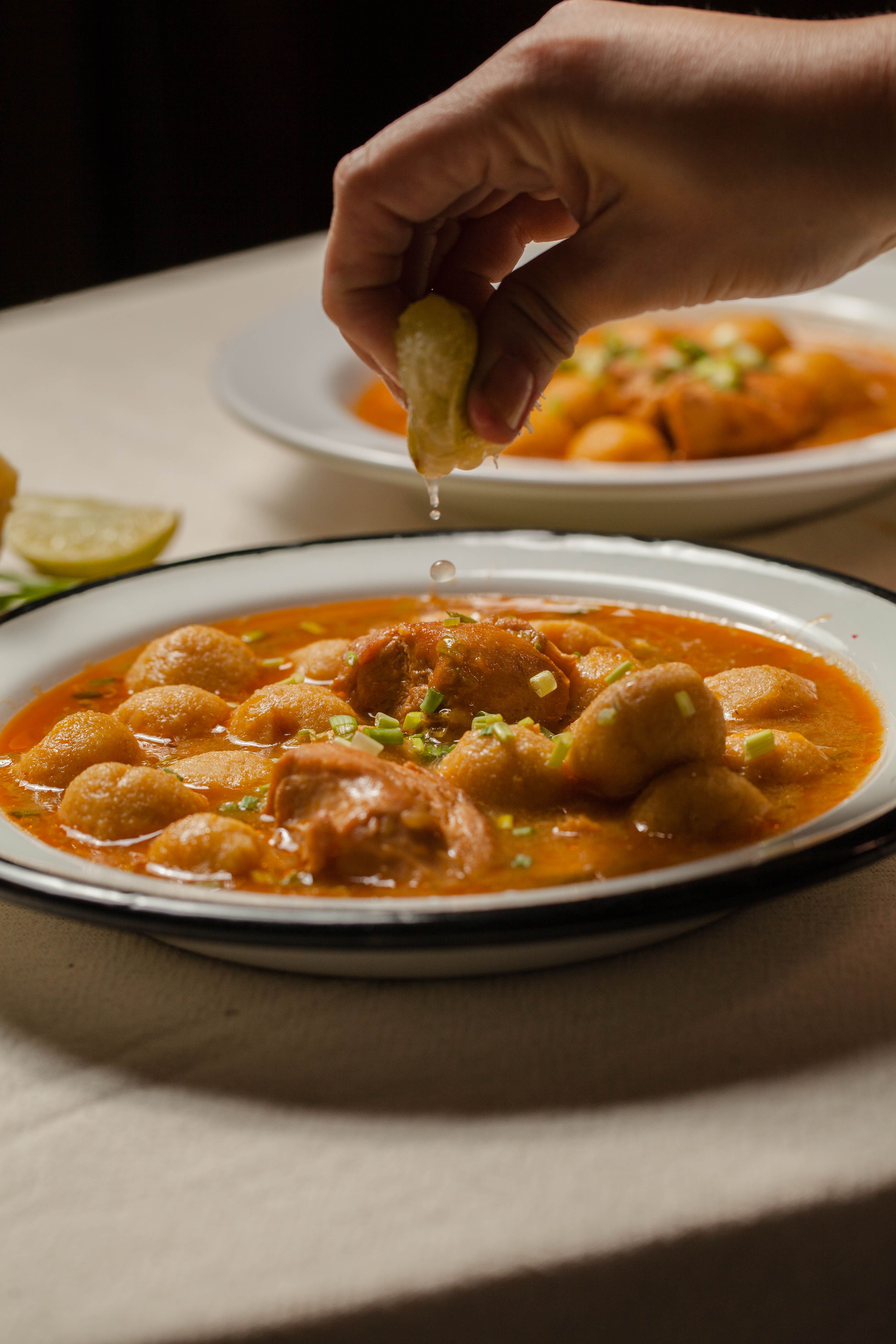
Fufu and Light Soup
The diets react (see scores below)
Common Ingredients
- cassava
- plantain
- goat
- tomatoes
- onion
- ginger
- Scotch bonnet
- garden eggs
Specific recipes may vary.
Incompatible with 4 of 11 diets
Diet Ratings
Fufu and Light Soup is fundamentally incompatible with a ketogenic diet. The fufu base is made from cassava and plantain, both extremely high-carb ingredients. Cassava (yuca) contains approximately 38g of net carbs per 100g, and plantain contains roughly 28g of net carbs per 100g. A standard serving of fufu (~200-300g) would deliver well over 60-100g of net carbs from the fufu alone, obliterating the entire daily keto carb budget in a single component. The light soup itself (goat/fish, tomatoes, onions, scotch bonnet, garden eggs, ginger) is relatively keto-friendly, but it cannot redeem the dish when paired with such a high-carb starchy base. There is no realistic portion size that makes this dish compatible with ketosis.
Fufu and Light Soup as described contains goat, a clear animal product. The primary protein is explicitly listed as goat or fish, both of which are animal-derived and strictly excluded under vegan dietary rules. While the base ingredients of fufu (cassava and plantain) are fully plant-based, and the soup vegetables (tomatoes, onion, ginger, Scotch bonnet, garden eggs) are all vegan-friendly, the inclusion of goat meat makes this dish incompatible with a vegan diet. A vegan adaptation could be made by omitting the animal protein and using plant-based alternatives such as mushrooms, jackfruit, or legumes in the soup.
Fufu and Light Soup presents a mixed paleo picture. The light soup component is largely paleo-friendly: goat meat is an unprocessed animal protein, and the soup base of tomatoes, onion, ginger, Scotch bonnet, and garden eggs (African eggplant) are all whole vegetables well within paleo guidelines. The problem lies with the fufu itself. Traditional fufu is made from cassava and plantain pounded together. Cassava is a starchy tuber — paleo allows tubers generally, and cassava in its whole, minimally processed form occupies a gray zone similar to sweet potato. Plantain is a whole fruit and is paleo-approved. However, fufu is not simply boiled cassava or plantain — it is pounded, processed into a sticky dough, and often fermented, which moves it away from the 'whole food' ideal central to paleo philosophy. The starchy, doughy texture and preparation method put fufu in 'caution' territory even if its raw ingredients are technically paleo-compatible. The dish as a whole scores in the middle: the soup is approvable, but the fufu preparation method and high starch load temper the overall rating.
Strict paleo authorities like Loren Cordain would likely push this toward 'avoid' due to the heavily processed, doughy nature of fufu — arguing that pounding and fermenting starchy roots into a grain-like staple contradicts the ancestral eating pattern, regardless of the ingredients' technical origin. Conversely, practitioners following Paul Jaminet's Perfect Health Diet or the broader ancestral health framework would approve cassava and plantain as 'safe starches,' making this dish more acceptable.
Fufu and Light Soup is a nutritious West African dish with several Mediterranean-compatible elements but also some tension points. The vegetable-rich soup base (tomatoes, onion, ginger, Scotch bonnet, garden eggs/eggplant) is strongly aligned with Mediterranean principles — these are exactly the kinds of whole plant foods emphasized. If fish is chosen as the protein, the dish scores quite well, as fish is a cornerstone of the Mediterranean diet. However, the primary starch — fufu made from cassava and plantain — is a refined, starchy base with limited fiber compared to whole grains like farro, barley, or whole wheat, which are the Mediterranean ideal. Goat meat, while leaner than beef, is still red meat and should be limited to a few times per month under Mediterranean guidelines. The dish also lacks olive oil as a fat source. The combination of a refined starchy base plus red meat protein pulls the score down, while the excellent vegetable profile and fish option pull it up.
Some Mediterranean diet researchers, particularly those studying traditional rural Mediterranean eating patterns, would note that starchy tuber-based staples (like cassava) occupy a similar dietary role to bread or pasta in Mediterranean cultures and were consumed regularly in low-income coastal Mediterranean communities. If prepared with fish, some practitioners might rate this dish more favorably, as the overall nutrient profile — lean protein, abundant vegetables, no processed ingredients — mirrors Mediterranean principles more closely than the starch base alone suggests.
Fufu and Light Soup is almost entirely plant-based and is incompatible with the carnivore diet. The fufu base is made from cassava and plantain — both starchy plant foods that are strictly excluded. The light soup contains tomatoes, onion, ginger, Scotch bonnet peppers, and garden eggs (African eggplant), all of which are plant-derived vegetables completely off-limits on carnivore. While the dish does include goat or fish as a protein component, the animal protein is merely one ingredient among a heavily plant-dominant dish. Even isolating the goat or fish would not redeem this dish as presented — the entire preparation, cooking base, and starch vehicle are plant foods. This dish scores a 1 because it is fundamentally a plant-starch dish with animal protein as a minor component.
The light soup component is straightforwardly Whole30-compliant: goat (or fish), tomatoes, onion, ginger, Scotch bonnet, and garden eggs (African eggplant) are all whole, unprocessed ingredients explicitly allowed on Whole30. The problem lies with the fufu. Traditional fufu is made by pounding cassava and/or plantain into a smooth, dense, dough-like mass that is then shaped into balls and used to scoop soup. While cassava and plantain are themselves Whole30-compatible ingredients, the finished fufu functions as a starchy, bread-like dough — an analogue to the 'no recreating baked goods or bread-like foods' rule (Rule 4). Fufu is the West/Central African equivalent of a dumpling or bread roll in texture and eating purpose, which puts it in tension with the program's spirit. The individual ingredients are clean, but the preparation creates a food that mimics excluded starchy staples. If consumed as a loose, mashed preparation rather than a cohesive dough, the concern diminishes, but traditional fufu is unmistakably a starchy, formed carb vehicle.
Official Whole30 guidelines prohibit recreating bread, tortillas, or dough-like staples even from compliant ingredients, and Melissa Urban has emphasized that the spirit of the rule matters as much as the letter. However, some Whole30 practitioners argue that fufu — made solely from whole tubers and fruit with no added flour, egg, or binding agent — is fundamentally different from baked goods and does not trigger the same psychological 'food-with-no-brakes' response the rule is designed to address; on this view, it is simply a starchy side, no different from mashed plantain or yuca.
Fufu and Light Soup contains two significant FODMAP problems during the elimination phase. First, onion is one of the highest-FODMAP foods tested by Monash University, containing substantial fructans at any typical culinary quantity — even small amounts cooked into a soup broth will leach fructans into the liquid, making the entire dish high-FODMAP. Second, green/unripe plantain is high in fructans and GOS at standard serving sizes, and fufu made from plantain (or cassava-plantain blend) is typically consumed in large portions (150–250g), further compounding the risk. Cassava alone (pure cassava fufu) is low-FODMAP at moderate servings per Monash, but plantain in the fufu blend is problematic. The remaining ingredients are more manageable: goat and fish are FODMAP-free proteins; tomatoes are low-FODMAP at standard servings (up to ~65g); ginger is low-FODMAP in culinary amounts; Scotch bonnet pepper is low-FODMAP; garden eggs (African eggplant) are low-FODMAP at ~75g per Monash. However, onion alone is disqualifying — it is present as a foundational flavoring agent in virtually all light soup recipes and cannot be removed without fundamentally changing the dish. The combination of onion (high fructans) and plantain fufu (high fructans/GOS) makes this dish unsuitable during elimination phase.
Some clinical FODMAP practitioners note that if pure cassava fufu (no plantain) were substituted and onion were replaced with the green tops of scallions or omitted entirely with garlic-infused oil, the dish could potentially be adapted to a low-FODMAP version — but as traditionally prepared, it remains high-FODMAP. Monash has limited direct testing of West African staples like garden eggs and fufu blends, adding some uncertainty to portion-specific thresholds.
Fufu and Light Soup contains a mix of DASH-compatible and borderline elements. The light soup base is genuinely positive: tomatoes, onions, ginger, Scotch bonnet, and garden eggs (African eggplant) are all vegetables rich in potassium, fiber, and antioxidants — core DASH foods. Fish as the primary protein is strongly DASH-aligned (lean, rich in omega-3s). Goat meat is leaner than beef or pork and lower in saturated fat, making it more acceptable than red meat in general, though DASH still recommends limiting red meat. The fufu base (cassava and plantain) is a high-starch, low-fiber carbohydrate relative to DASH-preferred whole grains; cassava in particular is a refined starch with minimal fiber, and plantain adds natural sugars. The dish is typically sodium-moderate since no processed or cured ingredients are listed, which is a positive. The primary concerns are: (1) fufu is a refined, high-glycemic starch — not a whole grain — limiting its DASH alignment; (2) goat meat, while lean, is still red meat; (3) portion sizes of fufu are typically large, making calorie and carbohydrate control challenging. With fish as the protein and the vegetable-rich soup, the dish skews more DASH-compatible, but the refined starch base and potential for large portions keep it in the caution zone.
NIH DASH guidelines emphasize whole grains over refined starches and limit red meat, which would place this dish firmly in caution. However, some DASH-oriented dietitians note that cassava and plantain are minimally processed, whole-food carbohydrates with reasonable potassium content, and that goat is one of the leanest red meats globally — updated clinical interpretations in culturally-adapted DASH frameworks may rate this more favorably, particularly when fish is the protein and portion size is controlled.
Fufu and Light Soup presents a mixed Zone Diet picture. The soup base is actually quite Zone-friendly: goat or fish provides lean protein, while tomatoes, onions, ginger, Scotch bonnet, and garden eggs (African eggplant) are all low-glycemic, polyphenol-rich vegetables that Sears would strongly endorse for their anti-inflammatory properties. The fat from goat is moderate and mostly lean when trimmed. The major Zone challenge is the fufu itself — made from cassava and plantain, both of which are high-glycemic, starchy carbohydrates that Sears explicitly classifies as 'unfavorable' carbs. Cassava has a GI comparable to white bread (around 94), and ripe plantain is also high-glycemic. Together they create a very high-glycemic carbohydrate load that would spike insulin and disrupt the 40/30/30 Zone ratio significantly. A traditional fufu portion would vastly over-represent carbohydrate blocks and provide almost no fiber credit to offset the net carb count. The dish could be partially rehabilitated by dramatically reducing the fufu portion size (to perhaps a single small block) and loading up on the light soup, but as traditionally served, the carbohydrate-to-protein-to-fat balance is heavily skewed toward high-GI carbs with insufficient protein and fat to maintain Zone ratios.
Some Zone practitioners and Sears' later work (The Zone Diet Anti-Aging Solution) emphasize that the overall inflammatory profile of a meal matters alongside glycemic load. The light soup's exceptional polyphenol density from garden eggs, Scotch bonnet, tomatoes, and ginger could partially offset inflammatory impact. Additionally, if fish is chosen as the protein, the omega-3 content aligns well with Sears' anti-inflammatory protocol. A Zone-adapted version using a very small fufu portion with a large bowl of fish-based light soup could technically achieve acceptable macro ratios, making this more of a portioning challenge than a categorical exclusion.
Fufu and Light Soup is a whole-food, minimally processed West African dish with a genuinely mixed anti-inflammatory profile. On the positive side: tomatoes, onion, ginger, Scotch bonnet pepper, and garden eggs (African eggplant) are all rich in anti-inflammatory compounds — lycopene (tomatoes), quercetin (onions), gingerols (ginger), capsaicin (Scotch bonnet), and nasunin/chlorogenic acid (garden eggs/eggplant). Ginger in particular is a recognized anti-inflammatory spice. If the protein is fish (especially oily fish), the dish gains omega-3 fatty acids and shifts notably toward an anti-inflammatory profile. However, the fufu base made from cassava and plantain is high-glycemic and low in fiber relative to whole grains or legumes — refined starchy carbohydrates raise inflammatory markers (CRP, IL-6) and are in the 'limit' category. Goat, the likely meat variant, is a lean red meat — lower in saturated fat than beef or lamb, but still a red meat that anti-inflammatory frameworks recommend limiting. The dish contains no added oils, refined sugars, processed ingredients, or trans fats, which is a clear advantage over many Western processed foods. Overall: the soup component is genuinely anti-inflammatory; the fufu starch base brings the score down. The fish variant would score higher (6-7), the goat variant sits in the caution range.
Some anti-inflammatory practitioners (particularly AIP/autoimmune protocol adherents) would flag tomatoes, garden eggs, and Scotch bonnet pepper as nightshade foods containing solanine and lectins that may trigger inflammation in sensitive individuals — Dr. Tom O'Bryan and AIP protocols exclude these. Mainstream anti-inflammatory authorities including Dr. Weil, however, include these vegetables as beneficial due to their high antioxidant and polyphenol content, and would view this dish favorably if the protein is fish rather than red meat.
Fufu and Light Soup is a mixed dish for GLP-1 patients. The light soup component — tomatoes, onions, ginger, garden eggs (African eggplant), and goat or fish in a broth base — is genuinely beneficial: it provides lean protein (especially if fish is chosen), high water content, and fiber-rich vegetables. However, the fufu base (cassava and plantain) is a dense, starchy carbohydrate with low fiber relative to its calorie load, minimal protein, and a high glycemic impact. Fufu also expands in the stomach and is traditionally eaten in large, filling portions, which is problematic given slowed gastric emptying on GLP-1 medications — this combination significantly increases nausea and bloating risk. Scotch bonnet peppers add a serious concern: they are extremely spicy and likely to worsen GLP-1-related reflux and nausea. Goat meat, while a meaningful protein source, contains moderate saturated fat and can be tough to digest, especially in larger cuts. Fish version of this dish scores considerably better on the protein quality and digestibility axis. The dish can be made more GLP-1-compatible by: significantly reducing the fufu portion, choosing fish over goat, and reducing or eliminating Scotch bonnet. As prepared traditionally, this dish presents too many simultaneous GLP-1 risk factors to approve outright.
Some GLP-1-focused dietitians working with West African patient populations note that light soup is actually an excellent GLP-1-compatible broth — nutrient-dense, high in water content, and easily digestible — and argue the dish should be evaluated with cultural portion flexibility in mind, where a smaller fufu portion alongside a generous soup serving can meet protein and hydration goals adequately. Others maintain that the Scotch bonnet heat level and the dense starch load make this dish a consistent GI trigger regardless of portion adjustment, and recommend full substitution of the fufu with a lower-GI starch like boiled yam in smaller quantities or elimination of the starch component entirely.
*See how scores were generated at our methodology page.
Nutritional profile
Six traits that cut across every diet.
Fiber & Plants
How much whole-plant food and fiber it delivers.
Healthy Fats
The quality of its fats (unsaturated, omega-3).
Whole / Unprocessed
How close it is to its natural, unprocessed form.
Gut Gentle
How easy it is on digestion (low FODMAP, few irritants).
Low Glycemic
How little it spikes your blood sugar.
Protein Density
How much protein it packs per calorie.
Controversy Index
Higher controversy = more disagreement between diets.
Diet-Specific Tips
 Paleo — 5/10
View tips
- Goat meat is fully paleo-approved as unprocessed animal protein
- Soup vegetables (tomatoes, onion, ginger, Scotch bonnet, garden eggs) are all whole-food paleo staples
- Cassava is a tuber and generally allowed in paleo, but is very high in starch
- Plantain is a whole fruit and paleo-compatible
- Fufu's pounded/processed dough form moves it away from the whole-food ideal even if ingredients are individually acceptable
- No grains, legumes, dairy, or seed oils identified in this dish
- Added salt is commonly used in preparation and would be non-paleo if present
 Mediterranean — 5/10
View tips
- Excellent vegetable base (tomatoes, garden eggs/eggplant, onion, ginger) strongly aligns with Mediterranean principles
- Fish protein option is Mediterranean-compatible and would significantly improve the dish's rating
- Goat meat is red meat, which should be limited to a few times per month under Mediterranean guidelines
- Cassava and plantain fufu is a refined starchy base, lacking the fiber and nutrients of whole grains preferred in Mediterranean diet
- No olive oil present as fat source — a core Mediterranean diet requirement
- No processed ingredients, added sugars, or refined grains beyond the fufu base — a positive factor
- Overall dish is whole-food based, which is fundamentally compatible with Mediterranean philosophy
 Whole30 — 5/10
View tips
- Light soup ingredients (goat/fish, tomatoes, onion, ginger, Scotch bonnet, garden eggs) are all Whole30-compliant whole foods
- Cassava and plantain are individually Whole30-compatible vegetables/fruits
- Fufu is formed into a dough-like, cohesive ball — structurally and functionally analogous to bread or dumplings
- Whole30 Rule 4 prohibits recreating bread-like or dough-like foods even from compliant ingredients
- No excluded ingredients (grains, dairy, legumes, added sugar) are present in the listed components
- Ambiguity exists because fufu is a cultural staple made from whole tubers, not processed flour — community interpretation varies
 DASH — 5/10
View tips
- Fufu (cassava + plantain) is a refined, high-starch, low-fiber carbohydrate — not a DASH-preferred whole grain
- Light soup vegetables (tomatoes, onion, garden eggs, ginger, Scotch bonnet) are excellent DASH foods — rich in potassium and fiber
- Fish as primary protein is strongly DASH-approved (lean, omega-3 rich)
- Goat meat is relatively lean for red meat but DASH still recommends limiting all red meat
- No processed, cured, or high-sodium ingredients listed — sodium profile is favorable
- Typical serving portions of fufu are large, posing calorie and carbohydrate control challenges
- Plantain adds natural sugars but also potassium; cassava is lower in nutrients relative to whole grains
 Zone — 4/10
View tips
- Cassava is very high-glycemic (GI ~94), classified as an unfavorable Zone carb
- Plantain is also high-glycemic, compounding the carbohydrate problem
- Traditional fufu portions are very large, creating severe carbohydrate block imbalance
- Light soup base is Zone-positive: lean protein, low-GI vegetables, anti-inflammatory spices
- Garden eggs, tomatoes, ginger, and Scotch bonnet are polyphenol-rich Zone-favorable ingredients
- Goat provides moderate lean protein; fish (especially oily fish) would be the superior Zone protein choice
- High omega-6 potential from goat fat, though modest compared to processed foods
- Dish can approach Zone compliance only with very small fufu portions relative to soup
 Anti-Inflammatory — 5/10
View tips
- Ginger is a well-established anti-inflammatory spice (gingerols suppress COX-2 and pro-inflammatory cytokines)
- Tomatoes provide lycopene, an antioxidant carotenoid that reduces CRP
- Garden eggs (African eggplant) contain nasunin and chlorogenic acid — anti-inflammatory polyphenols
- Scotch bonnet pepper provides capsaicin, which modulates NF-κB inflammatory pathways
- Cassava and plantain fufu is high-glycemic and low-fiber, contributing to post-meal inflammatory markers
- Goat is a lean red meat — lower saturated fat than beef but still in the 'limit' category for anti-inflammatory diets
- Fish variant significantly improves the profile by adding omega-3 fatty acids
- No processed ingredients, added sugars, seed oils, or trans fats — whole-food preparation
- Nightshade ingredients (tomato, garden egg, Scotch bonnet) debated in autoimmune-specific anti-inflammatory contexts
 GLP-1 Friendly — 4/10
View tips
- Fufu (cassava and plantain) is a dense, low-fiber, high-glycemic starch that expands in the stomach — problematic with slowed gastric emptying
- Scotch bonnet peppers are among the hottest common culinary chilies and are likely to worsen GLP-1-related nausea and acid reflux
- Light soup broth with vegetables (tomatoes, onion, garden eggs, ginger) is beneficial — high water content, fiber, and micronutrients
- Fish version significantly outperforms goat version: lower saturated fat, easier to digest, often higher protein density per calorie
- Goat meat provides meaningful protein but has moderate saturated fat and can be chewy or tough, reducing digestibility
- Traditional portion sizes of fufu are large — GLP-1 patients would need to eat a fraction of the standard serving to avoid GI distress
- Garden eggs (African eggplant) are a GLP-1-friendly vegetable: high fiber, low calorie, easy to digest
- Dish has strong cultural significance — modification guidance should be offered sensitively, focusing on soup-forward serving rather than elimination