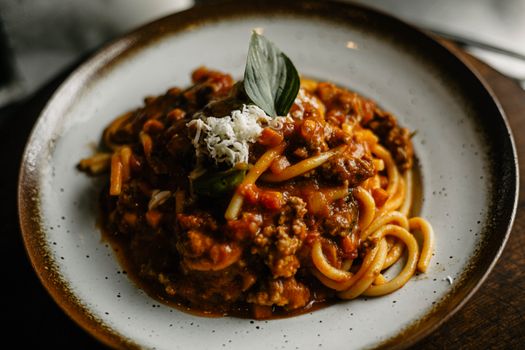
Photo: Ahmad salisu jaafar / Pexels
Italian
Gnocchi alla Sorrentina
The diets react (see scores below)
Common Ingredients
- potato gnocchi
- tomato sauce
- mozzarella
- Parmesan
- fresh basil
- garlic
- olive oil
Specific recipes may vary.
Incompatible with 6 of 11 diets
Diet Ratings
Gnocchi alla Sorrentina is fundamentally incompatible with a ketogenic diet. Potato gnocchi are made almost entirely from potatoes and flour — both high-carb ingredients that are explicitly excluded from keto. A single serving of potato gnocchi (roughly 200g) contains approximately 40-50g of net carbs, which alone can exceed the entire daily carb allowance for ketosis. The tomato sauce adds additional carbs from natural sugars. There is no meaningful way to consume this dish in a standard portion and remain in ketosis. The mozzarella, Parmesan, olive oil, basil, and garlic are keto-friendly individually, but they cannot offset the overwhelming carbohydrate load from the gnocchi itself.
Gnocchi alla Sorrentina contains two clear animal-derived dairy ingredients: mozzarella (a fresh cow's milk cheese) and Parmesan (an aged hard cheese made from cow's milk). Both are unambiguously non-vegan. The dish is otherwise plant-based — potato gnocchi, tomato sauce, basil, garlic, and olive oil are all vegan-friendly — but the cheeses are central to the dish's identity and cannot be considered incidental. A vegan adaptation is possible by substituting dairy-free mozzarella and Parmesan alternatives, but the traditional version as described is not vegan.
Gnocchi alla Sorrentina contains multiple non-paleo ingredients that place it firmly in the 'avoid' category. Potato gnocchi is a processed grain-adjacent product made from white potatoes combined with wheat flour, making it doubly problematic — white potatoes are already debated in paleo, and the wheat flour used to bind gnocchi is a clear grain exclusion. Mozzarella and Parmesan are dairy products, explicitly excluded from the paleo diet. While tomato sauce, fresh basil, garlic, and olive oil are all paleo-approved, they cannot redeem a dish whose structural components are fundamentally incompatible with paleo principles. This dish is a classic Italian comfort food built entirely around processed starch and dairy, two of paleo's core exclusions.
Gnocchi alla Sorrentina sits in a middle ground for the Mediterranean diet. The tomato sauce, fresh basil, garlic, and olive oil are strongly aligned with Mediterranean principles — these are core, encouraged ingredients. However, potato gnocchi are a refined, starchy carbohydrate with a high glycemic index, lacking the fiber and nutrient density of whole grains like farro, whole wheat pasta, or legumes that the Mediterranean diet prioritizes. The mozzarella and Parmesan add moderate saturated fat from dairy, which is acceptable in small amounts but not a cornerstone. This is a traditional Southern Italian dish, so it carries genuine regional heritage, but the refined potato-based dough and generous cheese topping push it toward 'caution' rather than a full endorsement. Enjoyed occasionally in modest portions with the olive oil and tomato base as the star, it fits the dietary pattern; as a frequent staple, it falls short.
Traditional Southern Italian (Campanian) cuisine regularly features potato gnocchi as a whole-food, home-made ingredient, and some Mediterranean diet scholars argue that traditional regional dishes — regardless of grain refinement — should be viewed favorably given their cultural context, modest portion norms, and accompanying vegetables and olive oil. From this perspective, the dish could be considered an acceptable moderate-frequency meal rather than a caution item.
Gnocchi alla Sorrentina is fundamentally incompatible with the carnivore diet. The dish is built almost entirely on plant-derived ingredients: potato gnocchi (starch/carbohydrate base), tomato sauce (plant), fresh basil (herb), garlic (plant), and olive oil (plant oil). While mozzarella and Parmesan are animal-derived dairy products, they are minor components of a dish whose entire foundation violates carnivore principles. There is no meaningful animal protein as the primary ingredient, and the carbohydrate load from potato gnocchi alone would disqualify it entirely.
Gnocchi alla Sorrentina contains multiple excluded ingredients that disqualify it from Whole30. Potato gnocchi is made from wheat flour (a grain), placing it squarely in the excluded grains category. Additionally, mozzarella and Parmesan are both dairy products, which are explicitly excluded. Even if the gnocchi were somehow grain-free, the dish would still be non-compliant due to the cheese. Furthermore, gnocchi itself falls under the 'no recreating pasta/noodles' rule (Rule 4), as it functions as a pasta-like dish. There is no compliant version of this dish in its traditional form.
Gnocchi alla Sorrentina contains multiple high-FODMAP ingredients that make it unsuitable during the elimination phase. Garlic is one of the highest-FODMAP foods tested by Monash University, rich in fructans, and is a core ingredient in the dish. Traditional potato gnocchi, while potato-based, typically contains wheat flour as a binder, making it a significant source of fructans. Mozzarella is generally low-FODMAP in small amounts (lactose is low in firm/fresh mozzarella depending on type), but fresh mozzarella contains moderate lactose and is used generously in this dish. The combination of garlic and wheat-containing gnocchi alone makes this dish a clear avoid during elimination. Even if garlic-infused oil were substituted for garlic, the wheat in standard gnocchi remains a major FODMAP barrier. Parmesan is low-FODMAP (aged, hard cheese, minimal lactose), and tomato sauce and basil are generally low-FODMAP in appropriate servings.
Gnocchi alla Sorrentina contains several DASH-compatible elements — olive oil, garlic, tomato sauce, and fresh basil align well with DASH principles (healthy fat, lycopene-rich tomatoes, anti-inflammatory herbs). However, the dish raises concerns on multiple fronts: (1) Potato gnocchi is a refined, high-glycemic carbohydrate with minimal fiber compared to whole grains emphasized by DASH. (2) Mozzarella and Parmesan together contribute significant saturated fat and sodium — standard mozzarella is a full-fat cheese, and Parmesan is notably high in sodium (~450mg per oz). (3) Commercially prepared tomato sauce often adds additional sodium, potentially pushing the dish well above DASH sodium targets per serving. The combination of refined starch, full-fat dairy cheeses, and sodium-laden sauce makes this a 'caution' dish — enjoyable occasionally in small, portion-controlled servings but not a DASH staple.
NIH DASH guidelines specify low-fat dairy and whole grains, which this dish does not meet. However, updated Mediterranean-DASH hybrid interpretations (e.g., MIND diet overlap) may be more permissive toward moderate full-fat cheese use and tomato-based dishes, and some DASH-oriented dietitians note that part-skim mozzarella with homemade low-sodium tomato sauce can make this dish considerably more DASH-compatible.
Gnocchi alla Sorrentina is heavily problematic for the Zone Diet primarily due to its potato gnocchi base. Potato gnocchi is a high-glycemic carbohydrate — potatoes are explicitly listed as an 'unfavorable' carb in Sears' Zone framework, and in dumpling/pasta form they deliver a dense, rapidly absorbed carb load. A typical serving of gnocchi (150-200g) delivers 30-40g of net carbs with minimal fiber buffering, spiking blood sugar and driving an insulin response contrary to Zone goals. The dish also lacks lean protein — the primary protein sources are mozzarella and Parmesan, which are high-fat dairy rather than lean protein blocks, making it very difficult to hit a 30% protein calorie target without severe portion manipulation. The fat profile is mixed: olive oil and the cheese provide some monounsaturated fat, but the mozzarella and Parmesan also contribute significant saturated fat. The tomato sauce, garlic, basil, and olive oil are genuinely Zone-favorable ingredients, but they cannot redeem the macro imbalance created by the gnocchi and cheese combination. To make this even marginally Zone-compliant would require drastically reducing the gnocchi portion to a few pieces as a minor carb block, adding a substantial lean protein (chicken, fish), and controlling cheese portions tightly — at which point you no longer have Gnocchi alla Sorrentina as a dish. As served in its traditional form, this dish skews heavily carb- and fat-dominant with inadequate lean protein, earning a low caution bordering on avoid.
Gnocchi alla Sorrentina presents a mixed anti-inflammatory profile. On the positive side, the dish contains several genuinely beneficial ingredients: tomato sauce provides lycopene and other antioxidants (especially when cooked, which increases lycopene bioavailability), fresh basil contributes flavonoids and anti-inflammatory polyphenols, garlic contains allicin and organosulfur compounds with well-documented anti-inflammatory effects, and olive oil (ideally extra virgin) delivers oleocanthal and monounsaturated fats that reduce inflammatory markers. These are all emphasized components of the anti-inflammatory diet. However, the dish's foundation — potato gnocchi — is a refined, high-glycemic carbohydrate that offers little fiber and can spike blood sugar, a recognized driver of inflammatory signaling. The full-fat mozzarella contributes saturated fat, and Parmesan, while used in smaller quantities, adds more. Full-fat dairy and its saturated fat content fall into the 'limit' category under anti-inflammatory guidelines. The net effect is a dish that pairs genuinely anti-inflammatory components with a refined-carb, dairy-heavy base — placing it firmly in 'caution' territory. It's not pro-inflammatory enough to avoid, but it lacks the fiber, omega-3s, and whole-food density to merit approval. Portion size and quality of ingredients (e.g., using EVOO, high-quality tomatoes, fresh basil) matter considerably here.
Some anti-inflammatory practitioners, including those aligned with Mediterranean diet principles, would rate this more favorably, arguing that the tomato-garlic-olive oil base is the signature of Mediterranean eating and that modest amounts of mozzarella (as traditionally used) do not meaningfully raise inflammatory markers in the context of an otherwise plant-forward diet. Conversely, stricter anti-inflammatory and low-glycemic protocols (such as those influenced by Dr. David Ludwig's glycemic load research) would rate this more harshly, pointing to potato gnocchi as a high-glycemic refined starch that undermines the beneficial components.
Gnocchi alla Sorrentina is a carbohydrate-dominant dish with very low protein density and minimal fiber. Potato gnocchi are made from refined potato starch and white flour, providing mostly simple carbohydrates that digest quickly and offer little nutritional value per calorie. The mozzarella and Parmesan contribute some protein and calcium, but not enough to meet the 15–30g per-meal protein target for GLP-1 patients — a standard serving likely delivers 10–14g protein at most. The dish is not fried and the tomato sauce adds modest lycopene and some micronutrients, while olive oil provides unsaturated fat, so it avoids the worst GLP-1 triggers. However, the high refined carbohydrate load, low fiber, and low protein density make it a poor fit as a standalone main for GLP-1 patients. It could be tolerated in a small portion as a side dish alongside a lean protein source, but as a primary meal it fails the nutrient-density-per-calorie standard central to GLP-1 dietary guidance.
*See how scores were generated at our methodology page.
Nutritional profile
Six traits that cut across every diet.
Fiber & Plants
How much whole-plant food and fiber it delivers.
Healthy Fats
The quality of its fats (unsaturated, omega-3).
Whole / Unprocessed
How close it is to its natural, unprocessed form.
Gut Gentle
How easy it is on digestion (low FODMAP, few irritants).
Low Glycemic
How little it spikes your blood sugar.
Protein Density
How much protein it packs per calorie.
Controversy Index
Higher controversy = more disagreement between diets.
Diet-Specific Tips
 Mediterranean — 5/10
View tips
- Potato gnocchi are refined, high-GI carbohydrates — not whole grain
- Tomato sauce, garlic, basil, and olive oil are core Mediterranean ingredients
- Mozzarella and Parmesan are moderate dairy — acceptable in small amounts but calorie-dense
- No protein source; lacks legumes, fish, or other Mediterranean-preferred proteins
- Authentic traditional Southern Italian dish with genuine regional heritage
- Overall dish is vegetable-forward in flavor profile but starch-heavy in composition
 DASH — 5/10
View tips
- Potato gnocchi is a refined carbohydrate — low fiber, not a whole grain as emphasized by DASH
- Mozzarella (ideally part-skim) and Parmesan contribute saturated fat and significant sodium
- Tomato sauce (commercial) adds additional sodium — homemade low-sodium sauce improves score
- Olive oil and garlic are DASH-positive ingredients
- Fresh basil provides phytonutrients with no sodium penalty
- Portion control is critical — a large serving pushes sodium and saturated fat beyond DASH limits
- Using part-skim mozzarella and low-sodium tomato sauce could raise score to 6-7
 Zone — 5/10
View tips
- Potato gnocchi is a high-glycemic carbohydrate explicitly unfavorable in Zone methodology
- Dense carb load with minimal fiber makes blood sugar control difficult
- No lean protein source — mozzarella and Parmesan are high-fat dairy, not lean protein blocks
- Macro ratio skews heavily toward carbs and fat, far from 40/30/30
- Tomato sauce, olive oil, garlic, and basil are Zone-favorable ingredients but insufficient to balance the dish
- Significant saturated fat from full-fat mozzarella and Parmesan
- Dish is structurally incompatible with Zone ratios without complete reconstruction
 Anti-Inflammatory — 5/10
View tips
- Potato gnocchi: refined high-glycemic carbohydrate, low fiber — pro-inflammatory potential
- Tomato sauce: rich in lycopene (enhanced by cooking) and antioxidants — anti-inflammatory
- Mozzarella: full-fat dairy with saturated fat — falls in 'limit' category
- Parmesan: additional saturated fat, though used in small quantities
- Garlic: allicin and organosulfur compounds with strong anti-inflammatory evidence
- Fresh basil: flavonoids and polyphenols — anti-inflammatory
- Olive oil: oleocanthal and MUFAs — strongly anti-inflammatory when EVOO is used
- No omega-3 source, no legumes, no whole grains — missed anti-inflammatory opportunities
 GLP-1 Friendly — 4/10
View tips
- Very low protein density — does not meet 15–30g per meal target without significant modification
- Potato gnocchi are refined carbohydrates with minimal fiber, low nutrient density per calorie
- Mozzarella and Parmesan add saturated fat and modest protein but not enough to rehabilitate the dish nutritionally
- Tomato sauce and olive oil are GLP-1-friendly components but insufficient to offset the carbohydrate base
- Not fried and not spicy — avoids the most acute GLP-1 side effect triggers
- Could be repurposed as a small side dish paired with grilled chicken or fish to meet protein targets
- Poor choice as a standalone main given reduced appetite and the need for every calorie to count