Italian
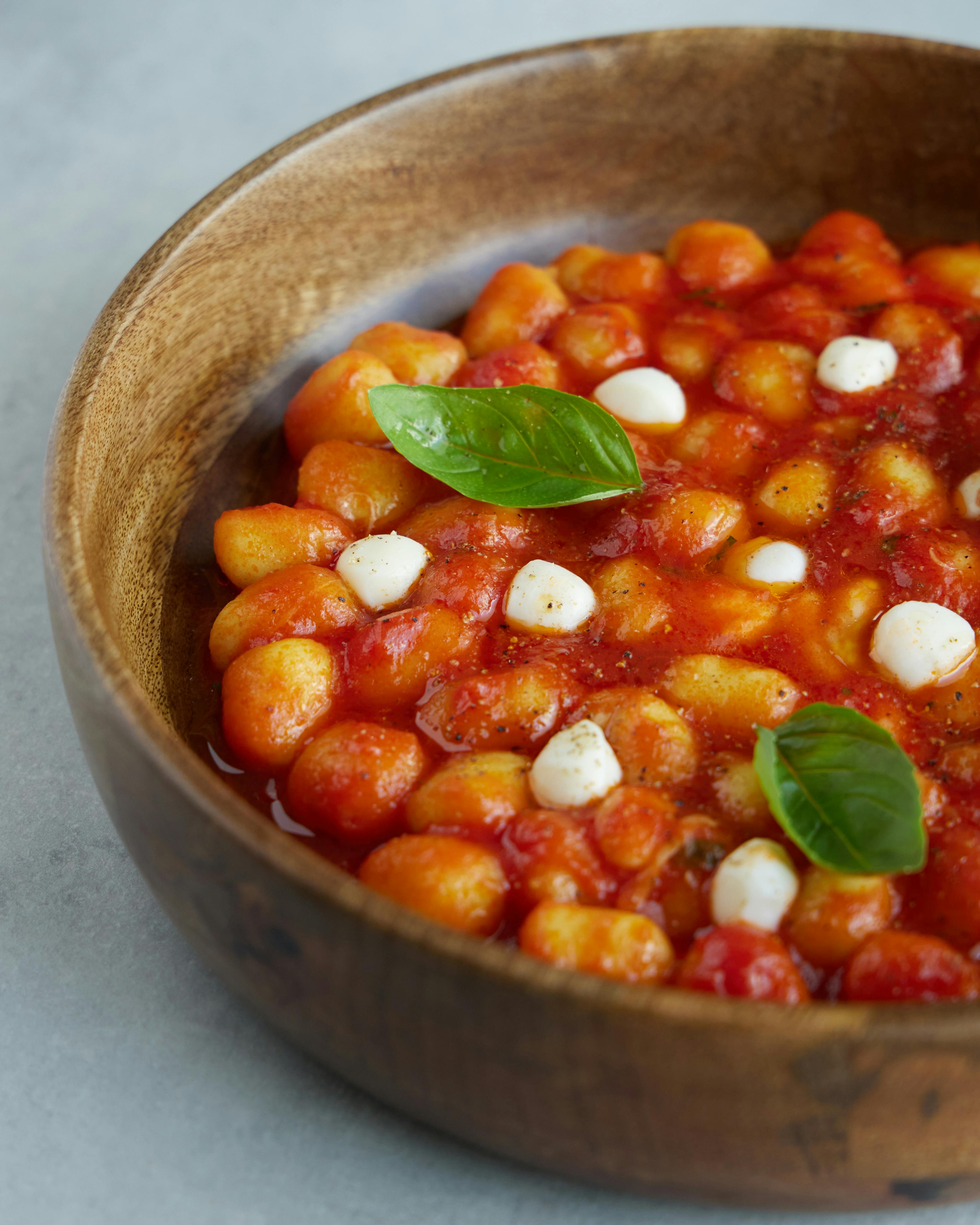
Gnocchi with Tomato Sauce
The diets react (see scores below)
Common Ingredients
- potato gnocchi
- crushed tomatoes
- fresh basil
- garlic
- olive oil
- Parmesan
- onion
Specific recipes may vary.
Incompatible with 7 of 11 diets
Diet Ratings
Potato gnocchi is made almost entirely from potatoes and flour — both of which are extremely high in net carbs and completely incompatible with ketosis. A standard serving of gnocchi (about 200g) delivers roughly 40-50g of net carbs on its own, immediately exceeding or maxing out the entire daily keto carb budget. The tomato sauce adds additional net carbs from the crushed tomatoes and onion. While olive oil, Parmesan, garlic, and fresh basil are individually keto-friendly ingredients, they cannot offset the dominant carbohydrate load from the gnocchi base. This dish has no meaningful fat content to offset the carbs either, making it doubly incompatible with keto macros. There is no reasonable portion size at which potato gnocchi becomes keto-compatible.
This dish contains Parmesan cheese, a dairy product derived from cow's milk, which is a clear animal-derived ingredient that disqualifies it from vegan compliance. Additionally, traditional Parmesan (Parmigiano-Reggiano) is made with animal rennet, adding a further animal-derived component. All other ingredients — potato gnocchi (assuming egg-free, though some recipes include eggs), crushed tomatoes, fresh basil, garlic, olive oil, and onion — are plant-based. The dish could be made vegan by omitting the Parmesan or substituting a plant-based alternative, and by ensuring the gnocchi is egg-free.
Gnocchi with Tomato Sauce contains multiple non-paleo ingredients that make it clearly incompatible with the diet. Potato gnocchi is made from white potatoes combined with wheat flour and eggs — the flour alone is a grain product and a hard exclude under all paleo frameworks. Parmesan is a dairy product, excluded across virtually all paleo interpretations. While some individual ingredients are paleo-friendly (crushed tomatoes, fresh basil, garlic, olive oil, onion), the dish as a whole is defined by its two core non-paleo components: a grain-based pasta and dairy cheese. There is no meaningful way to make this dish paleo-compliant without fundamentally changing what it is.
Gnocchi with tomato sauce features several Mediterranean-friendly ingredients — olive oil, crushed tomatoes, fresh basil, garlic, and onion are all staples of the diet. However, potato gnocchi is a refined, starchy dumpling made primarily from white potato and refined white flour, placing it in the category of refined carbohydrates that modern Mediterranean diet guidelines discourage in favor of whole grains. The dish lacks a meaningful protein source and is carbohydrate-heavy. The tomato-based sauce, olive oil base, and fresh aromatics are genuinely aligned with Mediterranean principles, which prevents a lower score, but the refined grain/starch component and absence of legumes, fish, or other encouraged proteins limit its rating. Parmesan in moderate amounts is acceptable as a dairy component. Overall, this is a culturally Italian dish that sits at the edge of Mediterranean alignment — enjoyable occasionally but not a dietary staple.
Traditional Italian and broader Mediterranean culinary practice does include potato and pasta dishes regularly, and some Mediterranean diet frameworks (particularly those rooted in Southern Italian tradition) treat gnocchi similarly to pasta — acceptable in moderate portions as part of a varied, plant-rich diet. The emphasis on whole tomatoes, olive oil, and fresh herbs in the sauce is seen by some practitioners as sufficient to qualify this as a Mediterranean-style meal.
Gnocchi with Tomato Sauce is entirely plant-based and completely incompatible with the carnivore diet. Every single ingredient — potato gnocchi (starch and carbohydrates), crushed tomatoes (plant fruit), fresh basil (herb), garlic (plant), olive oil (plant oil), and onion (plant) — is explicitly excluded from the carnivore diet. The only ingredient with any animal connection is Parmesan cheese, a dairy product that would itself be debated, but it is a minor component in an otherwise 100% plant-based dish. There is no animal protein source whatsoever. This dish represents the antithesis of carnivore eating: high-carbohydrate, plant-derived, with plant oils and multiple plant compounds.
This dish contains two excluded ingredients. First, potato gnocchi is a grain-based pasta/noodle product — even though gnocchi is primarily potato, it almost universally contains wheat flour, placing it squarely in the excluded grain category. Additionally, Whole30 explicitly prohibits all dairy, and Parmesan is a dairy cheese. The tomato sauce base (crushed tomatoes, fresh basil, garlic, olive oil, onion) would be entirely compliant on its own, but the two core components of this dish — the gnocchi and the cheese — make it incompatible with the program.
This dish contains two major high-FODMAP ingredients that make it unsuitable during the elimination phase: garlic (high in fructans at any amount) and onion (high in fructans, one of the highest-FODMAP foods tested by Monash). These alone are sufficient to classify the dish as avoid. Additionally, potato gnocchi is typically made with wheat flour alongside potato, making it a fructan source as well — unless specifically made with a gluten-free flour blend. Parmesan is low-FODMAP in standard servings (hard cheeses are low in lactose). Crushed tomatoes are low-FODMAP at around 100g. Fresh basil and olive oil are low-FODMAP. However, the combination of garlic and onion as core sauce ingredients is a definitive disqualifier with no safe workaround at standard serving sizes.
Gnocchi with tomato sauce sits in DASH's middle ground. The tomato-based sauce with fresh vegetables (crushed tomatoes, garlic, onion, fresh basil) and olive oil aligns well with DASH principles — tomatoes are rich in potassium and lycopene, and olive oil is a heart-healthy fat. However, potato gnocchi is a refined, starchy carbohydrate with limited fiber compared to whole-grain pasta, which DASH explicitly favors. Parmesan cheese, while used in small quantities for flavor, is high in sodium (roughly 400-450mg per ounce) and saturated fat. The dish also lacks a significant protein source, which limits its nutritional completeness by DASH standards. Sodium can escalate quickly depending on how much Parmesan is used and whether the gnocchi is store-bought (often contains added sodium). As prepared at home with modest cheese, this can fit within DASH limits, but it requires careful portion control and sodium awareness.
NIH DASH guidelines favor whole grains over refined starches and low-fat dairy over aged cheeses like Parmesan. However, some updated DASH-aligned clinicians note that the Mediterranean-style tomato-olive oil base is strongly cardioprotective, and if Parmesan is used sparingly as a flavoring (5-10g), the overall dish profile may be acceptable — particularly for non-hypertensive individuals following standard rather than low-sodium DASH targets.
Gnocchi with tomato sauce is highly problematic for the Zone Diet on multiple fronts. Potato gnocchi is made primarily from potatoes and white flour — both are high-glycemic carbohydrates that Dr. Sears explicitly classifies as 'unfavorable' and largely avoids. Potatoes in particular are singled out by Sears as a food to eliminate from the Zone due to their high glycemic load. The dish is almost entirely carbohydrate-based with no meaningful protein source (Parmesan provides minimal protein at typical garnish quantities), making it nearly impossible to hit the 40/30/30 ratio without radical reconstruction. The olive oil and fresh tomatoes, basil, garlic, and onion are all Zone-friendly components, but they cannot rescue a dish whose foundation is built on two of the most unfavorable carbohydrate sources in Zone terminology. Even careful portioning cannot solve the structural problem: a small portion of gnocchi provides very high glycemic carbs with essentially no protein to balance them. This dish would spike insulin significantly, which is precisely what the Zone Diet is designed to prevent.
Gnocchi with tomato sauce is a mixed dish from an anti-inflammatory standpoint. On the positive side, crushed tomatoes are rich in lycopene (a potent antioxidant and carotenoid), fresh basil and garlic are well-regarded anti-inflammatory herbs, and olive oil provides oleocanthal and monounsaturated fats. These components collectively deliver meaningful antioxidant and polyphenol content. However, potato gnocchi are a refined, high-glycemic carbohydrate with minimal fiber — essentially white potato and flour — which can spike blood sugar and promote low-grade inflammation when consumed regularly. Parmesan is an aged full-fat dairy product; while used in modest amounts here as a finishing cheese (reducing concern), full-fat dairy is in the 'limit' category. The dish lacks any protein, omega-3 source, or significant fiber to buffer the glycemic load. For a generally healthy person eating this occasionally, the anti-inflammatory components partially offset the refined carb concerns. For those managing inflammatory conditions or metabolic issues, the glycemic impact of gnocchi is a more significant concern.
Some anti-inflammatory practitioners (including those influenced by autoimmune protocol frameworks) would flag both the nightshade tomatoes and the high glycemic index potato base as potentially problematic for sensitive individuals. Conversely, traditional Mediterranean diet researchers like Dr. Walter Willett would likely view this dish more favorably given the tomato-garlic-olive oil base, arguing that whole food context and cultural eating patterns matter more than isolating refined carb concerns.
Gnocchi with tomato sauce is a carbohydrate-dominant dish with very little protein per serving. Potato gnocchi is made primarily from refined starch, offering minimal fiber and essentially no meaningful protein contribution. The crushed tomato sauce with garlic, basil, and onion adds modest fiber and beneficial micronutrients (lycopene, vitamin C), and olive oil provides healthy unsaturated fat — both positives. A small sprinkle of Parmesan adds a trace of protein and flavor but not enough to meaningfully shift the macronutrient profile. The dish is relatively easy to digest and low in fat, which works in its favor for GLP-1 tolerability. However, for GLP-1 patients eating significantly reduced portions, this meal delivers mostly empty starch calories with negligible protein — directly working against the #1 dietary priority of hitting 100-120g+ protein daily and preserving muscle mass. If consumed, it should be treated as a small side dish paired with a substantial lean protein source (e.g., grilled chicken, shrimp, white fish) and ideally made with a legume-based or protein-enriched gnocchi if available.
*See how scores were generated at our methodology page.
Nutritional profile
Six traits that cut across every diet.
Fiber & Plants
How much whole-plant food and fiber it delivers.
Healthy Fats
The quality of its fats (unsaturated, omega-3).
Whole / Unprocessed
How close it is to its natural, unprocessed form.
Gut Gentle
How easy it is on digestion (low FODMAP, few irritants).
Low Glycemic
How little it spikes your blood sugar.
Protein Density
How much protein it packs per calorie.
Controversy Index
Higher controversy = more disagreement between diets.
Diet-Specific Tips
 Mediterranean — 5/10
View tips
- Potato gnocchi is a refined starch, not a whole grain — conflicts with modern Mediterranean grain guidance
- Tomato-based sauce with olive oil, garlic, basil, and onion are core Mediterranean ingredients
- No protein source (no legumes, fish, poultry, or eggs) makes this nutritionally incomplete as a main
- Parmesan is an acceptable moderate dairy addition
- Culturally rooted in Italian tradition, which overlaps with but is not identical to Mediterranean diet guidelines
- Dish is minimally processed aside from the gnocchi itself
 DASH — 5/10
View tips
- Potato gnocchi is a refined carbohydrate — DASH prefers whole grains with higher fiber content
- Tomato-based sauce with garlic, onion, and olive oil strongly aligns with DASH principles
- Parmesan is high in sodium (~400-450mg/oz) and saturated fat — portion size is critical
- No significant lean protein source, limiting DASH nutritional completeness
- Store-bought gnocchi often contains added sodium; homemade scores higher
- Olive oil is a DASH-approved fat; no tropical oils or trans fats present
- Overall sodium can be managed with careful Parmesan portioning and low-sodium crushed tomatoes
 Anti-Inflammatory — 5/10
View tips
- Crushed tomatoes: high in lycopene and antioxidants — anti-inflammatory positive
- Garlic and fresh basil: well-established anti-inflammatory herbs
- Olive oil: source of oleocanthal and heart-healthy monounsaturated fats
- Potato gnocchi: refined, high-glycemic carbohydrate with minimal fiber — pro-inflammatory concern
- Parmesan: full-fat dairy in the 'limit' category, though typically used in small amounts
- No omega-3 source or significant fiber to buffer glycemic response
- No protein component to moderate blood sugar impact
 GLP-1 Friendly — 4/10
View tips
- Very low protein — potato gnocchi contributes negligible protein per serving, failing the #1 GLP-1 dietary priority
- Low fiber — refined potato starch base provides minimal fiber, not supporting the 25-30g daily target
- Low fat — olive oil and a small amount of Parmesan keep fat content moderate and manageable for GLP-1 GI tolerability
- Easy to digest — soft texture and simple ingredients are gentle on a slowed-gastric-emptying digestive system
- Tomato sauce adds micronutrient value (lycopene, vitamin C) and modest fiber from crushed tomatoes and onion
- Nutrient density per calorie is poor — mostly starch calories with little nutritional return for reduced-appetite patients
- Portion-sensitive — could be acceptable as a very small side dish only if paired with a high-protein main