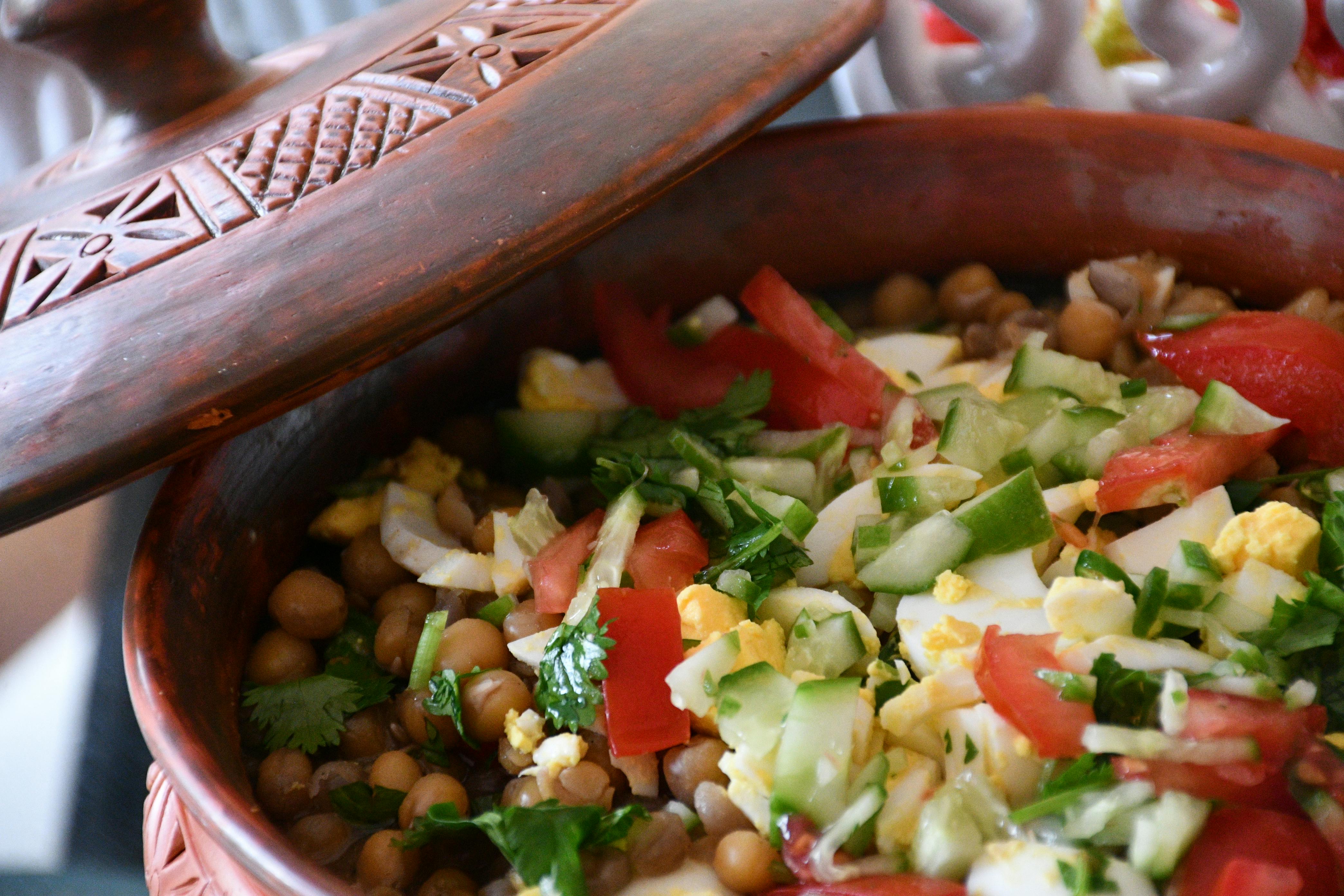
Photo: SAIF SIDDIQUE / Pexels
Vietnamese
Gỏi Gà (Vietnamese Chicken Salad)
The diets react (see scores below)
Common Ingredients
- chicken
- cabbage
- carrots
- mint
- cilantro
- fish sauce
- lime juice
- peanuts
Specific recipes may vary.
Incompatible with 4 of 11 diets
Diet Ratings
Gỏi Gà contains several keto-friendly components (chicken, cabbage, fresh herbs, fish sauce, lime juice) but also includes two problematic ingredients. Carrots add moderate net carbs (~4-5g per 50g serving) and peanuts, while protein- and fat-rich, are legumes with notable carb content (~5-6g net carbs per 28g). A typical serving of this salad could easily contain 15-25g net carbs depending on portion size — particularly from carrots, peanuts, and any added sugar often found in traditional Vietnamese dressings. With careful portioning (reduced carrots, limited peanuts, no added sugar in the dressing), this dish can fit within a daily keto budget, but it requires active management rather than free consumption.
Strict keto practitioners would flag peanuts as a legume (not a true nut) with a less favorable carb-to-fat ratio and potential for overconsumption, and some would eliminate carrots entirely as an orange/starchy vegetable. Lazy keto or 'dirty keto' followers may approve a moderate portion without modification, counting net carbs as acceptable within a 50g daily limit.
Gỏi Gà contains two distinct animal-derived ingredients that disqualify it from a vegan diet. Chicken is animal flesh (poultry), and fish sauce is made from fermented fish — both are explicitly excluded under vegan rules. The remainder of the dish (cabbage, carrots, mint, cilantro, lime juice, peanuts) is fully plant-based, but the presence of multiple animal products makes this clearly incompatible with veganism.
Gỏi Gà contains two clear non-paleo ingredients that disqualify it from approval. Peanuts are legumes, firmly excluded from the paleo diet with strong consensus across all major paleo authorities. Fish sauce, while derived from fish, is a fermented, processed condiment that typically contains added salt — a processed additive excluded under strict paleo rules. The remaining ingredients (chicken, cabbage, carrots, mint, cilantro, lime juice) are all paleo-approved whole foods. Because the dish as traditionally prepared includes peanuts (a legume) and fish sauce (processed/salted), it falls into the avoid category. The dish could be made paleo-compliant by omitting peanuts and substituting fish sauce with a paleo-friendly alternative, but as standardly prepared it does not qualify.
Gỏi Gà is a light, vegetable-forward salad with lean poultry, which aligns reasonably well with Mediterranean principles. The abundant cabbage, carrots, fresh herbs (mint, cilantro), and peanuts provide strong plant-based elements. Lime juice replaces vinegar as an acid, functioning similarly to Mediterranean dressings. Peanuts, while not traditional Mediterranean (where almonds and walnuts dominate), are legumes and fit the nut/legume emphasis. Chicken is acceptable in moderation under Mediterranean guidelines. The main deviations are the absence of olive oil (fish sauce and lime juice dress the salad instead of EVOO) and the use of fish sauce (a processed condiment, though minimally so and used in small quantities). Overall, this is a healthy, whole-food dish but falls short of a full 'approve' due to the missing olive oil foundation and chicken being a moderation food rather than a staple.
Some Mediterranean diet interpreters would score this higher, arguing that the spirit of the diet — abundant vegetables, lean protein, nuts, and fresh herbs with an acidic dressing — is fully met here, and that olive oil is an implementation detail rather than a strict requirement when overall dietary pattern is plant-forward and minimally processed.
Gỏi Gà is fundamentally incompatible with the carnivore diet. While it does contain chicken and fish sauce (animal-derived components), the dish is overwhelmingly plant-based: cabbage, carrots, mint, cilantro, lime juice, and peanuts are all excluded plant foods. Peanuts are legumes, a particularly prohibited category. The vegetables and herbs form the structural basis of the salad, not mere seasoning. Even if the chicken were extracted, the dish as defined cannot be adapted — it is a plant-forward salad with protein, not an animal-forward meal with garnish. Fish sauce in isolation would be acceptable, but here it serves as dressing for prohibited ingredients.
Gỏi Gà contains peanuts, which are legumes and explicitly excluded on the Whole30 program. All other ingredients — chicken, cabbage, carrots, mint, cilantro, fish sauce, and lime juice — are Whole30-compliant. However, the presence of peanuts makes this dish non-compliant as written. To make it Whole30-compatible, simply omit the peanuts or substitute with compliant toppings like toasted coconut flakes or sunflower seeds.
Most ingredients in Gỏi Gà are low-FODMAP: chicken is a safe protein, cabbage is low-FODMAP at moderate servings (up to 75g per Monash), carrots are low-FODMAP, mint and cilantro are low-FODMAP herbs, fish sauce is low-FODMAP in typical condiment amounts (2 tablespoons), and lime juice is low-FODMAP. The primary concern is peanuts, which are low-FODMAP at a small serving (28g/10 peanuts per Monash) but become high-FODMAP at larger amounts due to GOS content. In a Vietnamese salad, peanuts are often used as a generous topping, making portion control critical. Cabbage can also become moderate-FODMAP at larger serves. Overall, this dish can be low-FODMAP with careful portioning of peanuts, but the typical restaurant or home serving may exceed safe thresholds.
Monash rates peanuts as low-FODMAP at 28g (approximately 10 peanuts), but clinical FODMAP practitioners often flag peanuts as a practical risk during elimination because generous garnishing in dishes like Gỏi Gà routinely exceeds this threshold. Some practitioners recommend omitting peanuts entirely during the strict elimination phase to avoid ambiguity.
Gỏi Gà contains many DASH-friendly components: lean chicken (excellent protein), cabbage and carrots (vegetables rich in fiber and potassium), fresh herbs (mint and cilantro add micronutrients with negligible sodium), and lime juice. However, fish sauce is a significant sodium concern — it contains approximately 1,400–1,500mg sodium per tablespoon, and even modest amounts used in a typical Vietnamese dressing can push a single serving toward or beyond the DASH daily sodium limit of 2,300mg (and well beyond the 1,500mg low-sodium DASH target). Peanuts add healthy unsaturated fats and magnesium, but contribute some calories and require portion awareness. The overall dish is nutritionally balanced and not heavily processed, but the fish sauce sodium load prevents a full approval under standard DASH guidelines.
NIH DASH guidelines flag high-sodium condiments like fish sauce as incompatible with the diet's core sodium restriction. However, updated clinical interpretation notes that if fish sauce is used sparingly (1–2 tsp rather than tablespoons) or substituted with a reduced-sodium version, the dish's overall nutritional profile — lean protein, abundant vegetables, healthy fats — aligns well with DASH principles, and some DASH-oriented dietitians would approve it with that modification.
Gỏi Gà is an excellent Zone Diet candidate. The dish naturally aligns with Zone principles across all three macronutrient categories. Chicken (ideally poached or shredded skinless breast) is a textbook Zone lean protein source. Cabbage and carrots are low-glycemic, high-fiber vegetables that count favorably as Zone carbohydrate blocks — cabbage especially is very low in net carbs. Mint and cilantro add polyphenols with negligible macro impact, supporting Sears' anti-inflammatory emphasis. Fish sauce and lime juice provide flavor with minimal caloric disruption. The primary concern is peanuts: while they provide monounsaturated fat (favorable), they also carry protein and carbohydrate content that must be accounted for in block calculations, and are technically a legume with some omega-6 load. Portion control on peanuts is important to keep the fat block in range without overshooting calories or skewing the omega-6 balance. Overall, this dish requires only modest portioning awareness and fits Zone ratios naturally without significant modification.
Gỏi Gà is a strong anti-inflammatory dish overall. Lean chicken (white meat especially) is a moderate-category protein — acceptable and not pro-inflammatory. Cabbage and carrots provide antioxidants, fiber, and carotenoids (beta-carotene in carrots, sulforaphane precursors and vitamin C in cabbage), all associated with reduced inflammatory markers. Fresh mint and cilantro are herbs with demonstrated anti-inflammatory and antioxidant polyphenol content. Lime juice contributes vitamin C and flavonoids. Fish sauce, while high in sodium, is a fermented condiment used in small amounts and introduces beneficial bioactive compounds; sodium excess is a concern only at high intake. Peanuts provide some monounsaturated fats, resveratrol, and polyphenols, though they are legumes with a modest omega-6 contribution — still considered a net positive in anti-inflammatory frameworks when consumed in reasonable amounts. The dish is unprocessed, contains no refined carbohydrates, added sugars, trans fats, or inflammatory seed oils. It aligns well with the whole-foods, vegetable-forward, herb-rich principles of anti-inflammatory eating. The main caveats are the sodium load from fish sauce and peanuts' omega-6 content, but neither is significant enough to downgrade this dish.
Gỏi Gà is a strong GLP-1-friendly dish. Shredded chicken breast provides a lean, high-quality protein source (roughly 25-30g per typical serving), directly supporting the #1 priority of muscle preservation during weight loss. Cabbage and carrots contribute meaningful fiber, micronutrients, and high water content, supporting digestion and hydration — both critical on GLP-1 medications. Mint and cilantro add nutrients with negligible calories. The dressing of fish sauce and lime juice is low in fat and calories, adding flavor without the heavy, greasy profile that worsens GLP-1 side effects. The main caution is peanuts: they add beneficial unsaturated fat and a small protein boost, but also increase calorie and fat density per serving. In a traditional portion, peanuts are used as a garnish (10-15g), which is acceptable; a heavy-handed pour raises the fat load. The dish is light, easy to digest, nutrient-dense per calorie, and works well in small servings — all strongly aligned with GLP-1 dietary needs. No fried components, no refined grains, no added sugar, no carbonation.
Some GLP-1-focused dietitians flag fish sauce for its high sodium content, which can contribute to water retention and may interact with the dehydration risk already present on these medications; they recommend requesting reduced fish sauce or diluting the dressing. A minority also caution that raw cabbage in large quantities can cause bloating and gas in patients already experiencing GLP-1-related GI sensitivity, and may suggest lightly massaging or briefly blanching the cabbage to improve tolerability.
*See how scores were generated at our methodology page.
Nutritional profile
Six traits that cut across every diet.
Fiber & Plants
How much whole-plant food and fiber it delivers.
Healthy Fats
The quality of its fats (unsaturated, omega-3).
Whole / Unprocessed
How close it is to its natural, unprocessed form.
Gut Gentle
How easy it is on digestion (low FODMAP, few irritants).
Low Glycemic
How little it spikes your blood sugar.
Protein Density
How much protein it packs per calorie.
Controversy Index
Higher controversy = more disagreement between diets.
Diet-Specific Tips
 Keto — 5/10
View tips
- Chicken is an excellent lean keto protein source
- Cabbage is low net carb and keto-friendly in typical portions
- Carrots add meaningful net carbs and should be minimized or omitted
- Peanuts are legumes with moderate net carbs (~5-6g per 28g) — portion control essential
- Traditional Vietnamese dressings often include sugar — verify or substitute
- Fresh herbs (mint, cilantro) are negligible in net carbs
- Fish sauce and lime juice are low-carb condiments but lime juice adds trace carbs at scale
- Overall net carbs per serving likely 15-25g — manageable but requires portion discipline
 Mediterranean — 6/10
View tips
- Abundant vegetables (cabbage, carrots) strongly align with Mediterranean plant-forward emphasis
- Fresh herbs (mint, cilantro) add micronutrient density consistent with Mediterranean eating
- Peanuts provide healthy fats and protein in the legume/nut tradition
- Chicken is a moderate-consumption food under Mediterranean guidelines, not a staple
- No olive oil used — a core Mediterranean fat source is absent from this dish
- Fish sauce is minimally processed and used in small quantities, acceptable
- No refined grains, added sugars, or red meat — avoids key Mediterranean pitfalls
 Low-FODMAP — 6/10
View tips
- Peanuts are low-FODMAP at ≤28g but high-FODMAP at larger servings due to GOS — a common risk in this dish
- Chicken is a safe, high-confidence low-FODMAP protein
- Fish sauce is low-FODMAP at standard condiment serving sizes (up to 2 tbsp)
- Cabbage is low-FODMAP at moderate portions (up to 75g) but portion awareness needed
- Lime juice and fresh herbs (mint, cilantro) are low-FODMAP
- No onion or garlic listed, which is a significant positive for this Vietnamese dish
 DASH — 6/10
View tips
- Fish sauce is very high in sodium (~1,400–1,500mg/tbsp), the primary DASH concern
- Lean chicken breast is an ideal DASH protein source
- Cabbage and carrots provide fiber, potassium, and magnesium consistent with DASH goals
- Fresh herbs (mint, cilantro) and lime juice add flavor with negligible sodium — a positive substitution strategy
- Peanuts provide heart-healthy unsaturated fats and magnesium but require portion control
- Reducing or replacing fish sauce with low-sodium soy sauce or coconut aminos would raise the score to 8–9
- No saturated fat, added sugar, or processed ingredients beyond the condiment
 Zone — 8/10
View tips
- Skinless chicken is an ideal Zone lean protein source (~7g per block, easily portioned)
- Cabbage and carrots are favorable low-glycemic Zone carbohydrates high in fiber, reducing net carb count
- Mint and cilantro contribute polyphenols aligned with Sears' anti-inflammatory dietary goals
- Fish sauce and lime juice are essentially calorie-free flavor enhancers with negligible macro impact
- Peanuts provide predominantly monounsaturated fat but must be carefully portioned — they add protein and carbs in addition to fat, requiring block recalculation
- No high-glycemic ingredients, refined carbohydrates, saturated fat sources, or processed components present
- Natural dish composition closely mirrors a Zone-balanced meal without requiring significant modification
 Anti-Inflammatory — 8/10
View tips
- Lean chicken protein — anti-inflammatory moderate category
- Cabbage and carrots rich in antioxidants, fiber, and carotenoids
- Fresh mint and cilantro — anti-inflammatory polyphenols and flavonoids
- Lime juice provides vitamin C and flavonoids
- Peanuts offer monounsaturated fats and resveratrol with modest omega-6
- Fish sauce adds sodium but used in small amounts as a fermented condiment
- No refined carbohydrates, added sugars, trans fats, or seed oils
- Whole-food, herb-rich preparation consistent with anti-inflammatory principles
 GLP-1 Friendly — 8/10
View tips
- High lean protein from chicken breast (~25-30g per serving) directly supports muscle preservation
- Cabbage and carrots provide fiber, micronutrients, and high water content
- Fish sauce and lime dressing is low-fat and low-calorie — avoids the greasy profile that worsens nausea
- Peanuts are portion-sensitive: a light garnish is fine, a heavy serving adds significant fat and calories
- No fried components, refined grains, added sugars, or carbonation
- Light and easy to digest — well-suited to slowed gastric emptying on GLP-1s
- Works well in small servings, fitting the 4-5 small meal pattern
- High sodium from fish sauce warrants awareness given GLP-1 dehydration risk
- Raw cabbage may cause gas/bloating in GI-sensitive patients — individual tolerance varies