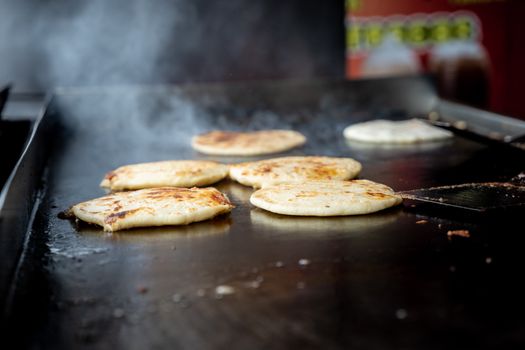
Photo: Noé Villalta Photography / Pexels
The diets react (see scores below)
Common Ingredients
- masa harina
- shredded chicken
- refried beans
- queso fresco
- salsa
- lettuce
- Mexican crema
Specific recipes may vary.
Incompatible with 6 of 11 diets
Diet Ratings
Gorditas are fundamentally incompatible with a ketogenic diet. The shell is made from masa harina (nixtamalized corn flour), which is a high-carb grain product. A single gordita shell made from masa harina contains approximately 25-35g of net carbs on its own. Compounding the problem, refried beans add another significant carb load (roughly 10-15g net carbs per serving). Together, these two ingredients alone can exceed the entire daily net carb allowance for strict keto (20g) or push well past the upper limit (50g) in a single snack. The remaining ingredients — shredded chicken, queso fresco, Mexican crema, lettuce, and salsa — are largely keto-friendly, but they cannot offset the carb-dense foundation of this dish. There is no practical portion size that makes a traditional gordita keto-compatible.
This gordita contains multiple animal-derived ingredients that are clearly incompatible with a vegan diet. Shredded chicken is direct animal flesh. Queso fresco is a fresh dairy cheese. Mexican crema is a dairy cream product. These three ingredients alone make this dish firmly non-vegan. A vegan version of gorditas is entirely possible — the masa harina shell is plant-based, and fillings could be replaced with seasoned jackfruit or mushrooms, plant-based cheese, and cashew crema — but as described, this dish must be avoided.
Gorditas are fundamentally incompatible with the paleo diet. The base of the dish is masa harina, a processed corn flour, which is a grain and explicitly excluded from paleo. Refried beans are a legume, also strictly forbidden. Queso fresco is dairy, and Mexican crema is dairy as well — both excluded. This dish has three independent, high-confidence paleo violations (grains, legumes, dairy) at its core. The shredded chicken, salsa, and lettuce are the only paleo-compliant components, and they are peripheral toppings rather than the foundation of the dish.
Gorditas are a traditional Mexican snack made from masa harina (nixtamalized corn dough), which is a whole-grain corn product with cultural parallels to Mediterranean flatbreads. The filling here includes shredded chicken (a moderate-consumption protein consistent with Mediterranean guidance), refried beans (a legume — a Mediterranean diet staple), and fresh vegetables like lettuce and salsa. These elements align reasonably well with Mediterranean principles. However, several components complicate the picture: masa harina is a refined/processed corn flour, not a whole grain in the Mediterranean tradition; Mexican crema is a high-fat dairy product exceeding Mediterranean dairy norms; queso fresco adds moderate saturated fat; and refried beans are often prepared with lard. The dish is also fried or griddled in a way that may not use olive oil. The overall profile is moderate — not a Mediterranean staple, but not deeply contradictory if prepared with lean chicken, olive oil, and minimized dairy.
Some modern Mediterranean diet interpreters would treat this more favorably, noting that legumes (beans), lean poultry, vegetables, and corn-based whole foods mirror the diet's plant-forward, whole-ingredient philosophy. Traditional Mediterranean cuisine includes various flatbreads and stuffed corn-adjacent preparations; from this lens, gorditas with beans and chicken could be seen as broadly compatible in moderate consumption.
Gorditas are fundamentally incompatible with the carnivore diet. The dish is built on masa harina (ground corn dough), a plant-based grain product that forms the structural base of the food. Beyond the corn shell, the filling contains refried beans (legumes), salsa (plant-based), and lettuce (vegetable) — all strictly excluded plant foods. While shredded chicken and Mexican crema are animal-derived, they are minor components buried within an overwhelmingly plant-based dish. The queso fresco is a debated dairy product on carnivore, but even that point is moot given the overall composition. This dish cannot be modified into a carnivore-compatible form without fundamentally deconstructing it into something unrecognizable as a gordita.
Gorditas contain multiple excluded ingredients that make them clearly non-compliant with Whole30. First, masa harina is a corn-based flour (dried nixtamalized corn), making it a grain and explicitly excluded. Second, gorditas are structurally a corn dough pocket — essentially a thick flatbread — which falls squarely under the Rule 4 prohibition on recreating baked goods and grain-based bread/wrap formats (wraps, tortillas, etc.). Third, refried beans are legumes, which are excluded. Fourth, queso fresco is dairy (cheese), which is excluded. Fifth, Mexican crema is a dairy product (similar to sour cream), also excluded. Even if individual toppings like shredded chicken, salsa, and lettuce are compliant, the foundational structure and multiple core ingredients of this dish are all non-compliant.
Gorditas as described contain multiple high-FODMAP ingredients that make the dish unsuitable during the elimination phase. Refried beans are the primary offender — they are high in GOS (galacto-oligosaccharides) and fructans, and even small servings (more than a few tablespoons) are high-FODMAP. Queso fresco is a soft, fresh cheese with significant lactose content and should be avoided during elimination. Mexican crema is a high-fat sour cream product that still contains meaningful lactose and is typically consumed in moderate amounts that exceed safe thresholds. Salsa frequently contains onion and/or garlic (both high in fructans), making commercial or traditional preparations high-FODMAP. Masa harina (corn-based) is itself low-FODMAP, and shredded chicken, lettuce are safe. However, the combination of refried beans, queso fresco, crema, and likely-garlicky/oniony salsa creates a dish with at least three to four independently high-FODMAP components, making it clearly unsuitable for the elimination phase without significant modification.
Gorditas present a mixed DASH diet profile. The masa harina (corn-based dough) is a whole grain option that provides some fiber and is relatively low in sodium on its own. Shredded chicken is a lean protein well-aligned with DASH principles. Lettuce and salsa contribute vegetables. However, several ingredients raise concerns: refried beans are nutritious (high in fiber, potassium, magnesium) but commercially prepared versions are typically high in sodium and often contain lard (saturated fat); queso fresco adds moderate sodium and saturated fat from full-fat dairy; and Mexican crema is a high-fat, high-saturated-fat dairy product that DASH explicitly limits. The combination of these three problematic ingredients — refried beans (sodium/saturated fat), queso fresco (sodium/saturated fat), and crema (saturated fat) — pushes this dish into 'caution' territory. With modifications such as using low-sodium homemade refried beans, omitting the crema or substituting low-fat plain yogurt, and reducing queso fresco, gorditas could be made more DASH-compatible.
NIH DASH guidelines emphasize limiting saturated fat and sodium from dairy and processed foods, which targets the crema and commercial refried beans here. However, updated clinical interpretations note that beans are among the most DASH-friendly foods for their fiber, potassium, and magnesium content — when prepared with minimal sodium and no lard, refried beans can be strongly DASH-positive, and some practitioners argue the overall dish can fit DASH with simple substitutions.
Gorditas present a mixed Zone profile. The masa harina shell is a corn-based, moderate-to-high glycemic carbohydrate that Dr. Sears classifies as an 'unfavorable' carb — similar to corn tortillas. However, unlike pure white bread or sugar, masa does provide some fiber and is not nutritionally empty. The shredded chicken is a lean, Zone-favorable protein. Refried beans add both protein and carbohydrates but are often prepared with lard, adding saturated fat. Queso fresco is a relatively low-fat cheese and manageable in small amounts. Mexican crema is a source of saturated fat that tips the fat profile away from the preferred monounsaturated Zone fats. Salsa and lettuce are Zone-positive additions — low-glycemic, polyphenol-rich vegetables. The overall dish skews carb-heavy relative to Zone's 40/30/30 target: a typical gordita has a thick masa shell that dominates the carbohydrate load with a high-glycemic profile. Protein from chicken is present but may be insufficient relative to carbs without careful portioning. Fat comes largely from saturated sources (crema, lard in beans) rather than monounsaturated. With careful modifications — smaller masa shell, generous chicken, skipping or minimizing crema, using well-made refried beans without lard — a gordita can be nudged toward Zone balance, but as typically prepared it falls in caution territory.
Some Zone practitioners apply the 'favorable vs. unfavorable' distinction loosely, arguing that small portions of masa in the context of a protein-and-vegetable-rich filling can be block-balanced. Dr. Sears' later writings (The OmegaRx Zone, Zone Perfect Meals) emphasize anti-inflammatory eating and polyphenols over strict glycemic categorization, which could elevate salsa and vegetable components as positives that partially offset the masa's glycemic impact. Under this lens, a small gordita with abundant chicken, extra salsa, and no crema might score a 5-6.
Gorditas present a mixed anti-inflammatory profile. The masa harina (nixtamalized corn dough) is a whole-grain-derived carbohydrate with moderate fiber and some antioxidants, and nixtamalization improves nutrient bioavailability — it's not a refined grain in the same way white flour is, but it is still a processed carbohydrate with a moderate glycemic load. Shredded chicken is a lean protein, which fits well within the anti-inflammatory 'moderate' category. Refried beans are a genuine anti-inflammatory positive — legumes are rich in fiber, polyphenols, and have been associated with reduced inflammatory markers. Salsa (tomato, chili, onion, garlic) adds meaningful anti-inflammatory compounds including lycopene, capsaicin, and allicin. Lettuce adds minimal but harmless fiber and micronutrients. The problematic elements are queso fresco and Mexican crema: both are full-fat dairy products. Queso fresco is relatively low in fat compared to aged cheeses, but Mexican crema is a high-fat soured cream that contributes saturated fat — a component the anti-inflammatory framework recommends limiting. The dish is also typically fried or cooked on a griddle with oil (often vegetable oil), which could add pro-inflammatory omega-6 fats if seed oils are used. Overall, this is a moderately anti-inflammatory dish when made with lean chicken, with beans providing genuine benefit, offset by full-fat dairy and refined-carbohydrate concerns.
Mainstream anti-inflammatory nutrition (including Dr. Weil's approach) would view this dish fairly neutrally — beans and lean chicken are positives, and full-fat dairy in modest amounts is a 'limit, not avoid' category. However, stricter anti-inflammatory and AIP-adjacent practitioners would flag both the high glycemic load of masa-based dishes and the full-fat dairy (crema in particular) as meaningful inflammatory triggers, especially for individuals with autoimmune conditions or insulin resistance.
Gorditas are thick masa (corn dough) pockets stuffed with savory fillings. With shredded chicken as the protein, they provide a moderate protein contribution, but the masa shell is a refined-starch base that is low in fiber and protein relative to its caloric density. Refried beans add meaningful fiber and plant protein, partially offsetting the masa's shortcomings. Queso fresco is relatively lower in fat than many Mexican cheeses but still adds saturated fat. Mexican crema is high in fat and low in nutritional value, functioning similarly to sour cream — it adds calories without protein or fiber payoff, and its fat content can worsen GLP-1 nausea and reflux. Salsa and lettuce are positive additions (water content, micronutrients, negligible calories). The overall dish is portion-sensitive: a single small gordita with chicken and beans is a reasonable moderate-calorie snack, but the masa shell makes it carbohydrate-heavy relative to protein, and the crema adds fat that may trigger GI discomfort. The dish is not fried in the traditional street-food sense (gorditas are griddled), which avoids the worst fat loading scenario, though some preparations do involve pan-frying in oil. Overall: acceptable in moderation, with modifications (reduce or skip crema, ensure adequate chicken filling, keep portion to one small gordita).
Some GLP-1-focused dietitians would rate this more favorably when beans and chicken are the dominant fillings, arguing that the bean-plus-lean-protein combination meaningfully supports fiber and protein targets in a small-volume serving. Others caution that masa-based foods are poorly tolerated by some GLP-1 patients due to the dense, doughy texture slowing gastric emptying further, potentially worsening nausea — individual GI tolerance varies significantly.
*See how scores were generated at our methodology page.
Nutritional profile
Six traits that cut across every diet.
Fiber & Plants
How much whole-plant food and fiber it delivers.
Healthy Fats
The quality of its fats (unsaturated, omega-3).
Whole / Unprocessed
How close it is to its natural, unprocessed form.
Gut Gentle
How easy it is on digestion (low FODMAP, few irritants).
Low Glycemic
How little it spikes your blood sugar.
Protein Density
How much protein it packs per calorie.
Controversy Index
Higher controversy = more disagreement between diets.
Diet-Specific Tips
 Mediterranean — 4/10
View tips
- Refried beans are a Mediterranean-friendly legume component, but often contain lard
- Shredded chicken is an acceptable moderate-consumption protein
- Masa harina is a processed corn flour, not a whole grain endorsed by Mediterranean guidelines
- Mexican crema is a high-fat dairy product beyond typical Mediterranean dairy moderation
- Queso fresco adds saturated fat, acceptable only in small amounts
- Fresh salsa and lettuce are positive plant-based additions
- Preparation fat (likely not olive oil) is not aligned with Mediterranean primary fat source
 DASH — 5/10
View tips
- Masa harina provides whole grain fiber and is minimally processed
- Shredded chicken is a lean protein consistent with DASH guidelines
- Refried beans offer fiber, potassium, and magnesium but commercial versions are typically high in sodium and may contain lard (saturated fat)
- Queso fresco contributes full-fat dairy sodium and saturated fat, both limited on DASH
- Mexican crema is high in saturated fat, a food category DASH explicitly restricts
- Salsa and lettuce are DASH-positive vegetable components
- Overall sodium load from combined ingredients (beans, cheese, crema, salsa) likely exceeds DASH snack-level targets
- Dish can be significantly improved by using low-sodium homemade beans, omitting crema, and reducing cheese portion
 Zone — 4/10
View tips
- Masa harina is a moderate-to-high glycemic 'unfavorable' Zone carbohydrate derived from corn
- Thick masa shell makes the dish carbohydrate-dominant, disrupting 40/30/30 ratio
- Shredded chicken is a lean, Zone-favorable protein source
- Mexican crema adds saturated fat rather than preferred monounsaturated fat
- Refried beans often contain lard, adding saturated fat; also add carb load
- Salsa and lettuce are Zone-positive low-glycemic vegetables with polyphenols
- Queso fresco is relatively low-fat and manageable in small portions
- Can be modified toward Zone compliance but requires significant portioning adjustments
 Anti-Inflammatory — 5/10
View tips
- Shredded chicken is a lean, anti-inflammatory-friendly protein
- Refried beans are a genuine anti-inflammatory positive — high fiber, polyphenols, reduced CRP association
- Masa harina is a processed corn carbohydrate with moderate glycemic load — not a whole grain per se
- Mexican crema contributes saturated fat, a component to limit on anti-inflammatory diets
- Queso fresco adds modest saturated fat; less problematic than aged high-fat cheeses
- Salsa ingredients (tomato, chili, garlic, onion) are anti-inflammatory positives
- Cooking method (griddle/frying) may introduce pro-inflammatory seed oils depending on preparation
 GLP-1 Friendly — 5/10
View tips
- Masa shell is low in protein and fiber relative to caloric load
- Shredded chicken provides lean protein — a positive factor
- Refried beans contribute fiber and plant protein — a meaningful positive
- Mexican crema adds saturated fat with no protein or fiber benefit; recommend omitting or minimizing
- Griddled preparation avoids worst-case fried-food fat loading
- Dense doughy texture may worsen GI side effects in sensitive patients
- Portion-sensitive: one small gordita is manageable; multiple servings become problematic
- Queso fresco adds moderate saturated fat — acceptable in small amounts