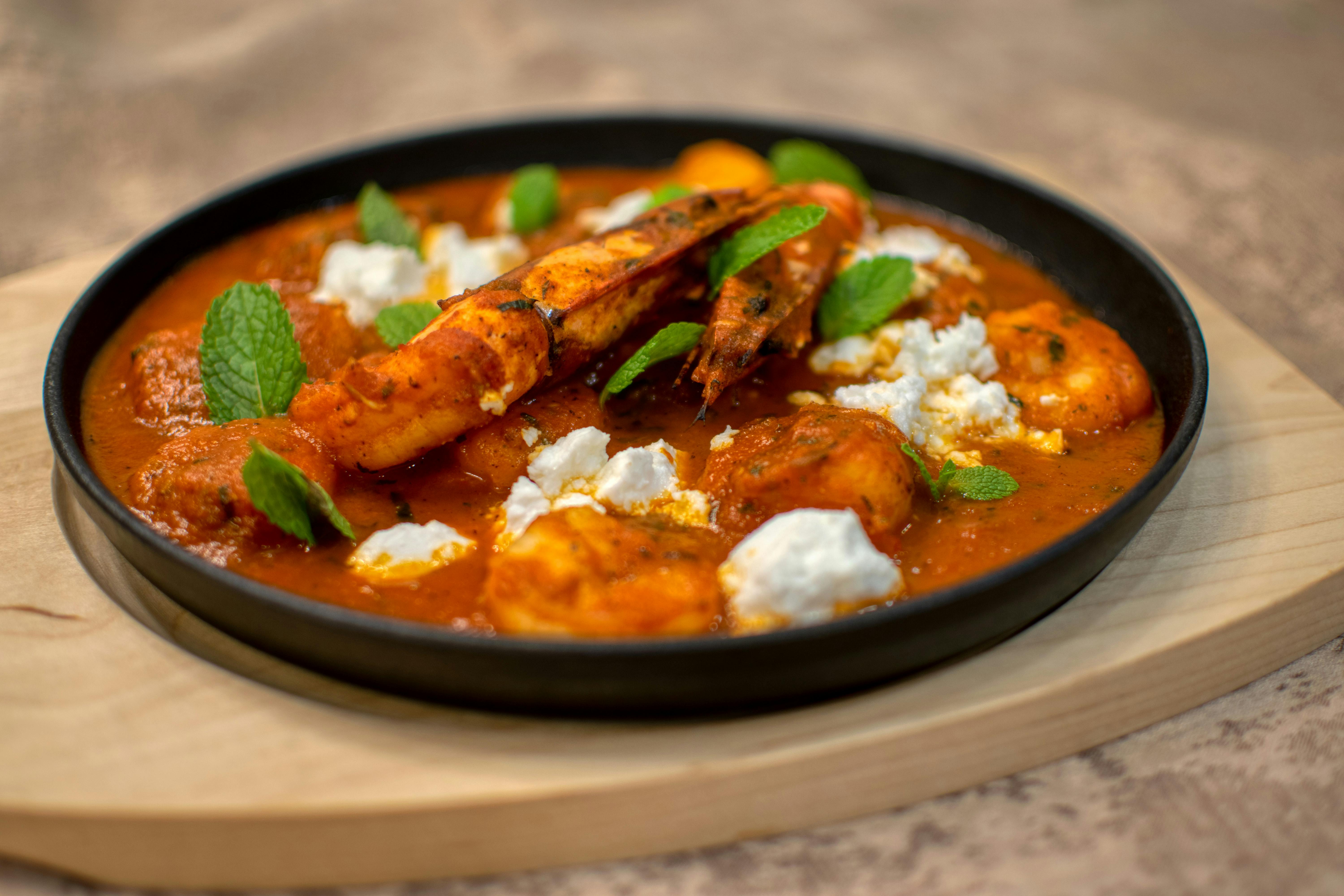
Photo: Cristian Mihaila / Pexels
Mediterranean
Shrimp Saganaki
The diets react (see scores below)
Common Ingredients
- shrimp
- tomatoes
- feta cheese
- ouzo
- garlic
- olive oil
- parsley
- red pepper flakes
Specific recipes may vary.
Incompatible with 5 of 11 diets
Diet Ratings
Shrimp Saganaki is mostly keto-friendly but has two notable concerns: ouzo (an anise-flavored liqueur) contains significant sugar and carbs, and tomatoes contribute moderate net carbs. Shrimp is an excellent zero-carb protein, feta cheese is a good high-fat dairy, olive oil and garlic are keto staples, and parsley/red pepper flakes add negligible carbs. The ouzo is the primary problem — a standard pour (30-60ml) can contain 5-10g of sugar/carbs, and it's a core flavor component. Tomatoes add another 3-5g net carbs per serving. Together, these can push a serving toward the upper edge of daily carb limits. With ouzo omitted or replaced with a dry white wine used sparingly (or just skipped), and tomatoes kept minimal, the dish becomes more keto-compatible. As traditionally prepared, it warrants caution rather than approval.
Some strict keto practitioners would rate this 'avoid' outright, arguing that any alcohol-based ingredient with residual sugar has no place in ketosis, and that cooking does not fully eliminate the sugar content of ouzo. They would also flag tomatoes as a borderline vegetable that should be minimized or excluded in strict protocols.
Shrimp Saganaki contains multiple animal products that are strictly excluded from a vegan diet. Shrimp is seafood (an animal product), and feta cheese is a dairy product made from sheep's or goat's milk. Both are core, non-negotiable violations of vegan principles. The remaining ingredients — tomatoes, ouzo, garlic, olive oil, parsley, and red pepper flakes — are all plant-based, but the presence of two distinct animal-derived ingredients makes this dish entirely incompatible with a vegan diet.
Shrimp Saganaki contains two clear non-paleo ingredients that make it incompatible with the diet. Feta cheese is a dairy product, universally excluded under paleo guidelines. Ouzo is an anise-flavored liqueur that, while alcohol is a caution-level item in some paleo circles, is a processed spirit with added sugars and flavorings placing it firmly in avoid territory. The remaining ingredients — shrimp, tomatoes, garlic, olive oil, parsley, and red pepper flakes — are all paleo-approved. However, the dish as traditionally prepared cannot be considered paleo due to the feta and ouzo. Modifications (omitting feta and ouzo) would make it paleo-compliant.
Shrimp Saganaki is a quintessential Greek dish that aligns excellently with Mediterranean diet principles. Shrimp is a lean seafood protein fully encouraged multiple times weekly. Tomatoes, garlic, parsley, and olive oil are core Mediterranean staples consumed daily. Feta cheese, while a dairy product typically consumed in moderation, is traditional to Greek cuisine and used here as a flavor accent rather than the main component. Ouzo contributes minimal calories and is a culturally authentic ingredient. The dish is whole-food, minimally processed, and plant-forward in its supporting ingredients.
Some stricter Mediterranean diet clinical guidelines flag feta as a moderate-use dairy and may recommend limiting overall cheese intake; traditionalist Greek practice, however, embraces feta freely as part of the regional dietary heritage, and the quantities used in saganaki are typically small enough to remain within acceptable moderation thresholds.
Shrimp Saganaki is fundamentally incompatible with the carnivore diet. While shrimp is an approved animal protein, the dish is overwhelmingly built around plant-based ingredients: tomatoes, garlic, olive oil, parsley, and red pepper flakes are all excluded plant foods. Ouzo is an anise-flavored alcohol — a plant-derived processed beverage with no place on carnivore. Feta cheese is a debated dairy product, but its presence here is a minor concern compared to the extensive plant ingredients. The dish as a whole cannot be modified into a carnivore-compliant meal without essentially deconstructing it entirely — only the shrimp itself would survive scrutiny.
Shrimp Saganaki contains two explicitly excluded ingredients: feta cheese (dairy) and ouzo (alcohol). Feta is a dairy product with no Whole30 exception, and ouzo is an alcoholic spirit, also strictly excluded. Even though the base of shrimp, tomatoes, garlic, olive oil, parsley, and red pepper flakes is fully compliant, the presence of these two excluded ingredients makes this dish incompatible with the Whole30 program in its traditional form.
Shrimp Saganaki contains two significant high-FODMAP ingredients that make it unsuitable during the elimination phase. Garlic is one of the highest-FODMAP foods tested by Monash University, containing substantial fructans even in very small amounts — it cannot be made safe by portion reduction at any realistic serving. Feta cheese, while lower in lactose than many soft cheeses, is rated by Monash as low-FODMAP only at a 40g serving; in a dish like saganaki where feta is a starring ingredient, portions typically exceed this threshold significantly. Ouzo is anise-flavored liqueur and while alcohol itself is not a FODMAP, ouzo's FODMAP status is not well-established and anise/fennel compounds may be problematic. The remaining ingredients — shrimp, tomatoes (canned or fresh at standard servings), olive oil, parsley, and red pepper flakes — are all low-FODMAP and safe. However, the garlic alone is disqualifying for the elimination phase. A low-FODMAP adaptation would require substituting garlic with garlic-infused oil and keeping feta within the 40g serving limit.
Shrimp Saganaki contains several DASH-friendly ingredients — shrimp is a lean protein, tomatoes provide potassium and lycopene, olive oil is a heart-healthy unsaturated fat, and garlic and parsley are nutrient-dense. However, two ingredients create friction with strict DASH guidelines. Feta cheese is a full-fat, relatively high-sodium dairy product (a typical 1.5 oz serving contains ~400-500mg sodium), which conflicts with DASH's emphasis on low-fat dairy and sodium restriction. Ouzo (anise-flavored spirit) is an alcoholic ingredient that DASH does not endorse; NHLBI DASH guidelines do not incorporate alcohol as a recommended component. The dish is not inherently poor, but feta's sodium load and saturated fat content, combined with alcohol, push it into caution territory. Prepared with reduced feta, this dish could score higher. Shrimp itself is acceptable — it is low in saturated fat and calories, though moderately high in dietary cholesterol, which is a secondary concern under current DASH interpretation.
NIH DASH guidelines specify low-fat dairy and sodium restriction, which feta violates; however, updated Mediterranean-DASH hybrid approaches (e.g., MIND diet) recognize feta in small portions as compatible with cardiovascular-protective eating patterns, and some DASH clinicians note that fermented cheeses like feta may have modest benefits that offset their sodium content when portion-controlled.
Shrimp Saganaki is a strong Zone meal candidate with several favorable elements. Shrimp is an excellent lean protein source, fitting cleanly into Zone protein blocks at roughly 7g protein per ounce with minimal fat. Tomatoes provide low-glycemic carbohydrate blocks rich in polyphenols (lycopene), which aligns with Sears' anti-inflammatory emphasis. Olive oil is the ideal Zone fat — monounsaturated and anti-inflammatory. Garlic and parsley add polyphenol value with negligible macro impact. The main Zone considerations are feta cheese and ouzo. Feta adds saturated fat and some protein, which complicates the lean-protein profile but remains manageable in typical recipe quantities (1-2 oz serving). Ouzo introduces alcohol and a small amount of sugar/starch, though cooking burns off most alcohol content; the residual carbohydrate contribution is modest. With portion control — a moderate shrimp portion (~3-4 oz), limited feta, and olive oil measured to 1-2 fat blocks — this dish can achieve a reasonable 40/30/30 approximation, especially when served alongside additional low-glycemic vegetables to complete the carb blocks.
Feta cheese is a source of saturated fat, which early Zone writings (Enter the Zone) more strictly limited in favor of monounsaturated fats. However, Sears' later anti-inflammatory work (The OmegaRx Zone, Zone Perfect Meals in Minutes) takes a more nuanced view of saturated fat, particularly from dairy, making feta more acceptable in modest portions. Some strict Zone practitioners would flag this as a caution dish purely due to the feta and ouzo.
Shrimp Saganaki is a Mediterranean dish with a generally favorable anti-inflammatory profile, pulled toward 'caution' primarily by two ingredients: feta cheese and ouzo. On the positive side, olive oil is a cornerstone anti-inflammatory fat rich in oleocanthal; tomatoes provide lycopene and other antioxidants; garlic is well-supported as anti-inflammatory; red pepper flakes contain capsaicin, a known anti-inflammatory compound; and parsley contributes flavonoids and vitamin C. Shrimp itself is a lean protein with some omega-3 content, though lower than fatty fish, and contains astaxanthin, a potent antioxidant carotenoid. The negatives: feta is a full-fat dairy cheese — not strictly avoided in anti-inflammatory frameworks but flagged as a 'limit' food due to saturated fat content, though its fermented nature and lower fat content relative to aged hard cheeses offer partial mitigation. Ouzo (anise-flavored spirit) introduces alcohol that is not red wine, placing it in the 'limit to avoid' category per anti-inflammatory guidelines — though the cooking process burns off most alcohol, residual amounts and the spirit's general categorization lower the score. Overall, this is a dish with strong Mediterranean bones that is modestly compromised by feta and ouzo. Prepared with restraint on the cheese and with the ouzo largely cooked off, it sits comfortably at the upper end of caution.
Some anti-inflammatory practitioners, particularly those aligned with Dr. Weil's broader Mediterranean framework, would approve this dish given that the overall ingredient profile is Mediterranean and anti-inflammatory — olive oil, tomatoes, garlic, and spices dominate, and feta in modest quantities is a traditional Mediterranean food. Conversely, stricter anti-inflammatory protocols (and AIP-adjacent approaches) would flag both the full-fat dairy and alcohol content more harshly, potentially scoring it lower in the caution range.
Shrimp Saganaki has a genuinely strong protein foundation — shrimp is a lean, high-protein seafood that aligns well with GLP-1 priorities. Tomatoes add fiber, hydration, and micronutrients, and olive oil provides heart-healthy unsaturated fat in moderate amounts. However, two ingredients create meaningful concerns. Ouzo is an anise-flavored spirit, and even small amounts used in cooking retain some alcohol content unless the dish is flamed or simmered long enough to fully cook it off — alcohol is flagged as an avoid category. Feta cheese adds flavor and some protein but also contributes saturated fat and sodium, which can compound bloating and GI discomfort. Red pepper flakes may worsen reflux or nausea in sensitive patients. The dish is not fried and is tomato-based rather than cream-based, which works in its favor, but the combination of alcohol residue risk, moderate saturated fat from feta, and spice make this a caution rather than an approve. Prepared at home with ouzo fully cooked off, feta used sparingly, and red pepper flakes kept minimal, it can trend toward the higher end of the caution range.
Some GLP-1-focused dietitians would rate this higher, arguing that the alcohol in ouzo is largely volatilized during cooking and the dish's lean protein and Mediterranean fat profile outweigh the feta concerns. Others are more conservative about any dish with alcohol as an ingredient and would flag it regardless of cooking method, given that alcohol tolerance often decreases on GLP-1 medications and even trace amounts may exacerbate nausea in some patients.
*See how scores were generated at our methodology page.
Nutritional profile
Six traits that cut across every diet.
Fiber & Plants
How much whole-plant food and fiber it delivers.
Healthy Fats
The quality of its fats (unsaturated, omega-3).
Whole / Unprocessed
How close it is to its natural, unprocessed form.
Gut Gentle
How easy it is on digestion (low FODMAP, few irritants).
Low Glycemic
How little it spikes your blood sugar.
Protein Density
How much protein it packs per calorie.
Controversy Index
Higher controversy = more disagreement between diets.
Diet-Specific Tips
 Keto — 5/10
View tips
- Ouzo contains sugar and carbohydrates, adding 5-10g net carbs per serving
- Tomatoes contribute 3-5g net carbs per serving
- Shrimp is a zero-carb, high-quality protein — strongly keto-positive
- Feta cheese provides fat and protein with minimal carbs
- Olive oil is an ideal keto fat source
- Combined carb load may approach 10-15g net carbs per serving, requiring budget management
- Dish can be modified (reduce/omit ouzo, limit tomatoes) to improve keto compatibility
 Mediterranean — 9/10
View tips
- Shrimp is a lean seafood protein aligned with recommended 2-3 times weekly fish/seafood intake
- Olive oil as the primary fat source is a core Mediterranean staple
- Tomatoes, garlic, and parsley are whole plant-based ingredients strongly encouraged
- Feta cheese is a traditional Greek dairy used in moderation as a flavoring accent
- Ouzo is an authentic regional ingredient contributing negligible nutritional concern
- No processed foods, refined grains, or added sugars present
- Dish is minimally processed and whole-food based
 DASH — 5/10
View tips
- Shrimp is a DASH-approved lean protein, low in saturated fat
- Feta cheese is full-fat and high in sodium (~400-500mg per 1.5 oz), conflicting with DASH low-fat dairy and sodium goals
- Olive oil and tomatoes are core DASH/heart-healthy ingredients
- Ouzo (alcohol) is not endorsed by NHLBI DASH guidelines
- Garlic, parsley, and red pepper flakes are nutrient-dense, sodium-free flavor enhancers
- Overall sodium content of the dish could easily approach or exceed 600-800mg per serving depending on portion of feta
- Reducing feta quantity or substituting with a lower-sodium cheese would improve DASH compatibility
 Zone — 7/10
View tips
- Shrimp is an ideal lean Zone protein — low fat, high protein density
- Tomatoes are favorable low-glycemic Zone carbohydrate blocks with polyphenol benefits
- Olive oil is the gold-standard Zone fat — monounsaturated and anti-inflammatory
- Feta adds saturated fat and protein, requiring portion moderation to keep fat profile clean
- Ouzo contributes minimal residual carbohydrate after cooking but adds a mild glycemic consideration
- Garlic, parsley, and red pepper flakes contribute polyphenols with negligible macro impact
- Dish may need supplemental low-glycemic vegetables to complete carbohydrate blocks for a full Zone meal
 Anti-Inflammatory — 6/10
View tips
- Extra virgin olive oil provides oleocanthal and monounsaturated fats with strong anti-inflammatory credentials
- Tomatoes contribute lycopene and polyphenols; garlic and red pepper flakes are well-supported anti-inflammatory spices
- Shrimp is a lean protein with modest omega-3 content and astaxanthin (antioxidant carotenoid)
- Feta is a full-fat dairy — a 'limit' food in anti-inflammatory frameworks due to saturated fat, though fermentation and moderate use are partially mitigating
- Ouzo is a distilled spirit (not red wine), placing it in the 'limit/avoid' alcohol category — though most alcohol is cooked off during preparation
- Parsley adds flavonoids and vitamin C as a garnish/herb
 GLP-1 Friendly — 5/10
View tips
- Shrimp is a lean high-protein seafood — strong GLP-1 alignment
- Ouzo introduces alcohol risk even if partially cooked off
- Feta adds saturated fat and sodium — may worsen bloating
- Red pepper flakes may trigger reflux or nausea in sensitive patients
- Tomatoes contribute fiber, hydration, and micronutrients
- Olive oil provides unsaturated fat in moderate amounts
- Not fried and not cream-based — favorable texture and fat profile
- Home preparation allows ingredient adjustment to improve suitability