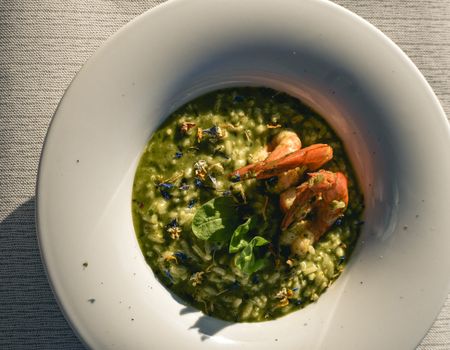
Photo: Marilena Baltzaki / Pexels
Mediterranean
Spanakorizo
The diets react (see scores below)
Common Ingredients
- spinach
- white rice
- onion
- dill
- lemon
- olive oil
- chicken broth
- scallions
Specific recipes may vary.
Incompatible with 6 of 11 diets
Diet Ratings
Spanakorizo is a Greek spinach and rice dish where white rice is the primary carbohydrate base. A standard serving contains roughly 30-45g of net carbs from the white rice alone, which can single-handedly consume or exceed the entire daily net carb allowance on a ketogenic diet. White rice is a refined grain with virtually no fiber to offset its carb load, making it fundamentally incompatible with ketosis. The remaining ingredients — spinach, onion, dill, lemon juice, olive oil, and scallions — are largely keto-friendly, but they cannot compensate for the rice. This dish is not salvageable in its traditional form without completely replacing the rice with a low-carb substitute such as cauliflower rice.
Spanakorizo (Greek spinach rice) is otherwise a fully plant-based dish, but this version explicitly lists chicken broth as an ingredient. Chicken broth is an animal-derived product made by simmering chicken bones and/or meat, making it incompatible with a vegan diet. All other ingredients — spinach, white rice, onion, dill, lemon, olive oil, and scallions — are wholly plant-based. A simple substitution of vegetable broth or water would make this dish vegan-compliant and, in fact, quite nutritious.
Spanakorizo is a Greek spinach and rice dish. The core problem is white rice, which is a grain and explicitly excluded from the paleo diet. All other ingredients — spinach, onion, dill, lemon, olive oil, and scallions — are paleo-compliant. Chicken broth is generally acceptable if made without additives or excessive salt. However, white rice is the dish's defining ingredient and cannot be substituted out; it makes up roughly half the dish by volume. This is not a borderline case of a trace ingredient — rice is structurally central to Spanakorizo, making the dish incompatible with paleo principles.
Paul Jaminet's Perfect Health Diet, widely respected in ancestral health circles, classifies white rice as a 'safe starch' on the grounds that it is low in anti-nutrients (no gluten, minimal lectins once cooked) compared to other grains. Under this framework, Spanakorizo would be largely acceptable given its otherwise clean ingredient list. Some modern paleo practitioners and the Primal Blueprint also take a more relaxed stance on white rice for lean, active individuals.
Spanakorizo is a traditional Greek spinach and rice dish that is largely plant-based and Mediterranean in character. The abundant spinach, olive oil, lemon, dill, and aromatics are all exemplary Mediterranean ingredients. However, the use of white rice rather than a whole grain like brown rice or farro slightly reduces its alignment with modern Mediterranean diet guidelines, which emphasize whole grains. The chicken broth is a minor concern as it introduces processed/animal-based elements, though it is used as a cooking liquid rather than a primary ingredient. Overall, this dish is nutritious, vegetable-forward, and deeply rooted in Greek culinary tradition, making it a solid choice with a small caveat around the refined grain.
Traditional Greek home cooking frequently uses white rice in dishes like spanakorizo, and some Mediterranean diet researchers who emphasize adherence to actual Greek dietary patterns (rather than idealized whole-grain guidelines) would fully approve this dish. The large quantity of spinach and olive oil more than compensates for the white rice in the view of traditionalists.
Spanakorizo is a Greek spinach and rice dish that is almost entirely plant-based. Every single ingredient — spinach, white rice, onion, dill, lemon, olive oil, and scallions — is derived from plants and is explicitly excluded from the carnivore diet. The only marginally animal-adjacent ingredient is chicken broth, which in its pure form would be carnivore-approved, but here it serves merely as a cooking liquid in an otherwise fully plant-based dish. There is no animal protein, no animal fat, and no qualifying animal product of substance. This dish is fundamentally incompatible with carnivore principles at every level.
Spanakorizo contains white rice, which is a grain explicitly excluded from the Whole30 program. All grains — including rice — are prohibited for the full 30 days. The remaining ingredients (spinach, onion, dill, lemon, olive oil, scallions) are fully compliant, and chicken broth is compliant as long as it contains no added sugar, MSG (now allowed), or other excluded ingredients. However, the presence of white rice makes this dish non-compliant regardless of how clean the other ingredients are.
Spanakorizo contains two major high-FODMAP ingredients that make it unsuitable during the elimination phase. Onion is one of the highest-fructan foods tested by Monash University and is high-FODMAP at any culinary amount — even small quantities cooked into a dish contribute significant fructans. Chicken broth (unless certified low-FODMAP or homemade without onion/garlic) almost universally contains onion and/or garlic, adding further fructan load. White rice is low-FODMAP and safe. Spinach is low-FODMAP at standard servings (up to 75g). Scallions (green tops only) are low-FODMAP, but the white bulb portions are high in fructans. Dill, lemon juice, and olive oil are all low-FODMAP. The dish as traditionally prepared cannot be made low-FODMAP without substituting onion (e.g., with the green tops of scallions only) and replacing standard chicken broth with a certified low-FODMAP or homemade onion/garlic-free stock.
Spanakorizo is a Greek spinach and rice dish with several DASH-friendly components: spinach is a core DASH vegetable rich in potassium, magnesium, and fiber; olive oil is the recommended fat; onion, scallions, dill, and lemon add flavor without sodium. However, two concerns moderate the score. First, white rice is a refined grain — DASH emphasizes whole grains, and white rice contributes little fiber compared to brown rice. Second, chicken broth is typically high in sodium (standard commercial broth runs 700–900mg per cup), which is the most significant DASH concern in this dish. If low-sodium or homemade broth is used, the dish becomes much more DASH-compatible. The absence of saturated fat, processed meat, or added sugar is a clear positive. Overall, this dish is acceptable in moderation but the refined grain and likely sodium from broth prevent a full approval.
NIH DASH guidelines specify whole grains over refined grains and flag sodium from broths and stocks. However, updated clinical interpretations note that the overall dietary pattern of this dish — vegetable-forward, olive oil–based, no red meat or saturated fat — aligns well with Mediterranean-DASH hybrid approaches (MIND diet), and some DASH-oriented clinicians would approve it readily if low-sodium broth is substituted and portion size of rice is controlled.
Spanakorizo is a Greek spinach and rice dish that presents a mixed Zone profile. On the positive side, spinach is an excellent Zone-favorable low-glycemic vegetable rich in polyphenols, and olive oil provides ideal monounsaturated fat. Onion, scallions, dill, and lemon are all Zone-favorable, anti-inflammatory ingredients. However, the dish's foundational carbohydrate is white rice, which is a high-glycemic, 'unfavorable' carb in Zone terminology — exactly the type Sears discourages due to its rapid insulin response. As a main dish with no stated protein source, it also lacks the lean protein component essential to achieving the 40/30/30 block ratio. The dish is essentially a carbohydrate-dominant meal with fat, missing both adequate protein and low-glycemic carb balance. It could be salvaged as a side dish paired with lean protein (grilled chicken, fish) and with rice portions significantly reduced or substituted with cauliflower rice, but as presented it cannot form a Zone-balanced meal.
Spanakorizo is a traditional Greek spinach and rice dish with a largely favorable anti-inflammatory profile. Spinach is rich in antioxidants (vitamin C, vitamin E, beta-carotene), polyphenols, and folate, all of which are associated with reduced inflammatory markers. Olive oil contributes oleocanthal and other polyphenols with well-documented anti-inflammatory effects. Dill, lemon, onion, and scallions provide additional flavonoids and quercetin. The dish is plant-forward and fits well within the Mediterranean dietary pattern that underlies most anti-inflammatory frameworks. The main limiting factor is white rice — a refined carbohydrate with a moderate-to-high glycemic index that lacks the fiber and nutrient density of whole grains. White rice is not inherently pro-inflammatory, but it is nutritionally inferior to brown rice or other whole grains recommended in anti-inflammatory protocols. Chicken broth is a minor, neutral ingredient. Overall, the dish earns a solid approve rating driven by its vegetable richness, olive oil, and Mediterranean character, tempered slightly by the use of white rice.
Most anti-inflammatory authorities (including Dr. Weil's pyramid) emphasize whole grains over refined grains like white rice. Some practitioners would rate this as 'caution' or suggest substituting brown rice or farro to improve the glycemic and fiber profile. However, white rice is generally considered a neutral — not pro-inflammatory — food in mainstream nutrition, and in a dish this vegetable-dense, its impact is likely modest.
Spanakorizo is a Greek spinach and rice dish that offers meaningful fiber from spinach and decent digestibility, but falls short as a GLP-1-friendly main due to its near-absence of protein. White rice provides refined carbohydrates with limited fiber, and while spinach, dill, scallions, and lemon contribute micronutrients and some fiber, the dish lacks the 15-30g protein per meal target that is the top priority for GLP-1 patients. Olive oil adds healthy unsaturated fat in moderate amounts, which is acceptable but does slightly increase caloric density. The dish is easy to digest and gentle on the GI tract, which works in its favor. As a side dish or base for added protein (grilled chicken, white fish, chickpeas, or a poached egg), it would score higher. As a standalone main, it fails the protein priority and nutrient density requirements for GLP-1 patients eating reduced volumes.
Some GLP-1-focused dietitians accept lower-protein meals when overall daily protein targets are met across other meals, and may view this dish favorably for patients struggling with GI side effects who need easy-to-tolerate, gentle foods — particularly around injection day. Others would caution that white rice as the primary calorie source represents a missed opportunity for nutrient density at a meal where appetite is already suppressed.
*See how scores were generated at our methodology page.
Nutritional profile
Six traits that cut across every diet.
Fiber & Plants
How much whole-plant food and fiber it delivers.
Healthy Fats
The quality of its fats (unsaturated, omega-3).
Whole / Unprocessed
How close it is to its natural, unprocessed form.
Gut Gentle
How easy it is on digestion (low FODMAP, few irritants).
Low Glycemic
How little it spikes your blood sugar.
Protein Density
How much protein it packs per calorie.
Controversy Index
Higher controversy = more disagreement between diets.
Diet-Specific Tips
 Mediterranean — 6/10
View tips
- Abundant spinach provides fiber, vitamins, and plant-forward nutrition
- Extra virgin olive oil as the primary fat aligns perfectly with Mediterranean principles
- White rice is a refined grain, slightly at odds with modern whole-grain emphasis
- Traditional Greek dish deeply embedded in Mediterranean culinary heritage
- Lemon, dill, onion, and scallions add nutritional and flavor value
- Chicken broth is a minor processed/animal element used in small quantity
 DASH — 6/10
View tips
- Spinach is a top-tier DASH vegetable: high potassium, magnesium, and fiber
- Olive oil is the DASH-recommended fat source
- White rice is a refined grain; DASH prefers whole grains like brown rice
- Chicken broth is a significant sodium risk — standard broth adds ~700–900mg sodium per cup
- Low-sodium broth substitution would substantially improve DASH compatibility
- No saturated fat, red meat, added sugar, or processed ingredients
- Lemon juice and herbs replace salt as flavor enhancers, a DASH-aligned technique
 Zone — 4/10
View tips
- White rice is a high-glycemic 'unfavorable' carbohydrate in Zone — Sears specifically discourages it
- No protein source listed — dish cannot achieve 40/30/30 ratio as a standalone meal
- Spinach is an excellent Zone-favorable vegetable (low glycemic, high polyphenols)
- Olive oil is ideal Zone fat — monounsaturated and anti-inflammatory
- Onion, scallions, dill, and lemon are all Zone-compatible low-glycemic ingredients
- Could work as a small side dish with lean protein added and rice portions tightly controlled
- Cauliflower rice substitution would significantly improve Zone compatibility
 Anti-Inflammatory — 7/10
View tips
- Spinach: high in antioxidants, polyphenols, folate — strongly anti-inflammatory
- Extra virgin olive oil: oleocanthal and polyphenols with well-documented anti-inflammatory effects
- Onion and scallions: quercetin and flavonoids support anti-inflammatory action
- Dill and lemon: modest polyphenol and vitamin C contribution
- White rice: refined carbohydrate, moderate glycemic index — the primary limiting factor versus whole grain alternatives
- Plant-forward Mediterranean dish with no red meat, processed ingredients, trans fats, or added sugars
 GLP-1 Friendly — 5/10
View tips
- Very low protein — does not meet the 15-30g per meal target for GLP-1 patients
- White rice is a refined grain with limited fiber and moderate glycemic impact
- Spinach contributes fiber, iron, and micronutrients supporting nutrient density
- Olive oil provides acceptable unsaturated fat in moderate amounts
- Easy to digest and gentle on the GI tract — beneficial for GLP-1 side effect management
- Well-suited as a side dish or base when paired with a high-protein addition
- Not appropriate as a standalone main for GLP-1 patients due to protein gap