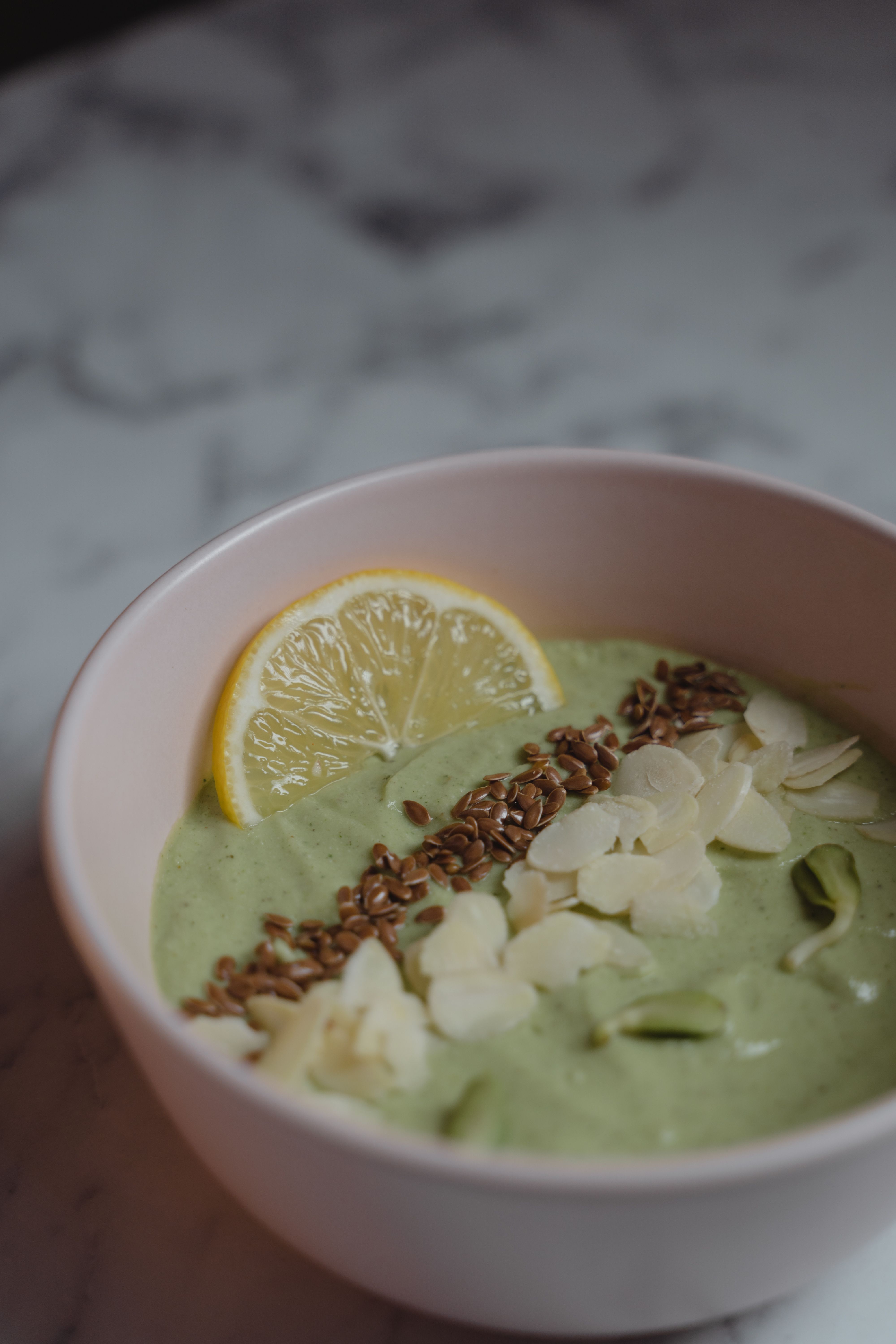
Photo: Tima Miroshnichenko / Pexels
American
Green Smoothie Bowl
The diets react (see scores below)
Common Ingredients
- spinach
- banana
- mango
- almond milk
- chia seeds
- granola
- kiwi
- honey
Specific recipes may vary.
Incompatible with 5 of 11 diets
Diet Ratings
This Green Smoothie Bowl is overwhelmingly incompatible with ketogenic dietary principles. The ingredient list is a collection of high-carb, sugar-dense foods: banana (~27g net carbs), mango (~22g net carbs), and kiwi (~8g net carbs) alone already far exceed the entire daily keto carb budget of 20-50g. Honey adds pure sugar with zero fiber benefit. Granola is a grain-based, high-carb food with added sugars, completely forbidden on keto. Even the chia seeds and spinach, which are individually keto-friendly, cannot redeem a dish that easily contains 70-100g+ of net carbs in a single serving. The macronutrient profile is the inverse of what keto requires: very high carb, very low fat, negligible protein.
The Green Smoothie Bowl is almost entirely whole-food plant-based, featuring spinach, banana, mango, almond milk, chia seeds, granola, and kiwi — all clearly vegan-compliant ingredients. However, honey is included, and the Vegan Society and most major vegan organizations classify honey as an animal product and exclude it from a vegan diet, as it is produced by bees. This single ingredient prevents a full approval. Without honey (or substituting agave or maple syrup), this bowl would score a 9 as an exemplary whole-food plant-based breakfast.
A minority of plant-based eaters, sometimes called 'bee-friendly' or 'plant-based' rather than strictly vegan, argue that consuming honey from ethically managed hives does not constitute animal exploitation and is therefore compatible with their dietary philosophy. However, the mainstream vegan consensus, led by organizations like the Vegan Society and PETA, firmly categorizes honey as non-vegan.
This dish contains two clear paleo violations that cannot be overlooked. Granola is grain-based (typically oats, sometimes wheat or rice) and is explicitly excluded from the paleo diet — this alone disqualifies the dish. Almond milk, while made from paleo-friendly almonds, is a processed product that often contains additives, emulsifiers, and sometimes added sugars, placing it outside strict paleo guidelines. Chia seeds are technically a grain-adjacent seed and are debated, but the granola is the dominant disqualifying factor here. The remaining ingredients — spinach, banana, mango, kiwi, and honey — are paleo-compatible (honey being a caution-level natural sweetener). However, the presence of granola as a listed topping makes this dish a clear avoid. Even substituting almond milk with coconut milk and removing chia seeds would not rescue the dish as long as granola is included.
This smoothie bowl is built almost entirely on Mediterranean-approved plant foods: leafy greens (spinach), whole fruits (banana, mango, kiwi), nuts/seeds (chia seeds, almond milk), and a small amount of natural sweetener (honey). Spinach, fruits, and chia seeds are all strongly encouraged under Mediterranean principles. The dish is whole, minimally processed, and plant-forward with no red meat, refined grains, or artificial additives. Minor concerns keep it from a perfect score: granola can be processed and may contain added sugars, honey adds a modest amount of sugar, and almond milk is a modern industrial product not rooted in traditional Mediterranean cuisine. Overall, this is a nutritionally sound, plant-rich meal well aligned with Mediterranean values.
Some traditional Mediterranean diet purists would note that smoothie bowls are an American construct with no place in the Mediterranean culinary tradition, and that blending fruit removes fiber structure and raises glycemic load compared to eating whole fruit. Granola in particular often contains added sugars and refined oats, which modern clinical Mediterranean diet guidelines (e.g., PREDIMED-based protocols) would flag as a concern.
The Green Smoothie Bowl is entirely plant-based and contains zero animal products. Every single ingredient — spinach, banana, mango, almond milk, chia seeds, granola, kiwi, and honey — is plant-derived or plant-processed. This dish is the antithesis of the carnivore diet, combining leafy greens, tropical fruits, a nut-based milk, seeds, and grain-based granola. Even honey, the one ingredient debated in some animal-based circles, is overshadowed by the overwhelming plant composition of this dish. There is universal consensus across all carnivore diet camps that this meal is completely incompatible with the protocol.
This Green Smoothie Bowl contains two clearly excluded ingredients: granola (a grain-based food — oats/grains are explicitly excluded on Whole30) and honey (an added sugar, which is explicitly excluded regardless of whether it is natural or artificial). These two ingredients alone disqualify the dish. Additionally, while the smoothie bowl format itself edges toward the 'no recreating junk food/comfort food' territory (blended fruit bowls can mimic dessert-like eating patterns), the hard rule violations from granola and honey make the verdict straightforwardly 'avoid' with high confidence. The remaining ingredients — spinach, banana, mango, almond milk (unsweetened, no additives), chia seeds, and kiwi — are individually Whole30-compliant.
This Green Smoothie Bowl contains multiple high-FODMAP ingredients that make it problematic during the elimination phase. Honey is high in excess fructose and should be avoided entirely. Mango is high-FODMAP at a standard serving (over 40g contains excess fructose and polyols). Banana is dose-dependent — ripe banana becomes high-FODMAP at around 100g (roughly one medium banana), and smoothie bowls typically use a whole banana as a base. Kiwi is moderate-to-high FODMAP at standard servings (two or more kiwis trigger polyol issues). Granola typically contains honey, dried fruit, or wheat-based oats in combinations that push it into high-FODMAP territory. Chia seeds are low-FODMAP at 2 tablespoons. Spinach is low-FODMAP at standard servings. Unsweetened almond milk is low-FODMAP. However, the combination of honey, mango at a smoothie-bowl portion, ripe banana, kiwi, and likely problematic granola creates a dish that is high-FODMAP by virtually any realistic serving size. The cumulative FODMAP load from stacking excess fructose (honey, mango), polyols (kiwi), and fructans (granola) makes this dish very likely to trigger symptoms during elimination.
Monash University rates green (unripe) banana as low-FODMAP at 100g and some individual ingredients like spinach and almond milk are clearly safe, so a heavily modified version of this bowl (firm banana, omitting honey and mango, using certified low-FODMAP granola, limiting kiwi to one fruit) could potentially be made compliant — but the dish as described with standard portions is not safe for the elimination phase.
This Green Smoothie Bowl is highly aligned with DASH principles. Spinach is a DASH star food, rich in potassium, magnesium, and fiber. Banana, mango, and kiwi are excellent DASH fruits providing potassium and fiber. Almond milk (unsweetened) is a low-sodium, low-fat dairy alternative. Chia seeds contribute healthy fats, fiber, magnesium, and calcium. The main considerations are granola (often contains added sugar and can be calorie-dense — portion control is key) and honey (added sugar, acceptable in small amounts but DASH discourages excess sweets). Overall sodium is very low, saturated fat is minimal, and the dish is rich in DASH-priority nutrients. The sugar load from fruit plus honey plus granola is worth monitoring for those with diabetes or insulin sensitivity, but for hypertension management this bowl is a strong DASH-compatible choice.
NIH DASH guidelines broadly approve fruit and vegetable-heavy meals like this without reservation. However, some updated clinical interpretations caution that the combined glycemic load of banana, mango, honey, and granola in one sitting may be a concern for individuals managing both hypertension and blood sugar, with some DASH-oriented dietitians recommending replacing honey with a small portion of nuts and choosing low-sugar granola or oats instead.
This Green Smoothie Bowl has several Zone-friendly elements (spinach as a favorable low-GI vegetable, chia seeds providing fiber, fat, and some protein, unsweetened almond milk as a low-calorie carb base) but is fundamentally imbalanced from a Zone perspective. The primary concern is the carbohydrate overload: banana is explicitly listed as an 'unfavorable' carb in Zone methodology due to its high glycemic index, mango is a high-sugar tropical fruit, granola is a high-glycemic processed grain, and honey is essentially pure sugar. Together these push the carb ratio far above the 40% target — realistically this dish is 70-80% calories from carbohydrates. Critically, there is no meaningful protein source listed, which means the 30% protein target is missed entirely. Without lean protein, this meal cannot achieve Zone balance regardless of portioning. The fat profile from chia seeds is reasonable (omega-3s align with anti-inflammatory focus) but insufficient to hit the 30% fat target. To Zone-ify this dish, one would need to eliminate honey and granola, reduce banana and mango substantially, add a lean protein (Greek yogurt, protein powder, egg whites), and increase fat slightly (perhaps additional chia or a few almonds). As presented, the dish cannot reasonably form a Zone meal.
Some Zone practitioners and Sears' later writings (The OmegaRx Zone, Zone Perfect Meals) acknowledge that smoothies can be acceptable if carefully portioned and protein-augmented. A strict minimalist interpretation might score this higher if one assumes the consumer will add protein powder and reduce the banana/mango/honey portions — in that context the spinach, chia, and kiwi are genuinely Zone-favorable. However, as presented with no protein and multiple high-GI carb sources including honey and granola, the dish diverges significantly from Zone principles.
This Green Smoothie Bowl is built largely on anti-inflammatory foundations. Spinach provides magnesium, folate, and flavonoids (kaempferol, quercetin) that suppress NF-κB inflammatory signaling. Chia seeds are a standout ingredient — rich in ALA omega-3 fatty acids and fiber, they are broadly emphasized across anti-inflammatory frameworks. Mango and kiwi deliver vitamin C, carotenoids, and polyphenols that reduce oxidative stress and CRP levels. Banana adds potassium and resistant starch (especially if underripe), which supports gut microbiome health — an underappreciated anti-inflammatory pathway. Almond milk is a neutral, acceptable base. Honey is a mild concern — it contains trace anti-inflammatory enzymes (flavonoids, phenolic acids), but it is still an added sugar and should be used sparingly; it does not dramatically undermine the dish in typical amounts. The most meaningful concern is the granola: commercial granola often contains refined oats, added sugars, seed oils, or canola oil, and can carry a meaningful glycemic load. A whole-grain, low-sugar granola significantly improves the profile. Overall, this dish is predominantly plant-forward, antioxidant-rich, and omega-3 supportive, earning a solid anti-inflammatory approval with a moderate caution about granola quality and sugar load.
Some anti-inflammatory practitioners, particularly those following higher-protein or lower-glycemic frameworks, would flag this bowl for its concentrated fruit sugars (banana + mango + kiwi + honey), arguing the glycemic spike can acutely promote inflammation. Dr. Weil's framework and mainstream anti-inflammatory nutrition would still consider whole fruits beneficial due to their fiber and phytonutrient content offsetting the sugar impact.
This green smoothie bowl has meaningful strengths for GLP-1 patients — spinach provides micronutrients and some fiber, chia seeds add omega-3 fats and fiber, and the fruit base (banana, mango, kiwi) contributes vitamins and hydration. However, the dish has a critical structural weakness: it lists no primary protein source, and none of the ingredients provide meaningful protein. For GLP-1 patients who need 100-120g of protein daily across small meals, a protein-free breakfast is a significant missed opportunity. The banana, mango, and honey combination also drives sugar content notably high, which runs counter to blood sugar stability goals. Granola adds further concern — most commercial granolas are calorie-dense with added sugars and offer limited nutritional value per calorie, scoring poorly on nutrient density. On the positive side, the overall fat content is low, the fiber from chia seeds, fruit, and spinach is solid, and the high water content of the fruits supports hydration. Digestibility is generally good. The smoothie bowl format is small-portion friendly. This dish could be upgraded to a caution-high or low approve with the addition of a protein source (Greek yogurt base, protein powder, or cottage cheese blend) and by swapping granola for a lower-sugar, higher-fiber topping. As-is, it scores in the caution range due to low protein and moderate sugar load.
Some GLP-1-focused RDs are more permissive about fruit-forward breakfasts, particularly early post-injection when appetite suppression is strong and patients struggle to eat anything at all — in that context, any nutrient-dense calories may be preferable to skipping breakfast entirely. Others are stricter, viewing high-sugar fruit combinations as counterproductive for patients with insulin resistance or type 2 diabetes who are often the same population on GLP-1s, and would recommend rebuilding this dish around a protein base before approving it.
*See how scores were generated at our methodology page.
Nutritional profile
Six traits that cut across every diet.
Fiber & Plants
How much whole-plant food and fiber it delivers.
Healthy Fats
The quality of its fats (unsaturated, omega-3).
Whole / Unprocessed
How close it is to its natural, unprocessed form.
Gut Gentle
How easy it is on digestion (low FODMAP, few irritants).
Low Glycemic
How little it spikes your blood sugar.
Protein Density
How much protein it packs per calorie.
Controversy Index
Higher controversy = more disagreement between diets.
Diet-Specific Tips
 Vegan — 6/10
View tips
- Honey is classified as an animal product by the Vegan Society and most vegan organizations, making it non-vegan
- All other ingredients — spinach, banana, mango, almond milk, chia seeds, granola, kiwi — are fully plant-based
- Dish is otherwise a whole-food plant-based meal with excellent nutritional profile
- Easy vegan swap available: replace honey with agave nectar or maple syrup
- Granola should be verified as vegan (some contain honey or dairy), but is rated as plant-based in its default form
 Mediterranean — 8/10
View tips
- High proportion of whole fruits and leafy greens (spinach, banana, mango, kiwi)
- Chia seeds are a nutrient-dense plant food consistent with Mediterranean principles
- No red meat, poultry, or processed protein sources
- Granola may contain added sugars and refined grains — quality matters
- Honey adds natural but non-trivial sugar
- Almond milk is not a traditional Mediterranean ingredient but is a whole-food-adjacent plant base
- Dish is entirely plant-based and minimally processed overall
 DASH — 8/10
View tips
- Spinach is explicitly a DASH-recommended vegetable rich in potassium and magnesium
- Banana, mango, and kiwi provide excellent potassium and fiber aligned with DASH goals
- Chia seeds add calcium, magnesium, and omega-3 fatty acids — all DASH-positive
- Unsweetened almond milk is low in sodium and saturated fat
- Granola may contain added sugars and refined grains — portion control recommended
- Honey adds unnecessary added sugar; should be minimized per DASH guidelines
- Very low sodium profile across all ingredients
- No saturated fat concerns — overall fat profile is heart-healthy
 Zone — 4/10
View tips
- No protein source — critical Zone imbalance, 30% protein target cannot be met
- Banana and mango are explicitly 'unfavorable' Zone carbs due to high glycemic index
- Honey is pure sugar, a Zone avoid ingredient that spikes insulin
- Granola is a high-glycemic processed grain, unfavorable in Zone
- Carbohydrate ratio estimated at 70-80% of calories — far exceeds Zone's 40% target
- Spinach is an ideal Zone vegetable (high polyphenols, very low GI, favorable)
- Chia seeds provide beneficial omega-3s, fiber, and modest fat — Zone-friendly
- Kiwi is a moderate-GI fruit acceptable in limited Zone portions
- Unsweetened almond milk is a Zone-acceptable low-calorie base
 Anti-Inflammatory — 8/10
View tips
- Chia seeds: excellent ALA omega-3, fiber, and antioxidant source — a core anti-inflammatory ingredient
- Spinach: high in flavonoids (kaempferol, quercetin) and magnesium; suppresses NF-κB inflammatory pathway
- Mango and kiwi: rich in vitamin C, carotenoids, and polyphenols that reduce oxidative stress
- Banana: provides resistant starch and prebiotic fiber supporting gut microbiome and indirect anti-inflammatory effects
- Honey: trace anti-inflammatory phenolics but still an added sugar; use minimally
- Granola: quality-dependent — commercial versions may contain added sugars or seed oils; whole-grain, low-sugar granola preferred
- No refined carbohydrates, seed oils, or processed additives in the core ingredients
- No direct anti-inflammatory 'hero' spices (e.g., turmeric, ginger) but overall phytonutrient density is high
 GLP-1 Friendly — 5/10
View tips
- No meaningful protein source — fails the 15-30g per meal protein target
- Chia seeds provide fiber and omega-3 fats — a positive contribution
- Banana, mango, and honey create a high combined sugar load
- Granola is calorie-dense with limited nutrient density and often contains added sugars
- High water content from fruit supports hydration, a key GLP-1 concern
- Good overall fiber content from chia seeds, spinach, and fruit
- Low fat content is appropriate for GLP-1 patients
- Easily upgradeable — adding Greek yogurt or protein powder would substantially improve the rating