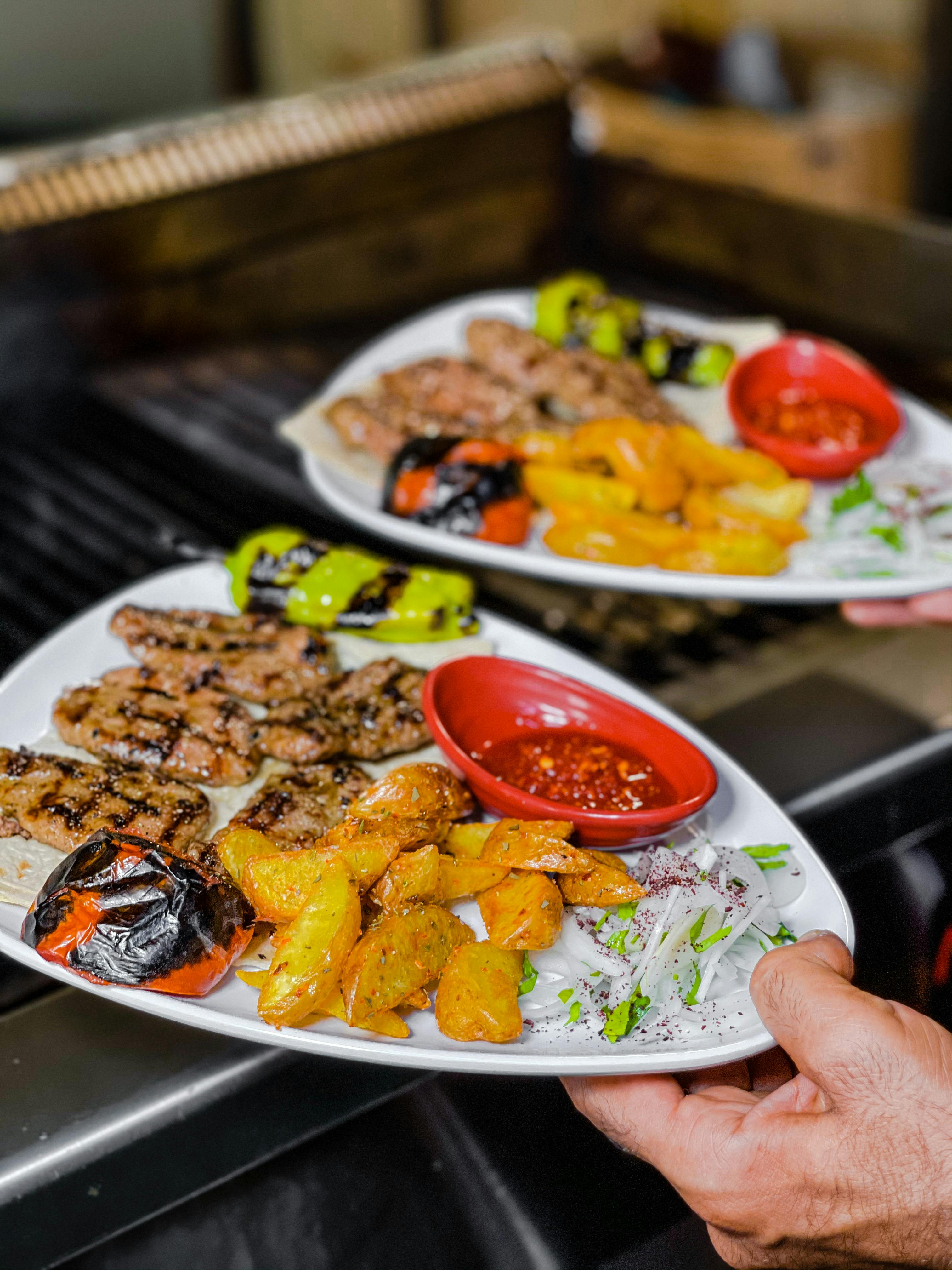
The diets react (see scores below)
Common Ingredients
- gyro meat
- pita
- tzatziki
- tomato
- onion
- cucumber
Specific recipes may vary.
Incompatible with 7 of 11 diets
Diet Ratings
The gyro meat, tzatziki, tomato, onion, and cucumber are all keto-friendly in standard portions, providing good fat and protein. However, the pita bread is a wheat-based flatbread with roughly 30-35g net carbs per piece, which alone can exceed a strict keto daily allowance. The plate is easily made keto-compliant by omitting the pita and treating the rest as a deconstructed bowl.
This dish contains gyro meat (lamb or beef) and tzatziki, which is a yogurt-based sauce. Both are animal products and clearly excluded from any vegan diet.
The gyro plate contains pita bread (a wheat-based grain) and tzatziki (a yogurt-based dairy sauce), both of which are explicitly excluded from paleo. Additionally, commercial gyro meat is typically a processed product containing breadcrumbs, fillers, and added salt, which further disqualifies it. While the lamb/beef base and vegetable accompaniments (tomato, onion, cucumber) are paleo-compliant, the dish as served cannot be considered paleo.
The gyro plate has authentic Mediterranean roots and includes positive elements like fresh vegetables (tomato, onion, cucumber) and tzatziki (yogurt-based). However, the centerpiece is processed gyro meat made from lamb/beef, which is typically high in saturated fat and sodium, falling under the 'red meat, limited to a few times per month' category. The pita is often refined white flour. Overall, it's acceptable occasionally but not aligned with daily Mediterranean eating patterns.
Traditional Greek practice includes gyro and similar spit-roasted meats as part of cultural cuisine, and when enjoyed occasionally with abundant vegetables and yogurt, it fits the Mediterranean lifestyle. Modern clinical Mediterranean diet guidelines, however, discourage processed red meats and would rate this lower.
While the gyro meat itself (lamb/beef) is carnivore-compatible, the dish as served is dominated by non-animal components: pita bread (grain), tomato, onion, and cucumber (vegetables), plus tzatziki which contains cucumber and herbs. The plate as a whole is not carnivore-compliant. A practitioner would need to order only the gyro meat and discard everything else, and even then commercial gyro meat often contains fillers, breadcrumbs, and seasonings with plant-based ingredients.
This dish contains pita bread (a wheat-based grain) and tzatziki (a yogurt-based sauce, dairy), both of which are explicitly excluded on Whole30. Additionally, commercially prepared gyro meat typically contains fillers like breadcrumbs and may include other non-compliant ingredients.
This dish contains multiple high-FODMAP ingredients at standard serving sizes. Gyro meat is typically seasoned heavily with garlic and onion (high in fructans). Pita bread is wheat-based, making it high in fructans. Raw onion is one of the highest-FODMAP foods. Tzatziki traditionally contains garlic and yogurt (lactose). Only the tomato and cucumber are clearly low-FODMAP.
Gyro meat is a heavily processed red meat (typically a seasoned lamb/beef loaf) that is high in saturated fat and sodium, both of which DASH explicitly limits. A typical gyro plate can exceed 1,000-1,500mg sodium in a single serving, approaching or exceeding the full daily DASH sodium target. The pita adds refined carbohydrates, and while the vegetables and tzatziki (yogurt-based) offer some redeeming value, they cannot offset the saturated fat and sodium load from the processed meat.
A gyro plate combines fatty processed lamb/beef (high in saturated fat) with pita bread (high-glycemic refined wheat) — both 'unfavorable' Zone components. However, the tzatziki, tomato, onion, and cucumber are favorable. With careful portioning (small amount of meat trimmed of visible fat, half pita or skip pita, large vegetable portion, tzatziki as the fat block), this can be approximated to a 40/30/30 ratio, but as typically served the meat-to-veg ratio and pita push it out of Zone balance. Saturated fat content is the main concern per Sears' anti-inflammatory emphasis.
Gyro meat is a processed red meat (typically a seasoned mixture of lamb and beef cooked on a vertical rotisserie), placing it in the most pro-inflammatory protein category. Processed red meat is strongly associated with elevated inflammatory markers (CRP, IL-6, TMAO) and is explicitly limited on Dr. Weil's Anti-Inflammatory Pyramid. The white pita is a refined carbohydrate that spikes blood glucose, further promoting inflammation. The redeeming elements — tzatziki (yogurt, cucumber, garlic), fresh tomato, onion, and cucumber — provide some polyphenols and probiotics but are not sufficient to offset the processed meat and refined grain base.
Gyro meat is typically a processed lamb/beef blend that is high in saturated fat and sodium, which can worsen GLP-1 side effects like nausea, reflux, and slowed digestion. The pita adds refined carbs with minimal fiber, and tzatziki, while protein-containing, adds more fat. The fresh vegetables (tomato, onion, cucumber) and yogurt-based tzatziki are positives, providing some fiber, hydration, and protein, but they don't offset the high-fat processed meat base. Portion control and swapping gyro meat for grilled chicken would substantially improve this meal.
*See how scores were generated at our methodology page.
Nutritional profile
Six traits that cut across every diet.
Fiber & Plants
How much whole-plant food and fiber it delivers.
Healthy Fats
The quality of its fats (unsaturated, omega-3).
Whole / Unprocessed
How close it is to its natural, unprocessed form.
Gut Gentle
How easy it is on digestion (low FODMAP, few irritants).
Low Glycemic
How little it spikes your blood sugar.
Protein Density
How much protein it packs per calorie.
Controversy Index
Higher controversy = more disagreement between diets.
Diet-Specific Tips
 Keto — 5/10
View tips
- Pita bread is high-carb wheat and must be removed
- Gyro meat (lamb/beef) is fatty and keto-friendly
- Tzatziki (yogurt, cucumber, garlic) is low-carb in normal portions
- Tomato and onion add minor carbs but acceptable in small amounts
- Watch for added sugar or fillers in commercial gyro meat
 Mediterranean — 4/10
View tips
- Processed red meat as primary protein
- Refined pita bread
- Positive inclusion of fresh vegetables
- Yogurt-based tzatziki adds value
- Frequency should be limited to monthly
 Zone — 4/10
View tips
- Gyro meat is high in saturated fat (unfavorable fat source)
- Pita bread is high-glycemic refined carbohydrate (unfavorable carb)
- Tomato, onion, cucumber are favorable low-glycemic vegetables
- Tzatziki (yogurt-based) provides reasonable protein/fat
- Requires significant portion control and substitution to hit 40/30/30
- Processed meat conflicts with anti-inflammatory Zone principles
 GLP-1 Friendly — 4/10
View tips
- High saturated fat from processed gyro meat may worsen GI side effects
- Refined pita bread is low in fiber
- Tzatziki contributes some protein but adds fat
- Fresh vegetables provide fiber and hydration
- High sodium content typical of gyro meat