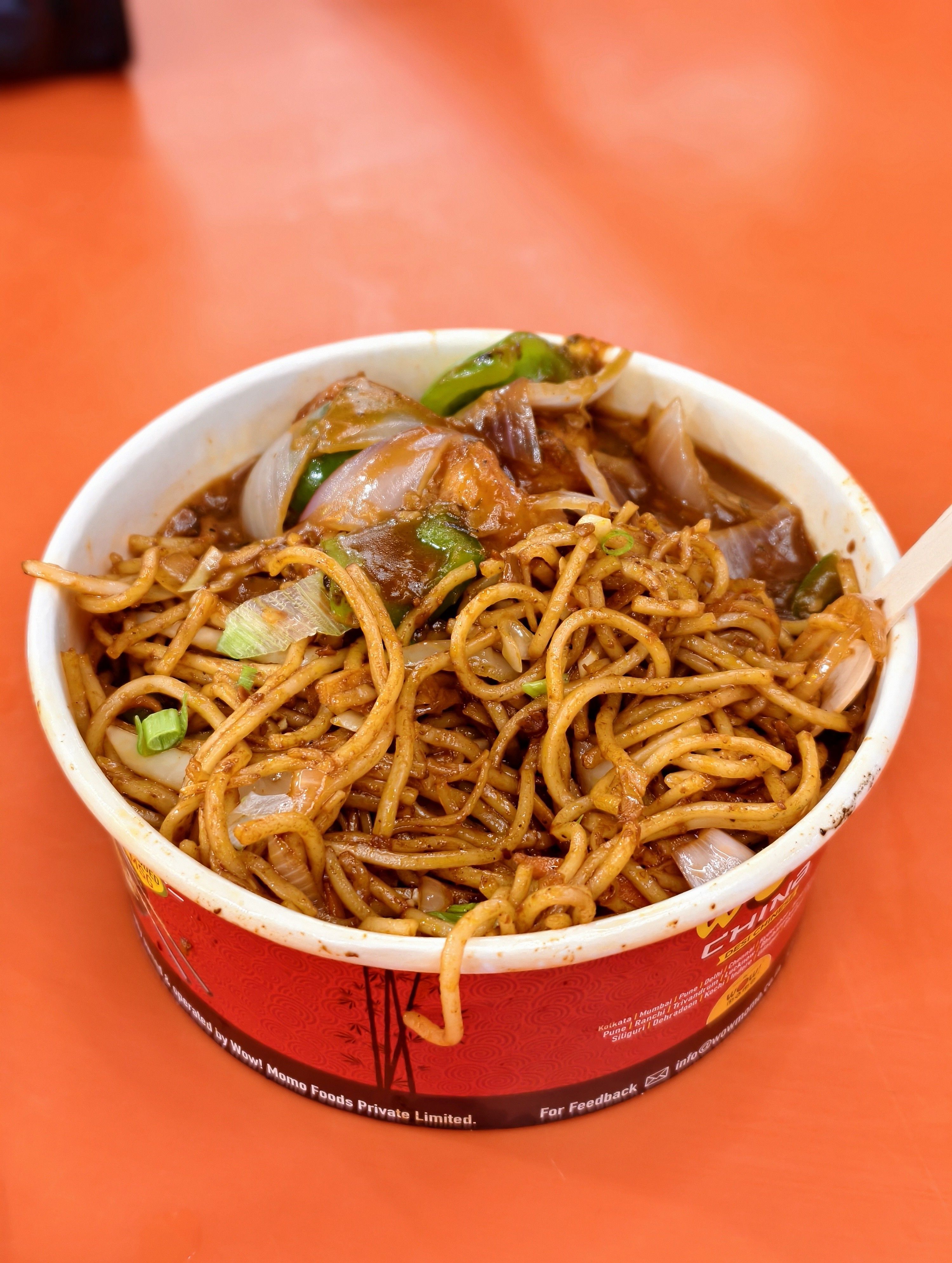
Photo: Michael Takahashi / Pexels
Indian
Hakka Noodles (Indo-Chinese)
The diets react (see scores below)
Common Ingredients
- wheat noodles
- cabbage
- bell peppers
- carrots
- soy sauce
- vinegar
- green chilies
- scallions
Specific recipes may vary.
Incompatible with 5 of 11 diets
Diet Ratings
Hakka Noodles is fundamentally incompatible with a ketogenic diet. The base ingredient — wheat noodles — is a refined grain product extremely high in net carbs, typically delivering 40-60g of net carbs per serving alone, which exceeds or entirely exhausts the entire daily keto carb budget in one dish. There is no meaningful modification possible while retaining the dish's identity. The secondary vegetables (cabbage, bell peppers, carrots) are relatively minor concerns compared to the noodles, but carrots also add moderate carbs. Soy sauce contributes trace carbs but is not the issue here. This dish has no significant fat content and negligible protein, making it a poor macronutrient fit across the board for keto.
Hakka Noodles as listed here contains entirely plant-based ingredients: wheat noodles, an array of vegetables (cabbage, bell peppers, carrots, green chilies, scallions), and condiments (soy sauce, vinegar) that are standard vegan staples. There are no animal products, dairy, eggs, or animal-derived additives present. The dish is relatively whole-food in character, with fresh vegetables forming the bulk of the recipe. One minor note: soy sauce occasionally contains trace amounts of non-vegan additives in specific brands, but the ingredient category itself is plant-based. This version of Hakka Noodles (without egg, which is commonly added in restaurant versions) is fully vegan-compliant.
Hakka Noodles is fundamentally incompatible with the Paleo diet. The base ingredient, wheat noodles, is a grain product — one of the most explicitly excluded food categories in Paleo. Soy sauce contains both soy (a legume) and wheat, compounding the violations. Vinegar is a processed condiment, and added salt is implicit in soy sauce. The only Paleo-compliant ingredients in this dish are the vegetables: cabbage, bell peppers, carrots, green chilies, and scallions. These compliant ingredients are thoroughly outweighed by the core non-compliant components that define the dish itself.
Hakka Noodles contains a mix of Mediterranean-compatible and less ideal elements. The vegetables (cabbage, bell peppers, carrots, scallions, green chilies) are excellent plant-based ingredients strongly aligned with Mediterranean principles. However, the wheat noodles are likely refined (not whole grain), which conflicts with the Mediterranean emphasis on whole grains. Soy sauce is a highly processed, high-sodium condiment not traditional to Mediterranean cuisine, and there is no olive oil as the primary fat. Vinegar is acceptable. The dish is vegetable-forward and has no red meat or added sugar, keeping it out of the 'avoid' category, but the refined noodles and non-Mediterranean condiments prevent a full approval.
Some modern Mediterranean diet interpreters focus primarily on the plant-forward, vegetable-rich nature of a dish and would view refined noodles consumed occasionally as acceptable within overall dietary balance — similar to how white pasta is tolerated in Italian Mediterranean tradition when paired with abundant vegetables.
Hakka Noodles is entirely plant-based and contains zero animal products. Every single ingredient — wheat noodles, cabbage, bell peppers, carrots, soy sauce, vinegar, green chilies, and scallions — is explicitly prohibited on the carnivore diet. Wheat noodles are a grain-based processed carbohydrate; cabbage, bell peppers, carrots, and scallions are vegetables; soy sauce is a fermented legume/grain product; vinegar is a plant-derived condiment; and green chilies are a plant spice. There is no animal protein, animal fat, or any animal-derived component whatsoever. This dish represents the antithesis of carnivore eating principles.
Hakka Noodles contain multiple Whole30-excluded ingredients. First and most critically, wheat noodles are a grain-based pasta product, which is doubly excluded: grains (wheat) are prohibited, and pasta/noodles are explicitly called out in the 'no recreating' rule regardless of ingredients. Second, soy sauce contains soy (a legume) and typically wheat, both of which are excluded — coconut aminos would be the compliant substitute. The remaining vegetables (cabbage, bell peppers, carrots, green chilies, scallions) and vinegar are all Whole30-compatible, but the foundational ingredients make this dish entirely non-compliant.
Hakka Noodles contains multiple high-FODMAP ingredients that make it unsuitable during the elimination phase. The primary issue is wheat noodles, which are high in fructans — a major FODMAP. Even a standard serving of wheat-based noodles (typically 180–200g cooked) far exceeds the safe fructan threshold. Scallions (green onions) are a further concern: while the green tops are low-FODMAP, the white bulb portions are high in fructans and are commonly used in Hakka Noodles preparation. Cabbage in large amounts can also contribute moderate FODMAPs (GOS/fructans), though small serves are generally tolerated. Bell peppers, carrots, soy sauce (in typical serving amounts), vinegar, and green chilies are generally low-FODMAP. However, the wheat noodles alone are a deal-breaker for the elimination phase, making this dish a clear avoid regardless of other ingredients.
Hakka Noodles sit at the intersection of DASH-friendly vegetables and a sodium-heavy condiment. The vegetables — cabbage, bell peppers, carrots, scallions, and green chilies — are excellent DASH foods rich in potassium, fiber, and micronutrients. However, soy sauce is one of the highest-sodium condiments in common use, with even 1 tablespoon containing roughly 900–1,000mg of sodium. A typical restaurant or home serving of Hakka Noodles can easily deliver 1,200–1,800mg of sodium from soy sauce alone, consuming the majority of the DASH daily sodium budget (1,500–2,300mg). The wheat noodles are refined carbohydrates rather than whole grain, which is less ideal for DASH. There is no protein source listed, no dairy, and the dish offers limited calcium and magnesium relative to DASH targets. The dish is not inherently high in saturated fat, which is a positive. With significant sodium reduction (low-sodium soy sauce, reduced quantity) and substitution of whole-grain noodles, this dish could approach DASH-friendly territory, but as commonly prepared it warrants caution.
Hakka Noodles is a carbohydrate-dominant dish built around wheat noodles, which are a refined, moderate-to-high glycemic carbohydrate source that Zone classifies as 'unfavorable.' The dish is essentially all carbs with negligible protein and very little fat, making it extremely difficult to fit into the Zone's 40/30/30 block structure. The vegetables — cabbage, bell peppers, carrots, and scallions — are Zone-favorable low-glycemic carbs that add polyphenols and fiber, but they are overwhelmed in volume and caloric contribution by the noodles. Critically, there is no protein source listed, which means the dish as served completely lacks the protein block needed for a Zone-compliant meal. Soy sauce adds sodium with negligible macros; vinegar is actually beneficial in Zone for glycemic modulation. To salvage this dish for Zone eating, one would need to: (1) significantly reduce noodle portion or substitute with shirataki/zucchini noodles, (2) add a lean protein (tofu, egg whites, chicken), and (3) add a monounsaturated fat source. As presented, it is a high-carb, protein-free, fat-free dish that disrupts Zone balance substantially.
Hakka Noodles presents a mixed anti-inflammatory profile. On the positive side, the dish is rich in colorful vegetables — bell peppers (vitamin C, carotenoids), carrots (beta-carotene), cabbage (glucosinolates), green chilies (capsaicin), and scallions (quercetin, allicin precursors) — all of which offer meaningful antioxidant and anti-inflammatory benefits. Vinegar (acetic acid) has a neutral-to-mildly-positive metabolic profile. The main liability is wheat noodles: refined wheat noodles are essentially a refined carbohydrate with a high glycemic load and negligible fiber, which can promote insulin spikes and downstream inflammatory signaling. Soy sauce, while fermented (which has mild probiotic benefits), is very high in sodium — excess sodium is linked to endothelial inflammation and hypertension. The dish also lacks any meaningful omega-3 source, quality fat, or deeply anti-inflammatory spice (e.g., turmeric, ginger). If made with whole wheat or buckwheat noodles and lower-sodium tamari, the profile would improve. As commonly prepared in Indo-Chinese cuisine, the refined noodles and sodium load keep this in cautious territory.
Some anti-inflammatory practitioners and whole-food advocates would rate this more favorably, arguing the abundance and variety of vegetables dominate the dish's net inflammatory effect and that moderate refined carbohydrate consumption in an otherwise vegetable-heavy meal doesn't meaningfully drive chronic inflammation in healthy individuals. Conversely, stricter low-glycemic or autoimmune protocol (AIP) frameworks would rate this lower, flagging refined wheat (gluten) and high sodium as meaningful inflammatory triggers, particularly for those with gut permeability issues.
Hakka Noodles is a primarily carbohydrate-driven dish built on refined wheat noodles with no listed protein source, making it a poor fit as a standalone main for GLP-1 patients who need 15–30g of protein per meal to prevent muscle loss. The vegetable mix (cabbage, bell peppers, carrots, scallions) contributes some fiber and micronutrients, which is a positive, but the overall fiber content is modest for a main dish. The dish is low in fat, which avoids GLP-1 GI side effects, and soy sauce and vinegar are low-calorie condiments acceptable in small amounts. Green chilies may aggravate nausea or reflux in sensitive patients. The refined wheat noodles offer low nutrient density per calorie — a significant concern given reduced appetite on GLP-1 medications means every calorie must count. Portion size is also a concern: noodle dishes are easy to overeat and the carbohydrate load can spike blood sugar without protein or fat to blunt it. As listed, this dish would leave a GLP-1 patient protein-deficient for that meal. It is not inherently harmful but is nutritionally incomplete and a poor use of limited caloric bandwidth unless substantially modified with a protein addition (e.g., tofu, egg, chicken breast).
Some GLP-1-focused dietitians may allow refined noodle dishes in small portions as part of a varied diet, arguing that overall daily protein and fiber targets matter more than per-meal composition. However, others caution that the combination of refined carbohydrates, no protein, and a GI-stimulating spice (green chili) makes this dish particularly poorly suited for patients actively managing nausea and blood sugar on GLP-1 therapy.
*See how scores were generated at our methodology page.
Nutritional profile
Six traits that cut across every diet.
Fiber & Plants
How much whole-plant food and fiber it delivers.
Healthy Fats
The quality of its fats (unsaturated, omega-3).
Whole / Unprocessed
How close it is to its natural, unprocessed form.
Gut Gentle
How easy it is on digestion (low FODMAP, few irritants).
Low Glycemic
How little it spikes your blood sugar.
Protein Density
How much protein it packs per calorie.
Controversy Index
Higher controversy = more disagreement between diets.
Diet-Specific Tips
 Vegan — 8/10
View tips
- All listed ingredients are plant-derived
- Wheat noodles contain no eggs in this formulation
- Soy sauce and vinegar are standard vegan condiments
- No animal proteins, dairy, or hidden animal derivatives present
- Restaurant versions of Hakka Noodles often contain egg — this listing specifies none
- Fresh vegetables constitute the majority of the dish, elevating the whole-food profile
 Mediterranean — 5/10
View tips
- Refined wheat noodles rather than whole grain — conflicts with Mediterranean whole grain emphasis
- Abundant vegetables (cabbage, bell peppers, carrots, scallions) strongly align with Mediterranean principles
- Soy sauce is highly processed and high-sodium, not a Mediterranean ingredient
- No olive oil as primary fat source
- No red meat, added sugar, or highly processed proteins — avoids worst offenders
- Dish is plant-forward overall, supporting a moderate 'caution' rating
 DASH — 4/10
View tips
- Soy sauce is very high in sodium (~900–1,000mg per tablespoon); as commonly prepared this dish likely exceeds DASH sodium targets in a single serving
- Vegetables (cabbage, bell peppers, carrots, scallions, green chilies) are DASH-positive ingredients rich in fiber and potassium
- Wheat noodles are refined carbohydrates, not whole grain — less aligned with DASH whole-grain emphasis
- No significant source of lean protein, low-fat dairy, calcium, or magnesium
- Low in saturated fat, which is consistent with DASH principles
- Low-sodium soy sauce and whole-grain noodles would significantly improve the DASH compatibility of this dish
 Zone — 4/10
View tips
- Wheat noodles are a high-glycemic, 'unfavorable' Zone carbohydrate that dominates the macronutrient profile
- No protein source present — completely missing the Zone's required protein block (~25g per meal)
- No fat source present — missing the Zone's required monounsaturated fat block
- Carbohydrate-only macro profile is the antithesis of Zone's 40/30/30 ratio
- Vegetables (cabbage, bell peppers, carrots, scallions) are Zone-favorable and contribute fiber and polyphenols
- Vinegar is Zone-positive for glycemic regulation, but insufficient to redeem the dish's imbalance
- Dish could theoretically be modified (reduced noodles + added lean protein + olive oil) to approach Zone compliance
 Anti-Inflammatory — 5/10
View tips
- Refined wheat noodles: high glycemic load, low fiber — pro-inflammatory
- Bell peppers, carrots, cabbage: rich in antioxidants, carotenoids, and glucosinolates — anti-inflammatory
- Green chilies: capsaicin has documented anti-inflammatory properties
- Scallions: quercetin and allicin precursors with anti-inflammatory activity
- Soy sauce: high sodium content may promote endothelial inflammation; fermentation is mildly positive
- No omega-3 source, quality fat, or strongly anti-inflammatory spice (turmeric, ginger)
- No protein source — dish is primarily carbohydrate with vegetable sides
- Vinegar: neutral to mildly beneficial for blood sugar modulation
 GLP-1 Friendly — 4/10
View tips
- No protein source listed — fails the 15–30g per meal protein target
- Refined wheat noodles offer low nutrient density per calorie
- Moderate fiber from vegetables (cabbage, bell peppers, carrots) is a partial positive
- Green chilies may worsen nausea or reflux in GLP-1 patients
- Low fat content is a positive — unlikely to worsen GI side effects on that dimension
- High carbohydrate load without protein or fat buffer risks blood sugar spike
- Easy to overeat — noodle dishes are not small-portion-friendly
- Dish is salvageable with addition of tofu, egg, or lean protein