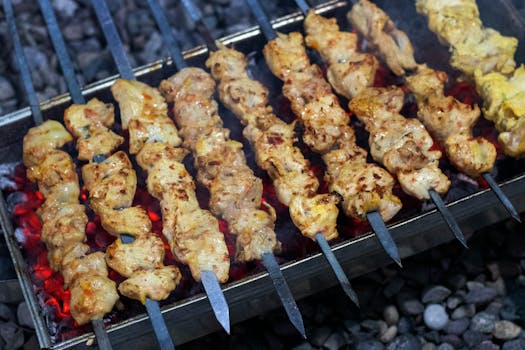
Photo: Mahsima Sojoudi / Pexels
Indian
Hariyali Chicken Kebab
The diets react (see scores below)
Common Ingredients
- chicken thighs
- mint
- cilantro
- green chilies
- yogurt
- ginger
- garlic
- garam masala
Specific recipes may vary.
Incompatible with 5 of 11 diets
Diet Ratings
Hariyali Chicken Kebab is built around chicken thighs, a high-fat, zero-carb protein that is ideal for keto. The marinade ingredients — mint, cilantro, green chilies, ginger, garlic, garam masala, and yogurt — contribute minimal net carbs in the quantities used as a marinade. Garam masala is a spice blend with negligible carbs per serving. The small amount of full-fat yogurt used as a tenderizer adds only trace carbs. Overall, a standard serving is well within keto net carb limits and provides solid protein and fat from the chicken thighs. This dish is naturally low-carb without any grains, added sugars, or starchy ingredients.
Some strict keto practitioners flag yogurt as a concern due to its lactose content and potential mild insulin response, and may also caution that garam masala blends from commercial sources can contain added starch or sugar as anti-caking agents. These practitioners on carnivore-leaning or clinical keto protocols may prefer to substitute yogurt with heavy cream or coconut cream.
Hariyali Chicken Kebab contains two clear animal-derived ingredients: chicken thighs (poultry/meat) and yogurt (dairy). Both are explicitly excluded under all definitions of a vegan diet. The green herb marinade components — mint, cilantro, green chilies, ginger, garlic, garam masala — are fully plant-based, but they do not offset the presence of animal products. This dish is incompatible with a vegan diet in its standard form.
Hariyali Chicken Kebab is disqualified from a paleo standpoint primarily due to yogurt, a dairy product explicitly excluded from the paleo diet. While the majority of ingredients are paleo-approved — chicken thighs (excellent protein source), mint, cilantro, green chilies, ginger, garlic, and garam masala are all hunter-gatherer compatible herbs and spices — the yogurt marinade is a core component that cannot be omitted without fundamentally changing the dish. Yogurt contains both casein and lactose, making it a clear avoid even under more permissive paleo frameworks. The dish is otherwise rich in paleo-friendly ingredients and could be made paleo-compliant with a coconut milk or olive oil-based marinade substitute.
Hariyali Chicken Kebab is built around chicken thighs marinated in yogurt with fresh herbs and spices — all ingredients that are individually compatible with Mediterranean diet principles. Poultry is an accepted moderate protein source (a few servings per week), and yogurt is a recognized dairy component. The herb-heavy marinade (mint, cilantro, ginger, garlic) aligns well with the Mediterranean emphasis on fresh aromatics over processed sauces. However, chicken thighs are higher in saturated fat than breast meat, and the dish is not a Mediterranean-origin preparation. There is no olive oil, no legumes, no whole grains, and no seafood — the dish lacks the plant-forward emphasis that defines Mediterranean eating. As an occasional protein choice it fits within the diet, but it should not be a daily staple.
Some modern Mediterranean diet practitioners, particularly those following the updated Oldways pyramid, give broader latitude to lean poultry prepared with herbs, spices, and fermented dairy (yogurt), arguing the marinade profile closely mirrors Eastern Mediterranean cooking traditions found in Turkish and Levantine cuisines. From this perspective the dish could score slightly higher and be eaten more regularly.
Hariyali Chicken Kebab is fundamentally incompatible with the carnivore diet. While chicken thighs are an acceptable animal protein, the dish is defined by its marinade of mint, cilantro, green chilies, ginger, garlic, and garam masala — all plant-derived ingredients that are explicitly excluded from the carnivore diet. The yogurt is the only other animal-derived component, and even that is debated within the community. The dish cannot be modified without losing its identity entirely; removing the plant-based marinade leaves plain chicken, which is a different food altogether. The 'hariyali' (green) character of the dish is entirely plant-based.
Hariyali Chicken Kebab contains yogurt, which is a dairy product explicitly excluded on the Whole30. Yogurt falls squarely within the banned dairy category (milk, cheese, sour cream, yogurt are all listed as excluded). All other ingredients — chicken thighs, mint, cilantro, green chilies, ginger, garlic, and garam masala — are fully Whole30-compliant. However, the presence of yogurt as a marinade ingredient disqualifies the dish as traditionally prepared. A compliant version could be made by substituting full-fat coconut milk or coconut cream for the yogurt to achieve a similar tenderizing and coating effect.
Hariyali Chicken Kebab contains two major high-FODMAP ingredients that make it unsuitable during the elimination phase: garlic (very high in fructans — one of the most potent FODMAP triggers) and yogurt (contains lactose, a disaccharide). These are not trace ingredients but core components of the marinade used in meaningful quantities. Chicken thighs themselves are protein and completely FODMAP-free, and herbs like mint, cilantro, and green chilies are low-FODMAP at typical cooking quantities. Ginger is low-FODMAP at standard amounts (up to 1 tsp fresh). Garam masala is generally considered low-FODMAP in small spice quantities. However, the garlic and yogurt alone disqualify this dish during the strict elimination phase. Even a small amount of garlic is high-FODMAP per Monash University. Yogurt becomes high-FODMAP at servings over 23g (a standard marinade would easily exceed this). There is no realistic way to rate this dish as safe during elimination without fundamentally changing the recipe.
Hariyali Chicken Kebab is a grilled Indian dish featuring chicken thighs marinated in a vibrant herb-yogurt base with mint, cilantro, green chilies, ginger, garlic, and garam masala. Several elements align well with DASH principles: the dish is grilled (not fried), uses low-fat yogurt (a DASH-approved dairy source), and incorporates potassium- and antioxidant-rich herbs and aromatics. Chicken is a DASH-endorsed lean protein. However, chicken thighs contain more saturated fat than chicken breast, which nudges this toward 'caution' territory. Garam masala is a spice blend and contributes negligible sodium on its own, but preparation in restaurants or with added salt can raise sodium content significantly. As commonly prepared, the dish is moderate in sodium and saturated fat but not as optimized as a skinless chicken breast version would be.
NIH DASH guidelines recommend lean poultry and specify limiting saturated fat, making chicken breast the preferred cut; however, updated clinical interpretations note that chicken thighs in moderate portions, especially when grilled and skin-removed, contribute only modestly to saturated fat intake and remain a reasonable protein choice within an overall DASH-compliant dietary pattern.
Hariyali Chicken Kebab is a promising Zone meal component but falls into 'caution' territory primarily due to the use of chicken thighs rather than the leaner chicken breast. The dish has several Zone-favorable elements: mint, cilantro, green chilies, ginger, and garlic are all low-glycemic, polyphenol-rich herbs and aromatics that align with Sears' anti-inflammatory emphasis. Yogurt provides a modest protein boost and a small carb contribution. Garam masala is a spice blend with negligible macronutrient impact. The main Zone concern is chicken thighs, which carry significantly more saturated fat than skinless chicken breast — a preferred Zone protein. Thigh meat makes hitting the 30% fat-from-monounsaturated target harder and raises saturated fat intake. However, if skinless thighs are used and portion size is controlled to approximately 3 oz (one Zone protein block), this dish can serve as the protein anchor of a Zone meal. Paired with a large colorful salad or grilled vegetables and a small drizzle of olive oil, it can achieve close to 40/30/30 balance. The marinade itself contains no added sugars or high-glycemic ingredients, which is a genuine Zone strength.
Some Zone practitioners and later Sears anti-inflammatory writings place less emphasis on the saturated fat concern with moderate amounts of chicken thigh, especially given the dish's strong polyphenol profile from herbs. In Sears' later work (The Zone Diet and anti-inflammatory protocols), the emphasis shifted toward omega-6/omega-3 balance and polyphenol intake — areas where this herb-heavy marinade actually excels. Under that lens, some would score this a 7 (approve) if skinless thighs are used and portions are controlled.
Hariyali Chicken Kebab is a green herb-marinated grilled dish with a strongly favorable anti-inflammatory profile overall. The hero ingredients are the herb-heavy marinade: mint and cilantro both provide polyphenols and antioxidants; green chilies contribute capsaicin, a well-documented anti-inflammatory compound; ginger offers gingerols which reduce inflammatory markers like CRP and IL-6; and garlic provides allicin and quercetin with established anti-inflammatory activity. Garam masala is a blend of spices (cumin, coriander, cardamom, black pepper, cloves, cinnamon) all of which are included in anti-inflammatory spice recommendations. The protein base — chicken thighs — is a moderate-category lean poultry. Thighs have higher fat content than breast meat, including a modest amount of saturated fat and arachidonic acid, but remain within the acceptable poultry category. Yogurt in the marinade provides probiotics (if live cultures are present) and is low-fat dairy, which falls in the moderate/acceptable range. The cooking method (grilled or broiled kebab) avoids added inflammatory fats. No refined carbohydrates, processed ingredients, seed oils, or added sugars are present. The dish scores well but stops short of a 9–10 because chicken thighs contribute some saturated fat and arachidonic acid, and yogurt is a moderate rather than emphasized food in the anti-inflammatory framework.
Most anti-inflammatory authorities (Dr. Weil, IF Rating system) would view this dish favorably given the spice and herb profile. However, practitioners following stricter autoimmune-oriented protocols (AIP) may flag yogurt as a potential gut irritant due to dairy proteins, and some AIP frameworks also restrict nightshade-adjacent ingredients. Additionally, those concerned about arachidonic acid from poultry may prefer white meat chicken breast to reduce any pro-inflammatory fatty acid load.
Hariyali Chicken Kebab is a grilled or broiled dish featuring chicken thighs marinated in a herb-forward yogurt base with mint, cilantro, ginger, garlic, green chilies, and garam masala. The protein content is solid and the cooking method (grilling/skewering) is GLP-1 friendly — no frying, no heavy sauces. The yogurt marinade adds a small amount of additional protein and supports digestibility. However, the use of chicken thighs rather than breast means meaningfully higher fat content, including saturated fat, which can worsen GLP-1 side effects like nausea, bloating, and slowed gastric emptying discomfort. Green chilies introduce a spice variable — at typical restaurant or home preparation levels, they may trigger reflux or nausea in GLP-1 patients who have heightened GI sensitivity. If prepared with chicken breast instead, this dish would likely score 8-9. As written with thighs, it earns a cautious approval at 6 — good nutrient profile and cooking method, but the fat content and spice level introduce meaningful individual variability.
Some GLP-1-focused dietitians accept chicken thighs as a reasonable protein source given that the fat difference from breast is moderate and the satiety benefit is real; others flag thighs more firmly due to saturated fat worsening nausea and gastric emptying symptoms, particularly in the early titration phase. Tolerance to green chili heat varies widely among GLP-1 patients — some report no GI impact, while others find even mild chili preparations worsen reflux.
*See how scores were generated at our methodology page.
Nutritional profile
Six traits that cut across every diet.
Fiber & Plants
How much whole-plant food and fiber it delivers.
Healthy Fats
The quality of its fats (unsaturated, omega-3).
Whole / Unprocessed
How close it is to its natural, unprocessed form.
Gut Gentle
How easy it is on digestion (low FODMAP, few irritants).
Low Glycemic
How little it spikes your blood sugar.
Protein Density
How much protein it packs per calorie.
Controversy Index
Higher controversy = more disagreement between diets.
Diet-Specific Tips
 Keto — 8/10
View tips
- Chicken thighs provide high fat, zero net carbs — ideal keto protein
- Yogurt marinade uses small quantities, adding minimal lactose/carbs
- Herbs (mint, cilantro) and green chilies are keto-friendly in marinade amounts
- Garam masala is a low-carb spice blend at typical serving sizes
- No grains, starchy vegetables, or added sugars
- Whole, minimally processed ingredients align with keto principles
 Mediterranean — 5/10
View tips
- Chicken is an accepted moderate protein in Mediterranean diet, not a daily staple
- Yogurt marinade is a recognized Mediterranean dairy component
- Rich fresh herb profile (mint, cilantro, garlic, ginger) aligns with Mediterranean flavor principles
- Chicken thighs are higher in saturated fat than leaner cuts
- No olive oil, legumes, whole grains, or vegetables in the dish itself
- Non-Mediterranean cuisine origin, though spice use has parallels to Eastern Mediterranean traditions
- No processed ingredients or added sugars — clean whole-food preparation
 DASH — 6/10
View tips
- Chicken thighs have higher saturated fat than breast — DASH prefers leaner cuts
- Grilled preparation is preferred over fried — aligns with DASH
- Yogurt marinade provides calcium and is a DASH-approved low-fat dairy source
- Herbs (mint, cilantro), garlic, ginger add potassium and micronutrients with minimal sodium
- Garam masala is a low-sodium spice blend — favorable
- Sodium content can vary widely depending on added salt during preparation
- No added sugars, tropical oils, or heavily processed ingredients
 Zone — 6/10
View tips
- Chicken thighs are higher in saturated fat than Zone-preferred lean proteins like chicken breast — primary Zone concern
- Mint, cilantro, and green chilies are polyphenol-rich, anti-inflammatory aromatics fully aligned with Zone principles
- Yogurt adds modest protein and minimal carbs; low-glycemic contributor
- No added sugars, high-glycemic starches, or seed oils in the ingredient list — clean Zone-compatible marinade
- Portion control critical: ~3 oz skinless thigh per serving to stay within Zone protein block targets
- Pairs well with Zone-favorable sides (grilled vegetables, salad) to complete 40/30/30 ratio
 Anti-Inflammatory — 7/10
View tips
- Ginger and garlic provide well-researched anti-inflammatory phytochemicals (gingerols, allicin)
- Green chilies contribute capsaicin, a documented anti-inflammatory compound
- Mint and cilantro add polyphenols and antioxidants
- Garam masala spice blend (cinnamon, cloves, cardamom, black pepper) is strongly anti-inflammatory
- Chicken thighs are acceptable lean poultry but contain more saturated fat and arachidonic acid than breast
- Yogurt marinade is low-fat dairy — moderate category, potentially probiotic
- No refined carbohydrates, added sugars, seed oils, or processed additives
- Grilling method avoids inflammatory added fats
 GLP-1 Friendly — 6/10
View tips
- Chicken thighs are higher in fat than breast, including saturated fat — increases nausea and bloating risk on GLP-1s
- Grilling or skewering is an ideal cooking method — no added fats, easy to digest compared to fried preparations
- Yogurt marinade contributes additional protein and supports tenderness and digestibility
- Green chilies may trigger reflux or nausea in GLP-1 patients with heightened GI sensitivity
- Herb-forward marinade (mint, cilantro, ginger, garlic) adds micronutrients and anti-inflammatory properties with negligible caloric cost
- Garam masala is generally well tolerated in moderate amounts; not a significant GI risk at typical seasoning levels
- Swapping chicken thighs for breast would significantly improve the GLP-1 suitability of this dish