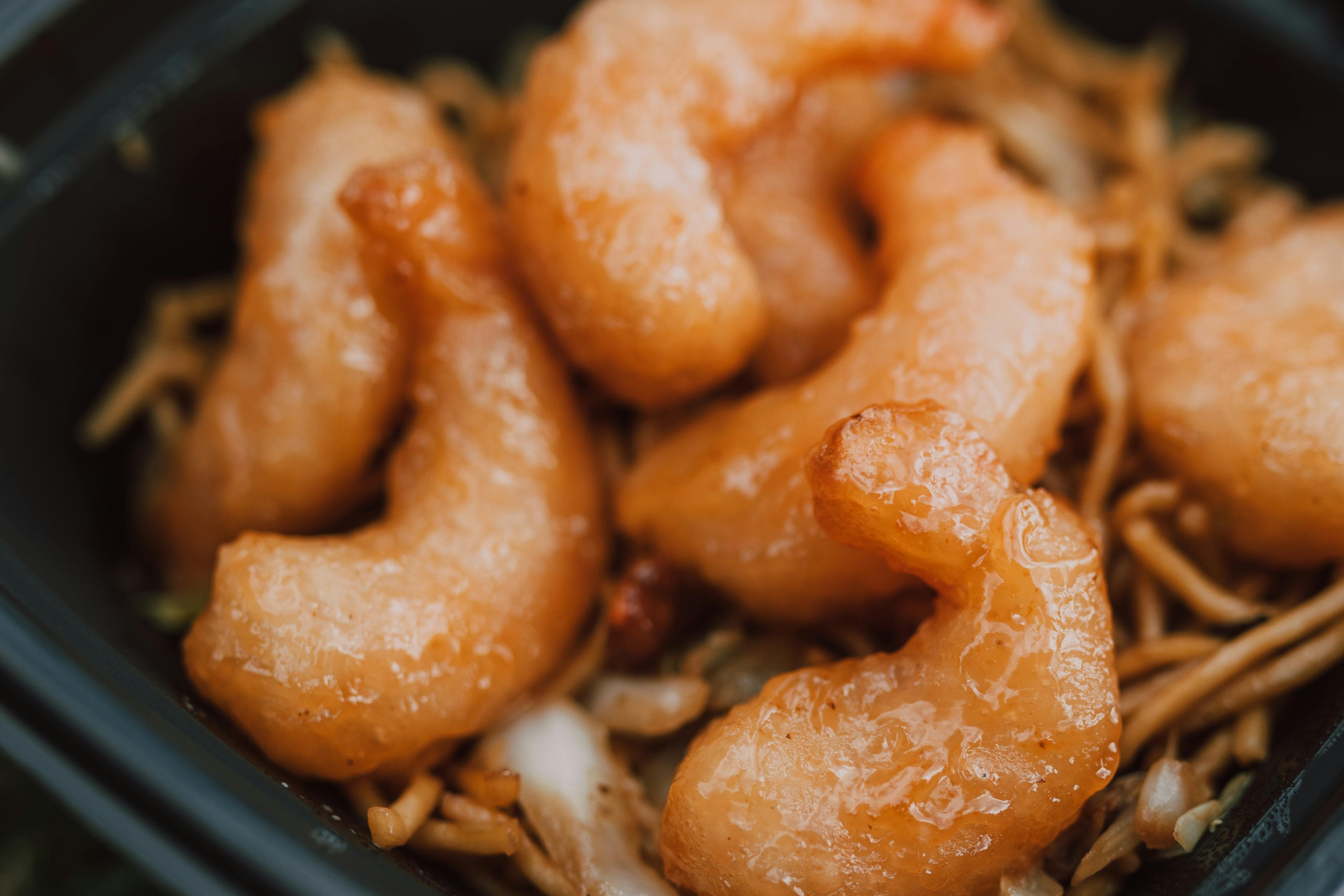
Photo: RDNE Stock project / Pexels
Chinese
Honey Walnut Shrimp
The diets react (see scores below)
Common Ingredients
- shrimp
- cornstarch
- walnuts
- sugar
- mayonnaise
- honey
- sweetened condensed milk
- lemon juice
Specific recipes may vary.
Incompatible with 11 of 11 diets
Diet Ratings
Honey Walnut Shrimp is fundamentally incompatible with a ketogenic diet. The dish is loaded with multiple high-sugar, high-carb ingredients: honey (pure sugar, ~17g carbs per tablespoon), sweetened condensed milk (extremely high in sugar, ~22g carbs per 2 tablespoons), added granulated sugar (used to candy the walnuts), and cornstarch (a starchy thickener, ~7g carbs per tablespoon). Combined in a single serving, these ingredients easily push net carbs well beyond the entire daily keto limit of 20-50g. While shrimp and walnuts individually are keto-friendly, and mayonnaise is a high-fat keto staple, the sugar-laden sauce and coating completely disqualify this dish. There is no meaningful portion size that would make this compatible with ketosis.
Honey Walnut Shrimp contains multiple animal-derived ingredients that make it entirely incompatible with a vegan diet. Shrimp is seafood (an animal product), mayonnaise typically contains eggs, honey is excluded by the vast majority of vegan organizations as an animal product, and sweetened condensed milk is a dairy product. With four distinct animal-derived ingredients present, this dish is unambiguously non-vegan with no meaningful debate within the vegan community.
Honey Walnut Shrimp contains multiple non-paleo ingredients that make it clearly incompatible with the diet. Cornstarch is a processed grain-derived starch and is excluded. Sugar is refined and explicitly banned. Sweetened condensed milk is a dairy product with added refined sugar, violating both the dairy and refined sugar rules. Mayonnaise, in its commercial form, is typically made with seed oils (soybean or canola oil), which are excluded. While shrimp, walnuts, honey, and lemon juice have some paleo standing, the combination of cornstarch, refined sugar, condensed milk, and seed-oil-based mayonnaise make this dish firmly non-paleo. The only salvageable elements are the shrimp, walnuts, honey (caution-level), and lemon juice.
While shrimp is a Mediterranean-approved protein, this dish is fundamentally incompatible with Mediterranean diet principles. The preparation is dominated by high-sugar, processed ingredients: sweetened condensed milk, honey, sugar, and mayonnaise combine to create a heavy, sweet sauce that is antithetical to the diet's emphasis on whole, minimally processed foods. Cornstarch coating and deep-frying add refined carbohydrates and unhealthy fat preparation methods. Mayonnaise is a processed fat replacing the canonical extra virgin olive oil. The multiple added sugars (honey, sugar, sweetened condensed milk) represent exactly the kind of sugar loading the Mediterranean diet discourages. Despite the seafood protein base and the presence of walnuts, the overall nutritional profile is overwhelmed by refined carbs, added sugars, and processed fats.
Honey Walnut Shrimp is fundamentally incompatible with the carnivore diet. While shrimp is a carnivore-approved seafood, nearly every other ingredient in this dish is excluded. Cornstarch is a grain-derived starch, walnuts are plant-based nuts, sugar is a refined carbohydrate, honey is debated but here used as a sweetener in a processed context, sweetened condensed milk is a heavily processed dairy product loaded with sugar, lemon juice is plant-derived, and mayonnaise typically contains plant oils and additives. The shrimp itself is buried under multiple layers of plant-based, processed, and sugary ingredients that make this dish entirely off-limits on any tier of the carnivore diet.
Honey Walnut Shrimp contains multiple explicitly excluded ingredients under Whole30 rules. Cornstarch is directly listed as an excluded ingredient. Sugar is an added sugar, which is excluded. Honey is an added sweetener and excluded. Sweetened condensed milk is both dairy and contains added sugar — doubly excluded. Standard mayonnaise typically contains soy or other non-compliant additives. Even if the mayonnaise were swapped for a compliant version, the remaining excluded ingredients (cornstarch, sugar, honey, sweetened condensed milk) make this dish entirely incompatible with the Whole30 program.
Honey Walnut Shrimp contains multiple high-FODMAP ingredients that make it problematic during the elimination phase. Honey is high in excess fructose and is a significant FODMAP trigger — it is explicitly listed as high-FODMAP by Monash at any meaningful culinary quantity. Sweetened condensed milk is high in lactose (a disaccharide) and would be present in a quantity sufficient to cause issues. Walnuts are low-FODMAP at small servings (approximately 10 walnut halves per Monash), but in a dish where they are a featured ingredient, portions are likely to exceed the safe threshold. The remaining ingredients — shrimp, cornstarch, sugar, mayonnaise, and lemon juice — are generally low-FODMAP. However, the combination of honey and sweetened condensed milk alone makes this dish unsuitable during the FODMAP elimination phase. Even small amounts of honey used as a sauce base can deliver enough excess fructose to trigger symptoms.
Monash University rates honey as high-FODMAP at any typical serving (even 1 teaspoon delivers excess fructose), but some clinical practitioners allow very small drizzles of honey in cooking where dilution is extreme — this is not standard elimination phase guidance and should not be relied upon. The lactose load from sweetened condensed milk is similarly difficult to mitigate through portion reduction while keeping the dish recognizable.
Honey Walnut Shrimp is a heavily modified dish that diverges significantly from DASH principles. While shrimp itself is a lean protein, the preparation involves deep-frying with cornstarch batter, then coating in a sauce made from full-fat mayonnaise, honey, and sweetened condensed milk — all of which contribute substantially to added sugar, saturated fat, and excess calories. The sugar is used to candy the walnuts as well, compounding the added sugar load. Mayonnaise is high in fat and calories, and sweetened condensed milk is extremely high in added sugar and saturated fat. The overall dish is calorie-dense, high in added sugars, and high in saturated fat from the mayonnaise and condensed milk, directly conflicting with DASH guidelines that limit saturated fat, sweets, and added sugars. Although shrimp provides lean protein and walnuts offer heart-healthy omega-3s in isolation, the overall dish preparation makes it incompatible with the DASH eating plan.
Honey Walnut Shrimp is extremely difficult to fit into any Zone-balanced meal. While shrimp itself is an excellent lean Zone protein, the dish is constructed almost entirely around high-glycemic, Zone-unfavorable ingredients. The sauce combines honey, sugar, and sweetened condensed milk — three concentrated sugar sources that spike blood glucose and drive a pro-inflammatory insulin response, which is precisely what the Zone Diet is designed to prevent. Cornstarch batter adds more high-GI carbohydrate load. The mayonnaise contributes omega-6-heavy fat (typically soybean or canola oil), directly conflicting with the Zone's anti-inflammatory emphasis on monounsaturated and omega-3 fats. While walnuts are a Zone-favorable fat source, they are typically present in token quantities and cannot offset the macro imbalance. The resulting dish is calorie-dense, heavily weighted toward simple sugars and inflammatory fats, with minimal fiber or polyphenol content. There is no practical portion size at which this dish can achieve a 40/30/30 ratio — the carbohydrate fraction would be dominated by rapidly absorbed sugars, the fat fraction by pro-inflammatory omega-6s, and protein would be proportionally crowded out by the high-calorie sauce. This is one of the rare cases where the Zone framework essentially cannot accommodate the dish as prepared.
Honey Walnut Shrimp is heavily pro-inflammatory despite containing shrimp (a lean protein) and walnuts (an excellent omega-3 and anti-inflammatory food). The dish is dominated by a triple-sugar load from honey, refined sugar (used to candy the walnuts), and sweetened condensed milk — all sources of added sugar that drive glycation, raise triglycerides, and elevate inflammatory markers like CRP. Mayonnaise contributes significant omega-6 fatty acids from soybean or canola oil, and in typical restaurant or commercial preparation it is used in large quantities. Sweetened condensed milk adds both saturated fat and high sugar content. Cornstarch provides a refined carbohydrate coating with no nutritional benefit. Shrimp itself is neutral-to-mildly positive (lean protein, some selenium and iodine), and walnuts are genuinely anti-inflammatory (ALA omega-3s, polyphenols), but these positives are completely overwhelmed by the sauce profile. This dish is essentially a sugar-and-omega-6-laden indulgence that conflicts with nearly every core anti-inflammatory principle regarding added sugars, refined carbohydrates, and pro-inflammatory fat ratios.
Honey Walnut Shrimp is a poor fit for GLP-1 patients despite its shrimp base. The dish is defined by a high-fat, high-sugar sauce — mayonnaise and sweetened condensed milk deliver significant saturated fat and empty calories, while honey and condensed milk spike the sugar load considerably. Shrimp is cornstarch-battered and typically deep-fried before being tossed in the sauce, compounding the fat and digestibility problems. The candied walnuts add further sugar. Net result: high fat, high sugar, low fiber, and fried — a combination that hits nearly every GLP-1 avoid criterion simultaneously. The underlying shrimp protein is largely offset by the caloric density and poor nutrient-per-calorie ratio of the preparation. Gastric emptying is already slowed on GLP-1 medications; a heavy fried-and-mayo-coated dish significantly raises the risk of nausea, reflux, and bloating.
*See how scores were generated at our methodology page.
Nutritional profile
Six traits that cut across every diet.
Fiber & Plants
How much whole-plant food and fiber it delivers.
Healthy Fats
The quality of its fats (unsaturated, omega-3).
Whole / Unprocessed
How close it is to its natural, unprocessed form.
Gut Gentle
How easy it is on digestion (low FODMAP, few irritants).
Low Glycemic
How little it spikes your blood sugar.
Protein Density
How much protein it packs per calorie.
Controversy Index
Higher controversy = more disagreement between diets.