Photo: Karl Solano / Pexels
Mediterranean
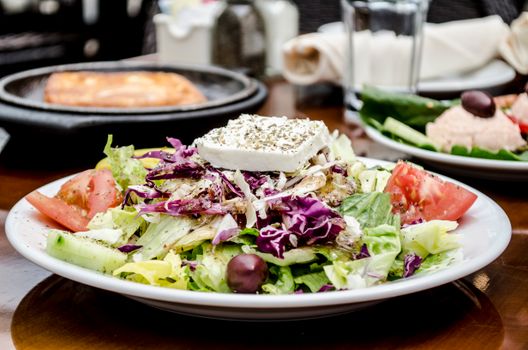
Village Greek Salad (Horiatiki)
The diets react (see scores below)
Common Ingredients
- tomatoes
- cucumber
- red onion
- green bell pepper
- Kalamata olives
- feta cheese
- olive oil
- oregano
Specific recipes may vary.
Incompatible with 4 of 11 diets
Diet Ratings
A traditional Horiatiki salad is mostly keto-friendly but requires portion awareness. The base ingredients — cucumber, green bell pepper, olives, feta, and olive oil — are excellent keto choices with low net carbs and healthy fats. The main concerns are tomatoes and red onion. A standard serving of Horiatiki uses a significant quantity of tomatoes (100–150g, ~3–5g net carbs) and red onion (~30g, ~2g net carbs), which add up meaningfully. A generous restaurant portion could push net carbs to 8–12g, which is manageable within a daily 20–50g budget but not trivial. Kalamata olives and olive oil boost fat content favorably, and feta provides moderate fat and protein. Overall, this dish fits keto with mindful portioning — particularly limiting tomato and onion quantities — making it a 'caution' rather than a clear approve.
Stricter keto practitioners argue that the natural sugars in tomatoes and the fructose load, even at moderate amounts, can be problematic for those with very low carb thresholds (under 20g/day) or insulin sensitivity issues, and recommend reducing tomatoes significantly or substituting with cucumber-heavy versions. Lazy keto adherents, conversely, would likely approve this dish outright given its whole-food, low-processed profile and moderate carb count.
Village Greek Salad (Horiatiki) contains feta cheese, which is a dairy product made from sheep's or goat's milk. Dairy is an animal product explicitly excluded under vegan dietary rules. All other ingredients — tomatoes, cucumber, red onion, green bell pepper, Kalamata olives, olive oil, and oregano — are fully plant-based and would score highly on their own. However, the presence of feta cheese as a core, defining ingredient of this dish makes it non-vegan. The dish can be made vegan by substituting feta with a plant-based alternative (e.g., marinated tofu or commercially available vegan feta), but the traditional recipe as listed is not compliant.
The Village Greek Salad is disqualified primarily by feta cheese, a dairy product explicitly excluded from the paleo diet. While the majority of ingredients — tomatoes, cucumber, red onion, green bell pepper, Kalamata olives, olive oil, and oregano — are fully paleo-compliant and would earn a strong approval on their own, feta is a cured, salted dairy cheese that violates two paleo rules simultaneously: it is a dairy product and contains added salt. Unlike ghee, which has casein and lactose largely removed, feta retains all dairy proteins and lactose. Kalamata olives may also contain added salt depending on the brine, which is a minor secondary concern. The dish cannot be rated higher than 'avoid' as long as feta is a core, non-optional ingredient.
The Village Greek Salad (Horiatiki) is arguably the most iconic dish of the Mediterranean diet, originating from Greece and embodying nearly every core principle. It is built entirely on raw vegetables (tomatoes, cucumber, red onion, green bell pepper), features Kalamata olives as a whole-food fat and phytonutrient source, uses extra virgin olive oil as the primary dressing fat, and includes feta cheese in a moderate, traditional portion. The herbs (oregano) add flavor without salt overload. There is no processed ingredient, no refined grain, no added sugar, and no red meat. Feta, while a dairy product, is used in the traditional Mediterranean manner — as a flavor accent rather than a protein centerpiece. This dish is a textbook example of plant-forward Mediterranean eating.
Village Greek Salad (Horiatiki) is composed almost entirely of plant-derived foods — tomatoes, cucumber, red onion, green bell pepper, Kalamata olives, and olive oil — all of which are strictly excluded on a carnivore diet. Oregano is a plant-based spice, also excluded. Feta cheese is the only animal-derived ingredient, but it is a minor component surrounded by foods that are fundamentally incompatible with carnivore principles. There is no primary protein source of animal origin. This dish is a quintessential Mediterranean plant-based salad and represents virtually everything the carnivore diet eliminates.
Feta cheese is dairy, and dairy is explicitly excluded on the Whole30 program. All other ingredients in this salad — tomatoes, cucumber, red onion, green bell pepper, Kalamata olives, olive oil, and oregano — are fully compliant. However, feta is a non-negotiable disqualifier. The salad could be made Whole30-compliant simply by omitting the feta cheese.
This classic Greek salad has two notable FODMAP concerns: red onion and feta cheese. Red onion is high in fructans even in small amounts and is a primary FODMAP offender — it's difficult to eat a meaningful portion of Greek salad without consuming a problematic quantity. Feta cheese is a hard-brined cheese that Monash rates as low-FODMAP at 40g per serve due to low lactose content, but many traditional servings include a large slab well exceeding this. The remaining ingredients are generally low-FODMAP: tomatoes are safe at standard servings (though cherry tomatoes have a lower threshold), cucumber is low-FODMAP, green bell pepper is low-FODMAP, Kalamata olives are low-FODMAP at ~15g (about 4-5 olives), olive oil is safe, and oregano in culinary quantities is fine. The dish could be made low-FODMAP by omitting red onion (substituting the green tops of spring onions) and moderating feta to ≤40g, but as traditionally prepared the red onion makes it unsuitable for the elimination phase.
Monash University rates feta as low-FODMAP at 40g and tomatoes as safe at standard servings, which might suggest approval with portion control. However, most clinical FODMAP practitioners would flag this dish during elimination due to the red onion content, which is high-FODMAP at virtually any culinary serving size and cannot be easily reduced without altering the dish fundamentally.
Village Greek Salad is built on a strong DASH-friendly foundation — tomatoes, cucumber, red onion, and green bell pepper are all excellent DASH vegetables, rich in potassium, fiber, and antioxidants. Olive oil aligns well with DASH's emphasis on healthy unsaturated fats. However, two ingredients pull this dish into 'caution' territory: feta cheese and Kalamata olives. Feta is a full-fat, relatively high-sodium cheese (~316mg sodium per 28g serving), and DASH explicitly favors low-fat dairy. Kalamata olives, while a source of heart-healthy monounsaturated fats, are typically cured in brine and contribute meaningful sodium (roughly 150–200mg per 10 olives). A traditional serving of this salad — with a generous block of feta and a full portion of olives — can easily deliver 600–900mg of sodium, which is a significant fraction of the DASH daily sodium budget (1,500–2,300mg/day). The dish is not disqualifying but requires portion awareness, particularly for those on the stricter 1,500mg/day DASH variant. Using reduced-fat feta and rinsing olives would improve the score.
NIH DASH guidelines specify low-fat dairy and caution about sodium, which technically flags full-fat feta and brined olives. However, updated clinical interpretations increasingly recognize the Mediterranean dietary pattern — of which Horiatiki is emblematic — as cardioprotective; some DASH-oriented cardiologists and dietitians permit moderate full-fat cheese and olives given their overall nutrient profile and the strong evidence base for Mediterranean eating.
Village Greek Salad (Horiatiki) is an excellent Zone-compatible dish. The vegetable base — tomatoes, cucumber, red onion, and green bell pepper — provides low-glycemic carbohydrates rich in polyphenols, exactly the colorful vegetables Dr. Sears prioritizes. Kalamata olives and olive oil deliver monounsaturated fats, the preferred Zone fat source. Feta cheese contributes both protein and fat. The dish aligns naturally with the Zone's anti-inflammatory emphasis on omega-3s, polyphenols, and monounsaturated fats. The primary concern is that feta is a saturated fat source and relatively high in sodium, and the dish lacks a dominant lean protein, making it better as a side or starter rather than a standalone Zone meal. To build a complete Zone meal, a lean protein source (grilled chicken, fish, or shrimp) should be added. As a salad component within a balanced Zone meal, it scores very well. The olive oil portion should be measured (roughly 1 teaspoon per block) to keep fat blocks in check given feta also contributes fat.
Early Zone literature (Enter the Zone) was more cautious about saturated fat from dairy sources like feta, classifying full-fat cheeses as less favorable. Sears' later anti-inflammatory writings (The OmegaRx Zone, Zone Perfect Meals in Minutes) became somewhat more permissive about moderate dairy fat in context, particularly when offset by abundant polyphenol-rich vegetables and monounsaturated fats as present here. Some Zone practitioners would rate this lower due to feta's saturated fat content and the absence of a dedicated lean protein block.
The Village Greek Salad (Horiatiki) is a flagship dish of the Mediterranean diet and broadly aligns with anti-inflammatory eating principles. Tomatoes provide lycopene and vitamin C — potent antioxidants with documented anti-inflammatory effects. Cucumber and red onion contribute quercetin and other flavonoids. Green bell pepper adds vitamin C and carotenoids. Kalamata olives are rich in oleuropein and hydroxytyrosol, polyphenols with strong anti-inflammatory activity. Extra virgin olive oil (EVOO) is the cornerstone of the anti-inflammatory diet, containing oleocanthal which inhibits COX enzymes similarly to ibuprofen. Oregano is a concentrated source of rosmarinic acid and other anti-inflammatory polyphenols. Feta cheese is the one ingredient that introduces a mild note of caution — it is a full-fat dairy product with saturated fat, which anti-inflammatory guidelines recommend limiting. However, feta is used in relatively modest quantities in this dish, and some research suggests fermented dairy may have neutral or even modest anti-inflammatory effects due to bioactive peptides and probiotics. Overall, this dish is a textbook anti-inflammatory meal. The confidence is rated 'medium' rather than 'high' solely because of feta's status as a full-fat dairy product, which creates minor disagreement among anti-inflammatory authorities.
Most anti-inflammatory protocols, including Dr. Weil's pyramid, encourage limiting full-fat dairy like feta. However, a growing body of fermented dairy research and Mediterranean diet studies suggest that small amounts of traditional cheeses like feta — consumed in the context of a polyphenol-rich, vegetable-forward meal — do not meaningfully increase inflammatory burden, and some practitioners consider them acceptable.
Village Greek Salad is a nutrient-dense, vegetable-forward dish with meaningful fiber from tomatoes, cucumber, bell pepper, and onion, and beneficial unsaturated fats from olive oil and Kalamata olives. However, it falls short as a GLP-1-friendly meal on its own primarily because it provides virtually no protein — feta contributes only modest protein (~4g per standard serving) while adding saturated fat and sodium. The olive oil and olives also add meaningful fat per serving, which can worsen nausea or bloating in GLP-1 patients. Positives include high water content (supports hydration), easy digestibility, anti-inflammatory ingredients, and good fiber. The core problem is that GLP-1 patients eating small portions cannot afford a meal-sized serving that delivers almost no protein. As a side dish paired with a high-protein main (grilled chicken, fish, legumes), it scores well. As a standalone meal, it fails to meet the protein priority and would require a large volume to be filling.
Some GLP-1-focused dietitians accept this salad readily as a side or light component, noting that the olive oil and feta provide satiety-supporting fat that can help GLP-1 patients tolerate small meals — particularly for patients who struggle with GI side effects and need gentler foods. Others flag the fat content from combined olive oil and olives as a meaningful nausea risk, especially early in treatment, and emphasize that the near-zero protein makes it unsuitable as a primary dish.
*See how scores were generated at our methodology page.
Nutritional profile
Six traits that cut across every diet.
Fiber & Plants
How much whole-plant food and fiber it delivers.
Healthy Fats
The quality of its fats (unsaturated, omega-3).
Whole / Unprocessed
How close it is to its natural, unprocessed form.
Gut Gentle
How easy it is on digestion (low FODMAP, few irritants).
Low Glycemic
How little it spikes your blood sugar.
Protein Density
How much protein it packs per calorie.
Controversy Index
Higher controversy = more disagreement between diets.
Diet-Specific Tips
 Keto — 5/10
View tips
- Tomatoes contribute 3–5g net carbs per 100–150g serving — manageable but notable
- Red onion adds ~2g net carbs and should be used sparingly
- Kalamata olives are keto-ideal: high fat, very low net carbs
- Feta cheese provides healthy fat and moderate protein with minimal carbs
- Olive oil dressing is a keto staple and boosts fat macros favorably
- Full restaurant portion could reach 8–12g net carbs — fits keto but requires daily budget awareness
- No grains, added sugars, or starchy vegetables — whole food ingredients throughout
 Mediterranean — 10/10
View tips
- Abundant raw vegetables provide fiber, vitamins, and antioxidants
- Extra virgin olive oil as the sole fat source — the canonical Mediterranean fat
- Kalamata olives contribute heart-healthy monounsaturated fats and polyphenols
- Feta cheese used in modest, traditional proportion consistent with moderate dairy guidance
- Zero processed ingredients, refined grains, or added sugars
- Oregano adds anti-inflammatory phytochemicals
- Directly originates from Greek Mediterranean culinary tradition
 Low-FODMAP — 5/10
View tips
- Red onion is high-FODMAP due to fructans at any standard culinary serving — primary concern
- Feta cheese is low-FODMAP at ≤40g but traditional Greek salad often includes a larger slab
- Tomatoes are low-FODMAP at standard serving (up to ~75g cherry tomatoes or 1 medium common tomato)
- Cucumber, green bell pepper, olive oil, and oregano are all low-FODMAP
- Kalamata olives are low-FODMAP at ~4-5 olives (≈15g) — standard salad portions are usually fine
- Dish is easily modified to low-FODMAP by substituting spring onion greens for red onion
 DASH — 6/10
View tips
- Vegetables (tomatoes, cucumber, pepper, onion) are core DASH-approved foods rich in potassium and fiber
- Olive oil is a DASH-compatible healthy fat
- Feta cheese is full-fat and high in sodium (~300+ mg per standard serving), conflicting with DASH low-fat dairy guidance
- Kalamata olives are brine-cured and add significant sodium load
- Combined sodium from feta and olives can approach 700–900mg per serving, requiring budget awareness on DASH
- Portion control of feta and olives is critical; reduced-fat feta and rinsed olives would upgrade this dish
- Strong alignment with Mediterranean diet pattern, which shares cardiovascular benefits with DASH
 Zone — 8/10
View tips
- Excellent low-glycemic vegetable base rich in polyphenols (tomatoes, cucumber, bell pepper, red onion)
- Kalamata olives and olive oil provide ideal monounsaturated fat blocks
- Feta cheese contributes protein and fat but is a saturated fat source — moderate the portion
- No lean protein source — dish should be paired with grilled fish or chicken for a complete Zone meal
- Anti-inflammatory profile is strong: polyphenol-rich vegetables, olive oil, and olives align with Sears' later Zone writings
- Olive oil quantity should be measured to avoid excess fat blocks given feta also contributes fat
 Anti-Inflammatory — 9/10
View tips
- Extra virgin olive oil provides oleocanthal, a natural COX inhibitor with anti-inflammatory properties comparable to ibuprofen
- Kalamata olives are rich in oleuropein and hydroxytyrosol — some of the most potent anti-inflammatory polyphenols in the Mediterranean diet
- Tomatoes contribute lycopene and vitamin C, both associated with reduced inflammatory markers
- Oregano delivers rosmarinic acid and flavonoids with documented anti-inflammatory activity
- Red onion and bell pepper add quercetin and carotenoids
- Feta is a full-fat dairy product recommended to limit, but modest quantities in this context are unlikely to significantly offset the dish's anti-inflammatory benefits
- No processed ingredients, refined carbohydrates, seed oils, or added sugars
 GLP-1 Friendly — 5/10
View tips
- Very low protein — feta contributes roughly 3-5g per serving, insufficient to meet the 15-30g per meal target
- Good fiber from mixed vegetables supports digestion and helps prevent GLP-1-associated constipation
- High water content from tomatoes and cucumber supports hydration, a key concern on GLP-1 medications
- Combined fat from olive oil and Kalamata olives may worsen nausea or reflux, particularly early in treatment
- Nutrient-dense per calorie — vitamins, antioxidants, and minerals are well-represented
- Functions well as a side dish but not as a standalone GLP-1-friendly meal
- Feta adds sodium, which may be a consideration for patients with blood pressure concerns