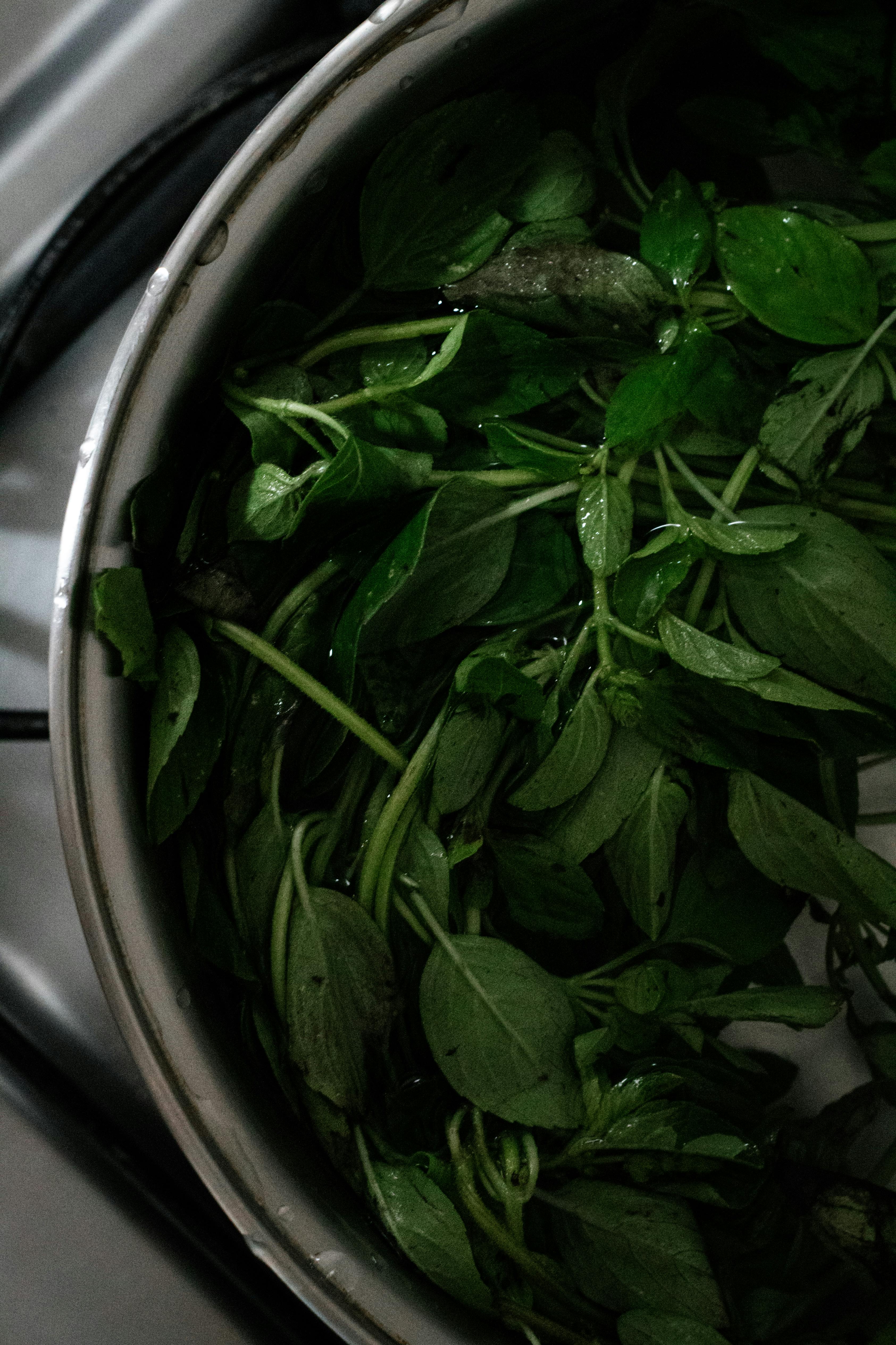
Photo: Giovanna Kamimura / Pexels
Mediterranean
Horta (Wild Greens)
The diets react (see scores below)
Common Ingredients
- dandelion greens
- chard
- spinach
- olive oil
- lemon juice
- salt
Specific recipes may vary.
Incompatible with 2 of 11 diets
Diet Ratings
Horta is an excellent keto-compatible dish. The base consists of leafy greens (dandelion greens, chard, spinach) which are all very low in net carbs — a standard serving of mixed cooked greens (roughly 150-200g) delivers approximately 3-5g net carbs. Olive oil adds healthy monounsaturated fat, aligning perfectly with keto's high-fat requirement. Lemon juice contributes a negligible amount of carbs at the quantity typically used as a dressing. The dish is whole, unprocessed, fiber-rich, and free from grains, added sugars, or starchy ingredients. It is an ideal keto side dish when consumed in reasonable portions.
Horta is a traditional Mediterranean dish of boiled or sautéed wild greens, and this version is composed entirely of whole plant foods. Dandelion greens, chard, and spinach are nutrient-dense leafy vegetables; olive oil is a plant-derived fat; lemon juice is fruit-based; and salt is a mineral. There are no animal products, animal-derived ingredients, or processed additives of any kind. This is an exemplary whole-food plant-based dish that aligns perfectly with vegan principles at the highest level.
Horta is a simple, wholesome dish of wild greens with olive oil and lemon — nearly perfect for paleo. Dandelion greens, chard, spinach, and olive oil are all unambiguously paleo-approved. Lemon juice is a natural, whole-food ingredient. The single disqualifying ingredient is salt, which falls under 'added salt' and is explicitly excluded under paleo rules. Without the salt, this dish would score a 9. Because the recipe as listed includes salt as a named ingredient, it must be rated 'avoid' per the guidelines.
Horta is one of the most quintessentially Mediterranean dishes in existence. Wild and cultivated greens dressed with extra virgin olive oil and lemon juice are a daily staple across Greece, southern Italy, and the broader Mediterranean basin. Every single ingredient aligns perfectly with core Mediterranean diet principles: leafy greens (dandelion, chard, spinach) are among the most nutritious plant foods emphasized by the diet, extra virgin olive oil is the canonical fat source, and lemon juice adds flavor without any processed additives. There is no red meat, no refined grains, no added sugar, and no processed ingredients of any kind. This dish exemplifies the plant-forward, whole-food foundation of the Mediterranean dietary pattern.
Horta is entirely plant-based — dandelion greens, chard, and spinach are all leafy vegetables, which are explicitly excluded from the carnivore diet. Olive oil is a plant-derived fat, and lemon juice is fruit-derived. Salt is the only carnivore-compatible ingredient in the entire dish. There are no animal products whatsoever. This dish is the antithesis of carnivore eating and would be rejected universally across all carnivore protocols, from the most permissive animal-based approach to the strictest Lion Diet.
Horta is a simple Mediterranean dish of boiled or sautéed wild greens dressed with olive oil and lemon juice. Every ingredient — dandelion greens, chard, spinach, olive oil, lemon juice, and salt — is explicitly compliant with Whole30 rules. These are whole, unprocessed vegetables dressed with natural fat and an acidic component. There are no excluded ingredients (no grains, legumes, dairy, added sugars, or any other disallowed items). This dish is a textbook example of the kind of whole-food, vegetable-forward eating the Whole30 program encourages.
Horta is a simple Greek dish of boiled or wilted greens dressed with olive oil and lemon juice. All core ingredients are low-FODMAP at standard servings. Olive oil is FODMAP-free; lemon juice is low-FODMAP at standard amounts (up to ~60ml); salt is FODMAP-free. Spinach and chard are low-FODMAP at standard side-dish servings per Monash (spinach up to 75g, chard/silverbeet is similarly low-FODMAP). Dandelion greens introduce slight uncertainty as Monash data is less comprehensive for this specific ingredient, but they are generally considered low-FODMAP at typical serving sizes and are not known to be high in any FODMAP category. The dish contains no garlic, onion, wheat, legumes, lactose, or other common high-FODMAP ingredients. A standard side serving of mixed greens (75–150g cooked) should be safe during elimination phase.
Monash University has tested spinach and chard individually, but dandelion greens have limited formal FODMAP testing data; some elimination phase practitioners may advise caution with untested greens or recommend sticking to well-documented vegetables. Additionally, large portions of spinach (above 75g raw) can become moderate-FODMAP, so very generous servings of this mixed greens dish warrant portion awareness.
Horta is an excellent DASH diet food. The core ingredients — dandelion greens, chard, and spinach — are precisely the types of vegetables the NIH/NHLBI DASH guidelines explicitly emphasize. These leafy greens are rich in potassium, magnesium, calcium, and fiber, the four key nutrients DASH targets for blood pressure reduction. Olive oil is a heart-healthy unsaturated fat fully consistent with DASH principles. Lemon juice adds flavor without sodium. The only minor concern is added salt; however, the amount used in home preparation of this dish is typically modest and within DASH sodium limits. This dish counts toward the recommended 4-5 daily vegetable servings and delivers an outstanding micronutrient profile aligned with DASH goals.
Horta is a near-perfect Zone Diet side dish. Dandelion greens, chard, and spinach are all highly favorable low-glycemic carbohydrates — exactly the colorful, non-starchy vegetables Dr. Sears champions as the carbohydrate foundation of the Zone. They are rich in polyphenols, fiber, and micronutrients while contributing minimal net carbs per serving. The olive oil dressing provides ideal monounsaturated fat, directly aligning with Zone fat recommendations. Lemon juice adds negligible carbs while boosting polyphenol absorption. As a side dish, horta pairs seamlessly with a lean protein source (fish, chicken) to complete a balanced Zone meal. The only minor limitation is the absence of protein, meaning it must accompany a protein source to form a complete Zone block structure — but as a side, this is expected and not a deduction. This dish exemplifies the Mediterranean anti-inflammatory eating pattern that Sears explicitly endorses in his later work.
Horta is essentially a textbook anti-inflammatory dish. Dandelion greens, chard, and spinach are all dark leafy greens loaded with antioxidants (vitamins C, E, K), carotenoids (beta-carotene, lutein, zeaxanthin), flavonoids, and fiber — all of which are associated with reduced inflammatory markers including CRP and IL-6. Dandelion greens in particular contain taraxacin and luteolin, which have demonstrated anti-inflammatory activity in research. Chard and spinach provide magnesium and polyphenols that further support an anti-inflammatory profile. Extra virgin olive oil is one of the cornerstone ingredients of the anti-inflammatory diet, rich in oleocanthal (a natural COX inhibitor) and monounsaturated fats. Lemon juice adds vitamin C and flavonoids. Salt at culinary levels is a non-issue. The dish is also low in calories, contains no saturated fat, no refined carbohydrates, no added sugars, and no processed ingredients. This is precisely the type of vegetable-forward preparation that Dr. Weil's Anti-Inflammatory Food Pyramid and the broader Mediterranean dietary pattern most strongly endorse.
Horta is an excellent GLP-1 companion dish. The blend of dandelion greens, chard, and spinach delivers significant fiber, micronutrients (iron, calcium, folate, vitamins A, C, K), and meaningful water content — all critical for GLP-1 patients who eat smaller volumes and are prone to constipation and reduced thirst. Olive oil provides heart-healthy unsaturated fat in what is typically a modest drizzle (1-2 tsp per serving), and lemon juice adds brightness without sugar or irritants. The dish is easy to digest when lightly wilted/boiled, low in calories, and nutrient-dense per bite. The main limitation is negligible protein, so it must be paired with a high-protein main to meet daily targets. As a side dish, this is nearly ideal.
*See how scores were generated at our methodology page.
Nutritional profile
Six traits that cut across every diet.
Fiber & Plants
How much whole-plant food and fiber it delivers.
Healthy Fats
The quality of its fats (unsaturated, omega-3).
Whole / Unprocessed
How close it is to its natural, unprocessed form.
Gut Gentle
How easy it is on digestion (low FODMAP, few irritants).
Low Glycemic
How little it spikes your blood sugar.
Protein Density
How much protein it packs per calorie.
Controversy Index
Higher controversy = more disagreement between diets.
Diet-Specific Tips
 Keto — 8/10
View tips
- Leafy greens (dandelion, chard, spinach) are very low in net carbs after fiber subtraction
- Olive oil provides healthy fats consistent with keto macros
- Lemon juice used in small quantities contributes minimal carbs (under 1g per tablespoon)
- No grains, added sugars, or starchy vegetables present
- High fiber content from greens supports digestive health without spiking net carbs
- Portion control still advisable — large quantities of greens could accumulate carbs toward daily limit
 Vegan — 10/10
View tips
- All ingredients are 100% plant-based with no animal derivatives
- Three varieties of nutrient-dense whole leafy greens as the base
- Olive oil is a minimally processed plant fat, fully vegan
- Lemon juice provides acidity and vitamin C from a whole fruit source
- No processing, additives, or ethically contested ingredients
- Scores maximum 10 as a whole-food, single-ingredient-category dish with no caveats
 Mediterranean — 10/10
View tips
- Multiple varieties of nutrient-dense leafy greens as the sole base
- Extra virgin olive oil used as primary fat — the gold standard for Mediterranean diet
- Lemon juice provides acidity naturally with no added sugar or processing
- Traditional Greek dish with centuries of documented Mediterranean culinary heritage
- Zero processed ingredients, refined grains, or added sugars
- High in fiber, vitamins K, A, C, and antioxidants
- Plant-based with no animal products, fully aligned with daily consumption guidance
 Whole30 — 10/10
View tips
- Dandelion greens, chard, and spinach are all Whole30-compliant vegetables
- Olive oil is an approved natural fat
- Lemon juice is a compliant acidic seasoning
- Salt is explicitly allowed on Whole30
- No excluded ingredients present
- Whole, unprocessed ingredients with no additives or preservatives
- Aligns perfectly with the spirit and rules of the Whole30 program
 Low-FODMAP — 8/10
View tips
- Spinach low-FODMAP at up to 75g per Monash — portion dependent
- Chard (silverbeet) considered low-FODMAP at standard servings
- Dandelion greens have limited Monash testing but no known high-FODMAP compounds
- Olive oil is FODMAP-free — fat-soluble medium poses no FODMAP risk
- Lemon juice low-FODMAP at standard culinary amounts
- No garlic, onion, wheat, legumes, or lactose present
- Simple preparation minimizes hidden FODMAP sources
 DASH — 9/10
View tips
- Dandelion greens, chard, and spinach are DASH-core vegetables rich in potassium, magnesium, and calcium
- High fiber content supports cardiovascular health and is a primary DASH nutrient target
- Olive oil provides heart-healthy monounsaturated fats with no saturated fat concern
- Lemon juice used as a sodium-free flavor enhancer — a DASH-approved strategy
- Added salt is the only limiting factor; portion control of salt keeps dish well within 2,300mg/day limit
- No saturated fat, no added sugar, no processed ingredients — fully aligned with DASH principles
 Zone — 9/10
View tips
- Dandelion greens, chard, and spinach are highly favorable low-glycemic Zone carbohydrates
- Olive oil provides ideal monounsaturated fat — a cornerstone Zone fat source
- Rich in polyphenols and fiber, supporting Zone anti-inflammatory goals
- Very low net carbs per serving, easy to portion within Zone carb blocks
- No protein present — must be paired with lean protein to complete a Zone meal
- Lemon juice adds minimal glycemic load while supporting nutrient absorption
- Fully whole-food, unprocessed dish with no unfavorable ingredients
 Anti-Inflammatory — 10/10
View tips
- Dandelion greens, chard, and spinach are rich in carotenoids, flavonoids, and vitamins C, E, and K
- Extra virgin olive oil provides oleocanthal with COX-inhibiting anti-inflammatory properties
- High fiber content supports gut microbiome and reduces systemic inflammation
- Zero refined carbohydrates, added sugars, trans fats, or processed ingredients
- Lemon juice contributes additional vitamin C and flavonoids
- Classic Mediterranean preparation fully aligned with anti-inflammatory dietary principles
 GLP-1 Friendly — 8/10
View tips
- High fiber from mixed bitter greens supports GLP-1 digestion and constipation prevention
- Rich in micronutrients — critical when total calorie intake is reduced
- High water content supports hydration, which GLP-1 medications can compromise
- Olive oil provides unsaturated fat; portion should remain modest to limit fat load
- Zero protein — must be paired with a quality protein source to be a complete meal component
- Easy to digest when cooked, gentle on slowed gastric emptying
- No sugar, no refined ingredients, no carbonation — avoids all GLP-1 trigger categories