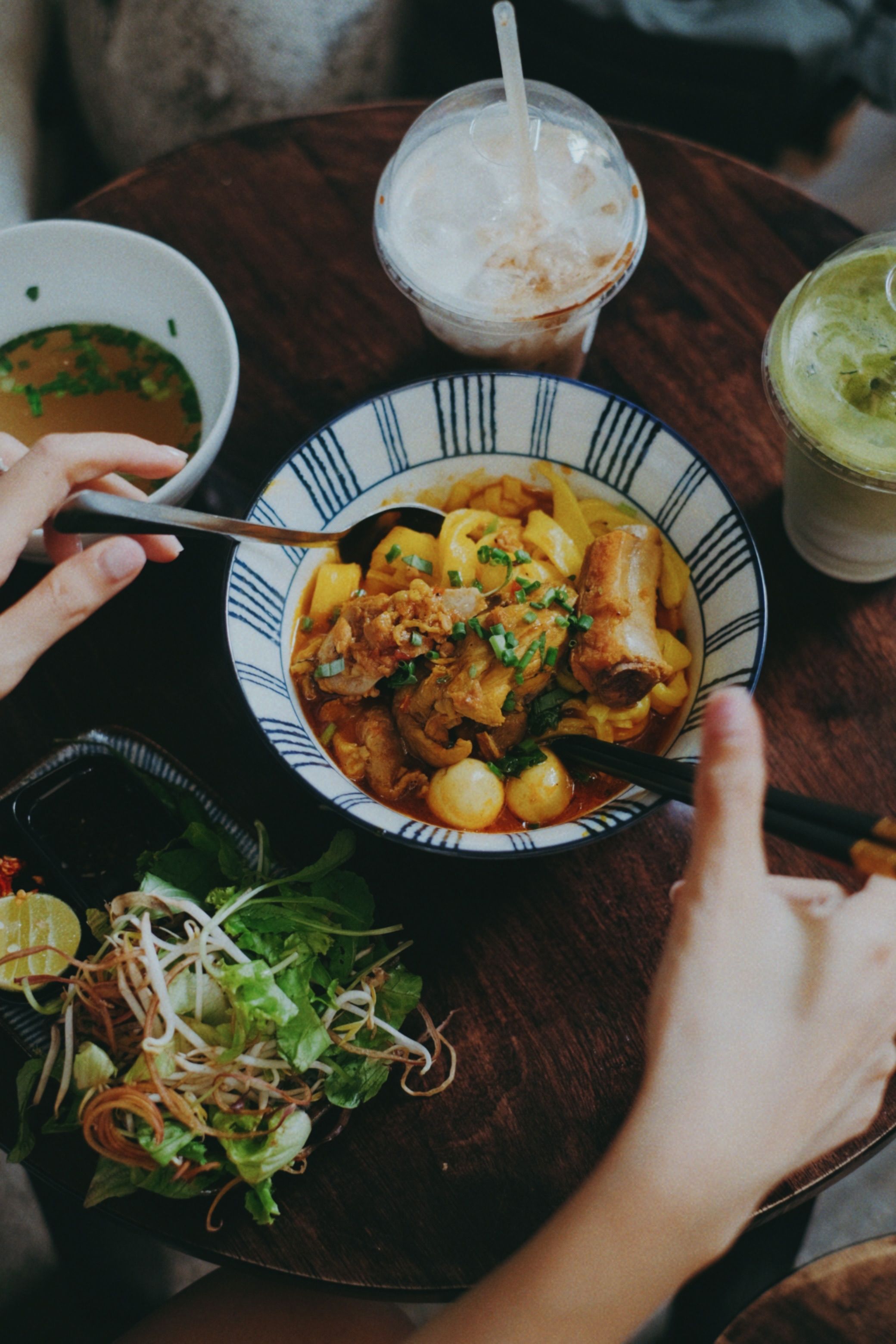
Photo: Pew Nguyen / Pexels
The diets react (see scores below)
Common Ingredients
- rice noodles
- pork ribs
- shrimp
- ground pork
- scallions
- cilantro
- bean sprouts
- garlic
Specific recipes may vary.
Incompatible with 6 of 11 diets
Diet Ratings
Hu Tieu is built on a foundation of rice noodles, which are a high-carb grain-based ingredient. A standard serving of rice noodles contributes approximately 40-50g of net carbs on its own, easily exceeding or maxing out the entire daily keto carb budget in a single bowl. While the broth, pork ribs, shrimp, ground pork, and most aromatics (scallions, cilantro, garlic, bean sprouts) are either keto-friendly or low-carb, the rice noodles are a non-negotiable core component that makes this dish incompatible with ketosis in its traditional form. Bean sprouts also add a small amount of carbs. The dish could theoretically be adapted by substituting shirataki or zucchini noodles, but as commonly prepared it must be avoided.
Hu Tieu contains multiple animal products that are strictly excluded from a vegan diet. Pork ribs, ground pork, and shrimp are all animal-derived proteins. The broth is typically made by simmering pork bones, making it non-vegan at its foundation. There is no ambiguity here — this dish is fundamentally built on animal ingredients and is incompatible with veganism in any form.
Hu Tieu is built on a rice noodle base, which is a grain product and firmly excluded from the paleo diet. While several ingredients are fully paleo-compliant — pork ribs, shrimp, ground pork, scallions, cilantro, garlic, and bean sprouts (though bean sprouts from mung beans are technically a legume, also excluded) — the foundational noodle component is a dealbreaker. Rice noodles are a processed grain product, and grains are one of the clearest exclusions in paleo dietary guidelines. The dish cannot be considered paleo in its traditional form.
Hu Tieu is a Vietnamese noodle soup with a mixed profile from a Mediterranean diet perspective. On the positive side, it includes shrimp (seafood is encouraged 2-3 times weekly), aromatic vegetables (scallions, garlic, cilantro), and bean sprouts, which are plant-forward components. The broth-based preparation is also in line with Mediterranean soup traditions. However, the dish relies on rice noodles (refined grain, not a whole grain) and features pork in two forms — pork ribs and ground pork — which counts as red/processed meat and should be limited to a few times per month. The combination of two pork preparations alongside shrimp tips the dish toward the caution category. The dish is minimally processed and free of added sugars, which is a positive, but the prominence of pork prevents a full approval.
Some Mediterranean diet practitioners applying a flexible, whole-food lens might rate the shrimp component favorably and accept occasional pork in a broth-based soup as a modest portion in the context of an otherwise vegetable-rich meal; traditional Mediterranean cuisines do include pork sparingly, and when pork is used as a flavoring agent in a soup rather than the centerpiece, some authorities consider it an acceptable moderate indulgence.
Hu Tieu is fundamentally incompatible with the carnivore diet. While it does contain carnivore-approved proteins (pork ribs, ground pork, shrimp), the dish is built around rice noodles — a grain-based carbohydrate that is strictly excluded. Additionally, multiple plant-based ingredients are present: scallions, cilantro, bean sprouts, and garlic are all plant foods prohibited on carnivore. The broth base may be animal-derived, but the overall dish is a plant-heavy noodle soup that cannot be adapted to carnivore without fundamentally changing its nature.
Hu Tieu is built on a foundation of rice noodles, which are a grain-based ingredient. Rice and all rice-derived products (including rice noodles) are explicitly excluded on the Whole30 program. While all other listed ingredients — pork ribs, shrimp, ground pork, scallions, cilantro, bean sprouts, and garlic — are individually Whole30-compliant, the rice noodles are a core, non-negotiable component of this dish and cannot be included. Substituting with a compliant noodle alternative (e.g., zucchini noodles or kelp noodles) would change the dish fundamentally. As presented with rice noodles, this dish is not Whole30-compatible.
Hu Tieu contains garlic as a direct ingredient, which is high-FODMAP due to fructans and must be avoided during the elimination phase at any reasonable serving size. Scallion bulbs (white parts) also contain fructans, though the green tops are low-FODMAP. Bean sprouts can be consumed in moderate portions (~75g is low-FODMAP per Monash), but in a typical bowl of soup they are often served in larger quantities. The rice noodles, pork ribs, shrimp, ground pork, and cilantro are all individually low-FODMAP. The dish is disqualified primarily by garlic, which is a core broth/seasoning ingredient that cannot realistically be omitted in a standard restaurant preparation.
Hu Tieu is a Vietnamese noodle soup with a mixed DASH profile. On the positive side, it contains rice noodles (a refined grain but relatively low in fat), shrimp (a lean protein high in potassium and low in saturated fat), bean sprouts (a DASH-friendly vegetable), and aromatic vegetables like scallions, cilantro, and garlic that add nutrients without sodium. However, the dish raises several DASH concerns: (1) Pork ribs are a fattier cut of red meat with moderate saturated fat, which DASH limits. (2) Ground pork adds additional saturated fat depending on fat percentage. (3) The broth, as commonly prepared in restaurants or at home, typically involves simmering bones with fish sauce, soy sauce, or other high-sodium condiments — the resulting broth can easily contain 800–1,500mg of sodium per serving, approaching or exceeding a significant portion of the DASH daily sodium limit. (4) Rice noodles are refined rather than whole grain. The dish is not categorically DASH-incompatible, but sodium from broth is the primary concern. A home-prepared version with reduced-sodium broth, leaner pork (or pork loin instead of ribs), and no added fish sauce/soy sauce could score higher. As commonly served, caution is warranted.
NIH DASH guidelines broadly limit high-sodium broths and fatty red meats, placing this dish in caution territory. However, some DASH-oriented clinicians note that shrimp and vegetable-rich Vietnamese soups, when prepared with controlled sodium, align reasonably well with DASH principles — and recent evidence suggests dietary cholesterol from shrimp has minimal impact on cardiovascular risk in most individuals, making the shrimp component less of a concern than once thought.
Hu Tieu is a Vietnamese noodle soup that has genuine Zone-compatible elements but requires significant portion adjustment to hit the 40/30/30 ratio. The protein sources — shrimp, pork ribs, and ground pork — are reasonable Zone proteins, with shrimp being lean and favorable. Pork ribs carry more saturated fat, which Zone tolerates but does not prefer. The aromatics (scallions, cilantro, garlic) and bean sprouts are excellent low-glycemic Zone vegetables. The primary problem is the rice noodles, which are a high-glycemic refined carbohydrate and classified as 'unfavorable' in Zone terminology — they will spike the carbohydrate block count significantly and raise glycemic load. In a typical restaurant serving, rice noodles dominate the carbohydrate profile, making it difficult to hit the balanced 40/30/30 ratio without actively reducing the noodle portion and increasing vegetables. With strict portion control — a small portion of noodles (~1 block), emphasis on protein and vegetables, and broth kept light — this dish can fit into Zone eating, but it requires deliberate adjustment rather than being naturally Zone-balanced as served.
Some Zone practitioners, particularly those following Sears' later anti-inflammatory framework, may rate this more favorably given the omega-3 potential from shrimp, the polyphenol-rich herbs (cilantro, garlic), and the relatively lean protein profile. The key debate is whether rice noodles in a soup context — where overall glycemic load is moderated by the broth, protein, and fiber from sprouts — warrant a stricter penalty than dry refined carbohydrates. Sears' published materials classify rice noodles as unfavorable but not categorically forbidden.
Hu Tieu is a Vietnamese noodle soup with a mixed anti-inflammatory profile. On the positive side, shrimp provides lean protein with some omega-3s and selenium; garlic, scallions, and cilantro are anti-inflammatory aromatics with polyphenols and organosulfur compounds; bean sprouts offer fiber and phytonutrients; and the broth base is typically bone broth from pork ribs, which provides minerals and collagen. The dish is generally low in added fats and free of trans fats, refined sugars, or artificial additives in its traditional preparation. However, pork ribs and ground pork contribute saturated fat and are categorized as red/processed meat under anti-inflammatory frameworks — sources that should be limited rather than emphasized. Rice noodles are a refined carbohydrate with a moderate glycemic index, providing little fiber or nutritional benefit beyond energy. The sodium content of the broth can also be high in restaurant preparations. Overall, Hu Tieu is a reasonably whole-food, minimally processed dish with genuine anti-inflammatory contributors, but the pork-heavy protein base and refined noodles prevent a full approval. It fits well in moderation as part of an otherwise anti-inflammatory diet.
Some anti-inflammatory practitioners emphasize the benefits of bone broth collagen (from pork rib stock) for gut lining integrity and reduced systemic inflammation, which would push the score higher. Conversely, stricter interpretations — such as the Autoimmune Protocol (AIP) — would flag pork as a significant saturated fat source and rice noodles as a glycemic load concern, potentially rating this dish lower.
Hu Tieu is a Vietnamese clear-broth noodle soup that has several GLP-1-friendly qualities but also notable drawbacks. On the positive side, the broth base is light and easy to digest, shrimp is a lean high-protein ingredient, and the dish includes fiber-supporting vegetables like bean sprouts, scallions, and cilantro. The clear soup format is also hydration-supportive. However, pork ribs introduce moderate-to-high saturated fat depending on preparation, and the rice noodle base is a refined carbohydrate with low fiber and minimal protein contribution. Ground pork adds further fat variability. The overall protein-to-carbohydrate ratio depends heavily on portioning — a bowl heavy on noodles and light on protein could fall short of the 15-30g per meal protein target. The dish is not fried or spicy, which is favorable for GI tolerance on GLP-1 medications. Evaluated as a standard restaurant or home preparation, it lands in caution territory: acceptable and even beneficial in a modified form (more shrimp and ground pork, fewer noodles, rib meat removed from bone and trimmed), but as typically served it is carbohydrate-forward with inconsistent protein density.
Some GLP-1-focused dietitians would rate this higher, noting that clear broth soups are among the best-tolerated meal formats for patients experiencing nausea or slowed gastric emptying, and that the overall fat content is modest compared to many other protein-containing dishes. Others would flag the refined rice noodle base as a meaningful concern, arguing that the low fiber and glycemic load of white rice noodles undermine blood sugar stability and nutrient density in patients already eating very small volumes.
*See how scores were generated at our methodology page.
Nutritional profile
Six traits that cut across every diet.
Fiber & Plants
How much whole-plant food and fiber it delivers.
Healthy Fats
The quality of its fats (unsaturated, omega-3).
Whole / Unprocessed
How close it is to its natural, unprocessed form.
Gut Gentle
How easy it is on digestion (low FODMAP, few irritants).
Low Glycemic
How little it spikes your blood sugar.
Protein Density
How much protein it packs per calorie.
Controversy Index
Higher controversy = more disagreement between diets.
Diet-Specific Tips
 Mediterranean — 5/10
View tips
- Shrimp is a Mediterranean-approved seafood, positively contributing to the dish
- Pork ribs and ground pork both qualify as red meat, which should be limited to a few times per month
- Rice noodles are refined grains, not whole grains, which are preferred by Mediterranean diet guidelines
- Vegetable and herb components (scallions, garlic, cilantro, bean sprouts) are plant-forward and encouraged
- Broth-based preparation is low in saturated fat compared to fried or heavy dishes
- No added sugars or highly processed ingredients present
 DASH — 5/10
View tips
- High broth sodium is the primary DASH concern — typically 800–1,500mg per serving from bone broth plus condiments like fish sauce or soy sauce
- Pork ribs and ground pork contribute saturated fat, which DASH limits; substituting lean pork loin would improve compatibility
- Shrimp is a DASH-friendly lean protein, rich in potassium and low in saturated fat
- Bean sprouts, scallions, cilantro, and garlic are DASH-positive vegetables
- Rice noodles are refined grain rather than whole grain, a minor negative
- Home preparation with low-sodium broth and leaner cuts could raise score to 7 (approve range)
- As commonly served in restaurants, sodium content likely approaches or exceeds 50–65% of the standard DASH daily sodium limit in one bowl
 Zone — 5/10
View tips
- Rice noodles are high-glycemic and classified as unfavorable carbohydrates in Zone methodology
- Shrimp is a lean, favorable Zone protein source
- Pork ribs add saturated fat, which Zone limits but tolerates in moderation
- Bean sprouts, scallions, cilantro, and garlic are low-glycemic, Zone-favorable vegetables
- Broth-based preparation is lighter than oil-heavy dishes, supporting Zone balance
- Portion control of noodles is critical — typical restaurant servings over-deliver carbohydrate blocks
- The dish lacks monounsaturated fat; no olive oil, avocado, or nuts present
 Anti-Inflammatory — 5/10
View tips
- Shrimp provides lean protein with selenium and modest omega-3 content — anti-inflammatory positive
- Garlic, scallions, and cilantro contribute organosulfur compounds and polyphenols — anti-inflammatory positive
- Bean sprouts add fiber and phytonutrients — mild anti-inflammatory benefit
- Pork ribs and ground pork are red/fatty meat sources high in saturated fat — anti-inflammatory concern
- Rice noodles are refined carbohydrates with minimal fiber — neutral to mildly pro-inflammatory
- Traditional preparation avoids seed oils, trans fats, added sugars, and artificial additives — positive
- High sodium broth is a concern for inflammatory conditions linked to hypertension
 GLP-1 Friendly — 6/10
View tips
- Shrimp is a lean, high-protein, GLP-1-friendly ingredient
- Pork ribs introduce saturated fat — fat content varies significantly by cut and preparation
- Rice noodles are refined carbohydrates with low fiber and low protein density
- Clear broth format supports hydration and is easy to digest
- Bean sprouts and aromatics add modest fiber and micronutrients
- Protein-to-noodle ratio is portion-dependent — standard serving may not meet 15-30g protein target
- Not fried or spicy — favorable for GI tolerance on GLP-1 medications
- Can be made more GLP-1-friendly by increasing shrimp and ground pork, reducing noodle portion