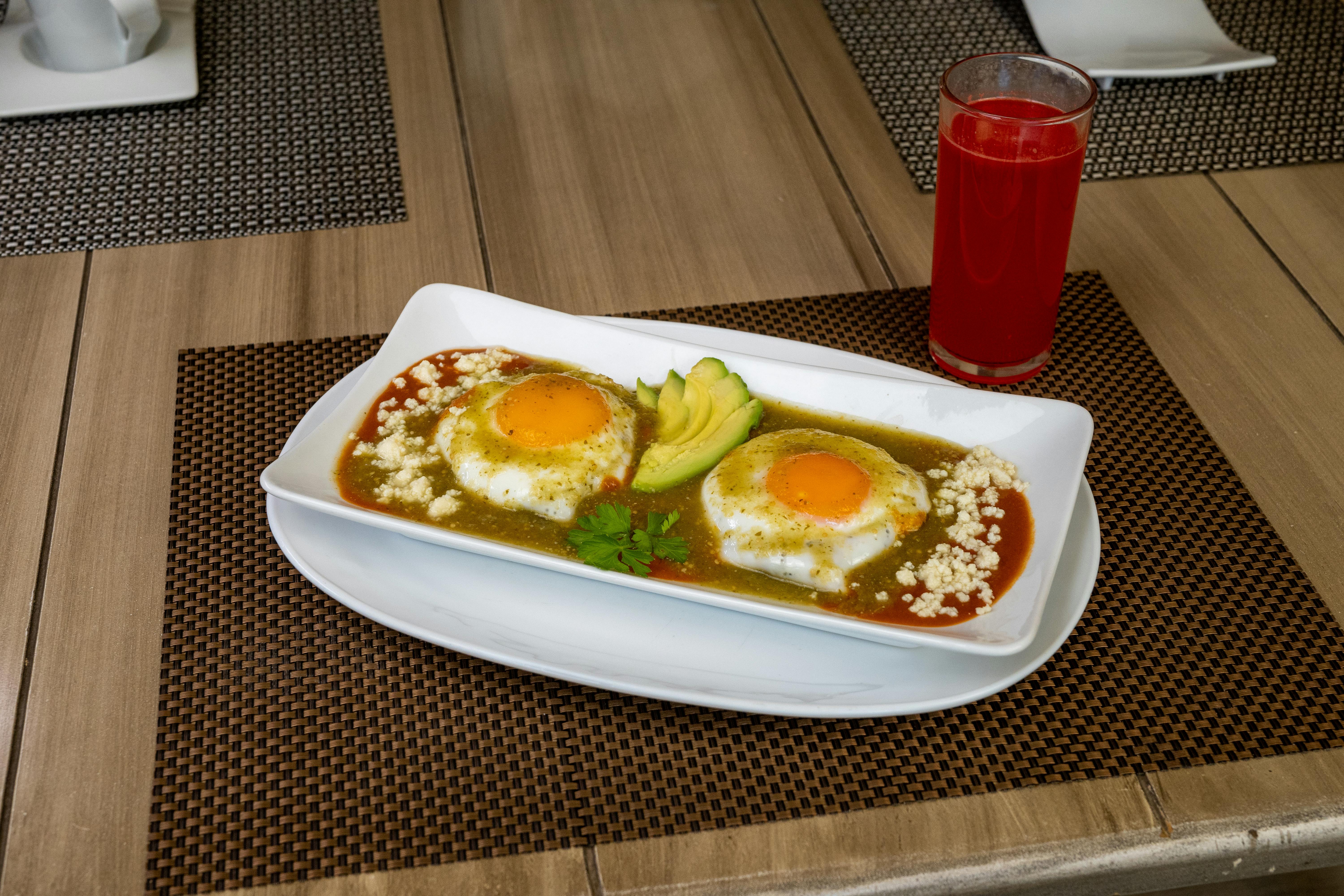
Photo: Allan González / Pexels
Mexican
Huevos Divorciados
The diets react (see scores below)
Common Ingredients
- eggs
- corn tortillas
- refried beans
- salsa roja
- salsa verde
- queso fresco
- cilantro
- avocado
Specific recipes may vary.
Incompatible with 6 of 11 diets
Diet Ratings
Huevos Divorciados is fundamentally incompatible with a ketogenic diet in its traditional form. The dish is built around corn tortillas (typically 2, each containing ~12-15g net carbs, totaling ~24-30g net carbs from tortillas alone) and refried beans (~20-25g net carbs per half-cup serving). Together, these two ingredients can easily push a single breakfast serving to 45-55g net carbs, which meets or exceeds the entire daily keto carb budget. While several individual components are keto-friendly — eggs are a perfect keto food, avocado is high in healthy fats, salsa in small amounts is acceptable, queso fresco and cilantro add minimal carbs — the structural grain and legume components make this dish as traditionally prepared clearly off-limits. There is no meaningful way to adapt it while retaining its identity, though a modified version replacing tortillas with low-carb alternatives and omitting refried beans could be made keto-compatible.
Huevos Divorciados contains multiple animal-derived ingredients that disqualify it from a vegan diet. Eggs are a direct animal product (the primary protein and central component of this dish), and queso fresco is a fresh dairy cheese. Both are explicitly excluded under vegan principles. The remaining ingredients — corn tortillas, refried beans, salsa roja, salsa verde, cilantro, and avocado — are fully plant-based, but the dish as defined cannot be considered vegan due to the eggs and dairy cheese.
Huevos Divorciados contains multiple non-paleo ingredients that are firmly excluded by paleo guidelines. Corn tortillas are a grain product — corn is explicitly excluded from the paleo diet. Refried beans are a legume and are also clearly excluded. Queso fresco is a dairy product, equally off-limits. These three ingredients are not peripheral garnishes but structural components of the dish. While eggs, salsa (roja and verde made from whole vegetables), cilantro, and avocado are fully paleo-approved, they cannot redeem a dish so fundamentally built around grains, legumes, and dairy. The dish as traditionally prepared cannot be considered paleo-compatible.
Huevos Divorciados is a nutrient-dense, whole-food dish that aligns reasonably well with Mediterranean principles despite its Mexican origin. Eggs are an accepted moderate-frequency protein in the Mediterranean diet. Corn tortillas, while not a traditional Mediterranean grain, are a whole grain product far preferable to refined wheat products. Refried beans are an excellent legume source — a Mediterranean staple category. Avocado provides healthy monounsaturated fats analogous to olive oil's role. Fresh salsas and cilantro contribute vegetables and phytonutrients. Queso fresco is a modest dairy addition. The dish is minimally processed with no added sugars or refined grains. The main caveats are that corn tortillas and refried beans (if cooked with lard) fall outside traditional Mediterranean foods, and eggs are moderate-frequency rather than daily staples. If refried beans are prepared with olive oil rather than lard, the dish scores higher.
Some Mediterranean diet purists would note that corn-based foods are not part of the traditional Mediterranean basin cuisine, and would prefer the legumes served simply rather than refried. However, modern Mediterranean diet frameworks emphasize dietary patterns and food quality over strict geographic origin, and this dish's whole-food, plant-forward, legume-rich profile fits the spirit of the diet well.
Huevos Divorciados is almost entirely incompatible with the carnivore diet. While eggs are an accepted animal product for most carnivore practitioners, they are surrounded by a large number of plant-based foods: corn tortillas (grain), refried beans (legume), salsa roja and salsa verde (vegetables and plant-based sauces), queso fresco (debated dairy, but minor here), cilantro (herb/plant), and avocado (fruit/plant). The dish is fundamentally a plant-forward Mexican breakfast that uses eggs as a garnish rather than a foundation. The dominant ingredients — tortillas, beans, salsas, and avocado — are all strictly excluded on any tier of the carnivore diet. This is not a borderline case; the overwhelming majority of ingredients are plant-derived.
Huevos Divorciados contains multiple Whole30-excluded ingredients. Corn tortillas are made from corn, which is an excluded grain. Refried beans are legumes, which are explicitly excluded. Queso fresco is a dairy cheese, also excluded. These are not edge cases or ambiguous items — they are clearly and directly prohibited by the official Whole30 program. The remaining ingredients (eggs, salsa roja, salsa verde, cilantro, avocado) are all compliant on their own, but the dish as traditionally prepared cannot be made Whole30-compatible without fundamentally changing its character.
Huevos Divorciados contains multiple high-FODMAP ingredients that make it unsuitable during the elimination phase. Refried beans are typically made from pinto or black beans, which are high in GOS (galacto-oligosaccharides) and are a significant FODMAP concern even in small portions. Traditional salsa roja and salsa verde almost always contain onion and/or garlic, which are high in fructans — among the most problematic FODMAPs. Queso fresco is a fresh soft cheese with moderate-to-high lactose content. Avocado is low-FODMAP only at 1/8 of a fruit (30g per Monash), and a typical serving in this dish would far exceed that threshold, pushing it into high-FODMAP territory for polyols (sorbitol). The eggs and corn tortillas are low-FODMAP and safe, and cilantro is fine, but the combination of beans, onion/garlic-containing salsas, soft cheese, and avocado stacks multiple FODMAP triggers simultaneously.
Monash University rates individual components at specific serving sizes, so a version of this dish made with FODMAP-friendly substitutions (e.g., canned lentils rinsed well, garlic/onion-free salsas, lactose-free cheese, and a strict 1/8 avocado portion) could technically be made low-FODMAP. However, clinical FODMAP practitioners would caution that the traditional preparation of this dish is essentially incompatible with the elimination phase as served in restaurants or home cooking, and the multi-ingredient nature makes it very difficult to control all FODMAP sources.
Huevos Divorciados combines several DASH-friendly elements with a few components requiring moderation. Corn tortillas are a whole grain option and DASH-compatible. Eggs are a lean protein; NIH DASH historically limited dietary cholesterol but current guidelines are more permissive in moderation. Avocado provides heart-healthy monounsaturated fats, potassium, and magnesium — well aligned with DASH. Cilantro is a free food. Salsa roja and salsa verde add vegetables and phytonutrients with generally low calories, though sodium content can vary significantly by preparation (homemade is lower; restaurant or jarred versions can add 200–400mg+ per serving). Refried beans are a DASH-encouraged legume source rich in fiber, potassium, and magnesium, but traditional lard-prepared versions add saturated fat and sodium — canned refried beans can contain 400–600mg sodium per half cup. Queso fresco is a full-fat cheese; DASH specifies low-fat dairy, and while it is lower in sodium than aged cheeses, it still contributes saturated fat. The dish as a whole is nutrient-dense with fiber, potassium, plant proteins, and healthy fats, but the combination of eggs (cholesterol), refried beans (sodium/saturated fat if traditional), and queso fresco (full-fat dairy) warrants moderation rather than unrestricted approval.
NIH DASH guidelines specify low-fat dairy and historically cautioned against dietary cholesterol, which would flag both queso fresco and whole eggs here. However, updated clinical interpretations post-2020 Dietary Guidelines no longer cap dietary cholesterol, and some DASH-aligned practitioners now view this dish favorably given its strong legume, vegetable, and healthy fat profile — particularly when made with low-sodium refried beans and only a modest sprinkle of queso fresco.
Huevos Divorciados is a flavorful Mexican breakfast that has a workable but imperfect Zone profile. The eggs provide a good lean protein base (whole eggs include some saturated fat, but are a Zone-acceptable protein source). Avocado is an excellent monounsaturated fat that aligns perfectly with Zone fat guidelines. The fresh salsas (roja and verde) and cilantro contribute polyphenols and low-glycemic vegetable carbs, which Sears would strongly approve of. However, the dish has two notable Zone challenges: (1) Corn tortillas are a higher-glycemic grain carbohydrate — Zone classifies grains as 'unfavorable' carbs, and corn tortillas spike blood sugar more than non-starchy vegetables would. Limiting to one small tortilla helps but they're central to the dish. (2) Refried beans, while providing fiber and protein, are typically made with lard and add a significant carbohydrate load that, combined with the tortillas, makes hitting the 40/30/30 ratio difficult without careful portioning. Queso fresco adds some saturated fat. With portion control — one tortilla, small bean portion, extra avocado, and 2-3 eggs — this meal can be made Zone-compliant, but as traditionally served the carb load from tortillas and beans likely exceeds the Zone's 40% carb target for a single meal.
Some Zone practitioners would rate this more favorably, noting that beans are a moderate-GI carb with substantial fiber (lowering net carbs) and that Sears' later work emphasizes anti-inflammatory polyphenols in salsa and avocado. If the dish is built with one tortilla and a modest bean portion, the macro ratios become quite manageable. Others following stricter early-Zone 'favorable carb' rules would push this toward a lower score given the grain and legume carb density.
Huevos Divorciados is a mixed dish from an anti-inflammatory standpoint. On the positive side, avocado contributes healthy monounsaturated fats and anti-inflammatory compounds; salsa roja and salsa verde are tomato- and tomatillo-based with garlic, onion, and chili peppers delivering lycopene, quercetin, capsaicin, and other anti-inflammatory polyphenols; cilantro offers antioxidant flavonoids; and refried beans (ideally made with olive or avocado oil) provide fiber, plant protein, and minerals that support a healthy gut microbiome. Corn tortillas are a whole grain option with moderate glycemic load and gluten-free. Queso fresco is a relatively low-fat fresh cheese used in small quantities as a garnish, placing it in the 'moderate' category. The main source of debate is eggs — they contain choline and selenium with potential anti-inflammatory benefits, but also arachidonic acid, which some researchers flag as pro-inflammatory. The nightshade content (tomatoes, tomatillos, chili peppers) in both salsas is also genuinely contested. Overall, this is a largely plant-forward dish with real anti-inflammatory ingredients, but the eggs and nightshades keep confidence low and the score in the 'caution' range rather than a clean approve.
Mainstream anti-inflammatory authorities including Dr. Weil view nightshade vegetables (tomatoes, peppers, tomatillos) as beneficial due to their high antioxidant content, while the Autoimmune Protocol (AIP) and researchers like Dr. Tom O'Bryan argue solanine and lectins in nightshades can trigger inflammation in sensitive individuals. On eggs, some anti-inflammatory protocols flag arachidonic acid as a concern, while others (including recent meta-analyses) find neutral or positive effects on inflammatory markers in healthy adults — making the egg verdict genuinely context-dependent.
Huevos Divorciados is a moderately GLP-1-friendly breakfast with several meaningful strengths but a few notable concerns. On the positive side, eggs provide high-quality complete protein (roughly 12-18g depending on number of eggs), refried beans add both protein and fiber (supporting the top two GLP-1 priorities), and corn tortillas are a reasonable whole-grain-adjacent carbohydrate with moderate fiber. Salsa roja and salsa verde are low-calorie, nutrient-dense condiments. Cilantro adds micronutrients at negligible caloric cost. The concerns center on the refried beans (traditionally made with lard, adding saturated fat and potentially worsening GI symptoms — though vegetarian versions are significantly better), queso fresco (adds saturated fat with modest protein contribution), and avocado (healthy unsaturated fats but calorie-dense in a meal context where small portions matter). The dish is not fried, not heavily processed, and not sugar-laden, which keeps it well clear of the avoid category. Spice level from the salsas is typically mild-to-moderate, acceptable for most GLP-1 patients, though individuals with reflux sensitivity should be mindful. Overall protein content per serving may fall short of the 15-30g per meal target depending on egg count — two eggs yields roughly 12g before accounting for beans. Requesting three eggs or adding a side of cottage cheese would close that gap. Portion size is naturally manageable given the dish's structure.
Some GLP-1-focused RDs would rate this higher, noting that eggs plus beans together can reach adequate protein and fiber targets in a single meal, and that traditional Mexican breakfast foods tend to be less processed and more nutrient-dense than typical American breakfast options. Others would rate it lower due to concern about the saturated fat load from lard-based refried beans and queso fresco, particularly on injection days when GI sensitivity is elevated — and would suggest substituting low-fat refried beans and omitting or reducing the cheese.
*See how scores were generated at our methodology page.
Nutritional profile
Six traits that cut across every diet.
Fiber & Plants
How much whole-plant food and fiber it delivers.
Healthy Fats
The quality of its fats (unsaturated, omega-3).
Whole / Unprocessed
How close it is to its natural, unprocessed form.
Gut Gentle
How easy it is on digestion (low FODMAP, few irritants).
Low Glycemic
How little it spikes your blood sugar.
Protein Density
How much protein it packs per calorie.
Controversy Index
Higher controversy = more disagreement between diets.
Diet-Specific Tips
 Mediterranean — 6/10
View tips
- Eggs are an accepted moderate protein source in the Mediterranean diet
- Refried beans provide excellent legume nutrition — a Mediterranean diet cornerstone
- Corn tortillas are a whole grain, preferable to refined grain alternatives
- Avocado contributes healthy monounsaturated fats similar to olive oil
- Fresh vegetable-based salsas add plant diversity and phytonutrients
- Queso fresco is a minor dairy addition within acceptable limits
- Preparation method matters: lard in refried beans would reduce score; olive oil preparation is preferred
- No added sugars, minimal processing — aligns with Mediterranean principles
 DASH — 5/10
View tips
- Eggs acceptable in moderation under updated DASH interpretations but historically cautioned due to cholesterol
- Refried beans are DASH-positive as legumes but traditional lard-prepared versions add saturated fat; canned versions high in sodium (400–600mg/serving)
- Queso fresco is full-fat dairy — DASH specifies low-fat dairy; contributes saturated fat
- Avocado provides DASH-valued potassium, magnesium, and monounsaturated fats
- Corn tortillas are a whole grain and DASH-compatible
- Salsas add vegetables and micronutrients but restaurant/jarred versions may significantly raise sodium load
- Overall sodium can exceed DASH targets depending on preparation of beans and salsa
- Dish is rich in fiber, potassium, and plant-based nutrients — structurally aligned with DASH if portions and ingredients are controlled
 Zone — 5/10
View tips
- Eggs provide Zone-appropriate lean protein (~7g per egg, fitting the block system well)
- Avocado is an ideal Zone monounsaturated fat source
- Corn tortillas are 'unfavorable' high-glycemic grain carbs in Zone terminology
- Refried beans add carb density and potentially saturated fat from lard
- Fresh salsas and cilantro contribute polyphenols and low-glycemic vegetable carbs — Zone-positive
- Traditional portions likely skew carb-heavy, requiring significant modification to hit 40/30/30
- Queso fresco adds modest saturated fat — acceptable in small amounts per Zone
 Anti-Inflammatory — 6/10
View tips
- Avocado: strong anti-inflammatory monounsaturated fats and phytosterols
- Salsa roja and salsa verde: lycopene, capsaicin, quercetin from tomatoes, tomatillos, chili peppers
- Refried beans: fiber and plant protein support gut health and reduce CRP
- Corn tortillas: whole grain, gluten-free, moderate glycemic impact
- Eggs: mixed profile — choline/selenium vs. arachidonic acid debate
- Queso fresco: low-fat fresh cheese, small garnish quantity, acceptable in moderation
- Cilantro: antioxidant flavonoids
- Nightshade ingredients contested under autoimmune and AIP protocols
 GLP-1 Friendly — 6/10
View tips
- Eggs provide high-quality complete protein but two-egg serving (~12g) may fall short of 15-30g per meal target
- Refried beans contribute both protein and fiber — a meaningful GLP-1 priority alignment
- Traditional lard-based refried beans add saturated fat and may worsen nausea or bloating; vegetarian/low-fat versions preferred
- Queso fresco adds saturated fat with only modest protein benefit
- Avocado contributes beneficial unsaturated fats but is calorie-dense — portion sensitivity applies
- Corn tortillas are moderately digestible and lower glycemic than refined flour alternatives
- Salsa roja and salsa verde are nutrient-dense and low-calorie; spice level is typically tolerable but may aggravate reflux in sensitive patients
- Dish is not fried, not high-sugar, and not ultra-processed — avoids major GLP-1 red flags
- Easily modified upward: adding a third egg or requesting low-fat refried beans meaningfully improves the nutritional profile