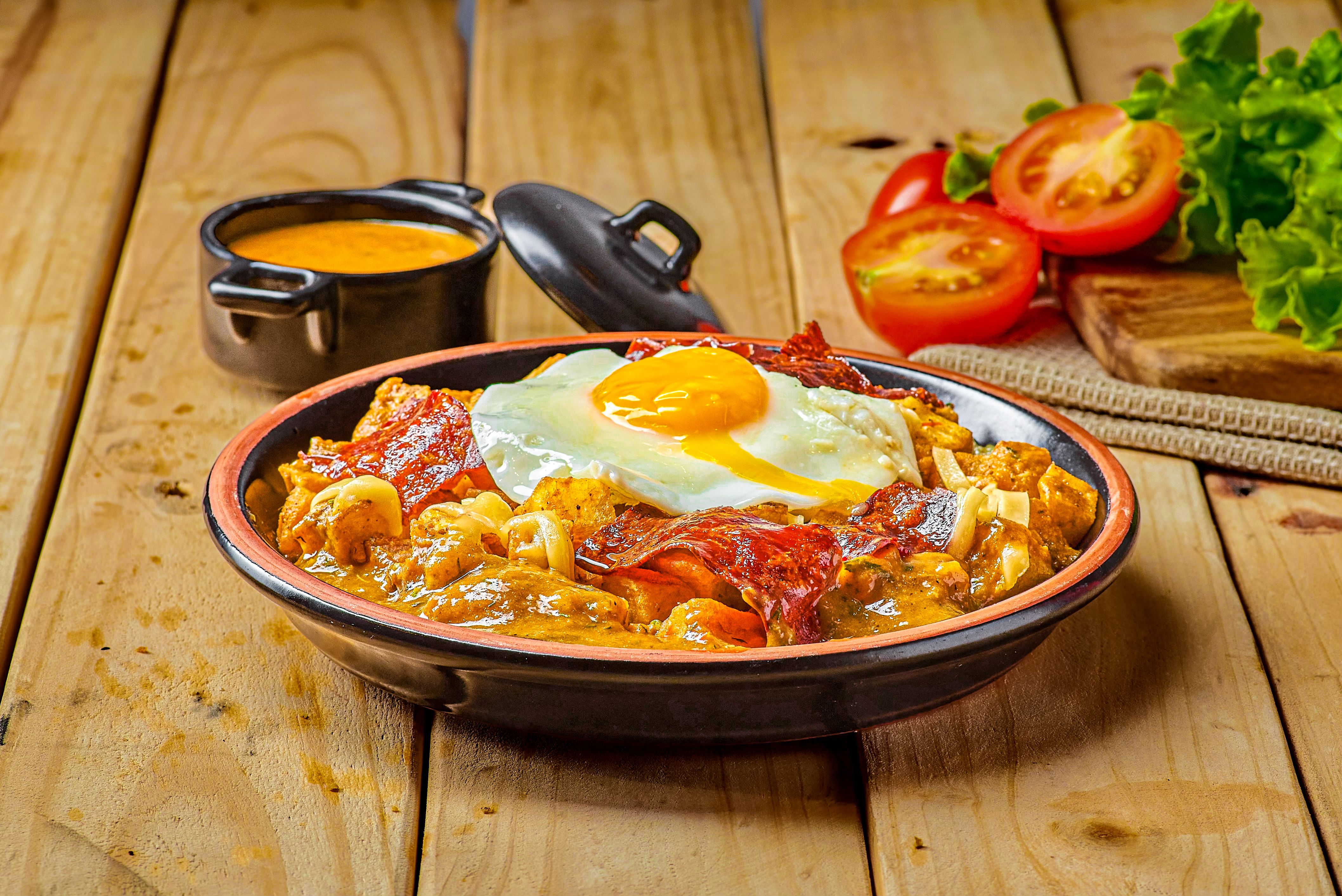
Photo: Cristian Arteaga / Pexels
Mexican
Huevos Rancheros
The diets react (see scores below)
Common Ingredients
- eggs
- corn tortillas
- tomatoes
- jalapeño
- onion
- garlic
- cilantro
- refried beans
Specific recipes may vary.
Incompatible with 6 of 11 diets
Diet Ratings
Huevos Rancheros in its traditional form is largely incompatible with ketogenic diet principles. The two primary offenders are corn tortillas and refried beans. Corn tortillas contain approximately 12-14g net carbs each, and a standard serving uses 2 tortillas, contributing ~25-28g net carbs from tortillas alone. Refried beans add another 20-25g net carbs per half-cup serving. Together, these two ingredients can push a single meal well past the entire daily keto carb limit of 20-50g. While the eggs, tomatoes, jalapeño, onion, garlic, and cilantro are keto-friendly or acceptable in small amounts, the foundational structural components of the dish — the tortillas and beans — are grains and legumes that are categorically excluded from a ketogenic diet. This dish cannot be made keto-compliant without replacing its core ingredients, essentially making it a different dish entirely.
Huevos Rancheros is built around eggs as its primary protein and defining ingredient. Eggs are an animal product (the unfertilized reproductive product of hens) and are unambiguously excluded from a vegan diet by every major vegan organization, including the Vegan Society and PETA. The remaining ingredients — corn tortillas, tomatoes, jalapeño, onion, garlic, cilantro, and refried beans — are all plant-based, but the dish cannot be considered vegan while eggs remain a core component. Note that a vegan-friendly adaptation could substitute scrambled tofu or chickpea flour scramble for the eggs, and confirm the refried beans contain no lard.
Huevos Rancheros contains two major paleo violations: corn tortillas (a grain) and refried beans (a legume). Both are explicitly excluded from the paleo diet with strong consensus. Corn is a grain that was selectively bred far beyond its ancestral form and is high in anti-nutrients; refried beans are legumes containing lectins and phytates that paleo principles categorically reject. The remaining ingredients — eggs, tomatoes, jalapeño, onion, garlic, and cilantro — are all paleo-compliant and form a solid base, but the dish as traditionally prepared cannot be considered paleo-friendly due to these two foundational violations.
Huevos Rancheros aligns reasonably well with Mediterranean diet principles despite being a Mexican dish. Eggs are accepted in moderation (a few servings per week to once daily), and the dish is rich in plant-forward components: tomatoes, jalapeño, onion, garlic, and cilantro form a nutrient-dense salsa base. Refried beans are an excellent legume source, a Mediterranean diet staple. Corn tortillas are a whole grain alternative that, while not traditional to the Mediterranean, are minimally processed and fiber-containing. The main limitation is the egg-centric nature placing it in the 'moderate' category, and traditional refried beans are sometimes prepared with lard — if olive oil or plant fat is used instead, the dish scores higher. Overall, this is a plant-rich, legume-forward breakfast with moderate egg content that fits the spirit of the diet well.
Some Mediterranean diet purists would note that corn tortillas and refried beans fall outside the traditional Mediterranean grain and legume preparations (e.g., lentils, chickpeas, whole wheat flatbreads), and if refried beans are prepared with lard rather than olive oil, the dish moves further from Mediterranean principles. However, modern flexible interpretations recognize that the core nutritional profile — legumes, vegetables, moderate eggs — aligns closely enough to be considered compatible.
Huevos Rancheros is almost entirely incompatible with the carnivore diet. While eggs are an approved animal product, they are a minor component overshadowed by a dish built entirely around plant foods. Corn tortillas are a grain-based food and strictly excluded. Refried beans are legumes — one of the most explicitly forbidden food categories. The salsa ranchera base consists of tomatoes, jalapeño, onion, and garlic — all plant-derived vegetables. Cilantro is an herb, also plant-derived. There is nothing ambiguous here: the structural foundation, sauce, and sides of this dish are 100% plant-based. The eggs alone cannot redeem a dish this thoroughly non-carnivore. No mainstream carnivore authority would consider this acceptable in any form.
Huevos Rancheros as described contains two excluded ingredients. First, corn tortillas are made from corn, which is a grain explicitly excluded on the Whole30. Second, refried beans are legumes, which are also explicitly excluded on the Whole30. The remaining ingredients — eggs, tomatoes, jalapeño, onion, garlic, and cilantro — are all compliant. However, the presence of both corn tortillas and refried beans makes this dish clearly non-compliant. There is no compliant workaround that preserves the identity of this dish; removing both would result in something entirely different (essentially just eggs with salsa).
Huevos Rancheros as traditionally prepared contains multiple high-FODMAP ingredients that make it unsuitable during the elimination phase. Onion and garlic are among the highest-FODMAP foods tested by Monash University — both are significant sources of fructans and must be avoided entirely during elimination, even in small amounts. Refried beans are made from pinto or black beans, which are high in GOS (galacto-oligosaccharides) and fructans, making them a clear avoid. These three ingredients alone are sufficient to classify the dish as high-FODMAP. The eggs and corn tortillas are low-FODMAP (corn tortillas are generally safe at 2 tortillas per Monash), tomatoes are low-FODMAP at standard servings, jalapeño is low-FODMAP in small amounts, and cilantro is a low-FODMAP herb — but these safe ingredients cannot offset the multiple high-FODMAP components. The dish would require significant reformulation (omitting onion, garlic, and refried beans, substituting with a FODMAP-friendly salsa) to be safe during elimination.
Huevos Rancheros as described contains several DASH-friendly components — corn tortillas (whole grain), tomatoes, jalapeño, onion, garlic, and cilantro are all vegetables aligned with DASH principles, and refried beans provide fiber, potassium, and plant protein. However, two factors introduce complexity: (1) Eggs are the primary protein, and while the 2020-2025 Dietary Guidelines removed the 300mg/day cholesterol cap — moving eggs toward acceptable on DASH — conservative DASH cardiologists still flag whole eggs for cholesterol content; (2) Refried beans are commonly prepared with lard and significant added sodium, which conflicts with DASH sodium limits. Home-prepared refried beans with no added fat and low sodium score much better. The dish lacks the high saturated fat or excessive sodium of a clear 'avoid' but requires attention to preparation method to qualify as a full DASH approve.
NIH DASH guidelines historically limited egg yolks due to dietary cholesterol concerns and flag refried beans prepared with lard as a saturated fat source. Updated clinical interpretation, informed by the 2020-2025 Dietary Guidelines dropping the cholesterol cap, increasingly allows eggs in moderation; and if fat-free, low-sodium canned or homemade refried beans are used, many DASH-oriented dietitians would rate this dish as fully approvable given its vegetable density and fiber content.
Huevos Rancheros is a structurally Zone-compatible breakfast that contains several favorable ingredients but requires careful portioning to hit the 40/30/30 target. Eggs provide solid lean protein (though whole eggs include yolk fat, which is more saturated than monounsaturated). The salsa ranchera base — tomatoes, jalapeño, onion, garlic, cilantro — is excellent Zone food: low-glycemic, polyphenol-rich vegetables that Sears would enthusiastically approve. The problems arise with two specific components: corn tortillas and refried beans. Corn tortillas are classified as an 'unfavorable' carb in Zone terminology — they are starchy, moderate-to-high glycemic, and dense in carb blocks (one 6-inch corn tortilla delivers roughly 12g net carbs, well over one carb block). Refried beans, while containing fiber and some protein, are a dense carbohydrate source and typically prepared with lard (saturated fat) or oils, complicating the fat ratio. A traditional restaurant portion of huevos rancheros — 2 tortillas, generous beans, 2 eggs — will likely be carb-heavy and protein-light relative to Zone targets. However, with modifications (1 tortilla, reduced beans, added egg whites, no lard in beans), this dish can be brought into reasonable Zone balance. The dish is not inherently incompatible; it simply requires deliberate portion control and ideally some substitutions.
Some Zone practitioners, particularly those following Sears' later anti-inflammatory refinements, would note that corn tortillas and beans are whole-food carbohydrates with meaningful fiber content, distinguishing them from refined starches. The net carb load per block is manageable if portions are kept to one small tortilla. A stricter early-Zone reading of Enter the Zone would flag corn tortillas as unfavorable and beans as borderline due to glycemic load, warranting the caution rating over an approval.
Huevos Rancheros has a genuinely mixed anti-inflammatory profile. On the positive side, the dish features several strongly anti-inflammatory ingredients: tomatoes provide lycopene and vitamin C, jalapeño and garlic are recognized anti-inflammatory spices, onion contributes quercetin, cilantro offers antioxidants, and refried beans (assuming traditionally prepared without lard) supply fiber, plant protein, and polyphenols that support a healthy gut microbiome — all consistent with Dr. Weil's anti-inflammatory pyramid which emphasizes legumes and colorful vegetables. Corn tortillas made from whole masa are a reasonable whole grain option with a moderate glycemic impact. The primary concern is eggs, which sit in a contested middle ground: they contain arachidonic acid (a precursor to pro-inflammatory eicosanoids) but also choline, selenium, and lutein with anti-inflammatory properties. The anti-inflammatory verdict on eggs is genuinely unsettled. A secondary concern is how refried beans are prepared — traditional lard-based versions introduce saturated fat, while olive or avocado oil versions are more favorable. The overall dish leans moderately positive due to the strong vegetable and legume base, but eggs and preparation variables prevent a full approval.
Dr. Weil's Anti-Inflammatory Pyramid places eggs in the 'eat in moderation' category (up to 6 per week) and considers the dish's vegetable and legume components clearly beneficial, which could push this toward a soft approval. However, some anti-inflammatory practitioners — particularly those following Autoimmune Protocol (AIP) or functional medicine frameworks — flag the arachidonic acid in eggs and the nightshade ingredients (tomatoes, jalapeño) as potentially pro-inflammatory for sensitive individuals, which could push the rating lower for that population.
Huevos Rancheros as described is a solid GLP-1 breakfast. Two eggs provide roughly 12-14g of protein, and refried beans add another 6-8g per half-cup serving, pushing the meal toward the 15-30g per-meal target. The corn tortillas contribute fiber, and the tomato-based ranchero sauce (tomatoes, onion, garlic, cilantro) adds micronutrients and water content with minimal calories. Refried beans also contribute meaningful fiber (5-8g), supporting the 25-30g daily target and helping counter GLP-1-related constipation. The dish is not fried, not high in saturated fat, and is made from whole, minimally processed ingredients — all favorable. The jalapeño is a mild caution: spicy ingredients can worsen reflux or nausea in some GLP-1 patients, though the amount in a standard ranchero sauce is usually modest. The main limitation is that protein per calorie could be higher — this dish relies on a moderate egg count and beans rather than a dense animal protein. Adding a third egg or a small amount of low-fat cheese would improve the protein profile. Portion size matters: corn tortillas and refried beans add carbohydrate load, so one to two tortillas and a measured bean portion are appropriate for reduced-appetite patients.
Some GLP-1-focused dietitians flag refried beans as a caution if prepared with lard or added fat (common in restaurant versions), which increases fat content and can worsen nausea and bloating; home-prepared or fat-free canned refried beans are significantly more favorable. There is also moderate variation in tolerance of jalapeño — clinicians working with patients prone to GLP-1-related reflux or gastroparesis symptoms sometimes recommend omitting spicy ingredients entirely rather than relying on individual tolerance.
*See how scores were generated at our methodology page.
Nutritional profile
Six traits that cut across every diet.
Fiber & Plants
How much whole-plant food and fiber it delivers.
Healthy Fats
The quality of its fats (unsaturated, omega-3).
Whole / Unprocessed
How close it is to its natural, unprocessed form.
Gut Gentle
How easy it is on digestion (low FODMAP, few irritants).
Low Glycemic
How little it spikes your blood sugar.
Protein Density
How much protein it packs per calorie.
Controversy Index
Higher controversy = more disagreement between diets.
Diet-Specific Tips
 Mediterranean — 6/10
View tips
- Eggs are a moderate-consumption food under Mediterranean guidelines — acceptable but not a daily staple in large quantities
- Refried beans provide excellent legume content, a Mediterranean diet cornerstone
- Tomatoes, onion, garlic, jalapeño, and cilantro contribute a rich plant-based component
- Corn tortillas are minimally processed whole grain alternatives, acceptable in moderation
- Traditional refried beans may use lard; substituting olive oil improves Mediterranean compatibility
- No red meat, added sugars, or highly processed ingredients present
 DASH — 6/10
View tips
- Eggs raise cholesterol concerns under traditional DASH but are increasingly accepted in moderation under updated dietary guidelines
- Refried beans are commonly high in sodium and may contain lard — low-sodium, fat-free versions significantly improve DASH compatibility
- Corn tortillas are a whole grain and DASH-compatible in controlled portions
- Tomatoes, onion, jalapeño, garlic, and cilantro are all DASH-approved vegetables contributing potassium, magnesium, and fiber
- No added cheese, sour cream, or processed meats in this version, avoiding common high-saturated-fat additions
- Sodium management is the key variable — restaurant preparations often exceed DASH sodium thresholds
 Zone — 5/10
View tips
- Eggs provide good lean protein but whole eggs add saturated fat from yolks — using 1 whole egg plus egg whites improves the Zone profile
- Corn tortillas are 'unfavorable' Zone carbs — moderate-to-high glycemic index, starchy, each one consumes more than one carb block
- Refried beans are carb-dense and often prepared with lard (saturated fat), both issues for Zone ratios
- Tomato-based salsa with jalapeño, onion, garlic, and cilantro is excellent Zone food — low-glycemic, anti-inflammatory polyphenols
- Traditional restaurant portions are likely carb-heavy relative to protein, throwing off the 40/30/30 ratio
- Dish can be brought into Zone compliance with modifications: 1 tortilla, smaller bean portion, added egg whites, oil-free bean preparation
 Anti-Inflammatory — 6/10
View tips
- Eggs: mixed anti-inflammatory profile — arachidonic acid (pro) vs. choline and selenium (anti); contested across anti-inflammatory authorities
- Tomatoes and jalapeño: high in lycopene, capsaicin, and vitamin C — anti-inflammatory for general population, but flagged by AIP/nightshade-sensitive protocols
- Refried beans: excellent source of fiber, plant protein, and polyphenols; preparation method (lard vs. plant oil) significantly affects inflammatory profile
- Garlic and onion: well-supported anti-inflammatory spices with quercetin and allicin compounds
- Corn tortillas: moderate glycemic index whole grain option; preferable to refined flour tortillas
- Cilantro: antioxidant herbs consistent with anti-inflammatory emphasis on fresh herbs
 GLP-1 Friendly — 7/10
View tips
- Eggs and refried beans together provide 18-22g protein per standard serving, approaching the 15-30g per meal target
- Refried beans contribute 5-8g fiber per half-cup, supporting the 25-30g daily fiber goal
- Corn tortillas add moderate carbohydrate and some fiber but keep fat low compared to flour tortillas
- Tomato-based sauce provides micronutrients, water content, and minimal calories — favorable for nutrient density
- Jalapeño is a mild spice risk for patients prone to GLP-1-related reflux or nausea
- Restaurant versions may use lard-based refried beans, significantly increasing saturated fat — home preparation preferred
- Portion-sensitive: one to two tortillas appropriate given reduced gastric capacity on GLP-1 medications
- No fried components, no added sugars, no carbonated or alcoholic ingredients — clean profile overall
Community
Healthiest Huevos Rancheros recipes
One scanned recipe so far — scan yours to see how it stacks up.
Scan your Huevos Rancheros recipe →