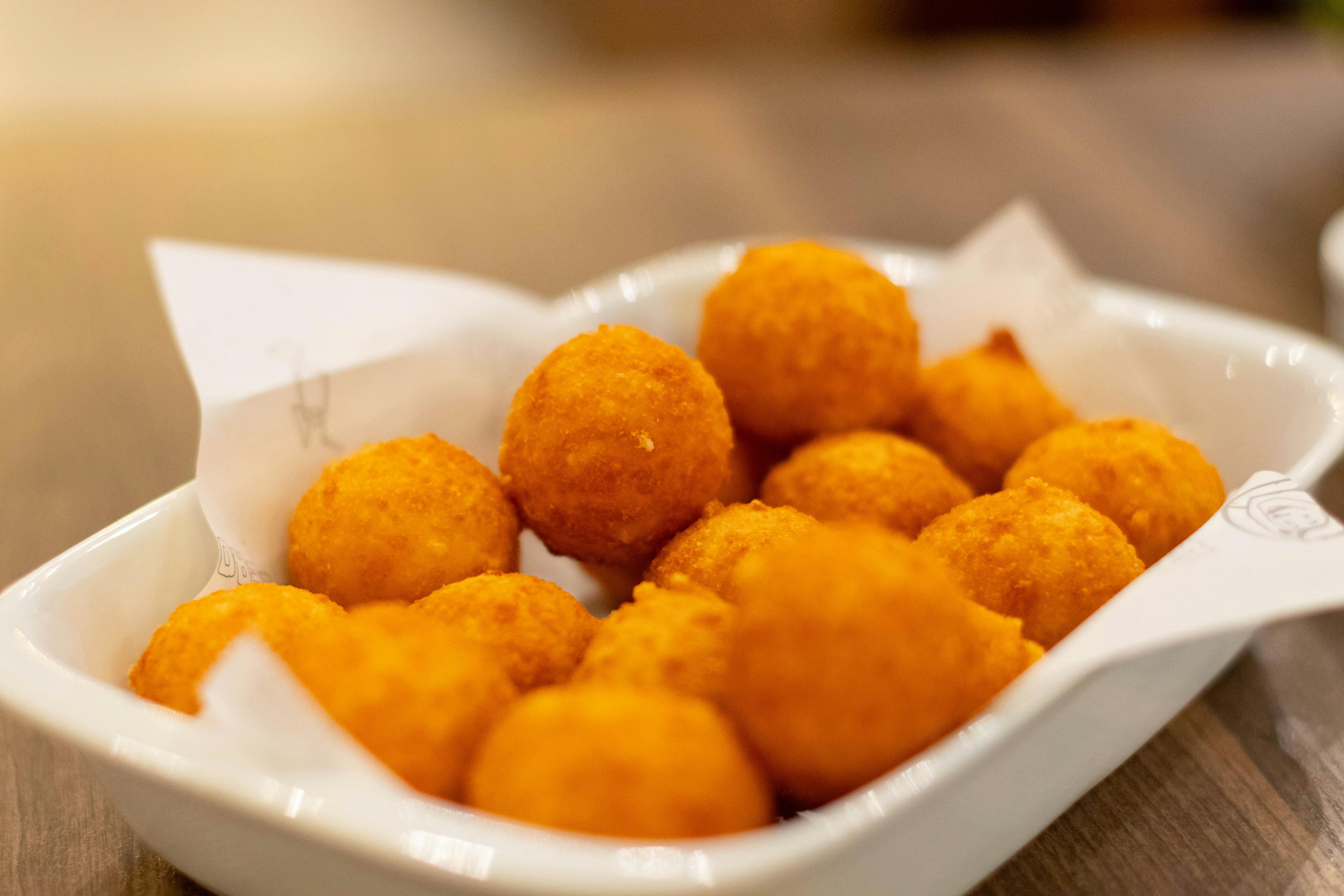
Photo: Laura oliveira / Pexels
American
Hush Puppies
The diets react (see scores below)
Common Ingredients
- cornmeal
- flour
- buttermilk
- egg
- onion
- baking powder
- sugar
- vegetable oil
Specific recipes may vary.
Incompatible with 11 of 11 diets
Diet Ratings
Hush puppies are essentially deep-fried cornbread balls, making them completely incompatible with a ketogenic diet. The primary ingredients — cornmeal and flour — are high-glycemic grains that are strictly off-limits on keto. A single serving of 3-4 hush puppies can easily contain 30-40g of net carbs, which alone may exceed the entire daily carb allowance. Added sugar further compounds the problem. There is no meaningful way to consume this dish within keto parameters without fundamentally changing the recipe.
Hush puppies as listed contain two clear animal-derived ingredients: buttermilk (a dairy product) and egg. Both are explicitly excluded under vegan dietary rules. While the base of cornmeal, flour, onion, baking powder, sugar, and vegetable oil is entirely plant-based, the buttermilk and egg make this dish non-vegan in its traditional form. Vegan versions can easily be made by substituting plant-based milk with a splash of apple cider vinegar (to mimic buttermilk) and using a flax egg or other egg replacer.
Hush puppies are fundamentally incompatible with the paleo diet. The dish is built almost entirely on non-paleo ingredients: cornmeal and flour are grains, buttermilk is dairy, sugar is a refined sweetener, and vegetable oil is a seed oil. The only paleo-compliant ingredients are egg and onion. This is not a borderline case — the core structure of the dish violates multiple foundational paleo exclusions simultaneously.
Hush puppies are deep-fried cornmeal fritters that conflict with Mediterranean diet principles on multiple fronts. They are made primarily from refined cornmeal and white flour (refined grains), contain added sugar, and are deep-fried in vegetable oil rather than olive oil. The frying process adds significant amounts of processed fat, and the base ingredients lack the fiber and nutritional density of whole grains. This is a processed, fried side dish with no meaningful presence in Mediterranean culinary tradition.
Hush Puppies are fundamentally incompatible with the carnivore diet. The dish is composed almost entirely of plant-derived ingredients: cornmeal and flour are grain-based carbohydrates, onion is a vegetable, sugar is an excluded sweetener, baking powder contains plant-derived starch, and vegetable oil is a plant-based fat. While the recipe does include egg and buttermilk (animal-derived), these are minor components in an overwhelmingly plant-based preparation. There is no meaningful animal protein present. This dish represents exactly the type of processed, grain-heavy, plant-oil-fried food the carnivore diet is designed to eliminate.
Hush puppies contain multiple excluded ingredients and violate core Whole30 rules. Cornmeal is a corn-based grain (excluded), flour is a wheat-based grain (excluded), buttermilk is a dairy product (excluded), and sugar is an added sweetener (excluded). Beyond the individual excluded ingredients, hush puppies are a deep-fried battered fritter — exactly the type of junk food/comfort food the program explicitly prohibits recreating even with compliant ingredients. This dish fails on nearly every front.
Hush puppies contain multiple high-FODMAP ingredients that make them unsuitable during the elimination phase. Wheat flour is high in fructans at any standard serving size. Onion is one of the highest-FODMAP foods tested by Monash, rich in fructans, and is a core ingredient in hush puppies — even small amounts are problematic. Buttermilk contains lactose and is high-FODMAP. Cornmeal itself is low-FODMAP, as is egg, sugar, baking powder, and vegetable oil, but the combination of wheat flour, onion, and buttermilk creates a dish that is definitively high-FODMAP at any realistic serving.
Hush puppies are deep-fried cornmeal fritters, making them incompatible with DASH diet principles on multiple fronts. The primary cooking method — deep frying in vegetable oil — significantly increases total fat content and caloric density, which DASH discourages. While vegetable oil is preferable to saturated fats, the large quantity absorbed during deep frying is problematic. The dish is made from refined cornmeal and white flour rather than whole grains, providing minimal fiber. Added sugar, though modest, contributes unnecessary calories. Baking powder adds sodium, and restaurant/commercial versions often contain substantial sodium. Buttermilk adds some sodium as well. Hush puppies provide virtually no potassium, magnesium, calcium, or fiber — the key nutrients DASH emphasizes. They are a highly processed, fried, refined-carbohydrate side dish with no redeeming DASH-aligned nutritional profile.
Hush puppies are deep-fried cornmeal-and-flour fritters that present multiple Zone Diet problems simultaneously. The base is high-glycemic refined carbohydrates (cornmeal and white flour) with added sugar, creating a rapid blood sugar spike that is the antithesis of Zone principles. They are deep-fried in vegetable oil (typically omega-6-heavy seed oil like soybean or canola), which directly conflicts with Sears' anti-inflammatory fat guidelines. There is essentially no protein content to balance the carbohydrate load — the egg provides minimal protein in a typical serving. The fat content is high but from the wrong source (polyunsaturated omega-6 seed oils rather than monounsaturated fats). As a side dish with no lean protein, no favorable carbohydrates, and no monounsaturated fat, hush puppies cannot be meaningfully balanced into a Zone block structure. They are nutritionally analogous to a fried doughnut — calorie-dense, high-glycemic, and pro-inflammatory. While technically one could eat a very small portion alongside lean protein and a salad, the food itself offers nothing of Zone value and is categorically the type of processed, fried, high-glycemic item Sears specifically warns against.
Hush puppies are deep-fried cornmeal fritters that combine several pro-inflammatory elements. The cooking method — deep frying in vegetable oil (likely corn, soybean, or sunflower oil) — introduces a high omega-6 fatty acid load and generates oxidized lipids and advanced glycation end products (AGEs) at high heat. The base is refined cornmeal and white flour, both refined carbohydrates with little fiber, causing rapid blood glucose spikes that drive inflammatory signaling. Added sugar compounds the glycemic load. While buttermilk and egg contribute modest nutritional value, and onion offers some quercetin, these benefits are negligible against the combined inflammatory burden of deep frying in seed oil, refined grains, and added sugar. There are no meaningful anti-inflammatory components — no omega-3s, no significant antioxidants, no polyphenols. This dish is essentially the intersection of three 'avoid' categories: refined carbohydrates, added sugar, and excessive omega-6 from frying oil.
Hush puppies are deep-fried cornmeal fritters — a near-perfect storm of GLP-1 dietary concerns. They are fried in vegetable oil, making them high in fat and difficult to digest given that GLP-1 medications significantly slow gastric emptying. The base is refined cornmeal and flour with added sugar, offering minimal nutritional value per calorie. Protein content is negligible (the egg contributes marginally but is diluted across multiple servings). Fiber is low despite the cornmeal base. The frying process and heavy, greasy texture are strongly associated with worsening nausea, bloating, and reflux — the most common GLP-1 side effects. As a side dish with no meaningful protein or fiber payoff, this food offers almost nothing a GLP-1 patient needs and several things that actively work against their treatment.
*See how scores were generated at our methodology page.
Nutritional profile
Six traits that cut across every diet.
Fiber & Plants
How much whole-plant food and fiber it delivers.
Healthy Fats
The quality of its fats (unsaturated, omega-3).
Whole / Unprocessed
How close it is to its natural, unprocessed form.
Gut Gentle
How easy it is on digestion (low FODMAP, few irritants).
Low Glycemic
How little it spikes your blood sugar.
Protein Density
How much protein it packs per calorie.
Controversy Index
Higher controversy = more disagreement between diets.