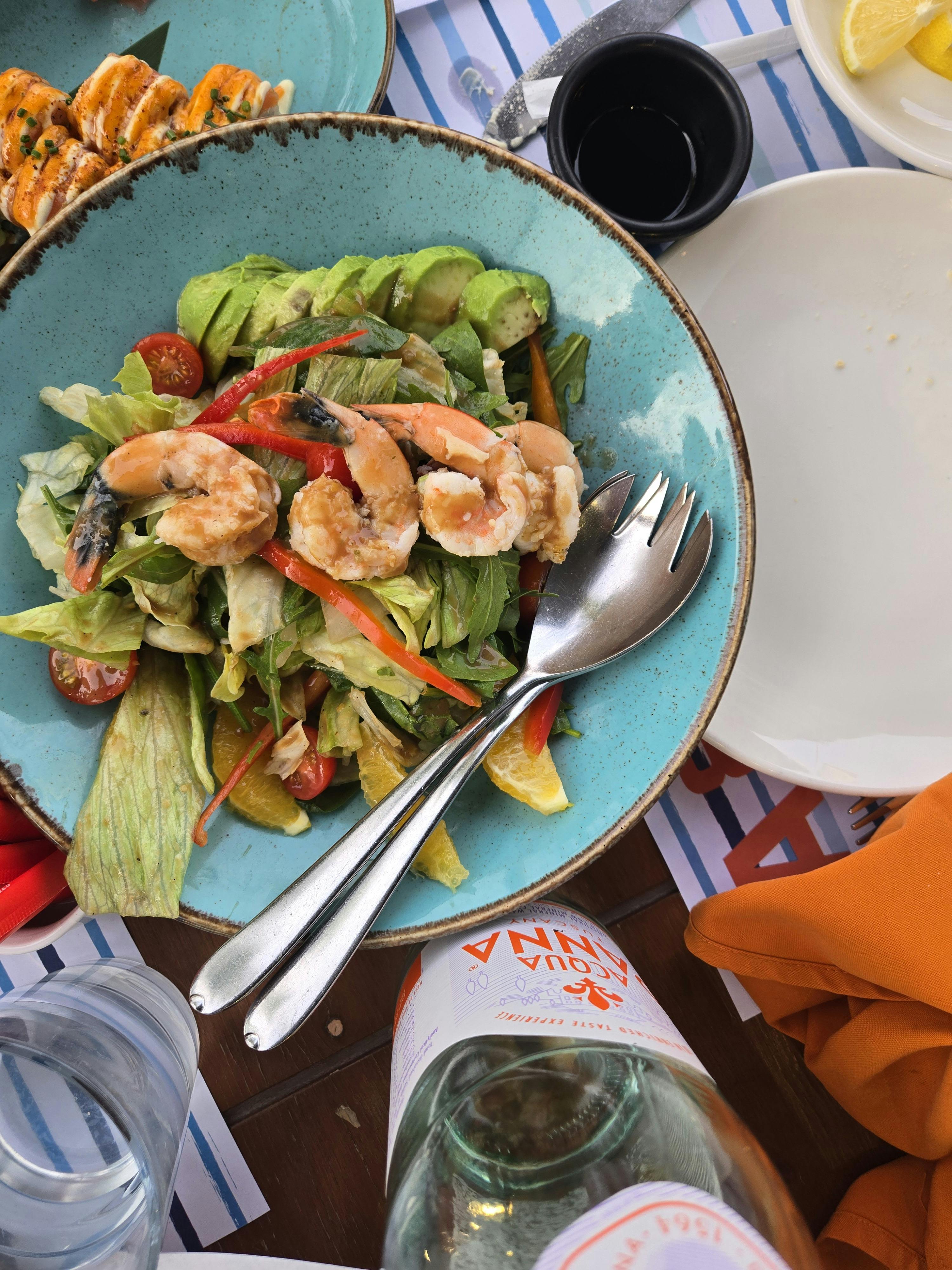
Photo: Kevin Early / Pexels
Italian
Insalata Mista
The diets react (see scores below)
Common Ingredients
- mixed greens
- cherry tomatoes
- cucumber
- carrot
- red onion
- olive oil
- red wine vinegar
- salt
Specific recipes may vary.
Incompatible with 3 of 11 diets
Diet Ratings
Insalata Mista is largely keto-friendly — mixed greens, cucumber, olive oil, red wine vinegar, and salt are all low-carb staples. However, carrot and red onion add meaningful net carbs that warrant portion control. A standard serving with a full carrot (~5-6g net carbs) and a generous amount of red onion (~2-3g net carbs) combined with cherry tomatoes (~3-4g net carbs) can push a single salad to 10-14g net carbs, which is manageable but not trivial within a 20-50g daily budget. The olive oil dressing is excellent for keto fat macros. With modest portions of the higher-carb vegetables — particularly the carrot — this dish can fit comfortably into a keto day.
Some stricter keto practitioners would flag carrots entirely as a higher-glycemic root vegetable and red onion as unnecessarily carb-dense, arguing these should be eliminated or substituted rather than portioned down; traditional clinical keto protocols targeting therapeutic ketosis would likely recommend omitting both.
Insalata Mista is a quintessential whole-food plant-based dish. Every ingredient — mixed greens, cherry tomatoes, cucumber, carrot, red onion, olive oil, red wine vinegar, and salt — is entirely plant-derived with no animal products or animal-derived additives. This is a textbook example of a vegan-friendly dish, requiring no substitutions or modifications. It also scores at the top of the range because all components are whole, minimally processed foods rather than manufactured vegan alternatives.
Almost every component of this salad is paleo-compliant — mixed greens, cherry tomatoes, cucumber, carrot, red onion, olive oil, and red wine vinegar are all whole, unprocessed foods available to hunter-gatherers. However, the inclusion of added salt places this dish in the 'avoid' category per strict paleo rules. Refined or added salt is excluded from the paleo framework, as Paleolithic humans had no access to processed sodium chloride. Beyond salt, all other ingredients pass cleanly: olive oil is a preferred paleo fat, red wine vinegar in its natural form is generally accepted, and the vegetables are unambiguously paleo-approved.
Insalata Mista is a textbook Mediterranean dish. Every single ingredient aligns perfectly with Mediterranean diet principles: mixed greens, cherry tomatoes, cucumber, carrot, and red onion are all fresh vegetables consumed multiple times daily in traditional Mediterranean eating. Extra virgin olive oil is the canonical fat of the Mediterranean diet, and red wine vinegar is a traditional, minimally processed acidulant used throughout the region. There are no refined grains, added sugars, processed ingredients, or animal products of concern. This salad could appear at virtually every Mediterranean meal.
Insalata Mista is composed entirely of plant-derived foods — mixed greens, cherry tomatoes, cucumber, carrot, and red onion — dressed with olive oil (a plant oil) and red wine vinegar (plant-derived). There is not a single animal product in this dish. Every ingredient violates the core carnivore diet principle of eating exclusively animal-derived foods. This is one of the clearest possible 'avoid' cases on the carnivore diet, with unanimous consensus across all carnivore practitioners and protocols.
Insalata Mista is a straightforward Italian mixed salad composed entirely of whole, unprocessed vegetables dressed with olive oil, red wine vinegar, and salt — all explicitly permitted on the Whole30 program. Mixed greens, cherry tomatoes, cucumber, carrot, and red onion are all compliant vegetables. Olive oil is a natural fat and fully approved. Red wine vinegar is explicitly listed as an allowed vinegar type. Salt is explicitly permitted. There are no excluded ingredients of any kind in this dish.
This salad is otherwise quite FODMAP-friendly — mixed greens, cucumber, carrot, olive oil, red wine vinegar, and salt are all low-FODMAP. Cherry tomatoes are low-FODMAP at a standard serve (about 5 cherry tomatoes / 75g per Monash). However, red onion is a significant high-FODMAP ingredient due to its very high fructan content, and there is no safe serving size during the elimination phase. Even a small amount of raw red onion — as would typically be added to a mixed salad — is enough to trigger symptoms in fructan-sensitive individuals. Because red onion is a core listed ingredient and not an optional garnish, this dish as described must be rated avoid for the elimination phase.
Insalata Mista is an excellent DASH diet choice. The dish is composed almost entirely of non-starchy vegetables — mixed greens, cherry tomatoes, cucumber, carrot, and red onion — which are core DASH foods rich in potassium, magnesium, fiber, and antioxidants. Olive oil is the recommended fat in DASH-aligned eating patterns (unsaturated, heart-healthy). Red wine vinegar adds flavor without sodium or calories. The only concern is the added salt, which should be kept minimal or omitted to maintain DASH sodium targets. As prepared with restrained salting, this dish easily fits within daily sodium limits and counts toward the DASH goal of 4–5 vegetable servings per day.
Insalata Mista is an excellent Zone Diet component. The vegetables — mixed greens, cherry tomatoes, cucumber, carrot, and red onion — are all low-glycemic, colorful, and polyphenol-rich, aligning perfectly with Dr. Sears' emphasis on favorable carbohydrates and anti-inflammatory eating. Olive oil is the ideal Zone fat source, being predominantly monounsaturated and anti-inflammatory. Red wine vinegar adds flavor with negligible macronutrient impact. The dish is carbohydrate-dominant with healthy fat, making it an ideal base or side that needs only a lean protein addition (e.g., grilled chicken, canned tuna, or hard-boiled egg whites) to complete a balanced Zone meal at the 40/30/30 ratio. The only minor limitation is the absence of protein, meaning it cannot stand alone as a complete Zone meal — it must be paired with a lean protein source to achieve proper block balance.
Insalata Mista is an excellent anti-inflammatory dish with virtually no pro-inflammatory components. Mixed greens provide a broad spectrum of antioxidants, polyphenols, and vitamins (K, C, folate). Cherry tomatoes are rich in lycopene, a powerful carotenoid that reduces oxidative stress and inflammatory markers. Cucumber offers hydration and flavonoids. Carrots contribute beta-carotene and other carotenoids linked to reduced CRP levels. Red onion is particularly notable for its high quercetin content, a flavonoid with well-documented anti-inflammatory properties. The dressing is exemplary: extra virgin olive oil contains oleocanthal, which inhibits COX-1 and COX-2 enzymes similarly to ibuprofen, and red wine vinegar contains polyphenols and acetic acid that may support gut health and glycemic regulation. Salt is the only ingredient without anti-inflammatory benefit, but in culinary quantities it presents no concern. There are no processed ingredients, refined carbohydrates, added sugars, seed oils, or saturated fats. This dish aligns perfectly with Dr. Weil's Anti-Inflammatory Food Pyramid and the IF Rating system across every ingredient.
Insalata Mista is a nutrient-dense, low-calorie vegetable salad with good fiber from mixed greens, tomatoes, cucumber, carrot, and red onion, and the olive oil dressing provides heart-healthy unsaturated fats. It is easy to digest, hydrating, and free of fried, high-sugar, or processed ingredients — all positives for GLP-1 patients. However, it contains no meaningful protein source, which is the #1 dietary priority for GLP-1 patients needing 100-120g of protein daily to prevent muscle loss. On its own, this dish contributes almost nothing toward that target. The olive oil adds moderate fat and calories, which is acceptable in small amounts but should be kept to roughly 1 teaspoon to avoid excess fat that can worsen nausea. Rated caution rather than approve solely because of the absence of protein — it is an excellent side dish or base but should not be consumed as a standalone meal without a protein addition (e.g., grilled chicken, canned tuna, white beans, or hard-boiled eggs).
*See how scores were generated at our methodology page.
Nutritional profile
Six traits that cut across every diet.
Fiber & Plants
How much whole-plant food and fiber it delivers.
Healthy Fats
The quality of its fats (unsaturated, omega-3).
Whole / Unprocessed
How close it is to its natural, unprocessed form.
Gut Gentle
How easy it is on digestion (low FODMAP, few irritants).
Low Glycemic
How little it spikes your blood sugar.
Protein Density
How much protein it packs per calorie.
Controversy Index
Higher controversy = more disagreement between diets.
Diet-Specific Tips
 Keto — 5/10
View tips
- Olive oil dressing is ideal for keto fat macros
- Mixed greens and cucumber are very low net carb
- Cherry tomatoes add modest carbs but are generally acceptable in small amounts
- Carrot is the primary concern — a starchy root vegetable with ~5-6g net carbs per medium carrot
- Red onion adds 2-3g net carbs and should be used sparingly
- No added sugars or grains — whole unprocessed ingredients
- Total net carbs are manageable with portion control but not negligible
 Vegan — 10/10
View tips
- All ingredients are whole plant foods
- No animal products, dairy, eggs, or animal-derived additives present
- Olive oil is plant-derived and unambiguously vegan
- Red wine vinegar is plant-based (fermented from grapes) with no fining agents of concern
- Minimal processing — ingredients are raw or lightly dressed
- Scores 10/10 as a whole-food plant-based meal with no nutritional or ethical caveats
 Mediterranean — 10/10
View tips
- All ingredients are whole, unprocessed vegetables
- Extra virgin olive oil as the sole fat source — the gold standard of Mediterranean diet
- Red wine vinegar is a traditional, low-calorie flavor enhancer with no dietary concerns
- No animal products, refined grains, or added sugars
- Directly mirrors traditional Italian antipasto/side salad culture
- High fiber, high micronutrient density, low caloric density
 Whole30 — 10/10
View tips
- All vegetables (mixed greens, cherry tomatoes, cucumber, carrot, red onion) are fully compliant whole foods
- Olive oil is an approved natural fat
- Red wine vinegar is explicitly listed as a permitted vinegar on Whole30
- Salt is explicitly allowed, including iodized versions
- No added sugars, grains, legumes, dairy, or any other excluded ingredients
- Dish is a whole-food preparation, fully aligned with the spirit of the program
 DASH — 9/10
View tips
- Mixed greens, tomatoes, cucumber, carrot, and red onion are all core DASH vegetables rich in potassium, magnesium, and fiber
- Olive oil is a heart-healthy unsaturated fat consistent with DASH guidelines
- No saturated fat, no added sugar, no processed ingredients
- Red wine vinegar is sodium-free and DASH-compatible
- Added salt is the only concern — should be minimized or omitted; low-sodium preparation scores a full 10
- Counts toward DASH daily vegetable serving goals (4–5 servings/day)
 Zone — 8/10
View tips
- All vegetables are low-glycemic and Zone-favorable carbohydrate sources
- Olive oil is the quintessential Zone monounsaturated fat
- Rich in polyphenols and anti-inflammatory compounds aligned with Sears' anti-inflammatory focus
- No protein component — must be paired with lean protein to form a complete Zone meal
- Carrot has a slightly higher glycemic index than leafy greens but is still acceptable in typical serving portions
- No unfavorable ingredients: no high-glycemic carbs, no saturated fat, no processed components
 Anti-Inflammatory — 9/10
View tips
- Extra virgin olive oil provides oleocanthal, a natural COX-1/COX-2 inhibitor with strong anti-inflammatory evidence
- Mixed greens and colorful vegetables deliver antioxidants, carotenoids, and polyphenols that reduce oxidative stress
- Red onion is high in quercetin, a well-researched anti-inflammatory flavonoid
- Cherry tomatoes provide lycopene, linked to reduced CRP and cardiovascular inflammation
- Red wine vinegar adds polyphenols and may support gut microbiome health
- Zero processed ingredients, refined sugars, seed oils, or saturated fats
- Whole, unprocessed ingredients throughout — ideal anti-inflammatory profile
 GLP-1 Friendly — 5/10
View tips
- No protein content — fails the #1 GLP-1 dietary priority
- High fiber from diverse vegetables — supports digestion and prevents constipation
- High water content from cucumber, tomatoes, and greens — supports hydration
- Olive oil provides unsaturated fat — acceptable in small amounts, keep to ~1 tsp per serving
- Easy to digest — no heavy, greasy, or fried components
- Low calorie density — excellent side dish but nutritionally incomplete as a standalone meal
- No added sugar, no processed ingredients, no carbonation — no GLP-1 side effect triggers