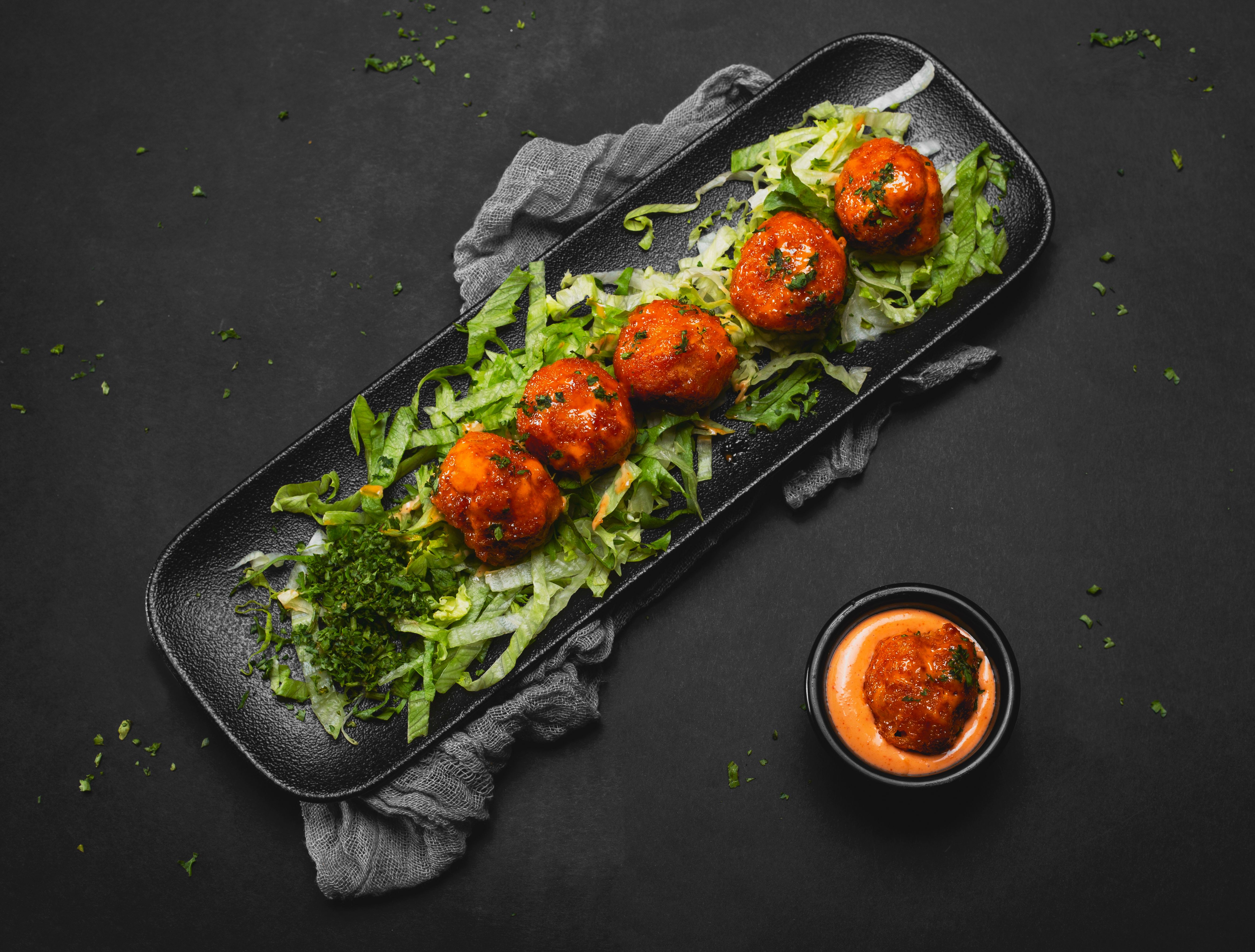
Photo: Huzaifa Bukhari / Pexels
Italian
Italian Meatballs in Marinara
The diets react (see scores below)
Common Ingredients
- ground beef
- ground pork
- breadcrumbs
- eggs
- Parmesan
- marinara sauce
- garlic
- basil
Specific recipes may vary.
Incompatible with 8 of 11 diets
Diet Ratings
Italian meatballs in marinara as traditionally prepared are incompatible with keto due to breadcrumbs as a binding agent (a grain-based, high-carb ingredient) and marinara sauce which typically contains added sugars and contributes additional net carbs. A standard serving of 4-5 meatballs with marinara could easily deliver 20-30g net carbs, potentially consuming or exceeding the entire daily keto carb budget in one dish. The base proteins (beef, pork, eggs, Parmesan) are all keto-friendly, but the breadcrumbs are a disqualifying ingredient in the standard recipe.
Italian Meatballs in Marinara contains multiple animal products that are strictly excluded from a vegan diet. Ground beef and ground pork are direct animal flesh, eggs are an animal by-product, and Parmesan is a dairy cheese. This dish fails the most fundamental vegan criteria on multiple counts simultaneously. There is no ambiguity here — this is a classic non-vegan dish by every definition recognized across all vegan organizations.
Italian Meatballs in Marinara contains multiple non-paleo ingredients that disqualify it clearly. Breadcrumbs are made from wheat (a grain), which is strictly excluded from the paleo diet. Parmesan is a dairy product, also excluded. While the core proteins (ground beef, ground pork) and the remaining ingredients (eggs, garlic, basil, and a simple tomato-based marinara) are paleo-compliant, the breadcrumbs and Parmesan are fundamental to this dish as traditionally prepared — not optional garnishes. The combination of a grain product and dairy makes this a clear avoid under any mainstream paleo interpretation.
Italian Meatballs in Marinara centers on a combination of ground beef and ground pork — two red meats — as the primary protein. The Mediterranean diet strictly limits red meat to a few times per month, making a dish built around it a poor fit for regular consumption. The refined breadcrumbs add processed carbohydrates, and the overall saturated fat load from two fatty ground meats is high. On the positive side, the dish includes genuinely Mediterranean-friendly elements: marinara sauce (tomatoes), garlic, basil, eggs, and Parmesan are all regionally appropriate ingredients, and the Italian culinary context is authentic. However, the dual red-meat foundation overrides these positives, placing the dish in 'avoid' territory for routine eating.
Traditional Southern Italian and Sicilian cuisines — the very traditions that inform the original Mediterranean diet research — do include meat-based dishes like polpette on occasion, typically in small portions as a condiment to pasta rather than a main protein. Some Mediterranean diet authorities argue that modest, infrequent servings of this dish (e.g., 2–3 small meatballs over a large serving of tomato-sauced pasta) can fit within the 'a few times per month' red meat allowance without violating the diet's spirit.
Italian Meatballs in Marinara contains multiple plant-based and processed ingredients that disqualify it from the carnivore diet. Breadcrumbs are grain-derived and act as a filler binder. Marinara sauce is made from tomatoes — a plant food — along with plant oils and additional seasonings. Garlic and basil are plant-derived spices/aromatics. Parmesan, while dairy-derived, adds to the complexity of violations. The core proteins (ground beef and ground pork) and eggs are carnivore-compatible, but they are heavily outnumbered by non-compliant ingredients that fundamentally define this dish. This is a classic Italian preparation with no practical carnivore adaptation possible without completely reimagining the recipe.
This dish contains multiple Whole30-excluded ingredients. Breadcrumbs are made from wheat/grain-based bread, which is explicitly excluded from the Whole30 program. Parmesan is a dairy product, also explicitly excluded. Marinara sauce as commonly prepared may contain added sugar or other non-compliant additives. The combination of grains (breadcrumbs) and dairy (Parmesan) makes this dish clearly non-compliant as described.
Italian Meatballs in Marinara contains multiple high-FODMAP ingredients that make it unsuitable during the elimination phase. The primary offenders are: (1) garlic — one of the highest-FODMAP foods tested by Monash, rich in fructans, problematic even in small amounts; (2) breadcrumbs — almost certainly wheat-based, containing significant fructans; (3) marinara sauce — commercially prepared marinara almost universally contains garlic and often onion, both high-fructan ingredients. Even homemade marinara typically uses garlic as a foundational ingredient. Parmesan cheese is generally low-FODMAP in small amounts (aged hard cheeses have minimal lactose), and ground beef, ground pork, eggs, and fresh basil are all low-FODMAP. However, the combination of garlic, wheat breadcrumbs, and standard marinara sauce makes this dish a clear avoid during elimination. Modifications could make it FODMAP-friendly (garlic-infused oil instead of garlic, gluten-free breadcrumbs, homemade FODMAP-safe tomato sauce), but as described with standard ingredients, this dish fails elimination criteria.
Italian Meatballs in Marinara conflicts with DASH diet principles on multiple fronts. The combination of ground beef and ground pork introduces significant saturated fat and cholesterol — DASH explicitly limits red meat and calls for lean protein sources. Breadcrumbs and Parmesan add notable sodium, and commercial marinara sauce is typically high in sodium (400–600mg per half-cup serving), making it easy to exceed DASH sodium thresholds in a single dish. Parmesan is a full-fat, high-sodium cheese, directly at odds with DASH's emphasis on low-fat dairy and sodium restriction. The overall dish as commonly prepared is calorie-dense, saturated-fat-heavy, and sodium-loaded — placing it firmly in the 'avoid' category under standard DASH guidelines.
Italian meatballs in marinara present a mixed Zone profile. The combined beef and pork protein base provides adequate protein but includes saturated fat that exceeds Zone ideals for lean protein sources. Breadcrumbs add a moderate-glycemic refined carbohydrate filler that displaces favorable carb blocks and is an 'unfavorable' Zone carb. Eggs and Parmesan are reasonable Zone-compatible additions. Marinara sauce, made from tomatoes with garlic and basil, is actually a Zone-friendly carbohydrate source — low-glycemic and polyphenol-rich. The dish can technically be incorporated into a Zone meal with careful portioning: a modest serving of 3-4 meatballs (roughly 3 protein blocks) paired with additional low-glycemic vegetables rather than pasta keeps the ratio manageable. The primary concerns are the saturated fat content from the fatty meat blend and the breadcrumb filler. Substituting leaner ground beef (93%+ lean) or turkey, and reducing or eliminating breadcrumbs, would significantly improve the Zone score. As served in a typical restaurant portion over pasta, this dish would score much lower; as a controlled component of a Zone-balanced plate with vegetables, it becomes workable.
Some Zone practitioners and Sears' earlier strict writings would rate this lower (3-4) due to the combined saturated fat load from beef and pork and the refined breadcrumb carbohydrates, classifying the fatty meat blend as clearly 'unfavorable.' However, Sears' later anti-inflammatory framework acknowledges that mixed meat dishes in controlled portions can fit Zone blocks, and the tomato-based marinara provides beneficial polyphenols and lycopene, which aligns with his evolved emphasis on polyphenol intake. The verdict thus depends on whether one applies the original Enter the Zone strictness or the updated Zone dietary approach.
Italian Meatballs in Marinara presents a mixed anti-inflammatory profile. On the pro-inflammatory side, the combination of ground beef and ground pork represents red meat — a category the anti-inflammatory framework recommends limiting due to saturated fat content and potential arachidonic acid load. Breadcrumbs introduce refined carbohydrates with minimal nutritional value. Parmesan, while used in relatively small quantities as a flavor accent, is a high-fat aged cheese. On the anti-inflammatory side, garlic and basil are well-regarded anti-inflammatory herbs. Marinara sauce made with tomatoes contributes lycopene (a potent carotenoid antioxidant, especially in cooked tomatoes), and the overall dish is built around a vegetable-based sauce rather than a cream or butter sauce. Eggs contribute some beneficial nutrients including choline and selenium. The dish is not categorically problematic — it's a traditional whole-food preparation with no trans fats, no seed oils, no processed additives, and genuine beneficial components. However, the red meat base (especially pork, which is higher in saturated fat) and refined breadcrumbs prevent this from approaching approval territory. Prepared with leaner beef, whole-grain breadcrumbs, and a generous portion of quality marinara, this dish edges toward the more acceptable end of caution. As typically prepared in a restaurant context, it scores at the lower end of the caution range.
Dr. Weil's framework treats red meat as a 'limit' rather than 'avoid' category and does not exclude traditional Mediterranean preparations like this outright — some anti-inflammatory practitioners would consider this acceptable as an occasional meal given the tomato-herb base. Conversely, stricter anti-inflammatory and autoimmune-focused protocols (such as AIP) would flag both red meat and the nightshade-containing marinara sauce as problematic, pushing this dish toward avoidance.
Italian meatballs in marinara present a mixed profile for GLP-1 patients. The beef-and-pork combination delivers meaningful protein, but also brings moderate-to-high saturated fat that can worsen nausea, bloating, and reflux — the most common GLP-1 side effects. Breadcrumbs add refined carbohydrates with minimal fiber or nutritional value, and Parmesan contributes additional saturated fat. Marinara sauce is a positive: it is low-calorie, lycopene-rich, and adds some vegetable-based nutrition, and garlic and basil are fine. The dish is not fried, which prevents a lower score, and the protein content is genuine. However, the fat load from two fatty meats combined makes this a risky choice for patients already struggling with GI side effects. A smaller portion (2-3 meatballs) over a fiber-rich base like zucchini noodles or a small amount of whole wheat pasta would meaningfully improve the profile. The dish scores higher than a pure avoid because it contains real protein and is not fried or ultra-processed, but the saturated fat content and refined filler ingredients prevent an approve.
Some GLP-1-focused RDs accept traditional meatballs in small portions as a practical protein source, particularly for patients who need calorie-dense options due to very low intake, arguing that the beef-pork fat content is manageable at 2-3 meatballs. Others flag that saturated fat is disproportionately problematic for GLP-1 patients because slowed gastric emptying prolongs fat exposure in the stomach, increasing nausea risk, and recommend substituting leaner ground turkey or chicken entirely.
*See how scores were generated at our methodology page.
Nutritional profile
Six traits that cut across every diet.
Fiber & Plants
How much whole-plant food and fiber it delivers.
Healthy Fats
The quality of its fats (unsaturated, omega-3).
Whole / Unprocessed
How close it is to its natural, unprocessed form.
Gut Gentle
How easy it is on digestion (low FODMAP, few irritants).
Low Glycemic
How little it spikes your blood sugar.
Protein Density
How much protein it packs per calorie.
Controversy Index
Higher controversy = more disagreement between diets.
Diet-Specific Tips
 Zone — 5/10
View tips
- Mixed beef and pork protein contains elevated saturated fat, not ideal for Zone's lean protein preference
- Breadcrumbs are a refined, moderate-glycemic carbohydrate filler classified as 'unfavorable' in Zone terminology
- Marinara sauce (tomato-based) is a Zone-friendly carb source rich in polyphenols and lycopene
- Eggs and Parmesan are acceptable Zone protein and fat contributors
- Dish can fit Zone blocks with portion control but requires pairing with vegetables rather than pasta
- Typical restaurant-sized portion would be difficult to balance within Zone ratios without modification
 Anti-Inflammatory — 4/10
View tips
- Ground beef and pork are red meats — limited in anti-inflammatory frameworks due to saturated fat and arachidonic acid
- Refined breadcrumbs add inflammatory potential with no nutritional offset
- Garlic and basil are anti-inflammatory herbs with documented benefits
- Tomato-based marinara provides lycopene, a potent antioxidant carotenoid (enhanced by cooking)
- No trans fats, seed oils, or processed additives — whole-food preparation
- Parmesan contributes saturated fat, though in modest quantity as a flavoring
- Traditional Mediterranean dish structure moderates overall inflammatory burden
 GLP-1 Friendly — 4/10
View tips
- Beef and pork combination yields moderate-to-high saturated fat per serving, increasing nausea and reflux risk
- Genuine protein source, but fat-to-protein ratio is less favorable than leaner alternatives
- Breadcrumbs are refined carbohydrates with minimal fiber contribution
- Marinara sauce is a positive addition — low fat, vegetable-based, nutrient-present
- Not fried — avoids the worst fat loading scenario
- Parmesan adds additional saturated fat, though in small amounts
- Portion-sensitive: 2-3 meatballs is far more appropriate than a full restaurant serving
- Slowed gastric emptying amplifies fat intolerance — fatty meats stay in stomach longer on GLP-1s
- Swapping beef-pork blend for lean ground turkey or chicken would raise score to 6-7
Community
Healthiest Italian Meatballs in Marinara recipes
One scanned recipe so far — scan yours to see how it stacks up.
Scan your Italian Meatballs in Marinara recipe →