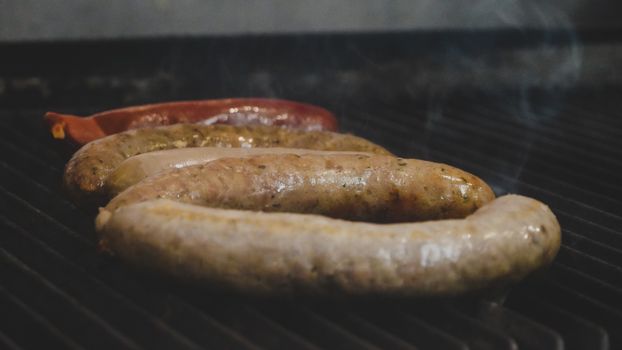
Photo: Vitaliy Haiduk / Pexels
Italian
Italian Sausage Link
The diets react (see scores below)
Common Ingredients
- Italian pork sausage
- olive oil
- fennel seed
- garlic
- red pepper flakes
Specific recipes may vary.
Incompatible with 8 of 11 diets
Diet Ratings
Italian sausage is a naturally keto-friendly food. Pork sausage is high in fat and protein with minimal net carbs from the spices (fennel seed, garlic, red pepper flakes contribute negligible amounts). Olive oil adds healthy monounsaturated fat. A standard link contains roughly 1-2g net carbs, well within keto limits. The macros align well with the keto fat-to-protein ratio. The main concern is that commercial Italian sausage sometimes contains fillers, binders, or added sugars — so checking the label or using a clean butcher-made product matters.
Some strict keto practitioners flag processed sausages due to potential hidden sugars, corn syrup solids, or starchy fillers used as binders in commercial products, and may exclude them unless the ingredient list is fully verified as clean.
Italian Sausage Link is made from Italian pork sausage as its primary ingredient, which is a direct animal product (pig meat). Pork is unambiguously excluded from a vegan diet. The remaining ingredients — olive oil, fennel seed, garlic, and red pepper flakes — are all plant-based, but the foundational protein source renders this dish entirely incompatible with veganism. There is no vegan version of this dish as described; a plant-based alternative would require substituting the pork sausage entirely with a plant-derived product.
Italian sausage links, even when made with otherwise paleo-friendly ingredients like pork, olive oil, fennel seed, garlic, and red pepper flakes, are typically a processed meat product. Commercial Italian sausage almost universally contains added salt, sugar, and often fillers, binders, or preservatives — all of which are excluded on paleo. The sausage casing may also be synthetic. Even 'natural' versions are processed in a way that contradicts the paleo philosophy of minimally processed whole foods. The underlying spices and olive oil are paleo-approved, but the sausage form itself is the problem.
Some paleo practitioners argue that homemade Italian sausage — ground pork seasoned with fennel, garlic, and red pepper flakes without added salt, sugar, or fillers — is entirely paleo-compliant. Robb Wolf and Mark Sisson both acknowledge that the acceptability of sausage hinges entirely on the ingredient list, and that clean, additive-free versions made at home or sourced from trusted producers can fit within a paleo framework.
Italian sausage links are primarily processed pork — a red meat product that is both heavily processed and high in saturated fat and sodium. The Mediterranean diet limits red meat to a few times per month and strongly discourages processed meats. While the dish includes olive oil, garlic, fennel, and red pepper flakes — all Mediterranean-friendly ingredients — the base protein is a cured, processed pork sausage, which directly contradicts core Mediterranean diet principles. The processing, added preservatives, and saturated fat content place this firmly in the 'avoid' category regardless of the aromatic accompaniments.
Some traditional southern Italian and Sicilian culinary traditions do incorporate small amounts of pork sausage as a flavoring agent in larger vegetable or legume dishes (e.g., added to lentil stew or sautéed greens), where the quantity is minimal. In this context, a small portion used occasionally as a condiment rather than a centerpiece protein might be viewed as culturally authentic and not strictly prohibited.
Italian sausage links contain multiple plant-derived ingredients that disqualify them from the carnivore diet. Olive oil is a plant-based oil explicitly excluded from carnivore principles. Fennel seed, garlic, and red pepper flakes are all plant-derived spices and aromatics that are forbidden on a strict carnivore diet. While the pork base is an acceptable animal protein, the overall dish is heavily seasoned with plant compounds and cooked in a plant oil, making it incompatible with carnivore guidelines. Even for practitioners who allow minor spice use, the combination of olive oil plus multiple plant-based seasonings pushes this well into avoid territory.
The individual seasonings listed (fennel seed, garlic, red pepper flakes) and olive oil are all Whole30-compliant. However, 'Italian pork sausage' as a commercially prepared product almost universally contains added sugar, dextrose, or other non-compliant fillers, binders, and preservatives. The dish cannot be approved as described without confirming the sausage is sourced from a Whole30-compliant brand (e.g., no added sugar, no sulfites that were formerly excluded, no gluten-containing fillers). If made from scratch with compliant pork and spices, this dish would be fully approvable. As commonly purchased, it warrants a caution rating pending label verification.
Some Whole30 practitioners argue that even compliant-labeled sausages fall into the category of processed meats that the program discourages for daily reliance, as Melissa Urban's broader food philosophy emphasizes whole, minimally processed foods. However, the official Whole30 guidelines do not exclude sausage categorically — only specific non-compliant ingredients within it.
Italian sausage links contain garlic as a direct ingredient, which is one of the highest-FODMAP foods tested by Monash University due to its extremely high fructan content. Even small amounts of garlic cooked into a sausage are problematic because fructans leach into the meat during cooking and cannot be removed. This disqualifies the dish outright during the elimination phase regardless of other ingredients. The pork itself is low-FODMAP, olive oil is low-FODMAP, fennel seed is low-FODMAP at typical culinary amounts, and red pepper flakes are low-FODMAP at small servings — but the garlic is a definitive deal-breaker. Additionally, commercial Italian sausage blends frequently contain onion powder or onion-derived fillers alongside garlic, adding further fructan load. The fennel seed, while low-FODMAP, is sometimes confused with fennel bulb (which becomes high-FODMAP above 1/2 cup), but seed form at spice-level quantities is generally safe.
Italian pork sausage is a processed red meat that is high in sodium (typically 500-800mg per link), saturated fat, and total fat — all of which DASH guidelines explicitly limit. The NIH/NHLBI DASH eating plan directly discourages processed meats, full-fat pork products, and high-sodium foods. A single Italian sausage link can consume roughly one-third to one-half of the daily sodium allowance on even the standard DASH threshold (2,300mg), and a much larger fraction on the stricter 1,500mg low-sodium DASH plan. While olive oil, garlic, and fennel seed are DASH-compatible ingredients, they do not meaningfully offset the primary protein's high saturated fat and sodium content. This dish is categorically misaligned with DASH priorities of lean protein and sodium restriction.
Italian sausage links are a processed pork product with a significantly higher fat content than Zone-preferred lean proteins. A typical Italian sausage link (85g) contains roughly 16-18g of fat, much of it saturated, and about 13-15g of protein. This creates an unfavorable protein-to-fat ratio for Zone purposes — you'd hit your fat block allocation before reaching a full protein block. The olive oil in the preparation adds further fat load, though it's the preferred monounsaturated type. The fennel seed, garlic, and red pepper flakes are Zone-friendly polyphenol contributors with negligible macro impact. The core problem is that Italian sausage is categorized as a 'unfavorable' protein in Zone terminology due to its high saturated fat content and processing — Dr. Sears consistently lists fatty processed meats as proteins to limit. That said, the Zone is ratio-based: a small portion of Italian sausage (half a link) paired with a large volume of low-glycemic vegetables and no added fat could technically balance into an acceptable Zone meal, making outright avoidance too strict. The olive oil used in cooking partially redeems the fat profile but doesn't overcome the saturated fat burden of the sausage itself.
Some Zone practitioners and Sears' later anti-inflammatory writings (particularly 'The Mediterranean Zone') soften the stance on traditional Mediterranean cured and seasoned pork products, noting that the overall dietary pattern matters more than individual food exclusions. In a Mediterranean Zone context, a small portion of Italian sausage alongside abundant vegetables and omega-3-rich foods could be considered acceptable occasionally. Earlier Zone books (Enter the Zone) are stricter, categorically preferring skinless poultry and fish over processed fatty meats.
Italian sausage links are primarily processed pork, which sits at the intersection of several anti-inflammatory concerns. Pork sausage is typically high in saturated fat and often contains added sodium, preservatives (nitrates/nitrites), and fillers depending on the product — all of which are associated with pro-inflammatory responses and elevated CRP. Red and processed meats are broadly limited or avoided in anti-inflammatory frameworks, and sausage is among the more processed forms. The dish does include genuinely beneficial anti-inflammatory ingredients — olive oil provides oleocanthal, garlic offers allicin, fennel seed has anti-inflammatory phytonutrients, and red pepper flakes contain capsaicin — but these are used in modest quantities relative to the dominant ingredient (pork sausage) and do not meaningfully offset its inflammatory burden. The spice profile is a bright spot, but it cannot rehabilitate a dish whose primary component is processed, high-saturated-fat meat. Rated as a side dish, the portion may be smaller, but the fundamental profile remains problematic.
Some anti-inflammatory practitioners note that high-quality, minimally processed Italian sausage made from pasture-raised pork (without nitrates, fillers, or artificial additives) is a different proposition than commodity sausage — and the garlic, fennel, and olive oil companions have real anti-inflammatory value. A small portion of whole-ingredient sausage as a flavor component might be tolerated in an otherwise strong anti-inflammatory diet. However, mainstream anti-inflammatory guidance (including Dr. Weil's framework) consistently places processed and cured meats in the limit/avoid category regardless of sourcing.
Italian pork sausage is a high-fat, high-saturated-fat processed meat that is poorly suited for GLP-1 patients. A standard Italian sausage link contains roughly 17-22g of fat (7-9g saturated) and only 13-16g of protein per link, making the fat-to-protein ratio unfavorable. The high fat content directly worsens GLP-1 side effects — nausea, bloating, reflux, and slowed gastric emptying are all exacerbated by fatty, greasy meats. Red pepper flakes add additional risk of GI irritation and reflux. As a processed meat, it also carries low nutrient density per calorie relative to lean protein alternatives. Olive oil is a positive ingredient, but it is a minor component that does not offset the core nutritional profile. While the dish provides some protein, far better lean protein sources exist for GLP-1 patients without the high saturated fat load and GI risk.
*See how scores were generated at our methodology page.
Nutritional profile
Six traits that cut across every diet.
Fiber & Plants
How much whole-plant food and fiber it delivers.
Healthy Fats
The quality of its fats (unsaturated, omega-3).
Whole / Unprocessed
How close it is to its natural, unprocessed form.
Gut Gentle
How easy it is on digestion (low FODMAP, few irritants).
Low Glycemic
How little it spikes your blood sugar.
Protein Density
How much protein it packs per calorie.
Controversy Index
Higher controversy = more disagreement between diets.
Diet-Specific Tips
 Keto — 8/10
View tips
- High fat, moderate protein from pork — strong keto macro alignment
- Negligible net carbs from spices (fennel, garlic, red pepper flakes)
- Olive oil adds heart-healthy monounsaturated fat
- Commercial sausages may contain hidden sugars or fillers — label verification recommended
- Homemade or butcher-sourced versions are ideal for strict keto compliance
 Whole30 — 5/10
View tips
- Commercial Italian sausage almost always contains added sugar or dextrose — label verification is essential
- Gluten-containing fillers or breadcrumbs are common in Italian sausage formulations
- Olive oil, fennel seed, garlic, and red pepper flakes are all fully Whole30-compliant
- Compliant versions (e.g., sugar-free, filler-free pork sausage) do exist but require careful sourcing
- Homemade version with compliant ground pork and these spices would be fully approved
 Zone — 4/10
View tips
- High saturated fat content relative to protein — unfavorable Zone protein-to-fat block ratio
- Processed meat with additives, which conflicts with Zone's anti-inflammatory principles
- Olive oil in preparation is Zone-approved monounsaturated fat
- Fennel, garlic, red pepper flakes contribute polyphenols with no adverse macro impact
- Small portions could technically fit Zone blocks but require careful balancing with very lean meal components
- Dr. Sears' published materials classify fatty processed pork as an unfavorable Zone protein