Italian
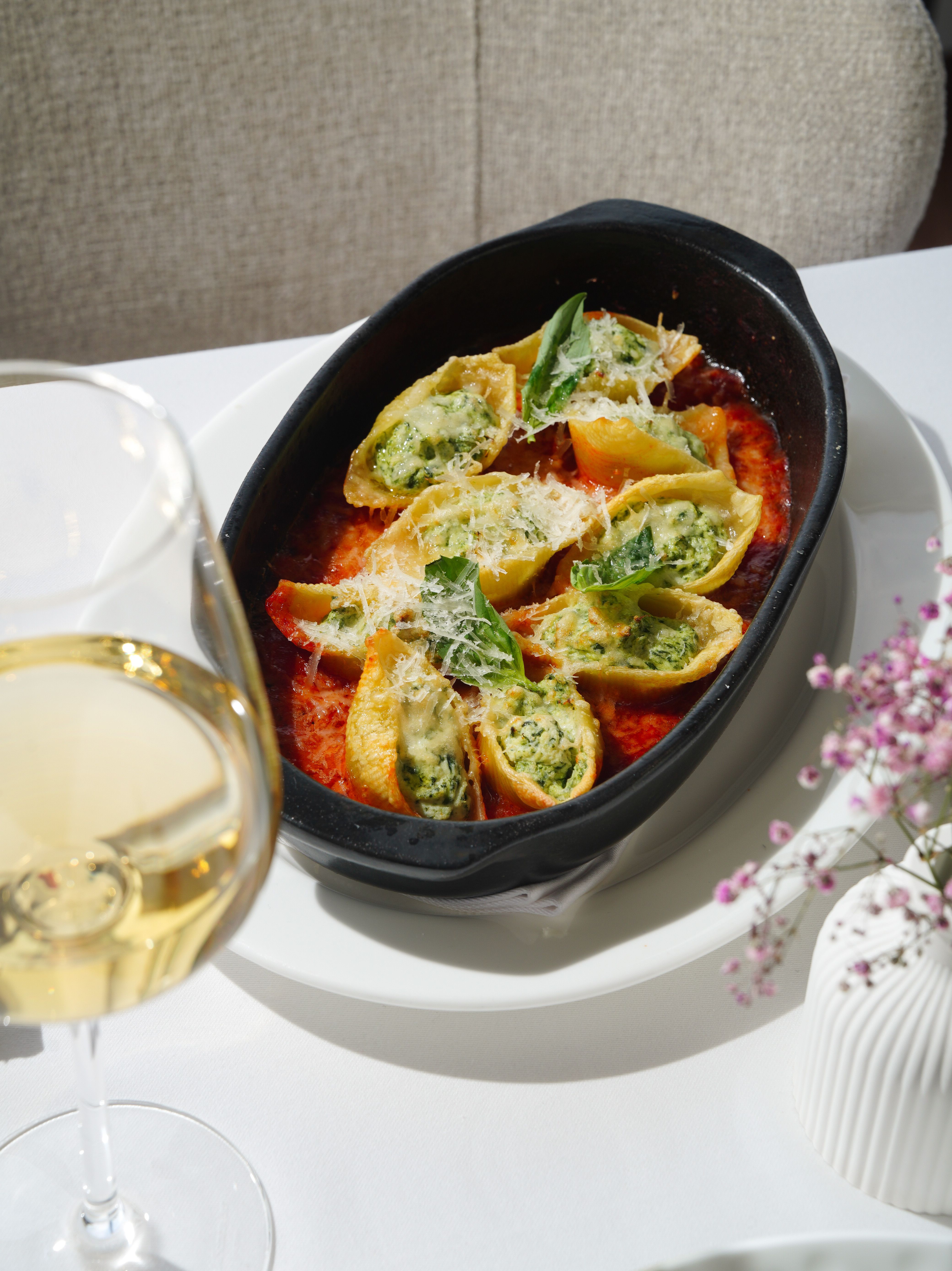
Italian Stuffed Shells
The diets react (see scores below)
Common Ingredients
- jumbo pasta shells
- ricotta
- spinach
- mozzarella
- Parmesan
- marinara sauce
- egg
- basil
Specific recipes may vary.
Incompatible with 6 of 11 diets
Diet Ratings
Italian Stuffed Shells are fundamentally incompatible with a ketogenic diet. The primary structural ingredient — jumbo pasta shells — is made from refined wheat flour, delivering approximately 30-40g of net carbs per serving (3-4 shells) before accounting for any other ingredients. This single ingredient alone exceeds or nearly maxes out the entire daily net carb allowance for strict keto. Marinara sauce typically contains added sugars and contributes additional carbs. While ricotta, mozzarella, Parmesan, spinach, egg, and basil are individually keto-friendly, they cannot offset the massive carbohydrate load from the pasta shells. There is no meaningful way to portion-control this dish into keto compatibility — removing the shells would eliminate the dish entirely.
Italian Stuffed Shells as prepared here contain multiple animal products, making them entirely incompatible with a vegan diet. Ricotta is a dairy cheese, mozzarella is a dairy cheese, Parmesan is a dairy cheese (and notably contains animal rennet), and egg is a direct animal product. Three distinct dairy ingredients plus egg place this dish firmly in the 'avoid' category with no ambiguity. The jumbo pasta shells, spinach, marinara sauce, and basil are plant-based, but the filling and topping are dominated by animal-derived ingredients. Vegan versions of this dish are possible using cashew or tofu-based ricotta, vegan mozzarella, nutritional yeast in place of Parmesan, and a flax or chia egg, but that would constitute a different dish entirely.
Italian Stuffed Shells is fundamentally incompatible with the paleo diet. The dish is built around jumbo pasta shells, which are made from wheat — a grain that is strictly excluded from paleo. Beyond the pasta, ricotta, mozzarella, and Parmesan are all dairy products, also excluded by paleo guidelines. These two categories of non-paleo ingredients form the very foundation and identity of this dish. The only paleo-compliant ingredients present are spinach, egg, basil, and potentially the marinara sauce (if made without added sugar or salt). There is no meaningful way to adapt this dish while retaining its character — removing the pasta and dairy would leave nothing resembling stuffed shells.
Italian Stuffed Shells sit in a gray zone for the Mediterranean diet. The dish includes beneficial elements — spinach (a nutrient-dense vegetable), tomato-based marinara sauce (lycopene-rich, olive oil-based), fresh basil, and egg — all well-aligned with Mediterranean principles. However, the pasta shells are a refined grain (not whole grain), and the dish is heavily dairy-forward with three cheeses (ricotta, mozzarella, Parmesan). While dairy is acceptable in moderation in the Mediterranean diet, this dish makes it the dominant macronutrient source rather than a complement. There is also no olive oil prominently featured as the primary fat. The lack of a lean protein or legume base further reduces its standing as a balanced Mediterranean main. Occasional consumption is acceptable, but it is not a staple dish.
Traditional Italian cuisine from regions like Campania and Sicily regularly incorporates pasta with cheese and tomato sauce as part of a balanced weekly pattern, and some Mediterranean diet authorities note that modest dairy and pasta portions eaten within an overall plant-rich dietary context remain consistent with the diet's spirit. Additionally, ricotta is lower in saturated fat than many aged cheeses, making it a more favorable dairy choice.
Italian Stuffed Shells is almost entirely plant-based and grain-based, making it fundamentally incompatible with the carnivore diet. The dish is built around jumbo pasta shells (wheat/grain), spinach (vegetable), marinara sauce (tomatoes, plant-based), and basil (herb/spice). While it does contain some animal-derived ingredients — ricotta, mozzarella, Parmesan (dairy), and egg — these are minor components within a dish that is overwhelmingly plant and grain-derived. Even if one were to evaluate only the animal ingredients in isolation, the dairy components would still be debated within the carnivore community. The primary structure of this dish (pasta, vegetables, tomato sauce) is categorically excluded from any tier of the carnivore diet.
Italian Stuffed Shells contains multiple Whole30-excluded ingredients. Jumbo pasta shells are made from wheat (a grain), which is strictly excluded. Ricotta, mozzarella, and Parmesan are all dairy products, also explicitly excluded. This dish fails on two separate major exclusion categories — grains and dairy — making it clearly incompatible with the Whole30 program.
Italian Stuffed Shells contains multiple high-FODMAP ingredients that make it unsuitable for the elimination phase. Jumbo pasta shells are made from wheat, which is high in fructans — a major FODMAP trigger. Ricotta cheese is high in lactose and is classified as high-FODMAP at typical serving sizes (safe only at very small amounts like 2 tablespoons). Marinara sauce frequently contains onion and garlic, both of which are among the highest-FODMAP foods due to fructans. The combination of wheat pasta, ricotta at filling quantities, and a standard marinara sauce creates a triple-FODMAP hit that makes this dish clearly off-limits during elimination. Mozzarella, Parmesan, spinach, egg, and basil are individually low-FODMAP, but they cannot offset the core problematic ingredients.
Italian Stuffed Shells contain several DASH-friendly elements — spinach is a core DASH vegetable rich in potassium and magnesium, whole-grain pasta shells would be preferred but standard refined pasta is commonly used, egg is acceptable in moderation, and tomato-based marinara sauce provides potassium and lycopene. However, the dish raises concerns: ricotta and mozzarella are typically full-fat dairy, which DASH specifies should be low-fat or fat-free; Parmesan adds significant sodium; and commercial marinara sauce is often high in sodium. The combination of full-fat cheeses and a sodium-heavy sauce pushes this dish into 'caution' territory. With ingredient modifications — part-skim ricotta, part-skim mozzarella, whole-grain pasta shells, and a low-sodium marinara — this dish could score higher (7-8) and approach DASH-approved status. As commonly prepared, it is acceptable occasionally but requires portion control and mindful preparation.
NIH DASH guidelines explicitly call for low-fat or fat-free dairy, making full-fat ricotta and mozzarella non-ideal. However, updated clinical interpretations note that emerging research (including meta-analyses published in Lancet and EJCN) suggests full-fat dairy may not adversely affect cardiovascular outcomes, leading some DASH-oriented dietitians to permit moderate amounts of full-fat cheese, particularly hard cheeses like Parmesan used in small quantities.
Italian Stuffed Shells present several Zone Diet challenges. The primary carbohydrate source — jumbo pasta shells — is a refined, high-glycemic carbohydrate that Dr. Sears classifies as 'unfavorable.' Pasta causes a rapid insulin spike and is dense in carb blocks, making it difficult to balance with the 40/30/30 ratio without eating very small portions. The protein profile is also problematic: ricotta, mozzarella, and Parmesan are the main protein sources, but they carry significant saturated fat alongside their protein, making them less ideal than the lean proteins Sears recommends. There is no lean protein listed at all. The spinach is a Zone-favorable ingredient — a polyphenol-rich, low-glycemic vegetable — but it plays a minor role in the overall macro profile. Marinara sauce can be favorable if low-sugar, adding lycopene and polyphenols. The egg adds some lean protein, helping slightly. Overall, this dish is carbohydrate-heavy and fat-heavy (largely saturated), with insufficient lean protein and no monounsaturated fat source. It can technically be incorporated into Zone eating by serving a very small portion (1-2 shells) alongside a lean protein and a large vegetable salad with olive oil, but as presented it skews well outside the 40/30/30 target. It scores a 4 — usable in modified Zone context but requiring significant restructuring.
Italian Stuffed Shells present a mixed anti-inflammatory profile. On the positive side, spinach is a highly anti-inflammatory leafy green rich in vitamins K, C, and folate, as well as antioxidants like lutein and zeaxanthin. Marinara sauce (tomato-based) provides lycopene, a well-studied carotenoid with anti-inflammatory properties, especially when cooked. Fresh basil contributes polyphenols and essential oils with mild anti-inflammatory effects. The egg provides choline and selenium. However, several ingredients temper the overall assessment: jumbo pasta shells are refined carbohydrates with a high glycemic index, capable of spiking blood sugar and promoting inflammatory cascades when consumed in significant quantities. The cheese trio — ricotta, mozzarella, and Parmesan — collectively adds saturated fat and full-fat dairy, which anti-inflammatory guidelines generally recommend limiting. The dish lacks omega-3-rich components, lean protein, or whole grains. If the pasta were whole-grain and the dairy portions modest, this would score higher. As typically prepared, it's a caution-level dish — enjoyable occasionally, but not a foundation of an anti-inflammatory eating pattern.
Some anti-inflammatory practitioners, including Dr. Weil, view moderate full-fat dairy as acceptable rather than problematic, and note that fermented dairy (like aged Parmesan) may have a more neutral or even beneficial gut-microbiome effect. Additionally, Mediterranean diet researchers — whose framework overlaps heavily with anti-inflammatory principles — often include pasta dishes as part of an overall healthy dietary pattern, arguing that glycemic load is more relevant than individual glycemic index when portions are reasonable and the meal includes fiber and protein.
Italian Stuffed Shells present a mixed nutritional profile for GLP-1 patients. The dish is dominated by refined pasta shells, which are low in fiber and protein relative to calorie load — a significant drawback when every calorie must count nutritionally. Ricotta provides some protein (approximately 14g per half cup) and the egg adds a small amount, but the overall protein density per serving is moderate at best, likely falling in the 15-20g range for a standard 2-3 shell portion — acceptable but not high. The mozzarella and Parmesan add saturated fat, which can worsen GLP-1 side effects like nausea and bloating. Marinara sauce and spinach contribute some fiber and micronutrients, but not enough to offset the refined carbohydrate base. Gastric emptying is slowed on GLP-1s, and a cheese-and-pasta-heavy dish sits heavy in the stomach. On the positive side, ricotta is relatively easy to digest compared to harder cheeses, the dish is soft-textured and portion-friendly in small servings, and spinach adds micronutrient value. This dish is not ideal but is not categorically off-limits if served in a small portion (2 shells) and paired with additional lean protein or a high-fiber side.
Some GLP-1-focused dietitians consider ricotta-based dishes a reasonable protein vehicle given ricotta's digestibility and moderate protein content, and may approve a small portion. Others flag the refined pasta base and saturated fat load as meaningful concerns given reduced calorie budgets and GI sensitivity, recommending protein-enriched or whole-wheat shell alternatives if the dish is prepared at home.
*See how scores were generated at our methodology page.
Nutritional profile
Six traits that cut across every diet.
Fiber & Plants
How much whole-plant food and fiber it delivers.
Healthy Fats
The quality of its fats (unsaturated, omega-3).
Whole / Unprocessed
How close it is to its natural, unprocessed form.
Gut Gentle
How easy it is on digestion (low FODMAP, few irritants).
Low Glycemic
How little it spikes your blood sugar.
Protein Density
How much protein it packs per calorie.
Controversy Index
Higher controversy = more disagreement between diets.
Diet-Specific Tips
 Mediterranean — 5/10
View tips
- Refined pasta shells rather than whole grain reduce nutritional alignment
- Heavy three-cheese filling makes dairy the dominant calorie source, exceeding moderation guidelines
- Spinach filling adds valuable plant nutrients and fiber
- Tomato-based marinara sauce is a Mediterranean-positive ingredient
- No legumes or lean protein to balance the macronutrient profile
- Egg adds modest protein and is acceptable in moderate amounts
- Dish is unprocessed and made from whole ingredients, which is a positive
 DASH — 5/10
View tips
- Full-fat ricotta and mozzarella conflict with DASH low-fat dairy recommendation
- Spinach is a DASH-approved vegetable high in potassium and magnesium
- Parmesan adds notable sodium; combined with commercial marinara, total sodium can be high
- Standard pasta shells are refined grain; whole-grain shells would better align with DASH
- Tomato-based marinara provides potassium and antioxidants but sodium varies widely by brand
- Dish can be modified toward DASH compliance with part-skim dairy, low-sodium sauce, and whole-grain pasta
- No lean animal protein present; beans or lean ground turkey could improve nutritional profile
 Zone — 4/10
View tips
- Jumbo pasta shells are refined, high-glycemic carbohydrates classified as 'unfavorable' in Zone methodology
- No lean protein source present — ricotta, mozzarella, Parmesan provide protein but with high saturated fat
- Fat profile is predominantly saturated (dairy cheeses), not the preferred monounsaturated fats
- Spinach is Zone-favorable — a polyphenol-rich, low-glycemic vegetable
- Egg contributes some lean protein, a minor positive
- Low-sugar marinara sauce adds lycopene and polyphenols — conditionally favorable
- Macro balance skews high-carb and high-saturated-fat, misaligned with 40/30/30 target
- Could be partially rehabilitated by very small portions paired with lean protein and extra vegetables
 Anti-Inflammatory — 5/10
View tips
- Refined carbohydrates (jumbo pasta shells) elevate glycemic load and may promote inflammation
- Spinach is a strongly anti-inflammatory leafy green (antioxidants, vitamin K, folate)
- Tomato-based marinara sauce provides lycopene and polyphenols with anti-inflammatory properties
- Multi-cheese combination (ricotta, mozzarella, Parmesan) contributes saturated fat and full-fat dairy
- Basil adds polyphenols and mild anti-inflammatory plant compounds
- No omega-3 sources, lean protein, or whole grain components present
- Overall dish is vegetarian but dominated by refined starch and moderate saturated fat
 GLP-1 Friendly — 4/10
View tips
- Refined pasta shells are low in fiber and protein relative to calorie density
- Ricotta and egg provide moderate but not high protein per serving
- Mozzarella and Parmesan add saturated fat, which may worsen GLP-1 GI side effects
- Dish is heavy and slow to digest due to combined cheese and pasta load
- Spinach and marinara contribute modest fiber and micronutrients
- Soft texture is GLP-1 friendly and portion control is feasible at 2-3 shells
- No lean protein source listed — dish lacks a dominant high-protein anchor
- Better suited as an occasional meal than a regular GLP-1 staple