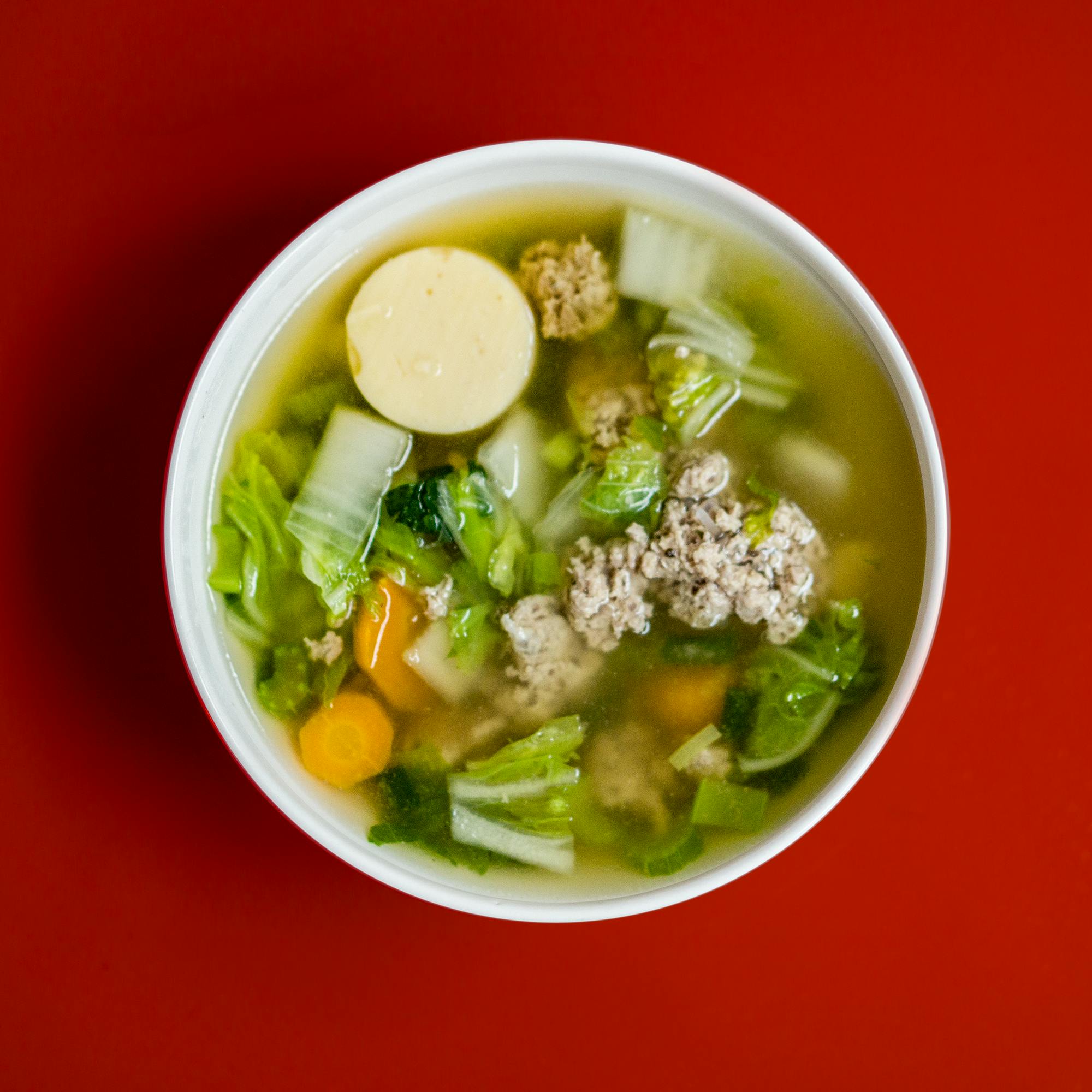
Italian
Italian Wedding Soup
The diets react (see scores below)
Common Ingredients
- ground beef
- ground pork
- escarole
- acini di pepe
- chicken broth
- Parmesan
- eggs
- garlic
Specific recipes may vary.
Incompatible with 7 of 11 diets
Diet Ratings
Italian Wedding Soup is incompatible with keto primarily due to acini di pepe, a small pasta made from refined wheat flour. Even a modest serving contains 20-30g of net carbs from the pasta alone, which can exhaust or exceed the entire daily keto carb budget. The remaining ingredients (meatballs from beef and pork, escarole, eggs, Parmesan, garlic, chicken broth) are largely keto-friendly, but the pasta is a dealbreaker. The dish cannot be considered keto in its traditional form.
Italian Wedding Soup contains multiple animal products that are categorically excluded from a vegan diet. Ground beef and ground pork are direct animal flesh. Chicken broth is an animal-derived liquid. Eggs are an animal product explicitly excluded by all major vegan organizations. Parmesan is a dairy cheese, also excluded. There is no plant-based version of this dish by default — it is built entirely around animal ingredients. No meaningful debate exists within the vegan community about any of these ingredients.
Italian Wedding Soup contains multiple non-paleo ingredients that disqualify it clearly. Acini di pepe is a small pasta made from refined wheat flour — a grain that is explicitly excluded from the paleo diet. Parmesan is a dairy product, also excluded. Chicken broth in commercial form typically contains added salt and preservatives, though homemade broth would be acceptable. The base proteins (ground beef, ground pork) and vegetables (escarole, garlic) are paleo-compliant, as are eggs, but the pasta and cheese are non-negotiable violations with strong consensus in the paleo community. This dish cannot be considered paleo without fundamental reformulation.
Italian Wedding Soup's primary protein comes from ground beef and pork meatballs, which are red meats that the Mediterranean diet limits to only a few times per month. The combination of two red meats as the dominant ingredient places this dish in tension with core Mediterranean principles. Positive elements exist — escarole is an excellent leafy green, garlic is a Mediterranean staple, eggs and Parmesan are acceptable in moderation, and chicken broth is benign. However, the refined pasta (acini di pepe) adds another mild concern. The dish is not inherently 'junk food' and has clear Italian culinary roots, but the red meat meatball base makes it a poor fit for regular Mediterranean diet consumption.
Some Mediterranean diet practitioners argue that small meatballs made with a blend of meats, used sparingly in a broth-based, vegetable-rich soup, reflect authentic Italian cucina povera tradition where meat was a flavoring agent rather than a main course. In this reading, a modest portion could qualify as an occasional 'caution' rather than 'avoid,' particularly given the escarole and broth-forward nature of the dish.
Italian Wedding Soup is fundamentally incompatible with the carnivore diet. While it contains several carnivore-approved ingredients — ground beef, ground pork, eggs, and chicken broth — the dish is disqualifying due to multiple plant-based ingredients. Escarole is a leafy green vegetable, acini di pepe is a wheat-based pasta (grain), garlic is a plant, and Parmesan (while animal-derived dairy) is paired with non-negotiable plant offenders. The pasta and vegetables are structural components of the dish, not optional garnishes, making this soup impossible to approve in any carnivore context. The chicken broth base would be acceptable on its own, and the meat components are fine, but as a complete dish it scores very low.
Italian Wedding Soup contains two explicitly excluded ingredient categories: acini di pepe (a small pasta/grain product made from wheat — grains are fully excluded on Whole30) and Parmesan cheese (dairy, which is excluded with only ghee/clarified butter as an exception). Either ingredient alone would disqualify the dish. The remaining ingredients — ground beef, ground pork, escarole, chicken broth, eggs, and garlic — are all Whole30-compliant, so a modified version could be made by omitting the pasta and cheese, but as traditionally prepared this dish is not compatible.
Italian Wedding Soup contains multiple high-FODMAP ingredients that make it unsuitable during the elimination phase. Garlic is one of the highest-FODMAP foods (fructans) and is explicitly listed as an ingredient — even small amounts are problematic. Acini di pepe is a wheat-based pasta, which is high in fructans and a clear avoid. Parmesan cheese, while generally considered low-FODMAP at small servings (~40g), is a minor concern. The remaining ingredients — ground beef, ground pork, eggs, and plain chicken broth — are low-FODMAP. However, garlic alone is enough to disqualify this dish, and the wheat pasta compounds the problem significantly. To make a low-FODMAP version, garlic would need to be replaced with garlic-infused oil, and acini di pepe substituted with a gluten-free small pasta (e.g., rice-based orzo or small rice pasta shapes). Escarole is a leafy green with no significant FODMAP concerns at standard servings.
Italian Wedding Soup contains several DASH-positive elements — escarole is a leafy green rich in vitamins and fiber, acini di pepe provides whole-grain-adjacent carbohydrates, garlic is DASH-friendly, and eggs are increasingly accepted in moderate DASH interpretations. However, the soup presents notable concerns: (1) ground pork is a red/processed-adjacent meat higher in saturated fat, which DASH limits; (2) ground beef adds saturated fat and cholesterol, and red meat is explicitly limited on DASH; (3) commercial or homemade chicken broth can contribute substantial sodium (typically 800–1,000mg per cup), pushing total sodium toward or beyond DASH thresholds in a single serving; (4) Parmesan is a high-sodium, full-fat aged cheese, adding further sodium and saturated fat. The combination of dual red meats, high-sodium broth, and aged cheese makes this a dish requiring significant modification (lean turkey meatballs, low-sodium broth, reduced Parmesan) to align with DASH guidelines. As prepared in its traditional form, it earns a cautious rating — acceptable occasionally in small portions but not a DASH staple.
NIH DASH guidelines explicitly limit red meat and high-sodium foods, placing this soup in caution territory. However, some updated clinical interpretations note that small, lean meatballs in a vegetable-rich broth represent a meaningful dietary pattern shift from processed foods, and that the escarole and broth base can be modified to make this dish reasonably DASH-compliant — several DASH-aligned meal plans include modified wedding soup with turkey and low-sodium broth as an acceptable option.
Italian Wedding Soup has a mixed Zone profile. On the positive side, escarole is an excellent low-glycemic, polyphenol-rich Zone vegetable, and eggs contribute lean protein. The chicken broth is essentially a free food in Zone terms. However, the combination of ground beef and ground pork as the primary protein source introduces meaningful saturated fat, which Zone diet principles discourage — lean ground beef (90%+ lean) would be more acceptable, but ground pork is typically fattier. The acini di pepe (small pasta) is the other significant Zone concern: it is a refined, higher-glycemic grain carbohydrate that Zone categorizes as 'unfavorable.' In a typical restaurant preparation, the pasta portion likely dominates the carb blocks and pushes glycemic load upward. Parmesan adds modest saturated fat and some protein. The soup can be made Zone-friendly with modifications — reducing or eliminating the pasta, using leaner meat (e.g., lean ground turkey or chicken), and increasing the escarole proportion — but as traditionally prepared, the pasta and fatty meat combination require careful portion control and make this a caution-level food rather than a clear approve.
Some Zone practitioners note that Sears' later anti-inflammatory writings (e.g., The OmegaRx Zone, Toxic Fat) are somewhat less rigid about saturated fat from whole food sources like meat, acknowledging that the inflammatory context matters more than saturated fat in isolation. Under this view, small meatballs made from a beef-pork blend might be acceptable if portion-controlled, and the soup's overall profile — broth-based, vegetable-forward, moderate protein — could be considered more Zone-compatible than the classic strict Zone framework would suggest.
Italian Wedding Soup presents a genuinely mixed anti-inflammatory profile. On the positive side, escarole is a bitter leafy green rich in antioxidants, vitamins K and A, and fiber — a strong anti-inflammatory contributor. Garlic provides allicin and sulfur compounds with well-documented anti-inflammatory effects. Eggs offer choline and selenium. The broth base is light and not inherently inflammatory. On the negative side, the dual red meat proteins (ground beef and ground pork) are the main concern: both are classified as 'limit' foods in anti-inflammatory frameworks due to saturated fat content and arachidonic acid, which can promote pro-inflammatory eicosanoid production. The combination of both meats in meaningful quantity pushes the dish toward the cautionary zone. Acini di pepe is a refined pasta — a refined carbohydrate — which adds a modest inflammatory load. Parmesan is a hard, lower-fat aged cheese, which is less problematic than full-fat soft cheeses, though still a dairy consideration. Overall, the dish is not aggressively pro-inflammatory — it's a broth-based soup with real vegetables and garlic — but the red and processed-adjacent meat combination and refined pasta prevent an approval. Consumed occasionally and in moderate portions, this soup is acceptable; made with leaner turkey or chicken meatballs and whole grain pasta, it would shift meaningfully toward 'approve.'
Some anti-inflammatory practitioners (following Dr. Weil's relatively permissive framework) would argue that small meatball portions in a vegetable-rich broth represent an acceptable occasional red meat serving, and that the garlic and escarole sufficiently offset the inflammatory load. Others following stricter protocols (such as those informed by Mark Hyman or functional medicine approaches) would rate this closer to 'avoid' due to the combined pork-beef saturated fat load and refined pasta.
Italian Wedding Soup sits in caution territory for GLP-1 patients due to a mixed nutritional profile. The broth base is a genuine positive — it's hydrating, easy to digest, and gentle on a slowed GI tract. Escarole contributes fiber and micronutrients. Eggs and Parmesan add modest protein and nutrient density. However, the primary proteins — ground beef and ground pork — are typically higher in saturated fat than leaner GLP-1-preferred options like chicken breast or fish, and the fat content of the meatballs depends heavily on the meat's fat percentage (80/20 ground beef is common and problematic; 90/10 or leaner would improve the rating). Acini di pepe is a refined pasta with minimal fiber, adding carbohydrate without meaningful nutritional payoff. The soup format is a strength — small portions are naturally satisfying, the broth supports hydration, and the dish is easy to eat in the small quantities GLP-1 patients tolerate. Overall protein per serving is moderate but not high, and the saturated fat load from beef and pork is the primary concern.
Some GLP-1-focused RDs would rate this more favorably, arguing that the soup format, broth hydration benefit, and vegetable content make it a practical real-world option, and that the meatball fat content is manageable in a typical small serving. Others would push it toward avoid, particularly on injection day or during peak nausea weeks, citing the saturated fat in ground pork and beef as a meaningful GI risk given slowed gastric emptying.
*See how scores were generated at our methodology page.
Nutritional profile
Six traits that cut across every diet.
Fiber & Plants
How much whole-plant food and fiber it delivers.
Healthy Fats
The quality of its fats (unsaturated, omega-3).
Whole / Unprocessed
How close it is to its natural, unprocessed form.
Gut Gentle
How easy it is on digestion (low FODMAP, few irritants).
Low Glycemic
How little it spikes your blood sugar.
Protein Density
How much protein it packs per calorie.
Controversy Index
Higher controversy = more disagreement between diets.
Diet-Specific Tips
 DASH — 4/10
View tips
- Ground beef and pork are red meats high in saturated fat, explicitly limited on DASH
- Commercial chicken broth is typically high in sodium (800–1,000mg/cup), a major DASH concern
- Parmesan is a high-sodium, full-fat aged cheese adding both sodium and saturated fat
- Escarole is a DASH-positive leafy green rich in fiber and micronutrients
- Eggs are increasingly accepted on DASH in moderation per updated dietary guidelines
- Low-sodium broth substitution and lean turkey meatballs would significantly improve DASH compatibility
- Single serving could easily exceed 1,000–1,500mg sodium depending on preparation
 Zone — 5/10
View tips
- Acini di pepe pasta is a refined, high-glycemic 'unfavorable' carbohydrate in Zone terminology
- Ground pork and full-fat ground beef add saturated fat, conflicting with Zone's lean protein preference
- Escarole is an ideal Zone vegetable — low glycemic, rich in polyphenols and fiber
- Eggs contribute lean protein and support the Zone protein block
- Broth base is essentially calorie-free and Zone-neutral
- Parmesan adds minor saturated fat but in small quantities is manageable
- Dish can be modified toward Zone compliance by reducing pasta and using leaner meats
 Anti-Inflammatory — 5/10
View tips
- Ground beef and ground pork are 'limit' foods — saturated fat and arachidonic acid raise inflammatory potential
- Escarole is a potent anti-inflammatory leafy green with antioxidants and fiber
- Garlic provides allicin and anti-inflammatory sulfur compounds
- Acini di pepe is a refined carbohydrate — modest negative contribution
- Parmesan is a hard aged cheese — lower fat than soft cheeses, minor concern
- Light broth base keeps overall fat and calorie density moderate
- Dish is salvageable with protein substitution (turkey/chicken) and whole grain pasta
 GLP-1 Friendly — 5/10
View tips
- Broth base supports hydration — a genuine GLP-1 positive
- Ground beef and ground pork are higher in saturated fat than preferred GLP-1 proteins
- Fat content is highly dependent on meat fat percentage used (80/20 vs 90/10 ground beef)
- Acini di pepe is refined pasta — low fiber, low nutrient density
- Escarole contributes fiber and micronutrients
- Soup format is portion-friendly and easy to digest in small quantities
- Protein per serving is moderate but not high — unlikely to meet 15-30g per meal target without a generous meatball portion
- Parmesan and eggs add nutrient density
- Could be improved significantly by substituting ground turkey or chicken for pork/beef and adding whole grain pasta or extra greens