Photo: Kunal Lakhotia / Pexels
Caribbean
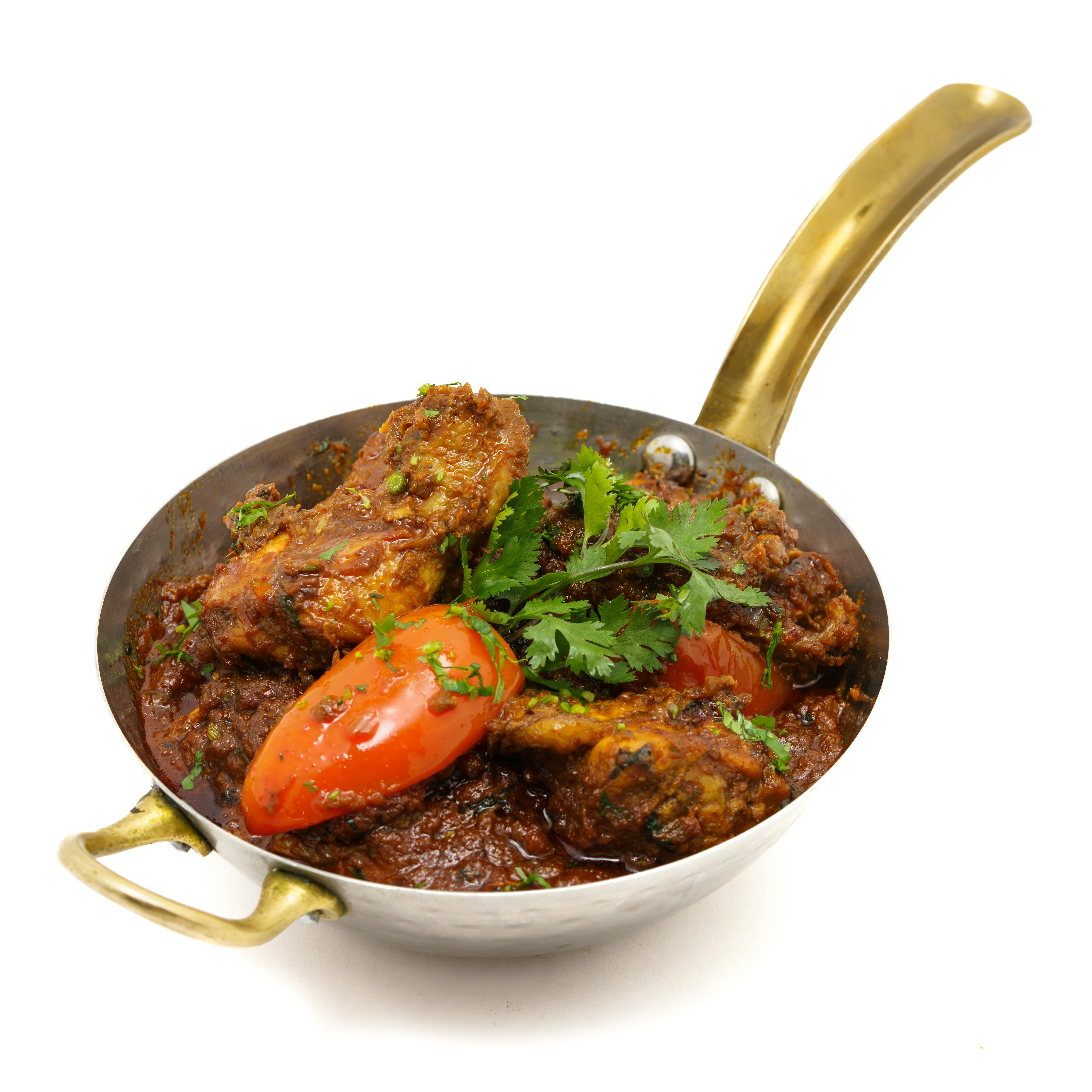
Jamaican Curry Goat
The diets react (see scores below)
Common Ingredients
- goat
- Jamaican curry powder
- onion
- garlic
- Scotch bonnet
- thyme
- potatoes
- allspice
Specific recipes may vary.
Incompatible with 4 of 11 diets
Diet Ratings
Jamaican Curry Goat is problematic for keto primarily due to the inclusion of potatoes, a high-starch vegetable that can contribute 15-30g of net carbs per serving on its own. The goat meat itself is an excellent lean protein source and fully keto-compatible. The aromatic base — onion, garlic, Scotch bonnet, thyme, allspice, and Jamaican curry powder — adds minimal net carbs per serving and is generally fine. However, potatoes are a standard ingredient in traditional Curry Goat and represent a clear keto obstacle. With a simple modification (omitting or substituting potatoes with a low-carb alternative like turnip or cauliflower), this dish would become fully keto-approved. As traditionally prepared, it warrants caution and portion control.
Jamaican Curry Goat is built on goat meat as its primary protein, making it unambiguously non-vegan. Goat is an animal product — its consumption requires slaughter — which places this dish in clear violation of the foundational vegan principle of excluding all animal flesh. The remaining ingredients (Jamaican curry powder, onion, garlic, Scotch bonnet, thyme, potatoes, allspice) are all plant-based, but the dish is defined by and inseparable from its animal protein. There is no version of 'Curry Goat' that is vegan; a plant-based approximation would be a categorically different dish (e.g., curried jackfruit or chickpea curry).
Jamaican Curry Goat is built on a strong paleo-friendly foundation — goat is an unprocessed, ancestral protein, and most aromatics (onion, garlic, Scotch bonnet, thyme, allspice) are fully paleo-approved. The two sticking points are Jamaican curry powder and white potatoes. Curry powder blends often contain added salt and occasionally anti-caking agents or non-paleo fillers, making it a processed spice mix rather than a pure herb or spice — though a clean, additive-free blend would be acceptable. White potatoes are the larger debate: originally excluded by Loren Cordain as high-glycemic and containing glycoalkaloids, they have since gained wider acceptance in modern paleo circles. Together, these two ingredients push the dish into 'caution' territory rather than a clean approval.
Mark Sisson (Primal Blueprint) and the Whole30 protocol both permit white potatoes, and many modern paleo practitioners accept them freely; under that lens, with a clean curry powder, this dish could score as a full approval. Conversely, strict Cordain-school paleo would flag both the white potatoes and any commercial curry powder blend, keeping it firmly in caution or even avoid territory.
Jamaican Curry Goat features goat as its primary protein, which is red meat. Mediterranean diet guidelines restrict red meat to a few times per month at most. While the dish contains several Mediterranean-friendly supporting ingredients — onions, garlic, potatoes, thyme, and aromatic spices — the goat meat base places it firmly in the 'limit' category. The Jamaican curry spice profile and Scotch bonnet are non-traditional to Mediterranean cuisine but are not inherently problematic from a health standpoint. The overall dish is still a red meat-centered preparation that contradicts core Mediterranean principles of plant-forward eating and limited red meat consumption.
Some Mediterranean diet researchers note that goat is actually one of the most traditional meats in Mediterranean regions (particularly Greece, Turkey, and North Africa), where it has been consumed for millennia and is leaner than beef or lamb. Under a traditional Mediterranean framing, a goat dish eaten occasionally — especially one rich in aromatics and vegetables — could be considered a culturally appropriate, if infrequent, choice rather than a strict avoid.
While goat is an excellent ruminant meat that would score very highly on its own, Jamaican Curry Goat as a dish is heavily incompatible with the carnivore diet. The recipe contains numerous plant-based ingredients that are strictly excluded: Jamaican curry powder (a blend of turmeric, coriander, cumin, and other spices), onion, garlic, Scotch bonnet pepper, thyme, potatoes, and allspice. Potatoes alone are a starchy plant food that is clearly off-limits. The curry powder represents multiple plant compounds and anti-nutrients. Onion, garlic, and peppers are all vegetables. This dish is essentially a plant-heavy spiced stew that happens to contain goat — the majority of the dish by ingredient count is plant-derived. The goat itself earns some points, but the overall dish is not carnivore-compatible in any meaningful way.
Jamaican Curry Goat is built on Whole30-compliant whole foods: goat meat, onion, garlic, Scotch bonnet pepper, thyme, potatoes, and allspice are all explicitly allowed. The main concern is Jamaican curry powder, which is a spice blend. While pure curry powder (turmeric, coriander, cumin, fenugreek, etc.) is compliant, many commercial Jamaican curry powder blends include added fillers, anti-caking agents, or even trace grains and non-compliant additives. Label reading is essential. Assuming a clean, compliant curry powder blend, this dish is fully Whole30-compatible.
Official Whole30 guidelines approve herbs and spices freely, and a homemade or verified clean Jamaican curry powder would make this dish a clear approve. However, the community frequently flags pre-mixed spice blends as a label-reading trap, and some practitioners argue that relying on packaged blends without verification undermines the diligence the program asks of participants.
Jamaican Curry Goat contains multiple high-FODMAP ingredients that cannot be mitigated at standard serving sizes. Onion and garlic are among the highest-fructan foods tested by Monash University and are high-FODMAP at any culinary amount. Both are core structural ingredients in this dish — not garnishes — and they leach fructans into the cooking liquid, making even picking them out ineffective. These two ingredients alone are sufficient to disqualify the dish during the elimination phase. Jamaican curry powder typically contains garlic powder and/or onion powder, which are even more concentrated sources of fructans than fresh versions. Potatoes are low-FODMAP at a moderate serving (up to ~75g of a regular potato per Monash), and goat meat is protein with no FODMAPs. Scotch bonnet pepper, thyme, and allspice are low-FODMAP condiments/spices. However, the combination of fresh onion, fresh garlic, and garlic/onion-containing curry powder makes this dish definitively high-FODMAP with no practical modification possible while keeping the dish recognizable.
Jamaican Curry Goat presents a mixed DASH profile. Goat meat is actually one of the leanest red meats available — lower in saturated fat and calories than beef, pork, or even some cuts of chicken — which gives it a favorable standing compared to typical 'red meat' concerns in DASH. The dish is rich in DASH-friendly spices and aromatics: onion, garlic, thyme, and allspice contribute antioxidants and potassium with negligible sodium. Scotch bonnet peppers are essentially a vegetable and DASH-compatible. Potatoes add potassium and fiber. The primary concerns are: (1) goat is still a red meat, and DASH emphasizes limiting red meat intake to ≤5 oz/week in some interpretations; (2) depending on preparation, bone-in goat can carry significant fat; (3) Jamaican curry powder blends vary — some commercial versions contain moderate sodium; (4) traditional recipes may use added salt generously. If prepared with minimal added sodium and lean goat cuts, this dish aligns reasonably well with DASH principles. Portion control is key — a 3-4 oz serving of lean goat in this spice-forward, vegetable-inclusive preparation is acceptable in moderation.
NIH DASH guidelines broadly recommend limiting red meat, which would place goat under scrutiny regardless of its fat profile. However, updated clinical interpretations increasingly differentiate within red meat categories — goat's saturated fat content (roughly 0.9g per 3oz) is lower than chicken thigh, leading some DASH-oriented dietitians to treat it more like lean poultry than conventional red meat, especially in culturally significant preparations.
Jamaican Curry Goat presents a mixed Zone Diet profile. On the positive side, goat is actually a lean red meat — leaner than beef or pork — making it a reasonable protein source in the Zone framework, comparable to lean beef. The aromatics (onion, garlic, Scotch bonnet, thyme, allspice) are Zone-friendly flavor builders with negligible macro impact and beneficial polyphenols. Jamaican curry powder contributes anti-inflammatory spices aligned with Sears' emphasis on polyphenol-rich foods. The significant problem is potatoes, which are high-glycemic carbohydrates explicitly flagged as 'unfavorable' in Zone methodology. Potatoes spike insulin rapidly and are hard to incorporate into Zone balance without displacing lower-glycemic vegetables. To make this dish Zone-compatible, potatoes would need to be reduced sharply or substituted with a low-GI vegetable like zucchini, cauliflower, or bell peppers. Additionally, traditional curry goat is slow-braised with bone-in cuts that carry more fat than trimmed lean meat, and some of that fat is saturated. With portion control (modest serving of goat as the protein block, minimal potato, adding a low-GI vegetable side), this dish can be worked into a Zone meal, but as traditionally prepared it requires significant modification.
Some Zone practitioners and later Sears writings take a more permissive view of small amounts of 'unfavorable' carbs like potatoes when they appear as a minor ingredient in a protein-dominant dish rather than the carbohydrate centerpiece. If potatoes are used sparingly (a few chunks for flavor and texture in a large pot), the glycemic load per serving may remain manageable. Additionally, goat's favorable lean protein profile and the dish's rich anti-inflammatory spice blend (curry, thyme, allspice) align well with Sears' later anti-inflammatory Zone framework, which some argue could bump this dish's practical usability higher than a strict early-Zone reading would suggest.
Jamaican Curry Goat presents a mixed anti-inflammatory profile. On the positive side, the spice blend is genuinely impressive: Jamaican curry powder typically contains turmeric (curcumin), coriander, cumin, and fenugreek — all with anti-inflammatory properties. Garlic, thyme, scotch bonnet pepper (capsaicin), onion (quercetin), and allspice (eugenol) add further antioxidant and anti-inflammatory compounds, making the aromatics and spicing a strong point. The problem lies in the primary protein: goat is a lean red meat, lower in saturated fat than beef or lamb and with a relatively favorable omega-6 to omega-3 ratio compared to grain-fed beef — but it is still red meat, which the anti-inflammatory framework recommends limiting due to its arachidonic acid content and associations with elevated inflammatory markers in research. Potatoes are neutral-to-moderate (high glycemic index but also provide potassium and resistant starch when cooled). Overall, this is a dish with genuinely powerful anti-inflammatory spicing anchored to a protein that should be eaten in moderation. It is not an avoid — goat is one of the leaner, more favorable red meats — but it falls short of approval given the red meat base. Prepared occasionally with generous use of its spice profile, it fits within an anti-inflammatory pattern.
Some anti-inflammatory practitioners (including those following AIP or stricter Weil-aligned protocols) would rate this lower due to the red meat component and the solanine content in potatoes, which AIP excludes as a nightshade. On the other side, researchers like those behind the IF Rating system note that goat is one of the most favorable red meats given its leanness and omega-3 profile, and the spice density here could meaningfully offset inflammatory potential — some would nudge this toward a 6 or even a low approve.
Jamaican Curry Goat presents a mixed profile for GLP-1 patients. Goat is actually one of the leaner red meats — lower in saturated fat than beef or lamb — and provides meaningful protein (~25-27g per 3.5oz serving), which supports the #1 priority. However, this dish carries several GLP-1-specific concerns. Scotch bonnet peppers are among the hottest commonly used chilies and are a real risk for worsening nausea, reflux, and GI distress in GLP-1 patients, whose slowed gastric emptying prolongs exposure of the stomach lining to irritants. Traditional curry goat is slow-braised with bone-in cuts that are moderately fatty, and the cooking fat from the meat accumulates in the stew, increasing the fat load per serving. Potatoes add starchy carbohydrates with low fiber density and modest nutrient density per calorie. The dish is not fried, is relatively easy to digest when slow-cooked, and the spice blend (curry powder, allspice, thyme) is generally tolerable — the Scotch bonnet is the primary GI risk factor. Portion size matters significantly: a small serving over a fiber-rich base (e.g., a side of steamed greens) improves the profile. As traditionally prepared with bone-in fatty cuts and Scotch bonnet heat, this is a caution-level dish for most GLP-1 patients.
Some GLP-1-focused dietitians may rate goat-based dishes more favorably given goat's relatively lean fat profile compared to other red meats, and would focus guidance on requesting mild heat preparation and defatting the braising liquid rather than avoiding the dish. Others would flag any Scotch bonnet-containing dish as an automatic avoid for patients in early GLP-1 titration phases when GI sensitivity is highest, regardless of the protein quality.
*See how scores were generated at our methodology page.
Nutritional profile
Six traits that cut across every diet.
Fiber & Plants
How much whole-plant food and fiber it delivers.
Healthy Fats
The quality of its fats (unsaturated, omega-3).
Whole / Unprocessed
How close it is to its natural, unprocessed form.
Gut Gentle
How easy it is on digestion (low FODMAP, few irritants).
Low Glycemic
How little it spikes your blood sugar.
Protein Density
How much protein it packs per calorie.
Controversy Index
Higher controversy = more disagreement between diets.
Diet-Specific Tips
 Keto — 4/10
View tips
- Potatoes are a high-starch, high-net-carb ingredient and a core component of the traditional recipe
- Goat meat is a quality protein source with zero carbs and is keto-compatible
- Onion and garlic add some net carbs but are manageable in typical curry quantities
- Scotch bonnet pepper, thyme, and allspice are low-carb flavor additions
- Dish can be made keto-friendly by substituting or omitting potatoes
- Jamaican curry powder is generally low-carb but should be checked for added sugar or starch fillers
 Paleo — 5/10
View tips
- Goat is a clean, ancestral protein — fully paleo-approved
- Onion, garlic, Scotch bonnet, thyme, and allspice are all paleo-compliant aromatics
- White potatoes are debated in the paleo community — excluded by Cordain, accepted by Sisson and Whole30
- Jamaican curry powder is a processed spice blend that may contain added salt or anti-caking agents — purity of the blend matters
- No grains, legumes, dairy, or seed oils present
- Dish can be made fully paleo-compliant by using a clean curry powder and substituting sweet potatoes
 Whole30 — 6/10
View tips
- Goat is a compliant protein — meat is explicitly allowed
- Scotch bonnet, onion, garlic, thyme, allspice, and potatoes are all Whole30-compliant
- Jamaican curry powder is a spice blend requiring label verification for additives, fillers, or non-compliant ingredients
- No grains, dairy, legumes, or added sugars in the core dish
- If curry powder is clean and compliant, this dish is a straightforward approve
 DASH — 5/10
View tips
- Goat is among the leanest red meats (~2.6g total fat per 3oz), lower in saturated fat than beef, pork, and lamb
- DASH guidelines recommend limiting red meat broadly, which technically includes goat
- Spice-forward preparation (curry powder, garlic, thyme, allspice, Scotch bonnet) adds flavor without significant sodium
- Potatoes contribute potassium and fiber, both DASH-favorable nutrients
- Sodium content depends heavily on preparation — added salt and commercial curry powder blends can raise sodium significantly
- Traditional bone-in preparation may include fattier cuts; lean trim cuts score higher
- Portion size critical — DASH limits red meat to small portions (≤5 oz/week in strict interpretations)
- No high-sodium processed ingredients, no added sugars, no tropical oils in base recipe
 Zone — 5/10
View tips
- Goat is a lean red meat — lower in fat than beef, acceptable Zone protein source
- Potatoes are explicitly 'unfavorable' high-glycemic carbs in Zone methodology and should be minimized or replaced
- Rich anti-inflammatory spice profile (curry powder, thyme, allspice, Scotch bonnet) aligns with Sears' polyphenol emphasis
- Traditional bone-in preparation adds saturated fat beyond typical lean protein guidelines
- Dish is Zone-adaptable with portion control and potato substitution but requires modification as traditionally prepared
- No processed ingredients or trans fats — clean whole-food base
 Anti-Inflammatory — 5/10
View tips
- Goat is lean red meat — lower saturated fat than beef/lamb but still an arachidonic acid source; limit per anti-inflammatory guidelines
- Turmeric in curry powder provides curcumin — one of the most researched anti-inflammatory compounds
- Scotch bonnet pepper contributes capsaicin with demonstrated anti-inflammatory and antioxidant effects
- Garlic, onion, allspice, and thyme collectively provide allicin, quercetin, eugenol, and rosmarinic acid — strong antioxidant stack
- Potatoes are moderate — high glycemic index is a mild negative; nightshade concern in autoimmune contexts
- No seed oils, refined sugars, or processed additives noted — preparation method matters (avoid frying in seed oils)
- Spice density is a meaningful positive that distinguishes this from plainer red meat dishes
 GLP-1 Friendly — 4/10
View tips
- Goat is a leaner red meat with reasonable protein density (~25g per serving), supporting GLP-1 protein priority
- Scotch bonnet peppers are very high on the Scoville scale and pose a meaningful risk of worsening nausea, reflux, and GI distress — a significant GLP-1 concern
- Bone-in braised cuts release fat into the stew, increasing saturated fat load per serving
- Potatoes are a low-fiber, starchy carbohydrate with modest nutrient density — not ideal for calorie-limited GLP-1 patients
- Slow-cooked texture is easy to digest, which is a positive for GLP-1 patients with slowed gastric emptying
- No frying involved — preparation method is a relative positive
- Portion-sensitive: a small serving with defatted broth and mild heat modification significantly improves the rating
- High individual tolerance variation expected, especially for spice sensitivity during early titration phases