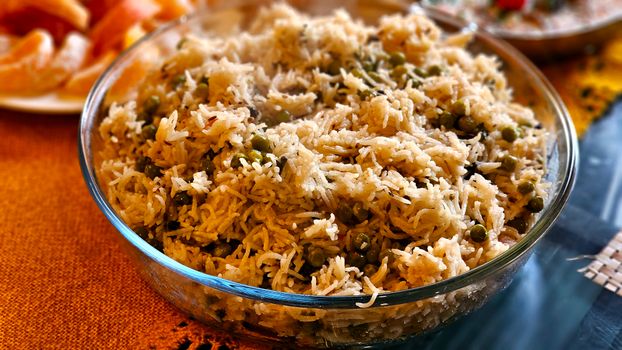
Photo: Muhammad Khawar Nazir / Pexels
Caribbean
Rice and Peas
The diets react (see scores below)
Common Ingredients
- rice
- red beans
- coconut milk
- thyme
- Scotch bonnet
- scallions
- garlic
- allspice
Specific recipes may vary.
Incompatible with 5 of 11 diets
Diet Ratings
Rice and Peas is fundamentally incompatible with a ketogenic diet. Rice is a high-glycemic grain with approximately 45g of net carbs per cooked cup, and red beans add another 20-25g of net carbs per half-cup serving. Together, these two primary ingredients alone would blow through an entire day's keto carb budget — and then some — in a single side dish serving. The coconut milk is keto-friendly, and the aromatics (thyme, Scotch bonnet, scallions, garlic, allspice) are negligible in carb terms, but they cannot redeem the dish. There is no practical portion size that makes this dish compatible with ketosis. This is a grain-plus-legume combination, both of which are explicitly excluded from ketogenic eating.
Caribbean Rice and Peas as listed is entirely plant-based. Every ingredient — rice, red beans, coconut milk, thyme, Scotch bonnet pepper, scallions, garlic, and allspice — is derived from plants. Coconut milk serves as the rich, fatty base in place of any dairy, and red beans provide plant-based protein and fiber. This is a whole-food-dominant dish with minimal processing, making it an excellent fit for a vegan diet. The only marginal note is that coconut milk is mildly processed (extracted and often canned), but it remains a whole plant product with no additives of concern.
Rice and Peas contains two hard paleo exclusions: rice (a grain) and red beans (a legume). Both are explicitly off-limits under all mainstream paleo frameworks due to their anti-nutrient content (lectins, phytates) and their absence from the Paleolithic diet. The remaining ingredients — coconut milk, thyme, Scotch bonnet, scallions, garlic, and allspice — are all paleo-approved, but the two core structural components of the dish are fundamental violations. This is not a gray-area case; both grains and legumes are among the most clearly excluded food categories in paleo, with unanimous agreement across Cordain, Sisson, Wolf, and all major paleo authorities.
Rice and Peas combines both positive and problematic elements from a Mediterranean diet perspective. Red beans (legumes) are a Mediterranean staple and strongly encouraged. The aromatics — garlic, scallions, thyme, allspice, and Scotch bonnet — are wholesome, plant-based flavor agents consistent with Mediterranean principles. However, white rice is a refined grain, and Mediterranean guidelines prefer whole grains such as brown rice, farro, or bulgur. More significantly, coconut milk is the main fat source here, replacing olive oil entirely. Coconut milk is high in saturated fat and has no place in traditional Mediterranean cuisine, which centers extra virgin olive oil as the primary fat. The dish is still plant-based and contains no processed ingredients or added sugar, which keeps it from a full 'avoid' verdict, but the coconut milk and white rice pull it away from Mediterranean ideals.
Some modern Mediterranean diet practitioners take a broader 'plant-forward, whole-food' view and may consider coconut milk acceptable as a minimally processed plant fat, especially compared to butter or cream. Additionally, white rice does appear in traditional Mediterranean cuisines (e.g., Greek pilafi, Lebanese rice dishes), and some authorities permit it in moderation, which would nudge this dish slightly higher.
Rice and Peas is entirely plant-based and contains zero animal products. Every single ingredient — rice (grain), red beans (legume), coconut milk (plant fat), thyme (herb), Scotch bonnet (pepper/plant), scallions (plant), garlic (plant), and allspice (plant spice) — is explicitly excluded on the carnivore diet. Grains and legumes are among the most strongly avoided foods in carnivore due to antinutrients, lectins, and high carbohydrate content. This dish is incompatible with carnivore at every level.
Rice and Peas contains two clearly excluded ingredient categories: rice (a grain) and red beans (a legume). Both are explicitly prohibited on the Whole30 program. There are no exceptions for either ingredient, and no compliant substitutions could make this dish what it is — rice and beans are the defining, structural components of the dish. All other ingredients (coconut milk, thyme, Scotch bonnet, scallions, garlic, allspice) are fully compliant, but they cannot redeem a dish built on two excluded foundations.
Caribbean Rice and Peas contains multiple high-FODMAP ingredients that make it unsuitable during the elimination phase. Red kidney beans (the 'peas' in this dish) are very high in GOS (galacto-oligosaccharides) and are high-FODMAP even at small servings — Monash rates kidney beans as high-FODMAP at just 1/4 cup (42g). Garlic is one of the highest-FODMAP foods tested by Monash, containing significant fructans even in tiny amounts. Coconut milk is moderate in FODMAPs — Monash rates it as low-FODMAP at 1/2 cup (125ml) but this threshold is easily exceeded in a coconut-rich dish. Scallion/green onion bulbs contain fructans (though the green tops are low-FODMAP), and it is unclear which part is used. Rice itself is low-FODMAP and safe, and thyme, Scotch bonnet, and allspice are low-FODMAP. However, the combination of red beans and garlic alone makes this dish clearly high-FODMAP and not appropriate for the elimination phase.
Caribbean Rice and Peas presents a mixed DASH profile. The red beans are excellent — high in fiber, potassium, magnesium, and plant protein, all core DASH nutrients. The aromatic vegetables (scallions, garlic, thyme, Scotch bonnet, allspice) are DASH-friendly flavor enhancers that help reduce sodium dependence. White rice, while not a whole grain, is a moderate-GI carbohydrate acceptable in portion-controlled DASH eating. The significant concern is coconut milk, a tropical oil-derived ingredient that DASH guidelines explicitly limit due to its high saturated fat content — a standard can of full-fat coconut milk contains roughly 48g of saturated fat, and even a quarter-cup serving used in this dish adds meaningful saturated fat load. The dish is typically low in sodium naturally, which is a DASH positive. Overall, this is an acceptable side in moderation, but the coconut milk prevents a full approval under standard DASH guidelines.
NIH DASH guidelines restrict coconut milk due to its saturated fat content and tropical oil origin, placing this dish in the caution zone. However, some updated clinical interpretations note that the saturated fat in coconut milk consists largely of medium-chain triglycerides (MCTs) with a different metabolic profile than long-chain saturated fats, and that when used in small amounts as a flavoring rather than a base, the cardiovascular impact may be minimal — particularly given the offsetting benefits of the beans.
Caribbean Rice and Peas is a carbohydrate-dominant dish that presents real challenges for Zone balance. White rice is a high-glycemic, 'unfavorable' carb in Zone terminology — it spikes blood sugar rapidly and lacks fiber to moderate the glycemic response. Red beans (kidney beans) are more Zone-friendly, providing fiber, some protein, and a lower glycemic index than rice, and Sears generally considers legumes acceptable carb blocks. Coconut milk adds saturated fat, which the early Zone discouraged, though Sears' later anti-inflammatory work softened this stance somewhat. The aromatics (thyme, Scotch bonnet, scallions, garlic, allspice) are negligible macronutrically and contribute polyphenols. The core problem is that this dish is almost entirely carbohydrate with a saturated fat source and no lean protein — making the 40/30/30 ratio very hard to achieve from the dish itself. As a side, it could theoretically pair with a lean protein source (grilled fish, skinless chicken) to partially balance a meal, but the white rice component remains an 'unfavorable' carb and the portion would need to be quite small (roughly 1/3 cup cooked) to fit within a Zone block budget. The coconut milk fat is saturated rather than monounsaturated, adding another Zone concern.
Some Zone practitioners note that the red beans partially redeem this dish — legumes are considered favorable Zone carbs by Sears, and a version of this dish with brown rice or reduced rice-to-bean ratio would score meaningfully better. Sears' later writings (The Anti-Inflammation Zone, The Mediterranean Zone) also became somewhat more permissive toward coconut-derived fats in the context of an otherwise anti-inflammatory diet.
Caribbean Rice and Peas is a mixed bag from an anti-inflammatory standpoint. On the positive side, red kidney beans are a strong anti-inflammatory ingredient — high in fiber, plant-based protein, polyphenols, and resistant starch that supports a healthy gut microbiome. The aromatic base of garlic, thyme, scallions, Scotch bonnet pepper (capsaicin is anti-inflammatory), and allspice contribute meaningful antioxidant and anti-inflammatory phytochemicals. These ingredients collectively support reduced inflammatory markers. The main limiting factors are white rice and coconut milk. White rice is a refined carbohydrate with a high glycemic index, offering little fiber or micronutrient value — a neutral-to-mildly-pro-inflammatory staple. Coconut milk contains significant saturated fat (primarily lauric acid), which is debated in anti-inflammatory nutrition: some authorities flag it as pro-inflammatory due to saturated fat content, while others note lauric acid's distinct metabolic profile compared to other saturated fats. The dish as a whole is not processed, contains no added sugars or artificial additives, and derives genuine anti-inflammatory value from its beans and spice profile. The white rice and coconut milk keep it from a full approval, but the dish is a reasonable choice in moderation, particularly if portioned with an emphasis on the bean-to-rice ratio.
Dr. Weil's framework would view the beans, garlic, and chili pepper favorably and likely consider this an acceptable side dish. However, stricter anti-inflammatory protocols that emphasize glycemic control (such as those informed by Dr. David Ludwig's work on refined carbohydrates) would flag the white rice as a meaningful concern, and some practitioners would recommend swapping in brown rice or a grain-free base to improve the overall anti-inflammatory profile. Coconut milk's saturated fat is similarly debated: mainstream anti-inflammatory researchers like the AHA caution against it, while Paleo and whole-food advocates consider it benign or beneficial.
Caribbean Rice and Peas is a mixed dish for GLP-1 patients. The red beans contribute meaningful fiber (roughly 6-8g per serving) and some plant protein (~7-8g per serving), which are positives. However, coconut milk is high in saturated fat, which can worsen GLP-1 side effects like nausea, bloating, and reflux — especially problematic given slowed gastric emptying. White rice is a refined carbohydrate with low nutrient density per calorie and minimal fiber on its own. The Scotch bonnet pepper is a significant concern: it is one of the hottest peppers commonly used in cooking and may worsen reflux, nausea, and GI discomfort that GLP-1 patients are already prone to. As a side dish with no primary protein, it contributes little toward the 100-120g daily protein target. Portion size matters significantly — a small serving (half cup) is more manageable than a full serving. Best consumed as a small accompaniment alongside a lean protein source rather than as a standalone dish.
Some GLP-1-focused dietitians would rate this more favorably, emphasizing the beans as a combined fiber-and-protein source and noting that coconut milk quantity per serving is modest in traditional recipes. Others flag the saturated fat from coconut milk and the refined white rice as meaningful drawbacks that outweigh the bean benefit, particularly for patients experiencing active GI side effects.
*See how scores were generated at our methodology page.
Nutritional profile
Six traits that cut across every diet.
Fiber & Plants
How much whole-plant food and fiber it delivers.
Healthy Fats
The quality of its fats (unsaturated, omega-3).
Whole / Unprocessed
How close it is to its natural, unprocessed form.
Gut Gentle
How easy it is on digestion (low FODMAP, few irritants).
Low Glycemic
How little it spikes your blood sugar.
Protein Density
How much protein it packs per calorie.
Controversy Index
Higher controversy = more disagreement between diets.
Diet-Specific Tips
 Vegan — 9/10
View tips
- All ingredients are fully plant-derived with no animal products
- Coconut milk replaces any dairy — already vegan by default
- Red beans provide plant protein and fiber
- Whole spices and aromatics (thyme, allspice, Scotch bonnet, garlic, scallions) are unprocessed plant foods
- No animal-derived additives or processing agents involved
- Traditional Caribbean preparation of this dish is inherently vegan
 Mediterranean — 5/10
View tips
- Red beans are an excellent Mediterranean legume source
- White rice is a refined grain; whole grains preferred by Mediterranean guidelines
- Coconut milk is high in saturated fat and is not a traditional Mediterranean fat
- No olive oil present — the canonical Mediterranean fat source is entirely absent
- All aromatics (garlic, thyme, scallions, allspice, Scotch bonnet) are whole, plant-based ingredients
- No processed ingredients, added sugars, or animal products
 DASH — 5/10
View tips
- Red beans are a DASH-approved legume rich in fiber, potassium, and magnesium
- Coconut milk is a tropical oil high in saturated fat, which DASH guidelines limit
- White rice is not a whole grain — brown rice would score higher under DASH
- Dish is naturally low in sodium, a significant DASH positive
- Aromatic herbs and spices (garlic, thyme, scallions, allspice) support flavor without sodium
- Portion size matters — a modest serving balances the coconut milk concern
- Substituting light coconut milk would meaningfully improve the DASH score
 Zone — 4/10
View tips
- White rice is a high-glycemic 'unfavorable' carb in Zone methodology
- Red kidney beans are relatively favorable Zone carbs with fiber and some protein
- Coconut milk contributes saturated fat rather than preferred monounsaturated fat
- Dish is carbohydrate-dominant with no lean protein — difficult to hit 40/30/30 alone
- Small portions could fit as one carb block alongside a lean protein source
- Aromatics contribute beneficial polyphenols with negligible macro impact
 Anti-Inflammatory — 6/10
View tips
- Red kidney beans: high in fiber, polyphenols, and resistant starch — strongly anti-inflammatory
- Garlic and scallions: contain allicin and quercetin, well-documented anti-inflammatory compounds
- Scotch bonnet pepper: capsaicin has meaningful anti-inflammatory and analgesic properties
- Thyme and allspice: antioxidant-rich aromatic spices consistent with anti-inflammatory eating
- White rice: refined carbohydrate, high glycemic index, low fiber — neutral to mildly pro-inflammatory
- Coconut milk: high in saturated fat (lauric acid) — debated in anti-inflammatory literature
- No processed ingredients, artificial additives, trans fats, or added sugars
- Overall bean-to-rice ratio and preparation method significantly affect the dish's inflammatory profile
 GLP-1 Friendly — 4/10
View tips
- Coconut milk adds saturated fat that may worsen nausea and bloating
- White rice is a refined carbohydrate with low fiber and nutrient density
- Red beans provide useful fiber (~6-8g) and modest plant protein (~7-8g)
- Scotch bonnet pepper is extremely spicy and likely to worsen GLP-1 GI side effects
- No primary protein source — inadequate as a standalone dish for GLP-1 patients
- Portion-sensitive: small serving is more tolerable than a full plate
- Better tolerated when paired with lean protein like grilled chicken or fish