Photo: Marvin Sacdalan / Pexels
Japanese
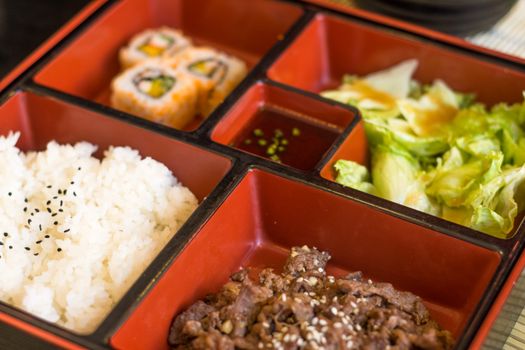
Japanese Bento Box
The diets react (see scores below)
Common Ingredients
- short-grain rice
- chicken karaage
- salmon
- tamagoyaki
- pickled vegetables
- umeboshi
- edamame
- nori
Specific recipes may vary.
Incompatible with 6 of 11 diets
Diet Ratings
The Japanese Bento Box is fundamentally incompatible with a ketogenic diet, primarily due to short-grain rice, which is the core component. A standard serving of short-grain rice (150-200g cooked) delivers approximately 45-55g of net carbs alone, instantly exceeding or maxing out the entire daily keto carb budget. Beyond rice, tamagoyaki typically contains sugar and mirin, chicken karaage is coated in wheat flour or starch, and edamame adds additional carbs. While several individual components are keto-friendly — salmon, nori, and plain chicken are excellent keto proteins, and umeboshi and pickled vegetables are low in carbs in small amounts — the dish as a whole, centered around rice, is a high-carb meal that cannot be adapted without fundamentally restructuring it into something no longer resembling a bento box.
This bento box contains multiple animal products, making it clearly incompatible with a vegan diet. Chicken karaage is fried chicken (poultry), salmon is fish, and tamagoyaki is a Japanese rolled omelette made from eggs — three distinct animal-derived ingredients. While several components are vegan-friendly (short-grain rice, pickled vegetables, umeboshi, edamame, nori), the primary protein sources and the egg dish render the overall dish non-vegan. There is no ambiguity here.
The Japanese Bento Box contains multiple clear paleo violations with no meaningful ambiguity. Short-grain rice is a grain and is excluded under strict paleo rules. Edamame is a legume (immature soybean) and is firmly excluded. Chicken karaage is traditionally coated in wheat flour or potato starch and deep-fried, likely in seed oils, making it a processed/non-paleo preparation. Umeboshi (pickled plum) is typically packed with added salt and preservatives. Pickled vegetables in commercial Japanese preparations almost always contain added sugar and salt. Nori (dried seaweed) is technically paleo-approved, and salmon and tamagoyaki (egg-based) are paleo-friendly proteins, but these compliant ingredients are far outnumbered and structurally overshadowed by the non-compliant core components. The dish as a whole is built around rice and includes legumes, processed meats, and likely seed oils — making it a clear avoid.
The Japanese Bento Box has several Mediterranean diet-compatible elements alongside some misalignments. Salmon is a strong positive, aligning well with the 2-3x weekly seafood recommendation. Edamame (legumes), pickled vegetables, nori (sea vegetable), and umeboshi (fermented plum) are plant-forward components consistent with Mediterranean principles. However, chicken karaage is deep-fried poultry, adding significant refined flour coating and fried oil — not olive oil — which conflicts with Mediterranean fat guidelines. Tamagoyaki (egg) is moderate and acceptable in small amounts. The short-grain white rice is a refined grain lacking the fiber of whole grains preferred by Mediterranean guidelines, though rice is a traditional staple in some Mediterranean-adjacent cuisines. The dish is not Mediterranean in origin, and the cooking methods (deep-frying, Japanese-specific preparations) diverge from Mediterranean practice, but the overall nutritional profile is not harmful — it sits solidly in caution territory.
Some modern Mediterranean diet interpreters apply broader 'healthy traditional diet' principles and would view this bento more favorably: the salmon and plant diversity are genuinely valuable, and short-grain rice appears in some Eastern Mediterranean and Middle Eastern traditions. A salmon-centric bento without karaage could approach an approve rating under this interpretation.
The Japanese Bento Box is almost entirely incompatible with the carnivore diet. While it contains some animal-derived components (chicken karaage, salmon, tamagoyaki/egg), the dish is dominated by plant-based foods that are strictly excluded: short-grain rice (grain), pickled vegetables (plant), umeboshi (pickled plum — fruit), edamame (legume), and nori (seaweed/plant). The chicken karaage is also typically battered and fried in plant-based oil with wheat flour, making even the protein component non-compliant. Only the salmon and the egg component of tamagoyaki would be salvageable in isolation. This dish is fundamentally a carbohydrate-centered meal with animal proteins as accompaniments, which is the opposite of the carnivore framework.
This Japanese Bento Box contains multiple Whole30-excluded ingredients. Most critically, short-grain rice is a grain and is explicitly excluded from the Whole30 program. Chicken karaage is traditionally made with a soy sauce marinade (soy is excluded) and coated in potato starch or wheat flour (a grain) before frying. Tamagoyaki (Japanese rolled omelette) typically contains mirin (a rice-based sweet wine — both alcohol and grain-derived) and/or soy sauce and sugar. Pickled vegetables in Japanese cuisine commonly contain sugar and/or rice vinegar-based brines with added sweeteners. Edamame, while a green soybean, is still a soy/legume product and is excluded (unlike green beans, sugar snap peas, or snow peas, edamame has no explicit Whole30 exception). Umeboshi (pickled plum) often contains added sugar and sometimes artificial additives. Nori itself is compliant. The rice alone is an automatic disqualifier, and the dish contains at least four additional problematic components, making this a clear avoid.
This Japanese bento box contains multiple high-FODMAP ingredients that make it unsuitable during the elimination phase. The most problematic ingredients are: (1) Edamame — green soybeans are high in GOS (galacto-oligosaccharides) and are high-FODMAP at typical serving sizes (Monash rates even 90g as high-FODMAP); (2) Umeboshi — pickled Japanese plums are stone fruits high in polyols (sorbitol), making them high-FODMAP; (3) Chicken karaage — traditionally coated in wheat flour or starch and often marinated with garlic and/or soy sauce containing wheat, introducing fructans; (4) Pickled vegetables — the specific vegetables matter greatly, but common Japanese pickles (tsukemono) often include daikon, cabbage, or cucumber which can be low-FODMAP, but many varieties also include onion, garlic, or high-FODMAP vegetables. Short-grain rice, plain salmon, and nori are all low-FODMAP and safe. Tamagoyaki (Japanese rolled omelette) is typically egg-based and low-FODMAP unless mirin or other high-FODMAP additives are used in significant quantities. However, the combination of edamame, umeboshi, and typical karaage preparation means this dish as typically presented is not safe during elimination.
Monash University clearly rates edamame and stone fruits (umeboshi) as high-FODMAP, but some clinical FODMAP practitioners may suggest that if edamame is omitted and umeboshi is replaced or removed, the remaining components (rice, plain protein, egg, nori) could be made low-FODMAP with careful modification. The dish as traditionally composed, however, is not elimination-phase compliant.
A Japanese Bento Box contains several DASH-friendly components — salmon (rich in omega-3s and lean protein), edamame (plant-based protein, fiber, potassium, magnesium), and vegetables — but is significantly offset by high-sodium elements. Umeboshi (pickled plums) are notoriously high in sodium, often containing 600–900mg per piece. Pickled vegetables add additional sodium depending on preparation. Chicken karaage is deep-fried, increasing total fat and potentially saturated fat depending on the oil used. Tamagoyaki (rolled egg omelet) is relatively benign but often contains soy sauce and sugar, adding sodium and refined sugar. Short-grain white rice, while a staple, is a refined carbohydrate lacking the fiber of whole grains emphasized by DASH. Nori is a DASH-positive food — low in calories, high in minerals. Overall, the dish has a mixed nutritional profile: several genuinely DASH-aligned components are overshadowed by the cumulative sodium burden from traditional Japanese fermented and pickled condiments, likely pushing a single meal close to or over 1,000–1,500mg sodium.
NIH DASH guidelines would flag this meal primarily due to high sodium from umeboshi and pickled vegetables, as well as refined white rice and fried protein. However, updated clinical interpretations note that a DASH-adapted bento — swapping umeboshi for fresh fruit, using baked chicken or increasing salmon proportion, and substituting brown rice — would align closely with DASH principles, reflecting how traditional Japanese dietary patterns (high fish, vegetables, plant protein) share considerable overlap with DASH's cardiovascular goals.
A Japanese bento box contains several Zone-compatible elements alongside one significant concern. The proteins — chicken karaage and salmon — are excellent Zone choices, though karaage is deep-fried in oil (likely omega-6-heavy vegetable oil), which adds unfavorable fat and disrupts the lean protein ideal. Salmon provides valuable omega-3s, strongly aligned with Sears' anti-inflammatory focus. Tamagoyaki (Japanese rolled egg omelet) is a reasonable protein/fat source, though it contains some sugar in traditional recipes. The vegetables — pickled vegetables, umeboshi (pickled plum), edamame, and nori — are largely favorable Zone carbohydrates, with edamame offering bonus protein and fiber. The primary issue is short-grain Japanese rice, which is high-glycemic and nutritionally dense — a classic 'unfavorable' Zone carbohydrate. A typical bento box portion of rice (often 1 cup or more) can easily push carbohydrate calories well above the 40% Zone target, especially from fast-digesting starch. With careful portioning — reducing rice to a half-portion or less and relying on edamame, pickled vegetables, and nori for the carbohydrate block — this meal can be brought closer to Zone ratios. As served in traditional proportions, the rice load makes true Zone balance difficult without deliberate modification.
Some Zone practitioners and Sears' later writings take a more flexible view of rice in the context of a nutrient-dense, polyphenol-rich, omega-3-forward meal. If salmon dominates as the protein and rice is kept to a small portion (e.g., 1/3 cup cooked), the overall glycemic load is moderated by the fiber from edamame and pickled vegetables and the healthy fats from salmon. In that configuration, a bento box could edge toward a low-end 'approve' rating, particularly given the strong anti-inflammatory profile of the salmon, umeboshi polyphenols, and nori micronutrients.
This Japanese Bento Box is a mixed anti-inflammatory profile. On the positive side, salmon is an excellent source of omega-3 fatty acids (EPA/DHA), one of the most potent anti-inflammatory foods available. Edamame is a whole soy food — specifically emphasized in Dr. Weil's Anti-Inflammatory Pyramid — providing plant protein, fiber, and isoflavones with anti-inflammatory properties. Nori (seaweed) is rich in antioxidants, iodine, and trace minerals. Pickled vegetables and umeboshi provide probiotic benefit and polyphenols (though umeboshi is high in sodium). Tamagoyaki (Japanese rolled egg) is a moderate-confidence food — eggs contain choline and selenium but also some arachidonic acid. The main concern is chicken karaage: deep-fried chicken coated in starch and fried in oil introduces trans fats or excess omega-6 depending on the frying oil used, along with refined starch from the coating and the caloric density of deep-frying. Short-grain white rice is a refined carbohydrate — nutritionally inferior to whole grains — but in the Japanese dietary context it is eaten in modest portions, and the overall glycemic impact depends on portion size and accompaniments. The dish is not uniformly anti-inflammatory, but the salmon-forward version with restraint on the karaage moves it meaningfully toward an acceptable profile. Rating the dish as presented (with both protein options possible) lands at caution/6 — solidly acceptable in moderation, especially salmon-forward preparations.
Some anti-inflammatory practitioners would rate this more favorably, arguing that traditional Japanese dietary patterns overall are associated with low rates of inflammatory disease, and that the sodium from umeboshi and pickled vegetables is offset by the dish's overall nutrient density. Conversely, stricter anti-inflammatory protocols would penalize the deep-fried karaage more heavily, particularly if fried in omega-6-rich seed oils (corn, soybean, or canola are common in commercial frying), and would flag white rice as a refined carbohydrate contributing to glycemic load.
A Japanese bento box is a nutritionally varied meal with both strong positives and notable concerns for GLP-1 patients. On the positive side, salmon provides excellent lean protein with beneficial omega-3 fatty acids, edamame contributes plant-based protein and fiber, tamagoyaki adds egg-based protein, and pickled vegetables and nori offer micronutrient density in small portions. However, the chicken karaage is the primary problem: it is deep-fried, which is explicitly in the avoid category for GLP-1 patients due to high fat content, difficult digestibility from slowed gastric emptying, and high likelihood of worsening nausea, bloating, and reflux. Short-grain white rice is a refined carbohydrate with low fiber content and moderate glycemic impact — acceptable in small portions but not ideal. Umeboshi (pickled plum) is very high in sodium, which matters for hydration balance. The overall meal is portion-sensitive: a typical restaurant or packaged bento is a large-volume meal that may exceed comfortable capacity for GLP-1 patients. If the karaage were substituted with grilled or steamed chicken, and rice portion kept small, this meal would rate much higher. As presented with karaage, it lands in caution territory.
Some GLP-1-focused dietitians argue that the overall nutritional profile of a bento — diverse micronutrients, quality protein from salmon and eggs, fiber from edamame — justifies including it with guidance to leave the fried component, noting that individual GI tolerance to small amounts of fried food varies and that rigidly excluding mixed dishes can undermine dietary adherence. Others maintain that fried foods should be categorically avoided regardless of the surrounding meal quality because gastric emptying delays make fat-heavy items disproportionately likely to cause side effects on GLP-1 medications.
*See how scores were generated at our methodology page.
Nutritional profile
Six traits that cut across every diet.
Fiber & Plants
How much whole-plant food and fiber it delivers.
Healthy Fats
The quality of its fats (unsaturated, omega-3).
Whole / Unprocessed
How close it is to its natural, unprocessed form.
Gut Gentle
How easy it is on digestion (low FODMAP, few irritants).
Low Glycemic
How little it spikes your blood sugar.
Protein Density
How much protein it packs per calorie.
Controversy Index
Higher controversy = more disagreement between diets.
Diet-Specific Tips
 Mediterranean — 5/10
View tips
- Salmon is a Mediterranean-approved oily fish (positive)
- Edamame and pickled vegetables add legume and plant diversity (positive)
- Chicken karaage is deep-fried in non-olive oil, contradicting Mediterranean fat principles (negative)
- Short-grain white rice is a refined grain, not a whole grain (mild negative)
- Tamagoyaki (egg) is acceptable in moderation (neutral)
- Non-Mediterranean cuisine with different cooking traditions and fat sources (contextual)
 DASH — 5/10
View tips
- Umeboshi is extremely high in sodium (600–900mg+ per piece), a significant DASH concern
- Pickled vegetables add cumulative sodium depending on preparation method
- Chicken karaage is deep-fried, increasing total and potentially saturated fat intake
- Salmon is a DASH-positive lean protein rich in omega-3 fatty acids
- Edamame provides plant-based protein, fiber, potassium, and magnesium — core DASH nutrients
- Short-grain white rice is a refined carbohydrate; DASH emphasizes whole grains over refined
- Tamagoyaki often contains soy sauce (sodium) and sugar (added sugars), both limited on DASH
- Nori is a mineral-rich, low-calorie food compatible with DASH
- Total meal sodium likely exceeds 1,000mg, problematic especially for low-sodium DASH (<1,500mg/day)
- Low-sodium adaptations (reduced or no umeboshi, low-sodium soy sauce, brown rice) would significantly improve DASH compatibility
 Zone — 5/10
View tips
- Short-grain white rice is a high-glycemic 'unfavorable' Zone carbohydrate — portion size is critical
- Salmon is an ideal Zone protein with strong omega-3 anti-inflammatory benefits
- Chicken karaage is deep-fried, introducing likely omega-6-heavy oils and excess fat calories
- Edamame provides favorable low-glycemic carbohydrates plus supplemental protein and fiber
- Pickled vegetables, umeboshi, and nori are low-calorie, favorable Zone carbohydrate sources
- Tamagoyaki contains added sugar in traditional preparation, a minor unfavorable element
- Overall macro balance is achievable only with deliberate rice portion reduction
 Anti-Inflammatory — 6/10
View tips
- Salmon: excellent omega-3 (EPA/DHA) source, strongly anti-inflammatory
- Edamame: whole soy food emphasized in anti-inflammatory frameworks, provides fiber and isoflavones
- Nori: rich in antioxidants and trace minerals
- Chicken karaage: deep-fried preparation introduces pro-inflammatory concerns (omega-6 frying oils, refined starch coating)
- Short-grain white rice: refined carbohydrate, lower fiber than whole grains
- Tamagoyaki: eggs are moderately acceptable but contain arachidonic acid
- Umeboshi and pickled vegetables: probiotic benefit but high sodium content
- Overall dish score heavily influenced by protein choice — salmon version is significantly more anti-inflammatory than karaage version
 GLP-1 Friendly — 5/10
View tips
- Chicken karaage is deep-fried — high fat, difficult to digest, likely to worsen GLP-1 GI side effects
- Salmon is an excellent GLP-1-friendly protein with beneficial omega-3 fats
- Edamame provides plant-based protein and fiber
- Tamagoyaki adds egg-based protein in a small, digestible portion
- Short-grain white rice is low-fiber refined carbohydrate — acceptable only in small portions
- Umeboshi is very high in sodium, relevant for hydration management
- Total meal volume may exceed comfortable capacity for GLP-1 patients
- Rating improves significantly if karaage is replaced with grilled or steamed chicken