Photo: Syed Muhammad Afifi / Pexels
Japanese
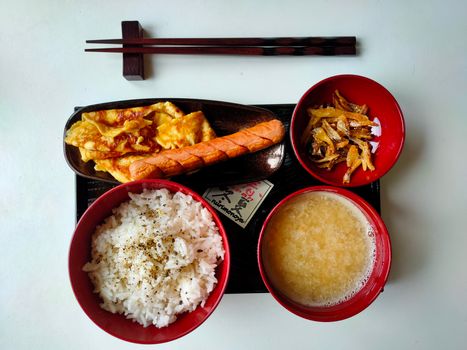
Japanese Breakfast Set
The diets react (see scores below)
Common Ingredients
- grilled salmon
- short-grain rice
- miso soup
- pickled vegetables
- nori
- tamagoyaki
- nattō
- green tea
Specific recipes may vary.
Incompatible with 6 of 11 diets
Diet Ratings
The Japanese Breakfast Set is fundamentally incompatible with ketogenic eating due to short-grain rice, which is the centerpiece carbohydrate. A standard serving of cooked short-grain rice (150-200g) contains approximately 50-60g of net carbs alone, instantly blowing past the entire daily keto carb budget. Pickled vegetables often contain added sugar in Japanese preparations, and tamagoyaki (rolled omelette) is typically sweetened with mirin and sugar. The remaining components — grilled salmon, miso soup, nori, nattō, and green tea — are individually keto-friendly or neutral, but the rice makes the full set a clear avoid. Even removing the rice, the sweetened tamagoyaki and sugary pickles add further incompatibility. This is not a borderline case.
This Japanese Breakfast Set contains multiple animal products that make it entirely incompatible with a vegan diet. Grilled salmon is fish (an animal product), tamagoyaki is a rolled egg omelette, and nattō — while made from fermented soybeans — is otherwise fine, but it cannot redeem a dish that includes fish and eggs as primary components. The miso soup base is typically made with dashi (fish stock from bonito flakes or dried sardines), adding a further animal-derived ingredient. Rice, pickled vegetables, nori, and green tea are plant-based, but the majority of this dish's components are animal-derived.
The Japanese Breakfast Set contains multiple core paleo violations. Short-grain rice is a grain and excluded under strict paleo guidelines. Miso soup is made from fermented soybeans (miso paste), making it a legume-derived product — a clear avoid. Nattō is fermented soybeans, another direct legume violation. Pickled vegetables are likely prepared with added salt and possibly vinegar or sugar, making them a processed food concern. The remaining components — grilled salmon, tamagoyaki (eggs), nori (seaweed), and green tea — are fully paleo-compliant. However, with three significant non-paleo ingredients (rice, miso, nattō) forming the structural backbone of the meal, the dish as a whole must be rated avoid.
The Japanese Breakfast Set aligns remarkably well with Mediterranean diet principles despite being from a different culinary tradition. Grilled salmon provides high-quality omega-3-rich fish protein, strongly encouraged 2-3 times weekly. Miso soup, nori, pickled vegetables, and nattō are all whole, minimally processed plant-based or fermented foods rich in nutrients and fiber. Tamagoyaki (eggs) and short-grain white rice are the mild points of concern. Eggs fall within the acceptable moderate category. Short-grain white rice is a refined grain, which the Mediterranean diet prefers to limit in favor of whole grains — however, the overall meal's nutritional profile (lean fish, fermented foods, vegetables, seaweed) is strongly aligned with Mediterranean principles. The absence of red meat, added sugars, or heavily processed foods, combined with the emphasis on fish, vegetables, and fermented foods, makes this a high-quality meal. The only notable absence is olive oil as a fat source.
Traditional Mediterranean guidelines prefer whole grains over white rice, so a strict interpretation would flag the short-grain rice as a meaningful departure; modern clinical adaptations of the Mediterranean diet (e.g., Willett's 'Healthy Eating Plate' influenced guidelines) do allow small portions of white rice within an otherwise nutrient-dense meal, keeping the overall verdict positive.
This Japanese breakfast set is almost entirely incompatible with the carnivore diet. While grilled salmon and tamagoyaki (egg-based) are carnivore-approved ingredients, they are a small fraction of the meal. Short-grain rice is a grain and strictly excluded. Miso soup contains miso (fermented soybean paste), a legume-derived product, and is excluded. Pickled vegetables are plant foods and excluded. Nori is a plant (seaweed) food and excluded. Nattō is fermented soybeans — a legume, heavily processed plant food, and one of the worst offenders on a carnivore diet. Green tea is a plant-derived beverage and excluded. The majority of this dish by volume and ingredient count consists of foods that are entirely off-limits on a carnivore diet. Only the salmon and tamagoyaki components could be salvaged in isolation.
This Japanese Breakfast Set contains multiple Whole30-excluded ingredients that make it clearly non-compliant. Short-grain rice is a grain and is explicitly excluded. Miso soup is made from fermented soybeans (miso paste), which is a legume product and excluded. Nattō is fermented whole soybeans — also a legume and excluded. Tamagoyaki (Japanese rolled omelette) is made with eggs, which are compliant, but typically includes soy sauce (a soy-based product) and/or mirin (a rice wine, containing both alcohol and sugar), making it non-compliant as commonly prepared. The remaining components — grilled salmon, pickled vegetables (depending on preparation), nori, and green tea — are generally Whole30-compliant, but the presence of rice, miso/soy, and nattō alone renders the entire set a clear avoid with high confidence.
This Japanese breakfast set contains multiple high-FODMAP ingredients that make it unsuitable during the elimination phase. The most problematic component is nattō (fermented soybeans), which is high in GOS (galacto-oligosaccharides) — a key FODMAP category — and should be avoided entirely. Miso soup traditionally contains dashi (generally low-FODMAP) but critically includes miso paste made from soybeans and often barley or wheat, making it high in GOS and fructans; additionally, miso soup frequently contains onion or tofu in larger amounts. Pickled vegetables are a wildcard — common Japanese pickles (tsukemono) often include garlic, onion, or high-FODMAP vegetables like cabbage in significant quantities. The remaining components are more favorable: grilled salmon is low-FODMAP (plain protein), short-grain white rice is low-FODMAP, nori (seaweed) is low-FODMAP in standard servings, tamagoyaki (rolled egg omelette) is generally low-FODMAP if made without high-FODMAP additives, and green tea is low-FODMAP. However, the nattō alone is a dealbreaker for elimination phase, and the miso soup and pickled vegetables add further high-FODMAP risk. The set as a whole cannot be approved.
The Japanese Breakfast Set contains several DASH-friendly components alongside some sodium concerns. Grilled salmon is an excellent lean protein rich in omega-3s and potassium, strongly aligned with DASH. Short-grain rice is an acceptable grain but refined, lacking the fiber benefit of whole grains. Nattō is a DASH-compatible food — high in protein, fiber, potassium, and magnesium from fermented soybeans. Tamagoyaki (rolled egg omelette) provides lean protein and is generally acceptable in moderation. Nori offers minerals including potassium and magnesium. Green tea is DASH-compatible. However, the sodium burden is significant: miso soup is high in sodium (typically 600–900mg per bowl), and pickled vegetables (tsukemono) are heavily salted, often contributing 200–600mg sodium per serving. Together, these two components alone can approach or exceed the 1,500mg low-sodium DASH threshold for a single meal. The overall meal is nutrient-dense and rich in DASH-valued minerals, but the sodium load from miso and pickles is a meaningful concern that warrants a 'caution' rating. Substituting low-sodium miso and rinsed or lightly pickled vegetables would substantially improve compatibility.
NIH DASH guidelines explicitly flag high-sodium condiments and preserved foods; miso and traditional Japanese pickles are high-sodium items that conflict with DASH sodium targets. However, some DASH-oriented clinicians note that the broader nutritional profile of a traditional Japanese diet — rich in fish, vegetables, fermented foods, and fiber — correlates with low cardiovascular disease rates in Japan, suggesting that overall dietary pattern context may mitigate sodium concerns when intake is otherwise balanced.
The Japanese Breakfast Set has several strong Zone-friendly components alongside one notable concern. Grilled salmon is an excellent Zone protein — lean, rich in omega-3s, and anti-inflammatory, aligning perfectly with Sears' emphasis on EPA/DHA. Tamagoyaki (Japanese rolled egg) and nattō provide additional quality protein, with nattō also offering polyphenols and beneficial fermented nutrients. Miso soup, pickled vegetables, and nori are low-calorie, low-glycemic carb sources loaded with polyphenols and micronutrients — ideal Zone carb blocks. Green tea is an outstanding polyphenol source explicitly praised in Sears' later work. The primary concern is short-grain Japanese rice, which has a relatively high glycemic index and represents an 'unfavorable' Zone carbohydrate. A traditional serving size will create a carbohydrate excess that skews the 40/30/30 ratio significantly. However, because the meal's other components are so Zone-favorable (omega-3 protein, fermented foods, low-GI vegetables, polyphenol-rich tea), this set can be adjusted into a workable Zone meal by reducing the rice portion to approximately half a cup (1 carb block equivalent) while ensuring the salmon portion is about 3 oz. The fat content from salmon's natural oils is largely monounsaturated and polyunsaturated, keeping the fat profile favorable. This is a 'caution' rather than 'avoid' because the overall nutritional architecture is sound — only portioning of the rice requires discipline.
Some Zone practitioners, particularly those following Sears' later anti-inflammatory writings, would rate this meal more favorably. Sears' post-2000 work places greater emphasis on omega-3 content and polyphenols over strict glycemic control alone. The salmon's EPA/DHA, nattō's nattokinase and polyphenols, miso's fermented bioactives, and green tea's catechins collectively represent an exceptionally anti-inflammatory meal profile that Sears explicitly champions. From this perspective, a moderate portion of short-grain rice is a minor concern offset by the meal's exceptional anti-inflammatory credentials, potentially warranting a score of 7.
The Japanese Breakfast Set is an exceptionally strong anti-inflammatory meal. Grilled salmon is one of the highest-rated foods in the anti-inflammatory framework — rich in EPA and DHA omega-3 fatty acids that directly suppress inflammatory cytokines (IL-6, TNF-α) and reduce CRP. Nattō is a fermented whole soy food and a standout ingredient: it contains nattokinase, vitamin K2, and beneficial probiotics, and as a whole soy food is explicitly emphasized in Dr. Weil's Anti-Inflammatory Food Pyramid. Miso soup is another fermented soy product with probiotic and antioxidant properties, though sodium content warrants mild attention. Nori (seaweed) provides iodine, folate, and additional anti-inflammatory compounds. Tamagoyaki (egg) is a moderate element — eggs provide choline and selenium but carry some debate over arachidonic acid. Pickled vegetables offer probiotics and fiber, though pickling brine sodium is a minor concern. Short-grain white rice is a refined carbohydrate and the meal's main limitation — it lacks the fiber and micronutrient profile of whole grains — but consumed in traditional portion sizes within a nutrient-dense meal, it does not significantly undermine the overall profile. Green tea is one of the most validated anti-inflammatory beverages, with EGCG demonstrably reducing inflammatory markers. The overall meal pattern closely mirrors the traditional Japanese dietary pattern (washoku), which is strongly associated with reduced chronic inflammation and longevity in epidemiological research.
The sodium load from miso soup, pickled vegetables, and nori could be a concern for individuals with hypertension or inflammatory conditions exacerbated by sodium. Additionally, some autoimmune protocol (AIP) advocates would flag the egg (arachidonic acid) and white rice (high glycemic index, lacking fiber) as mildly problematic, and a small camp would caution against regular soy consumption due to phytoestrogens and potential thyroid interference — though mainstream anti-inflammatory frameworks including Dr. Weil's explicitly endorse whole soy foods.
The Japanese Breakfast Set is an excellent GLP-1-friendly meal overall. Grilled salmon provides high-quality protein and omega-3 fatty acids with moderate fat that is predominantly unsaturated. Tamagoyaki (rolled egg omelette) adds additional complete protein. Nattō is a standout ingredient — it is high in protein, exceptionally high in fiber, and rich in vitamin K2 and probiotics, making it particularly valuable for GLP-1 patients who may experience constipation. Miso soup contributes probiotics, hydration, and electrolytes (sodium), which supports the hydration priority. Nori adds micronutrients and a small fiber contribution. Pickled vegetables support gut health and add volume with minimal calories. Green tea is an appropriate low-caffeine beverage that supports hydration. The primary caution is short-grain white rice, which is a refined carbohydrate with low fiber and moderate glycemic impact — it is not inherently harmful but represents a lower-nutrient-density component of the plate. Portion control on the rice is important. The overall meal is nutrient-dense, easy to digest (all components are lightly prepared), rich in protein across multiple sources, and well-suited to small-portion eating. Sodium content from miso and pickled vegetables warrants awareness for patients with hypertension.
Some GLP-1-focused dietitians flag the combination of miso sodium, pickled vegetable sodium, and nori's natural sodium as potentially problematic for patients with hypertension or fluid retention issues. Additionally, nattō has a strong flavor and sticky texture that many Western patients find difficult to tolerate, and a small number of GLP-1 practitioners express caution about high-sodium fermented foods triggering bloating or worsening GI sensitivity in early treatment phases.
*See how scores were generated at our methodology page.
Nutritional profile
Six traits that cut across every diet.
Fiber & Plants
How much whole-plant food and fiber it delivers.
Healthy Fats
The quality of its fats (unsaturated, omega-3).
Whole / Unprocessed
How close it is to its natural, unprocessed form.
Gut Gentle
How easy it is on digestion (low FODMAP, few irritants).
Low Glycemic
How little it spikes your blood sugar.
Protein Density
How much protein it packs per calorie.
Controversy Index
Higher controversy = more disagreement between diets.
Diet-Specific Tips
 Mediterranean — 8/10
View tips
- Grilled salmon is an excellent omega-3-rich fish, core to Mediterranean diet
- Nattō and miso are nutrient-dense fermented foods aligned with legume emphasis
- Pickled vegetables and nori contribute plant diversity and micronutrients
- Tamagoyaki (eggs) are acceptable in moderate daily amounts
- Short-grain white rice is a refined grain, not preferred over whole grains
- No red meat, added sugars, or heavily processed ingredients
- No olive oil present, which is the canonical Mediterranean fat source
 DASH — 5/10
View tips
- Grilled salmon: excellent DASH protein, high in omega-3s and potassium — strong positive
- Miso soup: typically 600–900mg sodium per serving — significant DASH sodium concern
- Pickled vegetables (tsukemono): high sodium, often 200–600mg per serving — negative for DASH
- Nattō: fermented soybeans high in fiber, protein, potassium, and magnesium — strong positive
- Short-grain white rice: acceptable grain but refined, lower fiber than DASH-preferred whole grains
- Tamagoyaki: moderate DASH compatibility, acceptable in moderation
- Nori: mineral-rich, DASH-compatible
- Green tea: no sodium or added sugar, DASH-compatible
- Combined sodium from miso and pickles may approach or exceed 1,500mg low-sodium DASH threshold in a single meal
- Low-sodium miso alternatives and reduced-salt pickles would significantly improve DASH score
 Zone — 6/10
View tips
- Grilled salmon: excellent Zone protein with high omega-3 EPA/DHA content, anti-inflammatory
- Short-grain rice: high-glycemic 'unfavorable' Zone carb — portion must be reduced to ~0.5 cup to fit Zone blocks
- Tamagoyaki and nattō: additional quality protein sources; nattō is a fermented polyphenol-rich food
- Miso soup and pickled vegetables: low-glycemic, fermented carb sources favorable in Zone methodology
- Nori: negligible calories, micronutrient-dense, favorable Zone carb component
- Green tea: explicitly praised by Sears for polyphenol content in anti-inflammatory Zone protocols
- Overall fat profile: salmon's natural fats are predominantly omega-3 and monounsaturated — favorable
- Meal is adjustable to Zone ratios with rice portion control; not inherently unbalanced
 Anti-Inflammatory — 9/10
View tips
- Grilled salmon: excellent source of EPA/DHA omega-3s, core anti-inflammatory protein
- Nattō: fermented whole soy food with probiotics, vitamin K2, and nattokinase — explicitly emphasized in anti-inflammatory frameworks
- Green tea: high in EGCG polyphenols, strongly associated with reduced CRP and IL-6
- Miso soup: fermented soy with probiotics and antioxidants; moderate sodium is a minor caveat
- Nori: nutrient-dense seaweed with iodine, folate, and anti-inflammatory compounds
- Short-grain white rice: refined carbohydrate with higher glycemic index — the meal's primary limitation
- Tamagoyaki (egg): moderate profile with beneficial choline/selenium but mild arachidonic acid debate
- Pickled vegetables: probiotic and fiber benefit; high sodium from brine is a minor concern
- Overall meal pattern mirrors traditional Japanese diet, associated with reduced chronic inflammation in epidemiological studies
 GLP-1 Friendly — 8/10
View tips
- Grilled salmon provides omega-3 fatty acids and high-quality protein with favorable unsaturated fat profile
- Nattō is exceptionally high in protein and fiber — ideal for preventing GLP-1-associated constipation
- Tamagoyaki adds complete protein from eggs in an easily digestible, low-fat preparation
- Miso soup supports hydration and electrolyte intake, critical given reduced thirst sensation on GLP-1s
- Short-grain white rice is the weakest component — low fiber, moderate glycemic index, portion control recommended
- Pickled vegetables support gut health but contribute sodium — relevant for hypertensive patients
- Green tea is appropriate: low caffeine, supports hydration, no added sugar
- Overall meal is lightly prepared, easy to digest, and small-portion friendly — well matched to GLP-1 gastric emptying slowdown