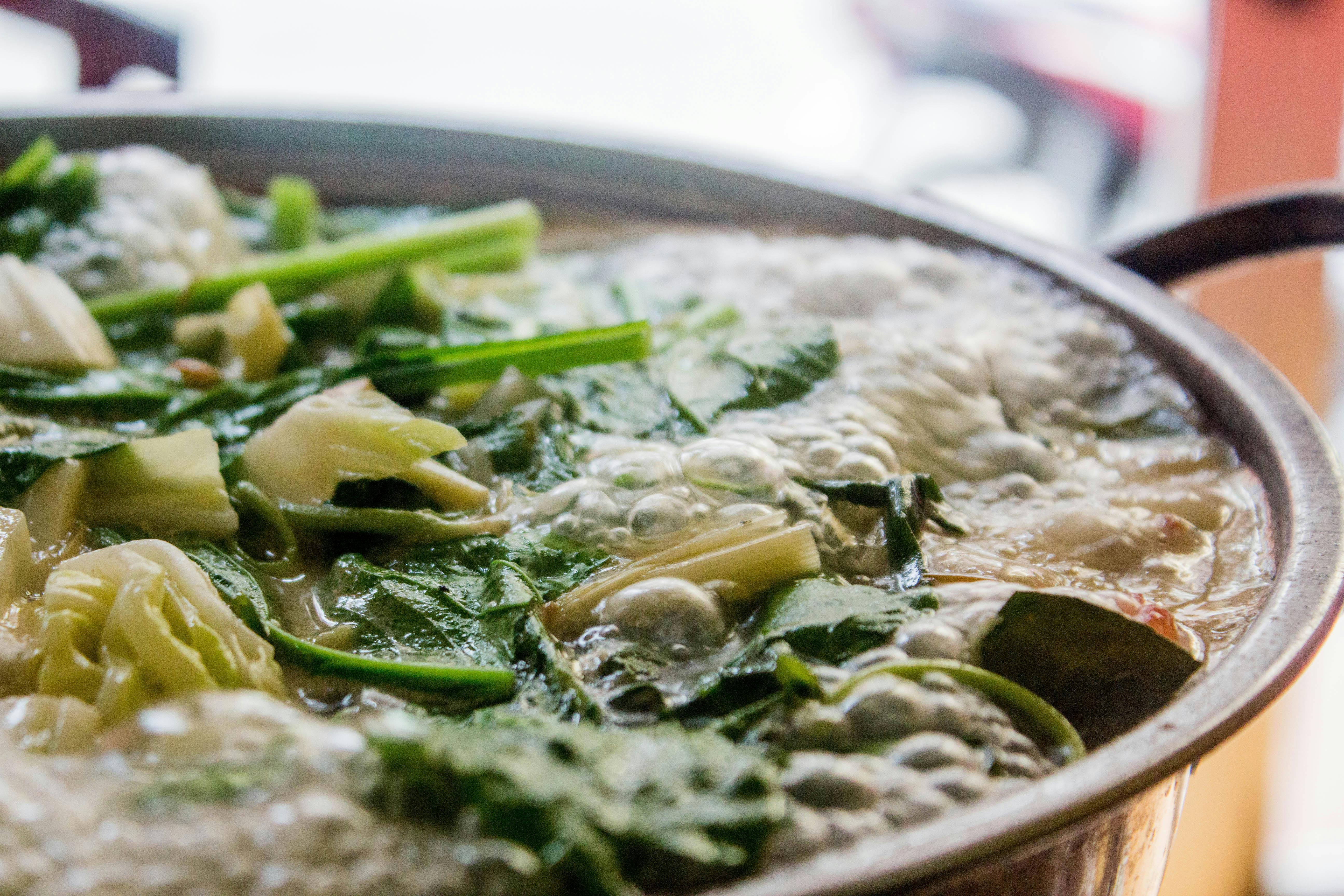
Japanese
Japanese Hot Pot (Nabe)
The diets react (see scores below)
Common Ingredients
- dashi
- Napa cabbage
- tofu
- shiitake mushrooms
- scallions
- chicken
- udon noodles
- ponzu
Specific recipes may vary.
Incompatible with 6 of 11 diets
Diet Ratings
Japanese Hot Pot (Nabe) as described is incompatible with a ketogenic diet primarily due to the inclusion of udon noodles, which are made from wheat flour and contain approximately 40-50g of net carbs per serving — enough to single-handedly exceed the entire daily keto carb limit. Beyond the noodles, ponzu sauce typically contains mirin and citrus juice, adding additional sugars and carbs. The remaining ingredients (dashi, Napa cabbage, tofu, shiitake mushrooms, scallions, chicken) are largely keto-friendly individually, but the dish as traditionally prepared cannot be considered keto-compatible. A modified version omitting the udon noodles and using a low-sugar ponzu or tamari could shift this into 'caution' or even 'approve' territory.
This dish contains multiple animal-derived ingredients that disqualify it from a vegan diet. Chicken is a direct animal product (poultry). Traditional dashi is typically made from katsuobushi (dried bonito fish flakes) and/or niboshi (dried sardines), making it non-vegan. Even if a kombu-only dashi were used, the chicken alone makes this dish entirely non-vegan. There is no ambiguity here — this is a clear avoid.
Japanese Hot Pot (Nabe) contains multiple non-paleo ingredients that make it clearly incompatible with the paleo diet. Udon noodles are made from wheat flour, a grain explicitly excluded from paleo. Tofu is a soy-based product, making it a legume derivative — also strictly excluded. Ponzu sauce typically contains soy sauce (fermented wheat and soy) and often added sugar or preservatives. Dashi, while sometimes made from just kombu and bonito flakes (which would be paleo-friendly), is frequently prepared with soy sauce or mirin in commercial or restaurant settings. The paleo-compliant ingredients — chicken, Napa cabbage, shiitake mushrooms, and scallions — are solid, but the disqualifying ingredients (udon, tofu, ponzu) are foundational to the dish, not optional garnishes.
Japanese Hot Pot contains several Mediterranean-compatible ingredients: tofu and shiitake mushrooms are excellent plant-based protein and nutrient sources, Napa cabbage is a nutritious vegetable, and scallions add flavor with minimal calories. Dashi (typically kombu/bonito-based) is a light, minimally processed broth. Chicken is acceptable in moderation per Mediterranean guidelines. However, udon noodles are refined grain noodles, which the Mediterranean diet discourages in favor of whole grains. Ponzu is a low-fat condiment that is generally acceptable. The dish lacks olive oil as a fat source and is not plant-forward in the Mediterranean tradition, but its overall profile — broth-based, vegetable-rich, lean protein — aligns reasonably well with Mediterranean principles of light, whole-food cooking. The refined udon noodles and non-Mediterranean cooking tradition lower the score.
Some Mediterranean diet researchers argue that the broth-based, vegetable- and legume-rich nature of Japanese hot pot closely mirrors the spirit of Mediterranean eating, and that white udon noodles can be consumed in moderation similarly to how white rice appears in some traditional Mediterranean cuisines (e.g., Greek rice dishes). From this perspective, the dish's overall nutritional profile warrants a higher approval.
Japanese Hot Pot (Nabe) is overwhelmingly composed of plant-based and processed ingredients that are explicitly excluded from the carnivore diet. The dish contains Napa cabbage, tofu (soy-based), shiitake mushrooms, scallions, and udon noodles — all plant-derived foods that violate core carnivore principles. Dashi, while traditionally made from fish (katsuobushi/kombu), often includes kombu seaweed, making even the broth questionable. Ponzu sauce contains citrus juice and soy sauce, both plant-derived. Tofu is a legume-derived product, udon noodles are wheat-based grains, and the vegetables represent the exact category the carnivore diet eliminates entirely. The only carnivore-compatible ingredient is the chicken, which represents a small fraction of this dish's composition. There is no meaningful way to adapt this dish while retaining its identity — it would require removing virtually every ingredient except the chicken.
This Japanese hot pot contains two clearly excluded ingredients. First, udon noodles are made from wheat flour, a grain explicitly banned on Whole30. Second, tofu is a soy-based product, and soy is a legume explicitly excluded from the program. Additionally, ponzu sauce typically contains soy sauce (soy/wheat), mirin (alcohol with sugar), and sometimes other non-compliant additives. Even if ponzu were replaced with a compliant alternative (e.g., coconut aminos with citrus), the udon noodles and tofu alone are sufficient to disqualify this dish. The remaining ingredients — dashi, Napa cabbage, shiitake mushrooms, scallions, and chicken — are generally compliant, but the dish as described cannot be made Whole30-compatible without removing the tofu and udon noodles entirely.
Japanese Hot Pot (Nabe) as described contains multiple high-FODMAP ingredients that make it unsuitable during the elimination phase. The most significant offenders are: (1) Udon noodles — made from wheat flour, which is high in fructans, a major FODMAP trigger. (2) Shiitake mushrooms — high in polyols (mannitol), rated high-FODMAP by Monash even at small servings. (3) Scallions/green onions — the white bulb portion is high in fructans; even the green tops should be used cautiously. (4) Ponzu sauce — traditionally contains citrus and soy sauce, but commercial versions often include high-FODMAP ingredients such as wheat-based soy sauce or added sugars. The remaining ingredients have more favorable profiles: dashi (kombu and bonito-based) is generally low-FODMAP in standard amounts, Napa cabbage is low-FODMAP at portions up to 75g, firm tofu is low-FODMAP, and plain chicken is FODMAP-free. However, the combination of wheat-based udon noodles and shiitake mushrooms alone is sufficient to classify this dish as avoid during elimination. Substitutions (rice noodles instead of udon, oyster mushrooms instead of shiitake, green tops of scallions only, tamari-based ponzu) could make a modified version low-FODMAP.
Japanese Hot Pot (Nabe) contains many DASH-friendly ingredients — Napa cabbage, tofu, shiitake mushrooms, scallions, and lean chicken are all well-aligned with DASH principles, providing fiber, potassium, magnesium, and lean protein. However, the dish has meaningful sodium concerns. Dashi (especially commercial or soy-based varieties) contributes moderate-to-high sodium, and ponzu sauce is notably high in sodium (soy sauce base), which is the primary flag for DASH compliance. Udon noodles are refined carbohydrates rather than whole grains, which DASH de-emphasizes. The dish is not inherently unhealthy, but as commonly prepared with standard dashi and ponzu, sodium content can easily approach or exceed DASH daily limits in a single serving. With low-sodium dashi, reduced-sodium ponzu, and portion control on noodles, this dish could score significantly higher (7-8). As a standard preparation, caution is warranted.
NIH DASH guidelines flag high-sodium condiments and broths categorically, which would push this dish toward avoidance given ponzu and dashi. However, updated clinical interpretations of DASH note that dishes rich in potassium-dense vegetables (cabbage, mushrooms) and plant protein (tofu) can offset some sodium risk, and many DASH-oriented dietitians would approve this dish with simple substitutions like low-sodium soy sauce and kombu-only dashi.
Japanese Hot Pot (Nabe) is a mixed dish with several Zone-friendly components alongside one notable concern. The protein sources — chicken and tofu — are both lean and Zone-favorable, providing a solid 30% protein foundation. The vegetable content is excellent: Napa cabbage, shiitake mushrooms, and scallions are all low-glycemic, polyphenol-rich vegetables that align well with Zone principles. Dashi is a low-calorie, low-glycemic broth base with no concerns. Ponzu adds minimal calories and is largely benign. The primary Zone challenge is the udon noodles — a refined wheat product with a high glycemic index that can disrupt the 40/30/30 carbohydrate balance and spike insulin. In a typical nabe serving, udon noodles are a significant carbohydrate source and are classified as 'unfavorable' in Zone terminology. However, the dish is not disqualifying: the high fiber content of the vegetables moderates glycemic impact, and Zone practitioners can simply reduce or omit the udon, substituting shirataki noodles or increasing vegetable volume. The fat profile is relatively low overall, which means a small portion of favorable fat (e.g., sesame oil, avocado) would need to be added to hit the 30% fat target. With udon portion controlled and fat supplemented, this dish is quite Zone-compatible.
Some Zone practitioners applying Sears' later anti-inflammatory framework would rate this dish higher (7-8), noting that the overall glycemic load is moderated by the abundant vegetables and that udon noodles in a small portion (half-serving or less) are manageable within a Zone block system. The dish's strong polyphenol profile from mushrooms, Napa cabbage, and ponzu aligns with Sears' later Zone emphasis on anti-inflammatory eating. Others following stricter early Zone guidelines would emphasize that udon is a refined-grain 'unfavorable' carb and keep the caution rating.
Japanese Hot Pot (Nabe) is a strongly anti-inflammatory dish overall, anchored by several standout ingredients. Shiitake mushrooms are explicitly emphasized in anti-inflammatory protocols as cooked Asian mushrooms with immune-modulating beta-glucans. Tofu provides whole soy protein, also emphasized in Dr. Weil's Anti-Inflammatory Food Pyramid. Dashi (typically made from kombu seaweed and bonito flakes) contributes iodine, glutamates, and umami compounds with low inflammatory burden. Napa cabbage is a cruciferous vegetable rich in antioxidants, vitamins C and K, and fiber. Scallions offer quercetin and organosulfur compounds with anti-inflammatory properties. Ponzu sauce (citrus-based soy sauce) adds polyphenols and is low in inflammatory ingredients. Chicken is a lean protein classified as 'moderate' — acceptable and far preferable to red meat. Udon noodles are the one relative weak point: as refined wheat noodles, they are low in fiber and have a high glycemic index, which can contribute mildly to inflammatory load. However, in the context of this dish — diluted in broth with abundant vegetables and protein — their glycemic impact is substantially buffered. The overall dish is broth-based (not oil-heavy), vegetable-rich, contains anti-inflammatory mushrooms and soy foods, and uses lean protein. This is a clear approve for an anti-inflammatory dietary pattern.
Japanese hot pot (nabe) is an excellent fit for GLP-1 patients overall. The broth base (dashi) is low-fat, hydrating, and easy to digest — ideal given slowed gastric emptying. Chicken provides lean, high-quality protein; tofu adds additional plant-based protein and is very gentle on the stomach. Napa cabbage, shiitake mushrooms, and scallions contribute meaningful fiber, micronutrients, and water content. Ponzu is a low-calorie, flavor-forward condiment that keeps the dish satisfying without adding fat or sugar. The main caution is the udon noodles — they are refined carbohydrates with low fiber and protein density, which dilutes the nutritional quality of an otherwise nutrient-dense dish. Portion control on the noodles is important; reducing or omitting them in favor of more tofu, vegetables, or chicken would meaningfully improve the dish's GLP-1 compatibility. The broth-heavy, small-portion-friendly format is well-suited to reduced appetite and GI sensitivity common in GLP-1 patients.
Some GLP-1-focused dietitians caution that hot pot meals can be difficult to portion-control in social or restaurant settings, where noodle and protein ratios vary widely and sodium in dashi-based broths can be high — a concern for patients managing blood pressure alongside weight loss. Others consider the format nearly ideal because the high water content of the broth naturally limits caloric density and the meal is inherently modular.
*See how scores were generated at our methodology page.
Nutritional profile
Six traits that cut across every diet.
Fiber & Plants
How much whole-plant food and fiber it delivers.
Healthy Fats
The quality of its fats (unsaturated, omega-3).
Whole / Unprocessed
How close it is to its natural, unprocessed form.
Gut Gentle
How easy it is on digestion (low FODMAP, few irritants).
Low Glycemic
How little it spikes your blood sugar.
Protein Density
How much protein it packs per calorie.
Controversy Index
Higher controversy = more disagreement between diets.
Diet-Specific Tips
 Mediterranean — 6/10
View tips
- Tofu and shiitake mushrooms are excellent plant-based protein and nutrient sources
- Vegetable-rich with Napa cabbage and scallions
- Chicken is acceptable in moderation per Mediterranean guidelines
- Udon noodles are refined grains, not aligned with whole-grain preference
- No olive oil; dashi-based broth replaces traditional Mediterranean fat source
- Ponzu is a low-sodium, minimally processed condiment — generally acceptable
- Broth-based cooking is low in saturated fat and aligned with Mediterranean principles
 DASH — 5/10
View tips
- Ponzu sauce is high in sodium (soy sauce base) — a significant DASH concern
- Dashi broth contributes additional sodium, especially commercial preparations
- Napa cabbage, shiitake mushrooms, tofu, and scallions are excellent DASH foods rich in potassium, magnesium, and fiber
- Lean chicken is an approved DASH protein source
- Udon noodles are refined grains — DASH prefers whole grains
- Low-sodium dashi and reduced-sodium ponzu would substantially improve DASH compatibility
- Overall sodium per serving can easily exceed 1,000-1,500mg depending on preparation
 Zone — 6/10
View tips
- Udon noodles are high-glycemic refined carbohydrates classified as 'unfavorable' in Zone — primary concern
- Chicken and tofu provide lean, Zone-approved dual protein sources
- Napa cabbage, shiitake mushrooms, and scallions are excellent low-glycemic, polyphenol-rich Zone vegetables
- Dashi broth is a low-calorie, Zone-neutral base
- Overall fat content is low — additional monounsaturated fat needed to achieve 30% fat target
- Dish is highly customizable: reducing udon and adding favorable fat makes this Zone-compliant
- Ponzu sauce is low-glycemic and adds flavor without significant macro disruption
 Anti-Inflammatory — 8/10
View tips
- Shiitake mushrooms: explicitly approved anti-inflammatory food with immune-modulating beta-glucans
- Tofu: whole soy food emphasized in Dr. Weil's Anti-Inflammatory Food Pyramid
- Napa cabbage: cruciferous vegetable rich in antioxidants, fiber, and vitamins C and K
- Dashi broth: low-inflammatory, nutrient-rich base with umami compounds from kombu and bonito
- Chicken: lean protein classified as moderate/acceptable in anti-inflammatory protocols
- Scallions: source of quercetin and organosulfur anti-inflammatory compounds
- Ponzu: citrus-based, polyphenol-containing condiment with low inflammatory burden
- Udon noodles: refined carbohydrate with limited fiber — modest pro-inflammatory factor, mitigated by overall dish composition
 GLP-1 Friendly — 8/10
View tips
- Broth-based format is hydrating, low-fat, and easy to digest
- Chicken and tofu provide solid lean protein per serving
- Napa cabbage, shiitake, and scallions add fiber and micronutrients
- Udon noodles are refined carbs — low fiber, low protein; portion should be minimized
- Ponzu is a low-calorie, GLP-1-friendly condiment
- High water content supports hydration needs on GLP-1 medications
- Small, modular serving format suits reduced appetite well
- Sodium in dashi may be a consideration for some patients