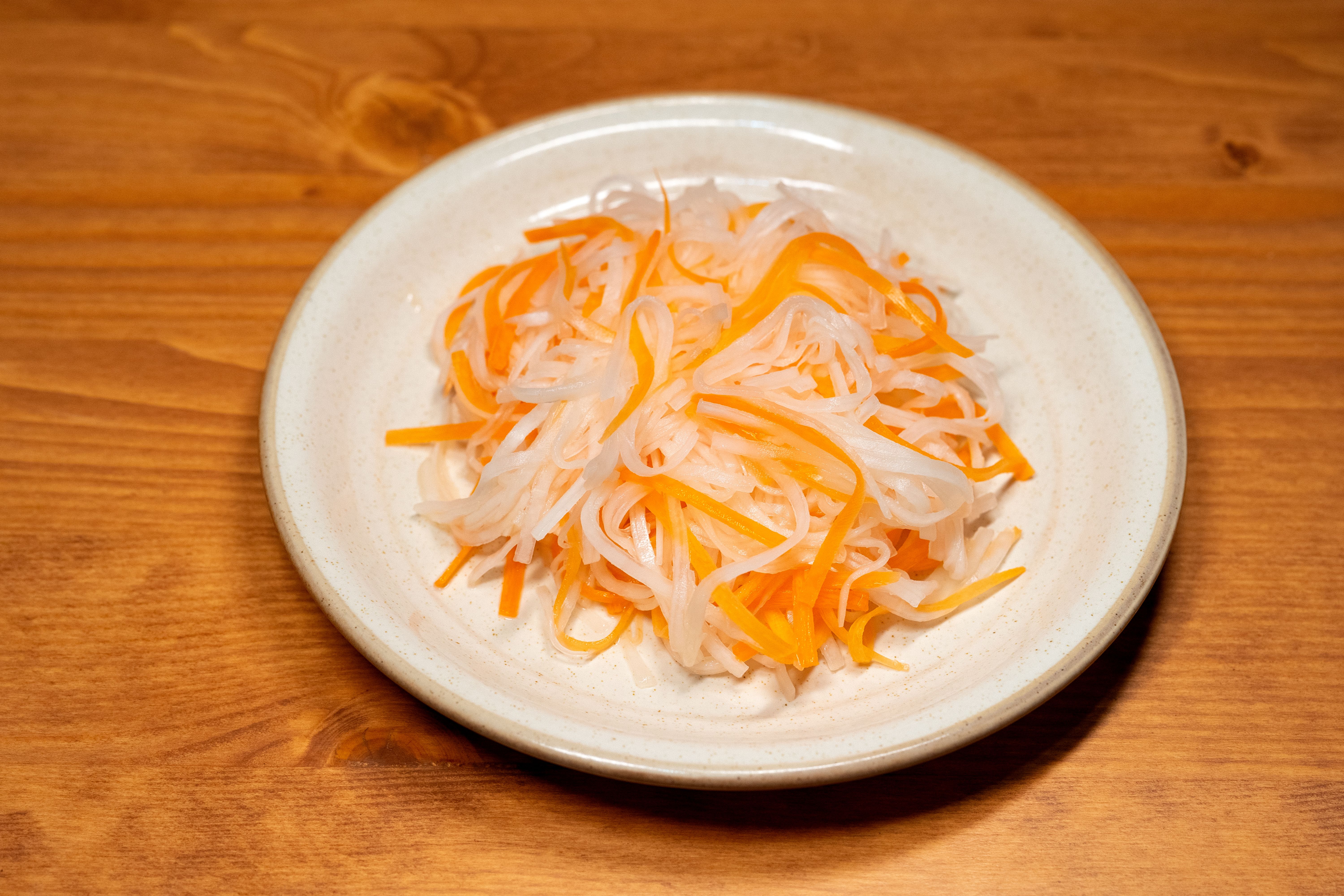
Japanese
Tsukemono
The diets react (see scores below)
Common Ingredients
- daikon radish
- cucumber
- cabbage
- rice vinegar
- sugar
- salt
- ginger
- shiso
Specific recipes may vary.
Incompatible with 4 of 11 diets
Diet Ratings
Tsukemono is a Japanese pickled vegetable dish that includes added sugar as a key ingredient in the brine, which is a direct violation of strict keto principles. While the base vegetables (daikon, cucumber, cabbage, ginger, shiso) are relatively low-carb, the sugar used in the pickling process adds meaningful net carbs per serving. Rice vinegar itself contributes minimal carbs, but combined with sugar, the brine significantly raises the net carb content. A typical serving of traditional tsukemono can contain 5-10g of net carbs primarily from added sugar, and it is difficult to consume this dish without the sugar-laden brine. The dish also lacks fat entirely, offering no keto benefit.
Some lazy keto or flexible keto practitioners argue that small portions of tsukemono (a few pieces as a condiment rather than a side dish) may be tolerable within a daily carb budget, especially if a sugar-free or low-sugar version is prepared at home using erythritol or another keto-approved sweetener.
Tsukemono (Japanese pickled vegetables) as described here is entirely plant-based. All ingredients — daikon radish, cucumber, cabbage, rice vinegar, sugar, salt, ginger, and shiso — are whole plant foods or simple plant-derived condiments. Rice vinegar is fermented from rice with no animal involvement, and shiso is a fragrant herb common in Japanese cuisine. This is a minimally processed, whole-food preparation with no animal products or animal-derived ingredients present. It scores highly as a nutritious, traditional vegan-friendly side dish.
Tsukemono is a traditional Japanese pickled vegetable dish that contains several non-paleo ingredients. While the base vegetables (daikon radish, cucumber, cabbage, ginger, shiso) are paleo-approved, the pickling preparation relies on added salt, refined sugar, and rice vinegar — all of which are excluded under strict paleo guidelines. Added salt and refined sugar are explicitly non-paleo, and rice vinegar, derived from fermented rice (a grain), is also excluded. The combination of these problematic ingredients makes the dish non-compliant despite its vegetable base.
Tsukemono is a Japanese pickled vegetable dish featuring daikon radish, cucumber, cabbage, ginger, and shiso — all vegetables that are strongly encouraged on the Mediterranean diet. The base ingredients are excellent: plant-forward, fiber-rich, and low-calorie. However, the preparation introduces some concerns. Rice vinegar is acceptable (similar to wine vinegar used in Mediterranean cuisine), but added sugar and relatively high salt content from the pickling process are less aligned with Mediterranean principles. The Mediterranean diet does use pickled and fermented vegetables (olives, capers, preserved lemons), so the concept is not foreign, but those preparations typically use olive oil and/or brine without added sugar. The small amount of sugar in tsukemono is unlikely to be clinically significant, but it is a mild deviation. Overall, the dish is acceptable in moderation — the vegetable base earns credit, but the added sugar and sodium warrant a caution rather than a full approve.
Some Mediterranean diet interpreters would fully approve tsukemono, noting that fermented and pickled vegetables are a valued tradition in Mediterranean food culture (e.g., Greek toursi, Italian giardiniera) and that the sugar and salt quantities per serving are minimal. From this perspective, the dish's plant-based, whole-food composition is what matters most.
Tsukemono is a Japanese pickled vegetable dish made entirely from plant-based ingredients. Every component — daikon radish, cucumber, cabbage, rice vinegar, sugar, ginger, and shiso — is explicitly excluded from the carnivore diet. There is no animal-derived ingredient whatsoever. Plant vegetables, plant-based vinegar, sugar, and plant spices/herbs all violate the core carnivore principle of eating exclusively animal products. This dish has zero compatibility with any tier of the carnivore diet.
Tsukemono contains sugar, which is an excluded added sweetener on the Whole30 program. While the base vegetables (daikon radish, cucumber, cabbage), rice vinegar (an explicitly allowed vinegar), salt, ginger, and shiso are all Whole30-compliant, the addition of sugar to the pickling brine makes this dish non-compliant. A modified version omitting sugar could potentially be approved, but as traditionally prepared, this dish cannot be considered Whole30 compatible.
Tsukemono (Japanese pickled vegetables) is generally a low-FODMAP-friendly dish, but several dose-dependent considerations apply. Daikon radish is low-FODMAP at 2–3 slices (75g) but becomes high-FODMAP in larger servings due to excess fructose. Cucumber is low-FODMAP at standard servings (½ cup). Cabbage is low-FODMAP at 75g but can accumulate fructans at larger portions. Rice vinegar is low-FODMAP. Sugar in small pickling quantities is fine (glucose/sucrose at typical condiment levels). Salt is fine. Fresh ginger is low-FODMAP at ≤1 tsp per Monash. Shiso (perilla leaf) lacks detailed Monash testing but is used in tiny garnish quantities and is generally considered safe. The main practical concern is that tsukemono is often eaten as a side in quantities that push daikon and cabbage servings into moderate-to-high FODMAP territory, and cumulative FODMAP load across multiple vegetables matters. At a controlled, modest serving (small side portion), this dish is likely low-FODMAP, but standard restaurant or home servings may exceed safe thresholds for daikon in particular.
Monash University rates daikon and cabbage as low-FODMAP only at specific portion limits; many clinical FODMAP practitioners advise caution with mixed pickled vegetable dishes during elimination because cumulative FODMAP stacking across multiple vegetables—even individually safe ones—can trigger symptoms. Shiso also lacks published Monash testing, adding minor uncertainty.
Tsukemono (Japanese pickled vegetables) presents a mixed DASH profile. The base ingredients — daikon radish, cucumber, cabbage, ginger, and shiso — are excellent DASH-friendly vegetables rich in fiber, potassium, and micronutrients. Rice vinegar adds minimal calories or sodium. However, the pickling process relies heavily on salt, which is the central tension here. Traditional tsukemono can contain 500–1,200mg of sodium per small serving (roughly 100g), which is significant against the DASH daily ceiling of 1,500–2,300mg. The sugar content is modest and not a primary concern. This dish cannot be rated 'approve' despite its vegetable base because the sodium load from pickling is inconsistent with DASH sodium targets, especially for the low-sodium DASH variant. However, it avoids saturated fat, tropical oils, added cholesterol, or heavily processed ingredients, keeping it out of 'avoid' territory. Portion-controlled consumption (2–3 tablespoons as a condiment) or home-prepared versions with reduced salt can fit within DASH guidelines.
NIH DASH guidelines focus broadly on limiting sodium rather than specifically addressing fermented or pickled vegetables; some DASH-oriented clinicians argue that the probiotic benefits and high vegetable density of tsukemono, when consumed in small condiment portions, align well with the dietary pattern's spirit. However, strict interpretation of the low-sodium DASH protocol (1,500mg/day) would classify even small servings of traditional tsukemono as a meaningful sodium contributor warranting caution.
Tsukemono (Japanese pickled vegetables) is primarily composed of low-glycemic vegetables — daikon radish, cucumber, cabbage — which are Zone-favorable carbohydrate sources rich in fiber and polyphenols. Ginger and shiso add anti-inflammatory phytonutrients that align well with Sears' later anti-inflammatory emphasis. The main Zone concern is the sugar used in pickling, which raises the glycemic load slightly above plain vegetables, and the salt content, which is a health consideration though not directly a Zone macronutrient issue. As a side dish served in small portions (typical tsukemono serving is 30-60g), the sugar contribution is modest — likely 2-4g net carbs per serving — making it easy to fit within a carbohydrate block. Rice vinegar itself may actually support glycemic control. The absence of protein and fat means it must be paired with Zone-compliant lean protein and monounsaturated fat sources to complete a balanced meal, but as a side/condiment component it functions well as part of the carbohydrate block allocation.
Some Zone practitioners would rate this more cautiously due to the added sugar in the pickling brine, which technically makes it an 'unfavorable' carbohydrate element — Sears distinguishes between naturally occurring carbohydrates in vegetables and added sugars. However, given the small serving sizes typical of tsukemono and the dominant fiber-rich vegetable base, most Zone-aware practitioners would treat this as an acceptable low-block carbohydrate side.
Tsukemono (Japanese pickled vegetables) features a base of daikon radish, cucumber, and cabbage — all colorful, fiber-rich vegetables with meaningful antioxidant and phytonutrient content. Ginger is a well-established anti-inflammatory spice containing gingerols and shogaols that suppress inflammatory cytokines. Shiso (perilla) is particularly notable: it contains rosmarinic acid and luteolin, polyphenols with documented anti-inflammatory activity, and is rich in alpha-linolenic acid (an omega-3 precursor). Rice vinegar contributes acetic acid, which some research links to improved metabolic markers. The fermentation process — when traditionally made — produces beneficial probiotics that support gut health and may reduce systemic inflammation via the gut-microbiome axis. The main concern is sodium content: tsukemono is typically high in salt, which at excess levels can promote inflammation and cardiovascular stress. Sugar is used in modest amounts, which is acceptable. Overall, the anti-inflammatory positives (fiber, polyphenols, ginger, shiso, probiotics) outweigh the sodium concern for most people in typical serving sizes, but sodium warrants a note. Scored 7 rather than higher due to salt load and the fact that commercially produced versions may use additives and lack live cultures.
Some anti-inflammatory practitioners emphasize that the high sodium content in most tsukemono preparations can promote fluid retention, raise blood pressure, and indirectly drive inflammatory pathways — particularly relevant for individuals sensitive to salt or with hypertension. Additionally, commercially pickled versions often lack live probiotic cultures and may contain additives, which would reduce the functional benefit assumed in a traditional preparation.
Tsukemono is a Japanese pickled vegetable side dish made from daikon, cucumber, and cabbage in a rice vinegar, sugar, and salt brine with ginger and shiso. It is virtually fat-free, low in calories, and provides modest fiber and beneficial plant compounds from the vegetables and aromatics. The vegetables also contribute hydration support, which is a meaningful benefit for GLP-1 patients who experience reduced thirst. However, tsukemono scores in the caution range for several reasons: it contains no meaningful protein, which is the top dietary priority for GLP-1 patients; the salt content is typically high, which can contribute to water retention and is a concern for patients with hypertension or cardiovascular risk factors often comorbid with obesity; and the small amount of added sugar in the brine, while minor per serving, adds minimally useful calories. Ginger is a mild GI soother that may actually benefit GLP-1 patients with nausea. As a side dish in small portions alongside a protein-rich main, tsukemono is acceptable and even beneficial for digestive variety and hydration, but it should not displace higher-priority foods in a calorie-restricted eating window.
Some GLP-1-focused dietitians view fermented or lightly pickled vegetables favorably for gut microbiome support and as a low-calorie, high-volume food that aids satiety without burdening the slowed GI tract; others caution that the sodium load in traditional tsukemono preparations may be problematic for patients whose cardiometabolic risk profiles are the primary reason for GLP-1 prescribing, and recommend limiting pickled foods or choosing low-sodium versions.
*See how scores were generated at our methodology page.
Nutritional profile
Six traits that cut across every diet.
Fiber & Plants
How much whole-plant food and fiber it delivers.
Healthy Fats
The quality of its fats (unsaturated, omega-3).
Whole / Unprocessed
How close it is to its natural, unprocessed form.
Gut Gentle
How easy it is on digestion (low FODMAP, few irritants).
Low Glycemic
How little it spikes your blood sugar.
Protein Density
How much protein it packs per calorie.
Controversy Index
Higher controversy = more disagreement between diets.
Diet-Specific Tips
 Vegan — 9/10
View tips
- All vegetables (daikon, cucumber, cabbage, ginger, shiso) are whole plant foods
- Rice vinegar is plant-derived (fermented rice), fully vegan
- Sugar in this context is standard; no bone-char processing concern is flagged unless a specific brand is identified
- Salt is a mineral, not an animal product
- No animal-derived preservatives, flavorings, or additives listed
- Minimally processed whole-food preparation earns a high score within the approve range
 Mediterranean — 5/10
View tips
- Excellent plant-based vegetable base (daikon, cucumber, cabbage, ginger, shiso)
- Added sugar deviates from Mediterranean principles of minimal added sugars
- High sodium from pickling process is a mild concern
- Fermented/pickled vegetables have a Mediterranean analog but typically without added sugar
- No olive oil, the Mediterranean diet's canonical fat, is present
- Portion sizes in practice are small, mitigating sugar/salt concerns
 Low-FODMAP — 6/10
View tips
- Daikon is low-FODMAP at 75g but high-FODMAP in larger servings due to excess fructose
- Cabbage is safe at 75g but contributes fructans at larger amounts
- Cumulative FODMAP stacking from multiple vegetables is a practical concern
- Rice vinegar, salt, and sugar at pickling quantities are low-FODMAP
- Ginger is low-FODMAP at ≤1 tsp per Monash guidelines
- Shiso lacks detailed Monash testing but used in negligible quantities
- Portion control is the key determinant of safety for this dish
 DASH — 5/10
View tips
- High sodium content from salt-pickling process (est. 500–1,200mg per 100g serving)
- Excellent vegetable base: daikon, cucumber, cabbage, shiso — rich in fiber and potassium
- No saturated fat, no tropical oils, no cholesterol concerns
- Modest sugar content — not a significant DASH concern
- Low-sodium home preparation would significantly improve DASH compatibility
- Standard DASH sodium limit (2,300mg/day) is more forgiving; low-sodium DASH (1,500mg/day) makes this a notable concern
- Best consumed as a small condiment rather than a full side dish serving
 Zone — 7/10
View tips
- Low-glycemic vegetables (daikon, cucumber, cabbage) form the base — Zone-favorable carbs
- Small typical serving size keeps net carbs and sugar contribution minimal
- Added sugar in pickling brine is a mild Zone concern but manageable at portion scale
- Ginger and shiso provide anti-inflammatory polyphenols aligned with Sears' later writings
- High sodium content is a health consideration but not a Zone macronutrient issue
- No protein or fat — must be paired to complete Zone meal ratios
- Rice vinegar may support glycemic modulation
 Anti-Inflammatory — 7/10
View tips
- Daikon, cucumber, and cabbage provide fiber and antioxidants with anti-inflammatory potential
- Ginger contains gingerols and shogaols, well-documented anti-inflammatory compounds
- Shiso is rich in rosmarinic acid, luteolin, and alpha-linolenic acid (omega-3 precursor)
- Traditional fermentation adds probiotics that support gut health and reduce systemic inflammation
- High sodium content is a notable concern and can be pro-inflammatory at excess levels
- Small amounts of added sugar are not a significant concern at typical serving sizes
- Commercial versions may lack live cultures and could contain additives
 GLP-1 Friendly — 5/10
View tips
- No protein content — does not support the primary GLP-1 dietary priority
- High sodium typical of pickled preparations — relevant given cardiometabolic comorbidities common in GLP-1 patients
- Low fat and very low calorie — does not worsen GI side effects
- Modest fiber from daikon, cucumber, and cabbage supports digestion and constipation prevention
- High water content supports hydration, a meaningful GLP-1 benefit
- Ginger may provide mild anti-nausea benefit
- Small amount of added sugar in brine is negligible per typical serving
- Best used as a small accompaniment to a protein-rich main dish, not as a standalone food in a limited eating window