This dish contains raw or undercooked ingredients. Consume at your discretion.
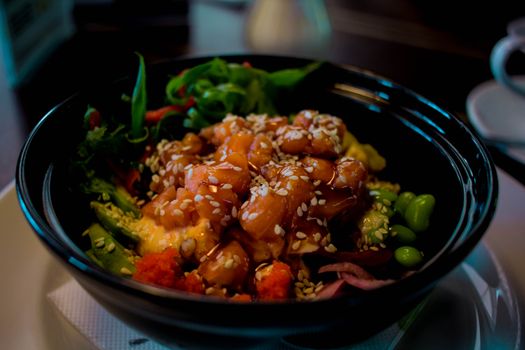
Photo: Sergey Meshkov / Pexels
Japanese
Japanese Poke Bowl
The diets react (see scores below)
Common Ingredients
- sushi-grade tuna
- sushi rice
- avocado
- cucumber
- edamame
- nori
- soy sauce
- sesame oil
Specific recipes may vary.
Incompatible with 5 of 11 diets
Diet Ratings
The Japanese Poke Bowl is fundamentally incompatible with a ketogenic diet in its standard form due to the sushi rice, which is the dominant carbohydrate source. A typical serving of sushi rice (around 150-200g) contains approximately 50-65g of net carbs on its own, immediately blowing past the entire daily keto carb budget in a single dish. The remaining ingredients tell a more nuanced story: tuna and salmon are excellent keto proteins, avocado is a keto superfood high in healthy fats, cucumber and nori are low-carb, and sesame oil is keto-friendly. However, edamame adds another 4-6g of net carbs per serving, and soy sauce contributes minor carbs. The dish as described cannot be made keto-compatible without a fundamental substitution — replacing sushi rice with cauliflower rice would transform this into a caution or even approve verdict. As presented, the sushi rice alone disqualifies it.
This dish contains sushi-grade tuna or salmon as the primary protein, both of which are fish — an animal product strictly excluded under all vegan dietary frameworks. No vegan substitution is present in the listed ingredients. The remaining ingredients (sushi rice, avocado, cucumber, edamame, nori, soy sauce, sesame oil) are all plant-based, but the fish component makes the dish as described non-vegan. A vegan poke bowl could be made by substituting the fish with tofu, marinated watermelon, or hearts of palm, retaining all other ingredients.
This Japanese Poke Bowl contains multiple non-paleo ingredients that make it clearly incompatible with the Paleolithic diet. Sushi rice is a grain and is excluded under strict paleo rules. Edamame is a legume (soy-based) and is explicitly excluded. Soy sauce contains both soy (a legume) and wheat (a grain), making it doubly non-paleo. Sesame oil is a seed oil, which is excluded in favor of paleo-approved fats. The remaining ingredients — sushi-grade tuna, avocado, cucumber, and nori — are paleo-approved, but the dish as constructed is fundamentally built around non-paleo staples. A paleo adaptation would require replacing rice with cauliflower rice, removing edamame, swapping soy sauce for coconut aminos, and replacing sesame oil with avocado or olive oil.
This poke bowl contains several Mediterranean-friendly elements: sushi-grade tuna or salmon provides excellent omega-3 fatty acids consistent with the diet's emphasis on fish 2-3 times weekly, avocado offers healthy monounsaturated fats, cucumber and edamame are wholesome plant foods, and nori adds micronutrients. However, the dish deviates from Mediterranean principles in a few ways. Sushi rice is a refined, white short-grain rice with added vinegar and sometimes sugar, falling short of the whole grain preference. Sesame oil, while a healthy plant-based fat, displaces the canonical extra virgin olive oil. Soy sauce adds significant sodium and is not a Mediterranean pantry staple. The dish is nutritionally solid and fish-forward, but its Japanese culinary framework means it lacks core Mediterranean ingredients and techniques.
Some modern Mediterranean diet practitioners argue that the diet's spirit — abundant fish, healthy fats, vegetables, and legumes — is what matters, not strict geographic ingredient sourcing. Under this interpretation, the omega-3-rich fish, avocado, and edamame make this bowl highly compatible. Conversely, stricter traditional Mediterranean frameworks would flag the refined sushi rice, absence of olive oil, and high-sodium soy sauce as meaningful departures from foundational principles.
The Japanese Poke Bowl is almost entirely incompatible with the carnivore diet. While sushi-grade tuna or salmon is an approved animal protein, it is surrounded by a near-complete list of excluded plant foods. Sushi rice is a grain carbohydrate, avocado and cucumber are plant foods, edamame is a legume, nori is seaweed, soy sauce is a fermented soy-grain product, and sesame oil is a plant-derived oil. The dish's identity, flavor profile, and caloric base are all built around plant ingredients. The only salvageable component — the raw fish — would need to be eaten in complete isolation to be carnivore-compatible. As a dish, this is a staple of plant-forward eating and is essentially the opposite of a carnivore meal.
This dish contains multiple excluded ingredients. Sushi rice is a grain (rice) and is explicitly excluded on Whole30. Soy sauce contains soy (a legume) and typically wheat (a grain), both of which are excluded. Edamame is a soy-based legume and is also excluded. These are not edge cases — grains, soy, and legumes are among the core exclusions of the Whole30 program. The remaining ingredients (tuna, avocado, cucumber, nori, sesame oil) are compliant, but the dish as described cannot be made Whole30-compatible without removing or substituting the rice, soy sauce, and edamame.
This Japanese Poke Bowl contains several ingredients that individually require careful portion control during the FODMAP elimination phase. Sushi rice is low-FODMAP and safe. Sushi-grade tuna or salmon (plain fish) is low-FODMAP. Cucumber is low-FODMAP at standard servings. Nori (seaweed) is low-FODMAP in typical amounts. Sesame oil is low-FODMAP (FODMAPs are water-soluble, not fat-soluble). However, three ingredients create significant concern: (1) Avocado is low-FODMAP only at 1/8 of a whole avocado (30g) per Monash — poke bowls typically contain far more, pushing it into high-FODMAP sorbitol territory. (2) Edamame (green soybeans) contains GOS and is high-FODMAP at the portion sizes typically used in poke bowls — Monash rates edamame as high-FODMAP. (3) Soy sauce contains wheat (fructans) unless specifically tamari/gluten-free soy sauce is used. The cumulative FODMAP load from avocado, edamame, and standard soy sauce makes this dish risky during strict elimination without significant modifications.
Monash University rates edamame as high-FODMAP even at small servings due to GOS content, but some clinical FODMAP practitioners suggest a very small garnish amount may be tolerable for some individuals — however this is not supported by Monash guidance during elimination. Similarly, avocado at 1/8 portion is technically approved by Monash, but real-world poke bowl servings far exceed this threshold, making the practical verdict closer to 'avoid' for avocado specifically.
A Japanese Poke Bowl has a strong nutritional foundation for DASH: sushi-grade tuna or salmon provides lean, heart-healthy omega-3-rich protein; avocado offers potassium and healthy monounsaturated fats; cucumber and edamame contribute fiber, magnesium, and potassium; and nori adds trace minerals. However, the dish is pulled down by two significant DASH concerns. First, soy sauce is extremely high in sodium — a standard 2-tablespoon serving contains roughly 1,800–2,000mg of sodium, which alone approaches or exceeds the entire daily DASH sodium budget. Second, sushi rice (white, short-grain, typically seasoned with rice vinegar and sugar) is a refined grain, not the whole grain emphasized by DASH. Sesame oil is an unsaturated vegetable oil acceptable in DASH, though calorie-dense. With portion control, reduced-sodium soy sauce or tamari, and brown rice substituted for white sushi rice, this dish could score 7–8 (approve). As commonly prepared and ordered, sodium is the disqualifying factor that drops it to caution.
NIH DASH guidelines explicitly target sodium below 2,300mg/day and emphasize whole grains over refined grains, which would flag this dish. However, updated clinical interpretations note that the omega-3 content from tuna/salmon and the potassium/fiber from avocado and edamame strongly support cardiovascular health — some DASH-aligned dietitians argue that if low-sodium soy sauce is used and portion size is controlled, this bowl fits well within a DASH pattern, particularly for non-hypertensive individuals.
A Japanese poke bowl has a strong Zone-friendly foundation — sushi-grade tuna or salmon provides lean, omega-3-rich protein; avocado and sesame oil supply monounsaturated and healthy fats; cucumber, edamame, and nori are excellent low-glycemic Zone vegetables. However, sushi rice is the key problem: it is a high-glycemic refined carbohydrate that Sears explicitly categorizes as an 'unfavorable' carb. A typical poke bowl contains 1–2 cups of sushi rice, which would represent an enormous carbohydrate block load (roughly 45–90g net carbs from rice alone) that would completely blow the 40/30/30 ratio. The dish can be made Zone-compliant with significant modification — reducing rice to a small portion (1/4 cup or less) or substituting cauliflower rice — at which point it becomes genuinely excellent. As traditionally served, the rice-heavy base makes it hard to balance. The protein and fat components are nearly ideal Zone building blocks, which keeps this from scoring lower.
Some Zone practitioners argue that because poke bowls are protein- and vegetable-forward in spirit, small portions of sushi rice (1–2 blocks worth) can fit within a Zone framework, especially given that the omega-3 content of the tuna or salmon and the polyphenol/antioxidant benefits of the bowl's other components align with Sears' later anti-inflammatory Zone writing. The rice issue is real but portion-manageable, and the overall nutrient density of the dish is high.
This poke bowl is built on a strong anti-inflammatory foundation. Sushi-grade tuna and salmon are among the best dietary sources of omega-3 fatty acids (EPA and DHA), which directly suppress pro-inflammatory cytokines and reduce CRP. Avocado contributes monounsaturated fats, potassium, and polyphenols. Edamame (whole soy) is explicitly emphasized in anti-inflammatory frameworks like Dr. Weil's pyramid for its isoflavones and plant protein. Cucumber adds hydration and mild antioxidants. Nori provides iodine, trace minerals, and additional omega-3s. Soy sauce in typical culinary quantities is generally neutral; sodium content is the main concern but not directly inflammatory. Sesame oil contains sesamol and sesaminol — lignans with antioxidant and modest anti-inflammatory properties — and its omega-6 content, while present, is balanced by the dish's overall omega-3 load and is used in small quantities. Sushi rice is the weakest element: white rice is a refined carbohydrate with a moderate glycemic index that lacks the fiber of whole grains, and anti-inflammatory protocols generally prefer brown rice or other whole grains. However, it is not a heavily processed or added-sugar ingredient, and rice is a staple in some of the lowest-inflammation populations globally (e.g., Okinawa). The overall dish profile is solidly anti-inflammatory, held just below a 9 by the white rice and modest sodium from soy sauce.
Sesame oil sits in a debated category: most anti-inflammatory practitioners accept it in small culinary amounts due to its unique lignans and antioxidants, but strict omega-6-reduction protocols (e.g., some ancestral health frameworks) flag it alongside other seed oils for its linoleic acid content. Additionally, white sushi rice is accepted in traditional Japanese anti-inflammatory eating patterns, but practitioners following a stricter anti-inflammatory or low-glycemic protocol (such as Dr. Mark Hyman's functional medicine approach) would recommend substituting brown rice or cauliflower rice to avoid the glycemic spike.
A Japanese poke bowl has a strong nutritional foundation for GLP-1 patients — sushi-grade tuna or salmon provides high-quality lean protein with beneficial omega-3 fatty acids, edamame adds both protein and fiber, cucumber contributes water content and easy digestibility, and nori offers micronutrients in a low-calorie form. However, two ingredients pull this into caution territory. Sushi rice is a refined grain with low fiber density and a high glycemic index, which is suboptimal when every calorie needs to count nutritionally. Avocado and sesame oil add healthy unsaturated fats, but the cumulative fat load — particularly with a generous avocado portion — can slow gastric emptying further beyond what the medication already causes, potentially worsening nausea or bloating. Soy sauce is high in sodium, which is a concern for patients who may already be under-eating and at risk for electrolyte imbalance. The bowl can absolutely work for GLP-1 patients, but portion control on rice, avocado, and sesame oil is essential, and swapping sushi rice for brown rice or cauliflower rice would meaningfully improve the rating.
Some GLP-1-focused dietitians view poke bowls favorably as a restaurant-friendly, minimally processed option where patients can self-select high-protein toppings and control portions — a practical win over many alternatives. Others flag the refined rice base and cumulative fat from avocado plus sesame oil as a common trigger for nausea and early fullness that displaces protein intake, making the bowl less reliable depending on where a patient is in their medication titration.
*See how scores were generated at our methodology page.
Nutritional profile
Six traits that cut across every diet.
Fiber & Plants
How much whole-plant food and fiber it delivers.
Healthy Fats
The quality of its fats (unsaturated, omega-3).
Whole / Unprocessed
How close it is to its natural, unprocessed form.
Gut Gentle
How easy it is on digestion (low FODMAP, few irritants).
Low Glycemic
How little it spikes your blood sugar.
Protein Density
How much protein it packs per calorie.
Controversy Index
Higher controversy = more disagreement between diets.
Diet-Specific Tips
 Mediterranean — 8/10
View tips
- Sushi-grade tuna/salmon aligns well with the 2-3x weekly fish recommendation
- Sushi rice is a refined grain, not a whole grain — conflicts with Mediterranean whole-grain preference
- Avocado and edamame provide healthy fats and plant protein consistent with Mediterranean values
- Sesame oil is a healthy fat but displaces extra virgin olive oil as the primary fat source
- Soy sauce introduces high sodium and is not a traditional Mediterranean condiment
- No olive oil present, which is a cornerstone of the Mediterranean diet
- Overall nutritional profile is healthy but the culinary tradition is distinctly non-Mediterranean
 Low-FODMAP — 5/10
View tips
- Edamame is high-FODMAP due to GOS content and should be omitted during elimination phase
- Avocado is low-FODMAP only at 1/8 avocado (30g) — typical poke bowl portions far exceed this, introducing sorbitol
- Standard soy sauce contains wheat (fructans) — must be replaced with tamari or certified gluten-free soy sauce
- Sushi rice, plain tuna/salmon, cucumber, nori, and sesame oil are all low-FODMAP and safe
- Cumulative FODMAP stacking from multiple moderate-risk ingredients raises overall dish risk
 DASH — 6/10
View tips
- Soy sauce is very high in sodium (~900mg per tablespoon); standard use can exceed entire DASH daily sodium limit
- Sushi rice is a refined grain; DASH emphasizes whole grains — brown rice would be more compliant
- Tuna/salmon are excellent lean, omega-3-rich proteins strongly aligned with DASH
- Avocado provides potassium and heart-healthy monounsaturated fats
- Edamame adds plant-based protein, fiber, and magnesium — a DASH-friendly ingredient
- Sesame oil is an unsaturated vegetable oil, acceptable under DASH in small amounts
- Low-sodium soy sauce and brown rice substitution would significantly improve DASH compatibility
 Zone — 6/10
View tips
- Sushi rice is a high-glycemic 'unfavorable' carb — the central Zone concern with this dish
- Tuna and salmon are ideal Zone protein sources, rich in omega-3 fatty acids
- Avocado is a top-tier Zone fat source (monounsaturated)
- Edamame and cucumber are favorable low-glycemic Zone carbs that help the carb profile
- Sesame oil is omega-6-heavy and should be minimized; olive oil would be preferred
- Easily modified into a Zone-friendly meal by reducing or replacing sushi rice
- Soy sauce contributes minimal macros but adds sodium — not a Zone concern per se
 Anti-Inflammatory — 8/10
View tips
- Fatty fish (tuna/salmon): rich in EPA and DHA omega-3s, among the strongest anti-inflammatory foods
- Avocado: monounsaturated fats and polyphenols support anti-inflammatory pathways
- Edamame: whole soy food explicitly emphasized in anti-inflammatory frameworks
- Nori: provides trace minerals and additional omega-3 contribution
- Sesame oil: contains anti-inflammatory lignans (sesamol); omega-6 content acceptable at culinary quantities
- White sushi rice: refined carbohydrate, moderate glycemic index — the dish's main anti-inflammatory liability
- Soy sauce: sodium content warrants moderation but not directly pro-inflammatory at typical serving levels
 GLP-1 Friendly — 6/10
View tips
- Tuna and salmon are excellent lean protein sources with omega-3 fatty acids — strongly aligned with GLP-1 dietary priorities
- Edamame adds plant-based protein and fiber, supporting the top two dietary priorities
- Sushi rice is a refined grain — low fiber, high glycemic index, suboptimal nutrient density per calorie
- Avocado and sesame oil contribute healthy unsaturated fats but elevate total fat load, which can worsen nausea and bloating on GLP-1 medications
- Cucumber adds beneficial water content, supporting hydration — a GLP-1 priority given reduced thirst sensation
- Soy sauce is high in sodium; relevant for patients eating small portions who need electrolyte awareness
- Portion-sensitive dish: a small bowl skewed toward protein and vegetables is GLP-1-friendly; a large rice-heavy bowl is less so
- Swapping sushi rice for brown rice or cauliflower rice would meaningfully improve fiber content and glycemic profile