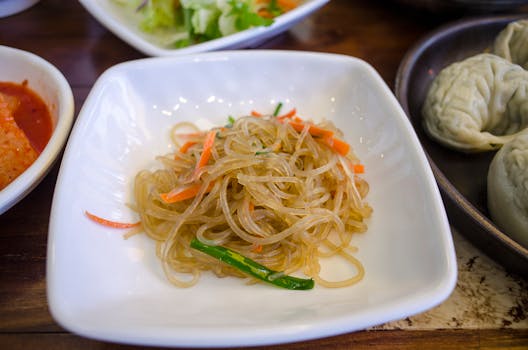
The diets react (see scores below)
Common Ingredients
- sweet potato noodles
- beef
- spinach
- carrots
- onion
- mushrooms
- soy sauce
- sesame oil
Specific recipes may vary.
Incompatible with 6 of 11 diets
Diet Ratings
Japchae is fundamentally incompatible with a ketogenic diet due to its primary ingredient: sweet potato noodles (dangmyeon). These glass noodles are made from sweet potato starch and are almost pure carbohydrate with virtually no fiber, delivering approximately 30-35g of net carbs per 100g serving. A standard serving of Japchae easily contains 40-60g of net carbs from the noodles alone, which single-handedly exceeds the entire daily keto carb budget. The remaining vegetables (carrots, onion) add modest additional carbs, and soy sauce may contain trace sugars. The beef and sesame oil are keto-friendly components, but they cannot redeem a dish built around a high-glycemic starch noodle base.
Japchae as listed contains beef, which is an animal product and strictly excluded from a vegan diet. While the base of this dish — sweet potato glass noodles, spinach, carrots, onion, mushrooms, soy sauce, and sesame oil — is entirely plant-based, the inclusion of beef makes this version non-vegan. A vegan adaptation is straightforward: simply omit the beef or substitute with tofu, tempeh, or additional mushrooms.
Japchae contains multiple non-paleo ingredients that disqualify it clearly. Soy sauce is a processed, grain-based condiment (fermented wheat and soy) and a legume derivative — both grain and legume categories are firmly excluded from paleo. Sesame oil is a seed oil, also excluded. Sweet potato noodles (glass noodles/dangmyeon), while derived from sweet potatoes, are a heavily processed starch product — stripped of fiber and nutrients, they function more like a refined carbohydrate than a whole food. The vegetables (spinach, carrots, onion, mushrooms) and beef are paleo-compliant, but the core structural and flavoring components of this dish are incompatible with paleo principles.
Japchae contains several Mediterranean-friendly elements: abundant vegetables (spinach, carrots, onion, mushrooms) and a vegetable-forward preparation style align well with plant-emphasis principles. However, sweet potato glass noodles are a refined starch with little fiber or whole-grain benefit, and sesame oil—while a healthy unsaturated fat—is not olive oil, the canonical Mediterranean fat. The inclusion of beef as the primary protein is the most problematic element; red meat is permitted only a few times per month in strict Mediterranean guidelines. The overall dish is relatively light on beef (typically used in small amounts as a flavor accent in Japchae), which partially mitigates concern. Soy sauce adds sodium but is not inherently contradictory. The dish lands in caution territory: the vegetable richness is a genuine positive, but the combination of refined noodles, non-olive oil fat, and red meat keeps it from approval.
Some Mediterranean diet interpreters would score this lower (toward avoid) given the refined glass noodles and red meat combination, noting that traditional Mediterranean clinical guidelines (e.g., PREDIMED framework) strictly limit red meat regardless of quantity. Conversely, a more flexible 'Mediterranean eating pattern' lens might focus on the vegetable density and unsaturated fat profile of sesame oil, pushing toward a higher caution or borderline approval if beef is used as a minor garnish rather than a main protein.
Japchae is fundamentally incompatible with the carnivore diet. The dish is dominated by plant-based ingredients: sweet potato noodles (starch/carbohydrate), spinach, carrots, onion, and mushrooms are all plant foods explicitly excluded from carnivore. Soy sauce is a fermented soy (legume/grain) product, and sesame oil is a plant-derived oil — both strictly forbidden. While the dish does contain beef, it is a minor component in a predominantly plant-based preparation. No modification short of removing every ingredient except the beef would make this carnivore-compatible, at which point it would no longer be Japchae.
Japchae contains two problematic ingredients under Whole30 rules. First, soy sauce is excluded because it contains soy (a legume) and typically wheat (a grain) — both are on the excluded list. Coconut aminos can substitute for soy sauce, but the dish as listed uses soy sauce. Second, and critically, sweet potato noodles (dangmyeon) are a noodle/pasta product, which falls squarely into the 'no recreating pasta or noodles' rule under the program's Rule 4 prohibition on noodles and pasta, even when made from compliant ingredients like sweet potato starch. The remaining ingredients — beef, spinach, carrots, onion, mushrooms, and sesame oil — are all Whole30-compliant.
Japchae contains multiple high-FODMAP ingredients that make it unsuitable during the elimination phase. Onion is one of the highest-FODMAP foods tested by Monash University, containing significant fructans at any cooking amount used in a dish. Mushrooms (typically shiitake in japchae) are high in polyols (mannitol) and are high-FODMAP at standard serving sizes. Together, these two ingredients alone would make this dish a clear avoid. Additionally, traditional soy sauce contains wheat (a fructan source), though tamari or gluten-free soy sauce could substitute. Sweet potato glass noodles (dangmyeon) are themselves low-FODMAP, as is beef, spinach, carrots, and sesame oil. However, the onion and mushroom content cannot be omitted without fundamentally changing the dish, making standard Japchae incompatible with the elimination phase.
Japchae features several DASH-friendly components — spinach, carrots, onion, and mushrooms are excellent vegetable sources of potassium, magnesium, and fiber. Sweet potato noodles are gluten-free and relatively low in sodium. Lean beef in moderate portions is acceptable on DASH. However, soy sauce is a significant sodium concern: a typical japchae recipe uses 2-4 tablespoons, contributing 500–1,000mg+ sodium per serving, pushing the dish toward the upper limits of DASH sodium targets. Sesame oil adds some unsaturated fat (generally acceptable) but also caloric density. The dish is not inherently incompatible with DASH but requires meaningful modifications — notably low-sodium soy sauce and portion-controlled beef — to fit comfortably within DASH guidelines. As commonly prepared in Korean cuisine, the sodium load tips this into 'caution' territory rather than approval.
NIH DASH guidelines flag high-sodium condiments like standard soy sauce as problematic; however, updated clinical interpretations note that when low-sodium soy sauce is substituted and the overall dietary pattern is DASH-compliant, dishes like japchae can be reasonably incorporated — the vegetable density and lean protein profile align well with DASH principles in that context.
Japchae presents a mixed Zone profile. The vegetable components — spinach, carrots, onion, and mushrooms — are excellent low-glycemic, polyphenol-rich Zone-favorable carbs. Beef provides the protein block, though it should be lean cuts (e.g., sirloin or round) to minimize saturated fat. Sesame oil is technically an omega-6-heavy oil, which Sears discourages, though small amounts in Korean cooking are manageable. The central challenge is the sweet potato noodles (dangmyeon): they are a moderate-to-high glycemic starch with significant net carbs per serving, making them an 'unfavorable' Zone carbohydrate similar to pasta or rice. Traditional Japchae servings are noodle-heavy, which would push carb blocks well past Zone ratios and spike insulin. However, the dish can be adapted for Zone compliance by dramatically reducing the noodle portion (treating noodles as a minor component rather than the base), increasing the vegetable volume, ensuring lean beef is portioned to ~25g protein, and limiting sesame oil to stay within fat block targets. As typically served in restaurants or homes, the noodle-to-vegetable ratio makes it Zone-unfavorable without modification. With intentional portioning, it becomes a viable Zone meal.
Some Zone practitioners and later Sears writings place more emphasis on overall glycemic load and anti-inflammatory ingredients rather than strict 'favorable/unfavorable' carb lists. In that framing, sweet potato noodles — which have a lower glycemic index than wheat pasta and contain resistant starch — may be more acceptable than traditional Zone block counting suggests, especially given the dish's rich polyphenol content from mushrooms, spinach, and sesame. A practitioner focused on Sears' later Zone anti-inflammatory model (as in 'The Anti-Inflammation Zone') might rate this more favorably if portions are reasonable.
Japchae is a Korean glass noodle stir-fry with a notably mixed anti-inflammatory profile. On the positive side, the dish is rich in anti-inflammatory vegetables: spinach provides folate, lutein, and antioxidants; carrots contribute beta-carotene; onions supply quercetin; and mushrooms (likely shiitake or similar) are among the most emphasized foods in anti-inflammatory protocols for their beta-glucans and immune-modulating properties. Sesame oil adds vitamin E and lignans with mild antioxidant activity, and the sweet potato noodles (dangmyeon) are gluten-free, low-glycemic relative to wheat noodles, and lower in inflammatory potential than refined white pasta. Soy sauce in typical cooking quantities is largely neutral. The primary concern is beef as the protein source — red meat is categorized as 'limit' in anti-inflammatory frameworks due to saturated fat content and arachidonic acid, which can promote inflammatory eicosanoids. However, beef in Japchae is typically used in modest quantities as one component among many vegetables, which softens this concern considerably. Sesame oil, while beneficial in small amounts, is relatively high in omega-6 (linoleic acid) compared to extra virgin olive oil, which may be a minor concern for those closely managing omega-6 intake. Overall, the vegetable-forward composition and anti-inflammatory ingredients meaningfully offset the red meat and sesame oil concerns, placing this dish solidly in the 'caution/acceptable in moderation' range rather than a clear avoid.
Most anti-inflammatory practitioners would consider Japchae acceptable given its vegetable density and modest beef portion — Dr. Weil's framework permits red meat occasionally and emphasizes overall dietary pattern. However, stricter anti-inflammatory protocols (such as those targeting autoimmune conditions) might flag both the beef and the sesame oil's omega-6 load, and would suggest substituting chicken, tofu, or tempeh and using extra virgin olive oil instead.
Japchae is a mixed dish with several GLP-1-friendly components — spinach, carrots, onion, and mushrooms provide fiber and micronutrients, and beef adds meaningful protein. However, the base ingredient — sweet potato glass noodles (dangmyeon) — is a refined starch with very low protein and fiber density, and it dominates the dish by volume. A standard serving of japchae is largely noodle-forward, meaning protein per calorie is relatively low unless beef is portioned generously. Sesame oil contributes unsaturated fat, which is the preferred fat type, but adds caloric density in a dish where every calorie needs to count. Soy sauce is high in sodium, which matters for hydration balance. The dish is generally easy to digest (soft noodles, lightly stir-fried vegetables), which is a positive. Overall, japchae is acceptable in moderation — particularly if the beef-to-noodle ratio is increased and portions are kept small — but it is not a high-protein, high-fiber GLP-1 staple.
Some GLP-1-focused dietitians accept japchae as a reasonable meal choice because the vegetable variety supports fiber intake and the dish is soft and easy on a slowed GI tract; others flag the noodle base as an essentially empty-calorie filler that displaces higher-value protein and fiber sources in a reduced-appetite context where volume capacity is limited.
*See how scores were generated at our methodology page.
Nutritional profile
Six traits that cut across every diet.
Fiber & Plants
How much whole-plant food and fiber it delivers.
Healthy Fats
The quality of its fats (unsaturated, omega-3).
Whole / Unprocessed
How close it is to its natural, unprocessed form.
Gut Gentle
How easy it is on digestion (low FODMAP, few irritants).
Low Glycemic
How little it spikes your blood sugar.
Protein Density
How much protein it packs per calorie.
Controversy Index
Higher controversy = more disagreement between diets.
Diet-Specific Tips
 Mediterranean — 5/10
View tips
- High vegetable content (spinach, carrots, mushrooms, onion) aligns with plant-forward principles
- Beef as primary protein conflicts with Mediterranean red meat restriction (few times/month)
- Sweet potato glass noodles are refined starch, not a whole grain
- Sesame oil is a healthy unsaturated fat but not the preferred extra virgin olive oil
- Dish is typically low in saturated fat overall due to small beef portions
- No added sugars or heavily processed ingredients
 DASH — 5/10
View tips
- High sodium from soy sauce (500–1,000mg+ per serving depending on preparation)
- Excellent vegetable variety: spinach, carrots, mushrooms, onion — rich in potassium and magnesium
- Sweet potato noodles are low-sodium and provide some fiber
- Lean beef in moderate portions is DASH-acceptable
- Sesame oil contributes unsaturated fat, acceptable in small amounts
- Low-sodium soy sauce substitution would significantly improve DASH compatibility
- Red meat (beef) should remain a limited component per DASH guidelines
 Zone — 5/10
View tips
- Sweet potato noodles are a moderate-to-high glycemic 'unfavorable' Zone carb and are the dominant ingredient by volume
- Spinach, carrots, onion, and mushrooms are excellent Zone-favorable low-glycemic carb sources
- Beef provides lean protein but must be a lean cut to minimize saturated fat
- Sesame oil is omega-6-rich, which Sears discourages; small amounts are acceptable but Zone prefers olive oil or avocado oil
- Traditional serving ratios are noodle-heavy, making Zone macro balance difficult without significant portioning adjustments
- Dish can be Zone-adapted by reducing noodles to 1 small block serving and increasing vegetable volume
 Anti-Inflammatory — 6/10
View tips
- Beef (red meat) is a 'limit' food in anti-inflammatory diets due to saturated fat and arachidonic acid
- Mushrooms are strongly anti-inflammatory (beta-glucans, immune modulation)
- Spinach, carrots, and onion provide antioxidants, carotenoids, and quercetin
- Sweet potato noodles are gluten-free with a moderate glycemic profile — better than refined wheat noodles
- Sesame oil contributes omega-6 fatty acids; better options would be extra virgin olive oil
- Beef portion in Japchae is typically small relative to the vegetable and noodle volume
- Soy sauce in culinary quantities is largely neutral; high sodium is a minor concern
 GLP-1 Friendly — 5/10
View tips
- Sweet potato glass noodles are low in protein and fiber, reducing nutrient density per calorie
- Beef and vegetables provide meaningful protein and fiber but are secondary in volume to the noodles
- Sesame oil is a preferred unsaturated fat but adds caloric density
- Soft texture and lightly cooked vegetables are easy to digest — a positive for GLP-1 patients
- High sodium from soy sauce warrants attention given reduced fluid intake on GLP-1s
- Dish can be optimized by increasing beef proportion and reducing noodle volume