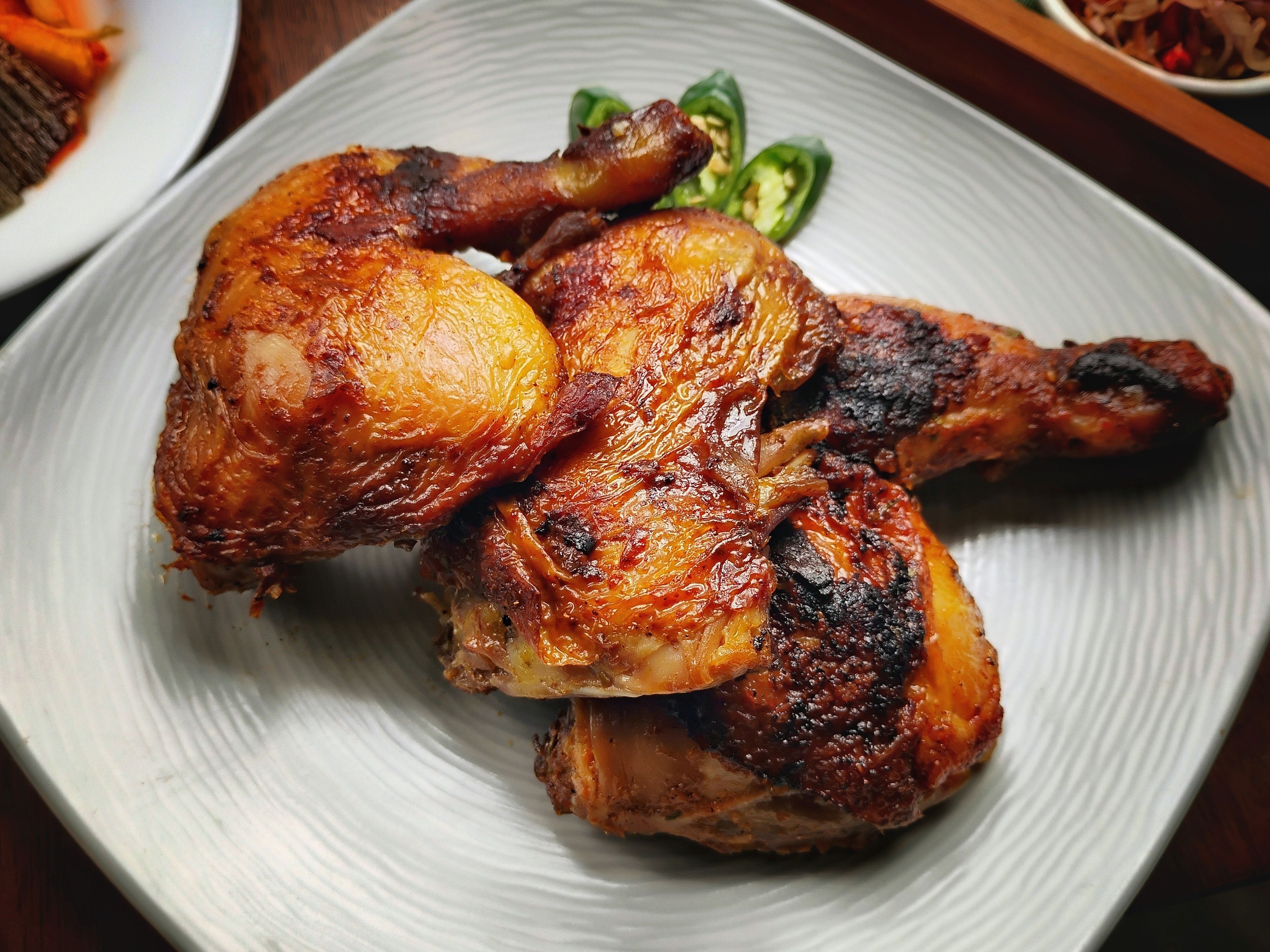
Photo: kandhi bharata / Pexels
Caribbean
Jamaican Jerk Chicken
The diets react (see scores below)
Common Ingredients
- chicken
- Scotch bonnet
- allspice
- thyme
- scallions
- garlic
- brown sugar
- soy sauce
Specific recipes may vary.
Incompatible with 5 of 11 diets
Diet Ratings
Jamaican Jerk Chicken is built on a keto-friendly base — chicken is an excellent protein source with zero carbs, and spices like allspice, thyme, garlic, scallions, and Scotch bonnet are low-carb aromatics. However, traditional jerk marinade includes brown sugar, which is a direct source of added sugar incompatible with strict keto. Soy sauce also adds a small amount of carbs and often contains wheat. The dish is not outright disqualifying, but the brown sugar is a real concern. A modified version substituting brown sugar with a keto sweetener (e.g., erythritol or monk fruit) and using tamari instead of soy sauce would be fully approvable. As prepared with traditional ingredients, portion size and marinade concentration matter — a lightly marinated piece is manageable within daily carb limits, but heavy application could push net carbs higher.
Lazy keto and moderate keto practitioners often allow small amounts of brown sugar in marinades, arguing that the per-serving carb contribution after cooking is minimal and fits within a 50g daily carb ceiling. Strict keto and zero-sugar protocols, however, reject any added sugar outright regardless of quantity, disqualifying traditional jerk preparations entirely.
Jamaican Jerk Chicken contains chicken as its primary protein, which is poultry — a direct animal product explicitly excluded under all vegan dietary frameworks. There is no ambiguity here. The remaining ingredients (Scotch bonnet, allspice, thyme, scallions, garlic, brown sugar, soy sauce) are all plant-derived and would be vegan-compliant, but the dish is defined by and inseparable from its animal protein. No version of this specific dish, as named and described, qualifies as vegan.
Jamaican Jerk Chicken contains two clear non-paleo ingredients that disqualify it outright. Soy sauce is a fermented soy and wheat product — both legume and grain derivatives are strictly excluded from the paleo diet. Brown sugar is refined sugar, another firm exclusion. The base of the dish is otherwise solid: chicken is a cornerstone paleo protein, and Scotch bonnet peppers, allspice, thyme, scallions, and garlic are all whole, paleo-approved herbs, spices, and aromatics. However, the presence of soy sauce and brown sugar in the marinade means the dish as described cannot be approved or even flagged as caution — both ingredients are unambiguous violations with strong consensus across all major paleo authorities.
Jamaican Jerk Chicken is built around poultry (chicken), which the Mediterranean diet permits in moderate amounts — a few servings per week. The spice and herb profile (Scotch bonnet, allspice, thyme, scallions, garlic) is rich in plant-based aromatics that align well with Mediterranean flavor principles. However, the dish is not Mediterranean in origin and includes brown sugar and soy sauce — both non-traditional additions that introduce added sugar and high sodium, elements the Mediterranean diet discourages. The absence of olive oil as the cooking fat is also a departure from Mediterranean norms. Overall, the chicken base is acceptable in moderation, but the marinade components temper the score.
Some Mediterranean diet practitioners take a flexible, whole-foods approach and would view this dish more favorably, noting that the abundant use of garlic, herbs, and spices mirrors Mediterranean cooking philosophy, and that small amounts of added sugar in a marinade are negligible in the context of an otherwise balanced diet. Regional Mediterranean cuisines (e.g., North African) also embrace bold spice profiles similar to jerk seasoning.
Jamaican Jerk Chicken is fundamentally incompatible with the carnivore diet. While chicken itself is an animal product, this dish is defined by its marinade and seasoning blend, which consists almost entirely of plant-based ingredients: Scotch bonnet peppers, allspice, thyme, scallions, garlic, and brown sugar. Brown sugar is a refined carbohydrate with zero place on carnivore, and soy sauce is a fermented plant-based condiment (soy and wheat) that further disqualifies this dish. The jerk preparation is inseparable from these plant-derived components — removing them would leave plain chicken, not jerk chicken. This dish scores at the very bottom of carnivore compatibility.
This Jamaican Jerk Chicken recipe contains two clearly excluded ingredients: brown sugar (an added sugar) and soy sauce (a soy/legume-derived product). Both are explicitly prohibited on the Whole30 program. The remaining ingredients — chicken, Scotch bonnet peppers, allspice, thyme, scallions, and garlic — are all fully compliant. To make this dish Whole30-compatible, brown sugar would need to be omitted entirely and soy sauce replaced with coconut aminos.
Jamaican Jerk Chicken contains two well-established high-FODMAP ingredients that make it unsuitable during the elimination phase. Garlic is one of the highest-FODMAP foods tested by Monash University, containing significant fructans even in very small amounts. Scallions (green onions) are also high in fructans in their white bulb portions — only the green tops are low-FODMAP. Soy sauce traditionally contains wheat (fructans), adding another fructan source. Brown sugar in small quantities is generally low-FODMAP, but the combination of garlic and scallion bulbs alone is sufficient to classify this dish as high-FODMAP. The Scotch bonnet pepper, allspice, thyme, and chicken itself are all low-FODMAP. A modified version using garlic-infused oil instead of garlic, only the green tops of scallions, and tamari (gluten-free soy sauce) instead of regular soy sauce could make this dish low-FODMAP.
Jamaican Jerk Chicken features a lean protein base (chicken) that is core to the DASH diet, and the spice blend includes several DASH-friendly ingredients — garlic, scallions, thyme, and allspice contribute flavor without problematic nutrients. However, soy sauce is a significant sodium concern: a typical jerk marinade can contain 400–800mg or more of sodium per serving from soy sauce alone, pushing toward or past DASH daily limits depending on portion and recipe. Brown sugar adds modest amounts of added sugar, which DASH advises limiting. The dish is not inherently disqualifying — lean chicken is encouraged, and the aromatic spice-heavy approach to flavoring is consistent with DASH's emphasis on herbs and spices over salt — but the sodium load from soy sauce and residual sugar content place it in the caution zone. Using low-sodium soy sauce and reducing sugar would improve the score meaningfully.
NIH DASH guidelines flag high-sodium condiments like soy sauce as problematic and would rate this dish cautiously due to sodium content. However, updated clinical interpretations note that the overall sodium per serving depends heavily on marinade-to-meat ratio and cooking method (grilling allows marinade to drip off), and some DASH-oriented dietitians consider jerk chicken an acceptable lean protein preparation if low-sodium soy sauce is substituted, potentially scoring it as a moderate approve.
Jamaican Jerk Chicken is built around skinless chicken, which is an ideal Zone protein source — lean, easy to portion into blocks (~7g protein per block), and naturally low in saturated fat. The spice base (Scotch bonnet, allspice, thyme, scallions, garlic) is essentially calorie-neutral and anti-inflammatory, aligning well with Sears' polyphenol and phytonutrient emphasis. The main Zone concerns are the brown sugar and soy sauce. Brown sugar adds glycemic load and nudges the carb profile upward in an unfavorable direction, and soy sauce contributes sodium and a small amount of omega-6. However, in typical jerk marinade quantities, brown sugar contributes only a few grams of carbohydrate per serving — manageable within a Zone block structure if portioned carefully. Paired with a low-glycemic carb side (e.g., non-starchy vegetables or a small serving of legumes), this dish can fit comfortably into a Zone-balanced meal. The protein core is strong, and the dish avoids problematic fats entirely. The primary adjustment needed is being mindful of the brown sugar quantity and accounting for it in carb blocks.
Some Zone practitioners would rate this more cautiously due to the brown sugar, which Sears classifies as an 'unfavorable' carbohydrate. In stricter interpretations of Enter the Zone, added sugars — even in small marinade quantities — are discouraged as they spike insulin. Additionally, soy sauce contains soy, which has estrogenic phytoestrogen compounds that Sears' later anti-inflammatory writings occasionally flag. A conservative Zone approach might suggest substituting the brown sugar with a small amount of a lower-GI sweetener or simply reducing the quantity significantly.
Jamaican Jerk Chicken sits in a solid middle ground on the anti-inflammatory spectrum. On the positive side, the spice profile is genuinely impressive: allspice contains eugenol, a well-documented anti-inflammatory compound; thyme provides rosmarinic acid and flavonoids; garlic delivers allicin and organosulfur compounds; and Scotch bonnet peppers are extremely high in capsaicin, one of the most researched natural anti-inflammatory and analgesic compounds. Scallions add quercetin and prebiotic fiber. The primary protein is lean poultry (chicken), which is explicitly in the 'moderate' category — acceptable and far preferable to red meat. The concerns are the brown sugar (added sugar is pro-inflammatory) and soy sauce (high sodium, typically containing additives and refined wheat). These are not dealbreakers in the context of a full dish, where they function as condiments rather than primary ingredients, but they do prevent this from reaching 'approve' territory. The overall dish is far more anti-inflammatory than it is inflammatory, largely redeemed by an exceptional spice blend. Typical restaurant or homemade portions would represent a net-neutral to mildly beneficial meal when paired with vegetables.
Most anti-inflammatory practitioners would view this dish favorably given its spice richness and lean protein base — Dr. Weil's framework explicitly endorses chili peppers, garlic, and thyme. However, some stricter AIP (Autoimmune Protocol) adherents would flag Scotch bonnet and allspice as nightshade-adjacent irritants or as triggers for sensitive individuals, and would also caution against soy sauce due to its wheat content and sodium load affecting gut integrity.
Jamaican Jerk Chicken is built on a lean protein base (chicken), which strongly aligns with GLP-1 dietary priorities. The spice blend — allspice, thyme, garlic, scallions — is nutrient-dense and low-calorie. However, two ingredients introduce meaningful concerns for GLP-1 patients. Scotch bonnet peppers are among the hottest commonly used culinary chilies and can significantly worsen GLP-1-related nausea, acid reflux, and GI irritation, particularly in patients already experiencing slowed gastric emptying. Brown sugar adds modest but unnecessary empty calories and glycemic load with no nutritional benefit. Soy sauce contributes high sodium, which can affect fluid retention and blood pressure — a relevant concern when patients are eating less overall but may be consuming concentrated condiments. The dish scores well on protein density and lean meat sourcing, but the spice intensity is the primary limiting factor. A mild version prepared with reduced Scotch bonnet and no added sugar would rate significantly higher (7-8). As prepared in a traditional recipe, caution is warranted.
Some GLP-1-focused dietitians take a permissive view on spicy foods, noting that individual heat tolerance varies widely and that capsaicin may offer modest metabolic benefits; they would approve a standard jerk preparation for patients who tolerated spicy food well before starting medication. Others apply a stricter position, arguing that GLP-1-slowed gastric emptying meaningfully amplifies GI irritation from hot peppers even in previously tolerant patients, and would recommend avoiding Scotch bonnet-based dishes entirely during the adjustment period.
*See how scores were generated at our methodology page.
Nutritional profile
Six traits that cut across every diet.
Fiber & Plants
How much whole-plant food and fiber it delivers.
Healthy Fats
The quality of its fats (unsaturated, omega-3).
Whole / Unprocessed
How close it is to its natural, unprocessed form.
Gut Gentle
How easy it is on digestion (low FODMAP, few irritants).
Low Glycemic
How little it spikes your blood sugar.
Protein Density
How much protein it packs per calorie.
Controversy Index
Higher controversy = more disagreement between diets.
Diet-Specific Tips
 Keto — 5/10
View tips
- Brown sugar is a direct added sugar — incompatible with strict keto
- Standard soy sauce contains wheat and small carbs; tamari is a better swap
- Chicken is an ideal keto protein with zero net carbs
- Spices and aromatics (allspice, thyme, Scotch bonnet, garlic) are keto-safe in typical quantities
- Marinade concentration and portion size determine actual carb impact
- Easily modified to be fully keto-compliant with sweetener and soy sauce substitutions
 Mediterranean — 5/10
View tips
- Chicken is an acceptable moderate protein in the Mediterranean diet
- Brown sugar adds unnecessary refined sugar, contradicting Mediterranean principles
- Soy sauce introduces high sodium, not aligned with Mediterranean guidelines
- No olive oil used as primary fat — a key Mediterranean pillar is absent
- Garlic, thyme, scallions, and hot peppers are plant-forward aromatics consistent with Mediterranean cooking
- Non-Mediterranean cuisine origin means the dish doesn't reflect traditional Mediterranean patterns
 DASH — 5/10
View tips
- Lean chicken protein is core to DASH and strongly positive
- Soy sauce contributes significant sodium — major concern for DASH sodium limits
- Brown sugar adds small but non-negligible amounts of added sugar
- Garlic, thyme, scallions, allspice are DASH-compatible flavor enhancers
- Grilling method is DASH-friendly (no added saturated fat from frying)
- Low-sodium soy sauce substitution would substantially improve DASH compatibility
- No saturated fat concerns from the protein or marinade ingredients
 Zone — 7/10
View tips
- Chicken is an ideal Zone lean protein — easy to portion at ~25g protein per meal
- Scotch bonnet and spices are polyphenol-rich and anti-inflammatory, aligning with Sears' later Zone dietary emphasis
- Brown sugar is an 'unfavorable' Zone carbohydrate — contributes glycemic load, though marinade quantities are typically small
- Soy sauce adds sodium and minor omega-6, but in negligible fat quantities
- No problematic fats present — dish is naturally low in saturated and trans fats
- Needs low-glycemic carb and monounsaturated fat accompaniments to complete Zone block ratios
- Overall macro profile is favorable if brown sugar is minimized and dish is plated with appropriate Zone sides
 Anti-Inflammatory — 6/10
View tips
- Scotch bonnet peppers are very high in capsaicin — a well-researched anti-inflammatory compound
- Allspice provides eugenol, with documented anti-inflammatory properties
- Garlic and thyme contribute allicin and rosmarinic acid respectively
- Lean chicken is an acceptable moderate protein on anti-inflammatory frameworks
- Brown sugar adds refined/added sugar, a pro-inflammatory ingredient
- Soy sauce contributes high sodium and refined additives; a small amount as a marinade ingredient is not a major concern but is not beneficial
- Net profile is positive but not strongly enough to 'approve' due to added sugar and sodium concerns
 GLP-1 Friendly — 5/10
View tips
- Lean chicken protein strongly supports GLP-1 protein priority (#1 rule)
- Scotch bonnet peppers are very high heat and a meaningful GLP-1 GI risk (nausea, reflux, irritation)
- Brown sugar adds empty calories and glycemic load with no nutritional upside
- High sodium from soy sauce is a secondary concern on reduced-calorie intake
- No fiber-rich ingredients in the listed recipe — fiber priority (#2) is unmet
- Dish rates significantly higher if Scotch bonnet is reduced and sugar is omitted
- Preparation method matters — grilled or baked jerk chicken is preferred over fried variants
Community
Healthiest Jamaican Jerk Chicken recipes
One scanned recipe so far — scan yours to see how it stacks up.
Scan your Jamaican Jerk Chicken recipe →