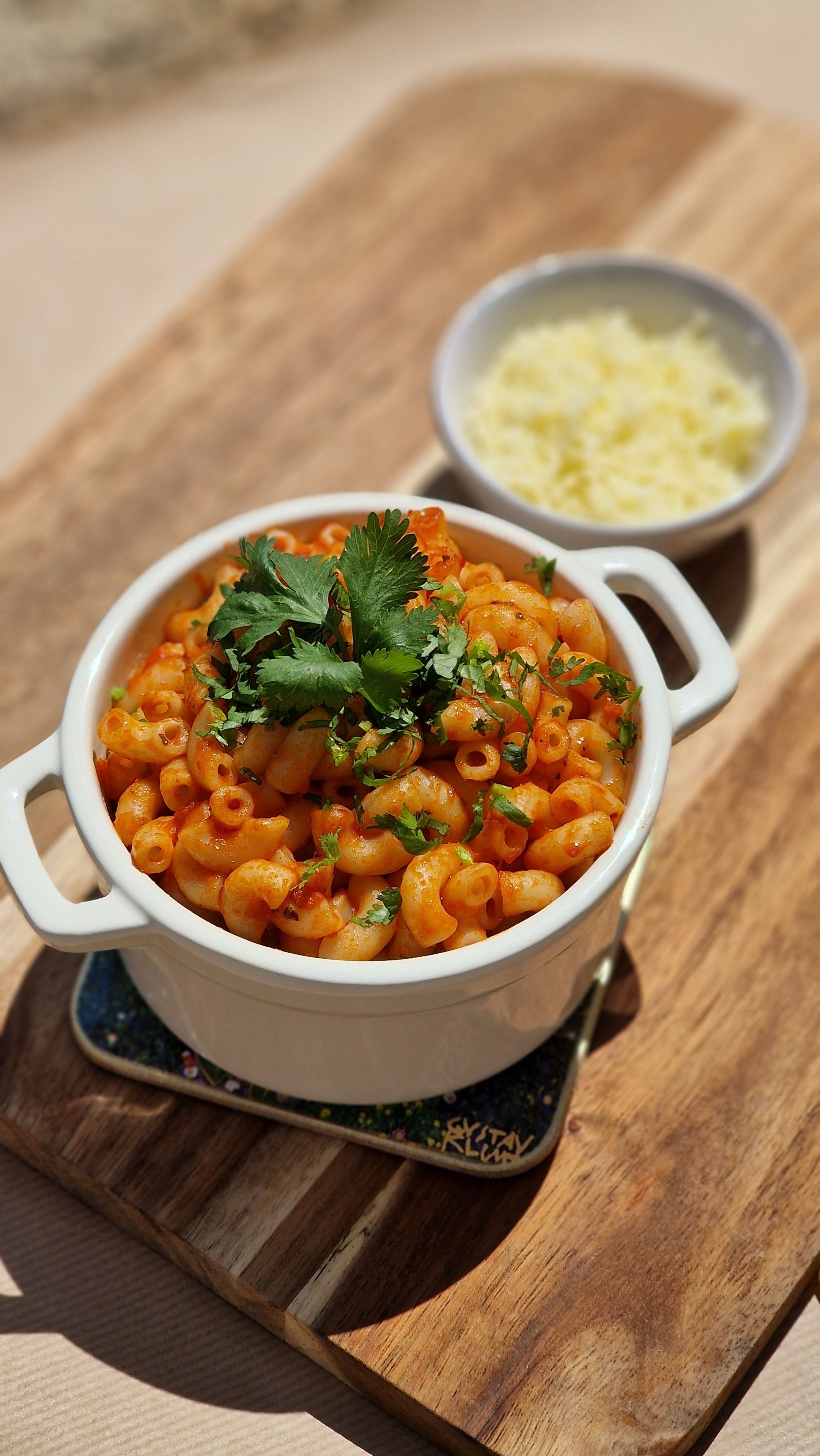
Photo: Nour Alhoda / Pexels
American
Johnny Marzetti
The diets react (see scores below)
Common Ingredients
- elbow macaroni
- ground beef
- tomato sauce
- cheddar cheese
- onion
- green bell pepper
- garlic
- Italian seasoning
Specific recipes may vary.
Incompatible with 7 of 11 diets
Diet Ratings
Johnny Marzetti is built around elbow macaroni, a refined grain pasta that delivers approximately 40-45g of net carbs per cup cooked — easily exceeding the entire daily keto carb budget in a single serving. There is no practical portion size that makes this dish keto-compatible. The tomato sauce adds additional net carbs (sugars from tomatoes), and while the ground beef and cheddar cheese are keto-friendly components, they cannot offset the massive carbohydrate load from the pasta base. This dish is fundamentally a pasta casserole and is incompatible with ketosis.
Johnny Marzetti contains multiple animal-derived ingredients that are entirely incompatible with a vegan diet. Ground beef is a direct animal product (mammal flesh), and cheddar cheese is a dairy product made from animal milk. Both are explicitly excluded under all definitions of veganism. The remaining ingredients — elbow macaroni, tomato sauce, onion, green bell pepper, garlic, and Italian seasoning — are plant-based, but the dish as described cannot be considered vegan in any meaningful sense due to the two core animal-product components.
Johnny Marzetti is fundamentally incompatible with the paleo diet. The dish is built on two major non-paleo foundations: elbow macaroni (a wheat-based grain pasta) and cheddar cheese (dairy). Both are explicitly excluded under core paleo principles with high consensus. Grains are avoided due to their anti-nutrient content (lectins, gluten, phytates) and absence from the Paleolithic diet, while dairy is excluded as a post-agricultural food. The remaining ingredients — ground beef, tomato sauce, onion, green bell pepper, garlic, and Italian seasoning — are paleo-compliant, but they represent a minority of the dish's structure and character. The dish cannot be considered paleo in any meaningful sense without losing its identity entirely.
Johnny Marzetti is a classic American comfort casserole that conflicts with Mediterranean diet principles on multiple fronts. The primary protein is ground beef, a red meat that should be limited to only a few times per month in the Mediterranean pattern. The base is elbow macaroni, a refined grain with no fiber benefit compared to whole grain alternatives. Cheddar cheese adds saturated fat beyond the modest dairy allowances typical of the diet. While the dish does include onion, green bell pepper, garlic, and tomato sauce — genuinely Mediterranean-friendly aromatics and vegetables — these are insufficient to offset the core structural problems. There is no olive oil, no legumes, no whole grains, and no fish or plant-forward protein. The overall profile is high in saturated fat, built on refined carbohydrates, and centered on a protein source explicitly limited in the Mediterranean framework.
Johnny Marzetti is fundamentally incompatible with the carnivore diet. The dish is built around elbow macaroni, a grain-based pasta that is entirely plant-derived and excluded on all tiers of carnivore eating. Beyond the pasta, the recipe contains multiple additional plant foods: tomato sauce (plant-derived, often with added sugar), onion, green bell pepper, garlic, and Italian seasoning — all strictly prohibited. While the dish does contain ground beef and cheddar cheese, both of which have carnivore-compatible counterparts, they are outnumbered and outweighed by plant ingredients. This is a classic American casserole that is essentially a plant-heavy carbohydrate dish with meat added. No meaningful modification short of completely rebuilding the recipe would make it carnivore-appropriate.
Johnny Marzetti contains multiple Whole30-excluded ingredients. Elbow macaroni is a grain-based pasta, which is explicitly excluded under the grains rule. Cheddar cheese is dairy, which is also explicitly excluded. These two ingredients alone make this dish firmly non-compliant, regardless of the other ingredients (ground beef, tomato sauce, onion, green bell pepper, garlic, and Italian seasoning, which are all compliant on their own).
Johnny Marzetti contains multiple high-FODMAP ingredients that make it unsuitable during the elimination phase. The most significant offenders are: (1) onion — one of the highest fructan-containing foods, high-FODMAP even in tiny amounts; (2) garlic — extremely high in fructans, high-FODMAP at any culinary quantity; (3) elbow macaroni — standard wheat pasta is high in fructans (a gluten-free pasta substitute would be needed). Additionally, canned/jarred tomato sauce often contains onion and garlic as ingredients, compounding the fructan load. Green bell pepper is low-FODMAP at small servings (up to 52g per Monash), and ground beef, cheddar cheese (hard cheese), and Italian seasoning herbs are generally low-FODMAP. However, the combination of wheat pasta + onion + garlic makes this dish clearly high-FODMAP as traditionally prepared, with no realistic portion size that would render it safe during elimination.
Johnny Marzetti is a classic American casserole combining refined pasta, ground beef, tomato sauce, cheddar cheese, and vegetables. From a DASH perspective, it has both positive and negative elements. The onion, green bell pepper, and garlic are DASH-friendly vegetables, and tomato sauce provides potassium and lycopene. However, the dish has several concerns: ground beef is a red meat that DASH limits due to saturated fat content; cheddar cheese is full-fat dairy, which DASH discourages; elbow macaroni is a refined grain rather than a whole grain; and canned tomato sauce typically carries significant sodium (400-700mg per half cup). The combination of red meat, full-fat cheese, and likely high sodium from tomato sauce places this dish firmly in caution territory rather than avoid, because vegetables are present and portions can be managed. With modifications — whole wheat pasta, lean ground turkey or 93% lean beef, low-sodium tomato sauce, and reduced-fat cheese — the dish could score considerably higher. As commonly prepared, it is acceptable only in modest portions and infrequent consumption.
NIH DASH guidelines specifically limit red meat and full-fat dairy, which are central to this dish. However, some updated DASH-aligned clinical dietitians note that lean ground beef (90%+ lean) in controlled portions fits within the DASH allowance for lean meats, and that the vegetable components meaningfully contribute to DASH nutrient targets — making occasional consumption with low-sodium tomato sauce more acceptable than a strict reading would suggest.
Johnny Marzetti is a classic American casserole that presents multiple Zone Diet challenges. The base is elbow macaroni — a high-glycemic refined carbohydrate that Dr. Sears classifies as 'unfavorable' and recommends minimizing. Ground beef, while a legitimate protein source, is higher in saturated fat than Zone-preferred lean proteins like skinless chicken or fish. Cheddar cheese adds additional saturated fat. On the positive side, the dish does contain Zone-favorable vegetables (onion, green bell pepper, garlic) and tomato sauce provides polyphenols and some anti-inflammatory benefit. The 40/30/30 ratio is severely skewed by the pasta-heavy base — a typical serving delivers far too many high-GI carbohydrates relative to protein and fat, and the fat profile leans saturated rather than monounsaturated. In Zone terminology, this is a collection of 'unfavorable' carbs and moderately unfavorable protein-fat sources. However, it is not categorically impossible to adapt: using a very small pasta portion (or substituting whole-grain pasta), lean ground beef or turkey, reduced-fat cheese, and bulking up with additional vegetables could bring it closer to Zone balance. As served in its traditional form, it scores low caution.
Johnny Marzetti is a classic American comfort casserole with a mixed inflammatory profile. On the negative side: elbow macaroni is a refined carbohydrate with a high glycemic index and minimal fiber, which can drive inflammatory markers; ground beef (especially conventional, higher-fat varieties) contributes saturated fat and arachidonic acid, both associated with pro-inflammatory pathways; and cheddar cheese adds additional saturated fat. These three ingredients — refined pasta, red meat, and full-fat cheese — are all in the 'limit' category of anti-inflammatory guidelines. On the positive side: onion, green bell pepper, and garlic provide meaningful antioxidants and polyphenols (quercetin, allicin, capsaicin precursors); tomato sauce contributes lycopene, especially when cooked; and Italian seasoning typically includes oregano, basil, and thyme, all with established anti-inflammatory properties. The dish is not a catastrophic inflammatory offender — it lacks trans fats, processed additives, or high-fructose corn syrup — but its foundation of refined carbs, red meat, and cheese makes it incompatible with anti-inflammatory eating as a regular staple. Modifications that would improve the score: substituting whole wheat or legume-based pasta, using lean ground turkey or lentils, reducing or eliminating the cheese, and increasing the vegetable content.
Johnny Marzetti is a classic American casserole combining ground beef, elbow macaroni, tomato sauce, cheddar cheese, and aromatics. It has meaningful protein from ground beef and cheese, and some fiber and micronutrients from tomato sauce, onion, and bell pepper. However, it presents several GLP-1 concerns: ground beef (typically 80/20) carries significant saturated fat, cheddar cheese adds more saturated fat, and elbow macaroni is a refined carbohydrate with low fiber density. The combination of fat and refined starch is hard on a stomach with slowed gastric emptying and can worsen nausea, reflux, and bloating. The dish is also calorie-dense relative to its protein and fiber yield per serving, reducing nutrient density per calorie. It is not inherently off-limits but requires meaningful modifications — leaner ground beef (93/7 or turkey), reduced cheese, whole wheat or high-protein pasta, and smaller portions — to become a reasonable choice on a GLP-1 regimen.
Some GLP-1-focused RDs allow dishes like this in modified form because the combination of protein, carbohydrate, and vegetables in a single small portion can help patients meet protein targets without requiring multiple separate foods. Others flag the saturated fat load and refined grain base as disproportionately problematic given the reduced total calorie budget GLP-1 patients are working with, recommending patients avoid this category of casserole entirely until GI side effects stabilize.
*See how scores were generated at our methodology page.
Nutritional profile
Six traits that cut across every diet.
Fiber & Plants
How much whole-plant food and fiber it delivers.
Healthy Fats
The quality of its fats (unsaturated, omega-3).
Whole / Unprocessed
How close it is to its natural, unprocessed form.
Gut Gentle
How easy it is on digestion (low FODMAP, few irritants).
Low Glycemic
How little it spikes your blood sugar.
Protein Density
How much protein it packs per calorie.
Controversy Index
Higher controversy = more disagreement between diets.
Diet-Specific Tips
 DASH — 4/10
View tips
- Ground beef is a red meat limited by DASH guidelines due to saturated fat
- Cheddar cheese is full-fat dairy, not DASH-recommended low-fat dairy
- Elbow macaroni is a refined grain; whole wheat pasta would be preferred
- Canned tomato sauce often contains high sodium (400-700mg per serving), a key DASH concern
- Onion, bell pepper, and garlic are positive DASH-compatible vegetables
- Dish can be modified significantly to improve DASH compatibility (lean turkey, whole grain pasta, low-sodium sauce, reduced-fat cheese)
- As commonly prepared, saturated fat and sodium together present meaningful cardiovascular concern
 Zone — 4/10
View tips
- Elbow macaroni is a high-glycemic 'unfavorable' carbohydrate in Zone terminology — dominant ingredient by volume
- Ground beef is higher in saturated fat than Zone-preferred lean proteins; lean ground beef (90%+) improves the profile
- Cheddar cheese adds saturated fat, compounding the unfavorable fat profile vs. monounsaturated ideal
- Onion, green bell pepper, garlic, and tomato sauce are Zone-favorable, low-glycemic vegetable contributors
- Traditional serving ratios produce excess carb blocks relative to protein and fat blocks
- Dish is adaptable (whole-grain pasta, lean turkey, reduced cheese, more vegetables) but not Zone-friendly as traditionally prepared
 Anti-Inflammatory — 4/10
View tips
- Elbow macaroni is a refined carbohydrate — high glycemic load, low fiber, pro-inflammatory in regular consumption
- Ground beef provides saturated fat and arachidonic acid, both associated with increased inflammatory markers
- Cheddar cheese adds saturated fat, a 'limit' ingredient in anti-inflammatory frameworks
- Onion, garlic, and green bell pepper contribute quercetin, allicin, and antioxidants with anti-inflammatory activity
- Cooked tomato sauce is a good source of lycopene, an anti-inflammatory carotenoid
- Italian seasoning herbs (oregano, basil, thyme) have documented anti-inflammatory polyphenol content
- No trans fats, artificial additives, or high-fructose corn syrup — a relative positive for a processed-style comfort dish
 GLP-1 Friendly — 4/10
View tips
- Ground beef is typically high in saturated fat — lean substitution (93/7 or ground turkey) is strongly recommended
- Cheddar cheese adds additional saturated fat with limited protein benefit per calorie
- Elbow macaroni is a refined carbohydrate with minimal fiber — whole wheat or legume-based pasta would improve the profile significantly
- Slowed gastric emptying makes high-fat, starchy casseroles a common nausea and bloating trigger
- Tomato sauce, onion, and bell pepper contribute modest fiber and micronutrients, which is a positive element
- Portion sensitivity is high — a small serving is manageable but a standard serving is likely too heavy
- Calorie density is moderate-to-high relative to protein and fiber yield
- Can be rehabilitated with ingredient swaps but as traditionally prepared is suboptimal for GLP-1 patients