Photo: Shameel mukkath / Pexels
Middle-Eastern
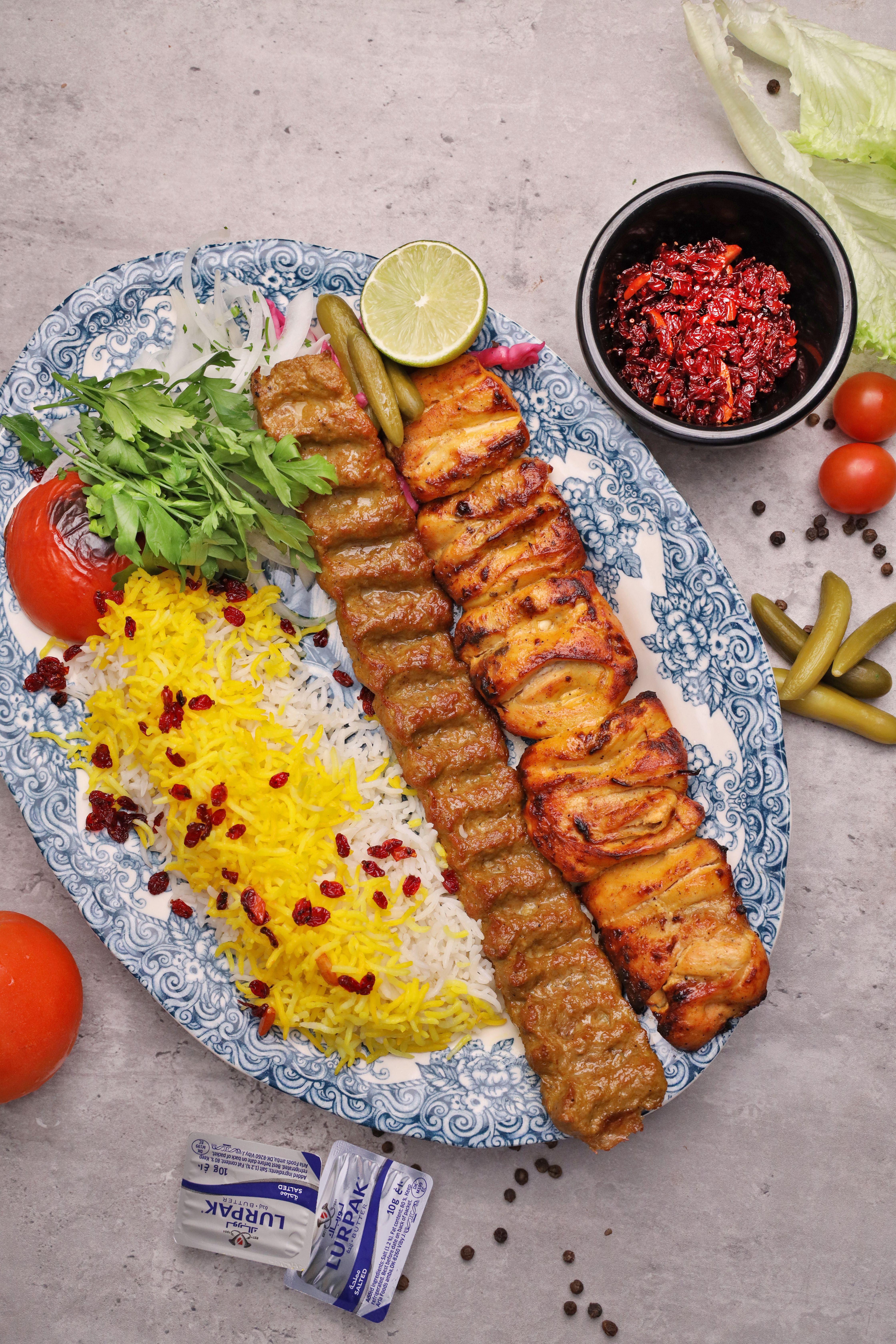
Jujeh Kabab
The diets react (see scores below)
Common Ingredients
- chicken
- saffron
- yogurt
- onion
- lemon juice
- butter
- salt
- black pepper
Specific recipes may vary.
Incompatible with 5 of 11 diets
Diet Ratings
Jujeh Kabab is a Persian grilled chicken dish marinated in saffron, yogurt, onion, and lemon juice, then cooked with butter. The primary macros are protein and fat, with minimal net carbs. Chicken is an excellent keto protein source, butter adds healthy saturated fat, and saffron has negligible carbs. The main carb contributors are yogurt (small amount used as a marinade, roughly 3-5g net carbs per serving), onion (used in marinade, mostly discarded, ~2-3g net carbs absorbed), and lemon juice (~1-2g). Total estimated net carbs per serving are well within keto limits at roughly 5-8g. This dish fits comfortably within a ketogenic framework.
Some strict keto practitioners flag full-fat yogurt marinades due to its lactose content and potential insulin response, and would recommend substituting with heavy cream or olive oil to eliminate even trace dairy sugars. Additionally, strict protocols may flag the onion as a moderate-carb ingredient even when used sparingly.
Jujeh Kabab is a Persian grilled chicken dish that contains multiple animal products. The primary protein is chicken (poultry), and the marinade includes yogurt (dairy) and butter (dairy). These are all clearly animal-derived ingredients that are excluded under any definition of veganism. There is no ambiguity here.
Jujeh Kabab is a Persian grilled chicken dish that would otherwise be largely paleo-friendly, but its traditional marinade relies on yogurt as a primary tenderizing ingredient, which is a dairy product explicitly excluded from the paleo diet. Additionally, salt is listed as an ingredient and is excluded under paleo rules. Butter, while debated, is also a dairy product discouraged by strict paleo authorities including The Paleo Diet's guide. The chicken, saffron, onion, lemon juice, and black pepper are all fully paleo-approved, but the combination of yogurt, butter, and salt as core marinade and cooking components pushes this dish firmly into avoid territory in its traditional form.
Jujeh Kabab is a Persian grilled chicken dish marinated in saffron, yogurt, onion, and lemon juice — a wholesome preparation that aligns reasonably well with Mediterranean principles. Chicken as the primary protein is acceptable in moderation (a few times per week). The marinade ingredients (yogurt, onion, lemon juice, saffron) are all compatible or beneficial. The main concern is butter, used for basting, which is an animal-based saturated fat not recommended in Mediterranean diet guidelines where extra virgin olive oil is the canonical fat. If butter were replaced with olive oil, this dish would score higher. As-is, it is acceptable occasionally but not a core Mediterranean staple.
Some Middle Eastern and Eastern Mediterranean culinary traditions — particularly those of Lebanon, Turkey, and Persia — do use small amounts of butter or clarified butter (sam'n) in grilled dishes, and some Mediterranean diet researchers acknowledge these regional practices as broadly compatible when consumed in moderation. However, modern clinical Mediterranean diet guidelines (e.g., those from the PREDIMED study framework) consistently prioritize olive oil over butter.
Jujeh Kabab contains multiple plant-derived ingredients that disqualify it from the carnivore diet. Onion and lemon juice are plant foods explicitly excluded. Saffron is a plant-derived spice. Black pepper is a plant-derived spice. Yogurt, while animal-derived, is marinated with acidic lemon juice and mixed with plant compounds. The dish is fundamentally a marinated chicken preparation built around plant-based flavoring and tenderizing agents, making it incompatible with carnivore principles in its traditional form. Even setting aside the debate over chicken and dairy (yogurt), the onion, lemon juice, saffron, and black pepper are clear violations with no debate within the carnivore community.
Jujeh Kabab as traditionally prepared contains two excluded ingredients: yogurt (dairy) and butter (regular butter, not ghee). The Whole30 program explicitly excludes all dairy except ghee and clarified butter. Yogurt is used as a marinade base and regular butter is used for basting, both of which are non-compliant. The remaining ingredients — chicken, saffron, onion, lemon juice, salt, and black pepper — are all fully Whole30-compliant. However, the presence of yogurt and regular butter makes this dish incompatible as described. A compliant version could be made by omitting the yogurt (or substituting coconut cream), and replacing butter with ghee or a compliant fat.
Jujeh Kabab contains two significant high-FODMAP ingredients that make it unsuitable during the elimination phase. Onion is one of the highest-FODMAP foods tested by Monash University, being very high in fructans at virtually any culinary quantity. Yogurt contains lactose, which is a disaccharide FODMAP — standard yogurt servings used in a marinade (typically 1/2 to 1 cup) far exceed the low-FODMAP threshold. The remaining ingredients are low-FODMAP: chicken (protein, no FODMAPs), saffron (safe in culinary quantities), lemon juice (low-FODMAP), butter (very low lactose, considered low-FODMAP), salt, and black pepper. However, the combination of onion and lactose-containing yogurt as core marinade components makes this dish high-FODMAP without significant recipe modification. A low-FODMAP adaptation would require omitting onion entirely (or using only the green tops of scallions) and substituting lactose-free yogurt.
Jujeh Kabab is a Persian grilled chicken dish marinated in saffron, yogurt, lemon juice, and onion — a preparation that aligns well with many DASH principles. Chicken is a DASH-approved lean protein, and the marinade ingredients (yogurt, lemon juice, onion, saffron) are either DASH-friendly or neutral. However, the inclusion of butter for basting introduces saturated fat, which DASH limits. The amount of added salt is variable and can push sodium content higher than ideal. The yogurt in the marinade is likely full-fat in traditional preparations, which DASH specifies should be low-fat. Overall, this is a reasonably healthy grilled protein dish, but the butter and potential sodium/full-fat dairy components place it in the 'caution' range rather than a clean approval.
NIH DASH guidelines specify low-fat dairy and limited saturated fat, which the butter and likely full-fat yogurt in this recipe technically violate. However, updated clinical interpretations note that the quantities of butter used in basting are relatively small, and recent evidence (including from the 2020–2025 Dietary Guidelines) has softened concerns about full-fat dairy's cardiovascular impact — some DASH-oriented clinicians would approve this dish if butter is minimized and low-fat yogurt is used.
Jujeh Kabab is a Persian saffron-marinated grilled chicken dish that aligns well with Zone Diet principles. The primary protein — chicken — is lean and ideal for Zone meals, easily portioned to ~25g protein per serving. The marinade ingredients (saffron, yogurt, onion, lemon juice) are all Zone-favorable: yogurt provides a small amount of protein and low-glycemic carbs, onion contributes minimal carbs, and lemon juice adds negligible carbohydrates with polyphenol benefits. Saffron is a potent anti-inflammatory spice, aligning with Sears' anti-inflammatory emphasis. The main Zone concern is butter, which is a saturated fat rather than a preferred monounsaturated fat like olive oil. However, the butter is typically used sparingly (basting during grilling), and its quantity is modest enough that it doesn't fundamentally disrupt the macronutrient balance. To build a complete Zone meal, this dish would need to be paired with low-glycemic vegetables (e.g., grilled peppers, tomatoes, salad) to fulfill the carbohydrate block requirement, and the butter should be kept minimal or substituted with olive oil. As a protein centerpiece, this dish is one of the stronger options in Middle Eastern cuisine from a Zone perspective.
The use of butter introduces saturated fat, which early Zone Diet writings (Enter the Zone) discouraged in favor of monounsaturated fats. However, Sears' later work — particularly Zone Perfect Meals in Minutes and his anti-inflammatory writings — adopted a more nuanced stance, acknowledging that small amounts of saturated fat are acceptable in the context of an otherwise balanced meal. Some strict Zone practitioners would downgrade this dish to 'caution' solely due to the butter, while others following later Sears guidelines would have no significant objection given the small quantity typically used.
Jujeh Kabab is a Persian grilled chicken dish marinated in saffron, yogurt, onion, and lemon juice — a profile that is largely anti-inflammatory, with a key concern around the finishing butter. Breaking down the components: Chicken (lean poultry) is classified as 'moderate' in anti-inflammatory frameworks — a clean protein source without the saturated fat burden of red meat. Saffron is a standout anti-inflammatory spice containing crocin and safranal, compounds shown in research to reduce oxidative stress and inflammatory markers. Yogurt provides probiotics that support gut health and reduce systemic inflammation, though full-fat dairy warrants moderation. Onion is rich in quercetin, a powerful flavonoid antioxidant. Lemon juice adds vitamin C and supports the absorption of other antioxidants. Black pepper contains piperine, which enhances bioavailability of other anti-inflammatory compounds. The main concern is butter, which is a saturated fat source that anti-inflammatory protocols recommend limiting. Traditional Jujeh Kabab is often finished with melted butter basted over the grilled chicken, which shifts the dish's profile toward caution rather than approve. If butter were replaced with extra virgin olive oil, this dish would comfortably score in the approve range. As prepared, it's a largely beneficial dish with one meaningful anti-inflammatory compromise.
Some anti-inflammatory practitioners (particularly those following Dr. Weil's broader Mediterranean-aligned approach) may be more permissive about modest butter use in an otherwise clean dish and could rate this higher. Conversely, stricter anti-inflammatory protocols emphasizing zero saturated fat from dairy would view the butter more negatively, potentially pushing the score lower.
Jujeh Kabab is a Persian grilled chicken dish marinated in yogurt, saffron, lemon juice, and onion, then typically finished with a small amount of butter. It is an excellent GLP-1-friendly main course. Grilled chicken breast is a lean, high-density protein source that supports the 100-120g daily protein target. The yogurt marinade adds a modest additional protein contribution and supports digestibility by tenderizing the meat. Lemon juice and onion are low-calorie, nutrient-supportive ingredients. Saffron is nutritionally neutral but anti-inflammatory. The primary concern is the butter finishing, which adds saturated fat; however, the quantity used in traditional preparation is small (a light basting) and unlikely to cause significant GI distress at standard serving sizes. The dish is grilled rather than fried, making it easy to digest and low in unnecessary fat. It is naturally low in fiber on its own, so pairing with a high-fiber side (grilled vegetables, a legume salad, or whole grain rice) is strongly recommended to hit daily fiber targets. Overall this is a high-protein, moderate-fat, easily digestible dish well-suited for GLP-1 patients.
Some RDs working with GLP-1 patients flag butter-basted grilled proteins as a caution for patients in early weeks of treatment when nausea and fat sensitivity are at their peak, recommending a dry-seasoned or olive-oil-substituted preparation during that period. Tolerance to the butter component is dose- and individual-dependent.
*See how scores were generated at our methodology page.
Nutritional profile
Six traits that cut across every diet.
Fiber & Plants
How much whole-plant food and fiber it delivers.
Healthy Fats
The quality of its fats (unsaturated, omega-3).
Whole / Unprocessed
How close it is to its natural, unprocessed form.
Gut Gentle
How easy it is on digestion (low FODMAP, few irritants).
Low Glycemic
How little it spikes your blood sugar.
Protein Density
How much protein it packs per calorie.
Controversy Index
Higher controversy = more disagreement between diets.
Diet-Specific Tips
 Keto — 8/10
View tips
- Chicken is a keto-friendly protein with no carbs
- Butter adds beneficial fat content
- Saffron and spices are negligible in carbs
- Yogurt marinade contributes minimal net carbs per serving (~3-5g)
- Lemon juice adds only ~1-2g net carbs
- Onion mostly discarded after marinating, low residual carb impact
- Estimated total net carbs per serving: 5-8g, well within daily keto limits
 Mediterranean — 5/10
View tips
- Chicken is an acceptable moderate-frequency protein in the Mediterranean diet
- Yogurt marinade is compatible — dairy in moderate amounts is allowed
- Lemon juice, onion, and saffron are wholesome, diet-compatible ingredients
- Butter for basting is the primary concern — not the recommended fat source
- No refined grains, added sugars, or highly processed ingredients
- Grilling is a healthy cooking method consistent with Mediterranean traditions
- Would improve significantly with olive oil substituted for butter
 DASH — 6/10
View tips
- Lean chicken protein is core to DASH diet
- Marinade of yogurt, lemon juice, and onion is largely DASH-compatible
- Butter adds saturated fat, which DASH limits
- Full-fat yogurt traditionally used — DASH specifies low-fat dairy
- Salt quantity is variable; can be made DASH-compliant with careful portioning
- Grilled preparation avoids added oils or heavy sauces
- No added sugars or high-sodium condiments
- Substituting butter with olive oil and using low-fat yogurt would improve DASH score
 Zone — 7/10
View tips
- Chicken is a lean, ideal Zone protein source — easily portioned to ~25g per meal
- Marinade ingredients (saffron, yogurt, lemon juice, onion) are Zone-favorable and low-glycemic
- Saffron is a potent polyphenol and anti-inflammatory spice, aligned with Sears' anti-inflammatory focus
- Butter is a saturated fat, not the preferred monounsaturated fat (olive oil, avocado); substituting olive oil would improve Zone score
- Dish provides protein block but lacks carbohydrate blocks — must be paired with low-glycemic vegetables to complete a Zone meal
- Grilling method is Zone-friendly; no added high-glycemic ingredients or processed components
 Anti-Inflammatory — 6/10
View tips
- Saffron: potent anti-inflammatory spice with crocin and safranal
- Lean chicken: approved moderate protein in anti-inflammatory frameworks
- Yogurt marinade: probiotic benefit, supports gut-inflammation axis
- Onion: rich in quercetin flavonoids
- Lemon juice: vitamin C, antioxidant support
- Butter (finishing): saturated fat, limit per anti-inflammatory guidelines
- Grilling method: no problematic oils or frying fats introduced
 GLP-1 Friendly — 8/10
View tips
- High lean protein from grilled chicken — strongly supports daily protein target
- Yogurt marinade adds protein and improves digestibility
- Grilled preparation avoids the high-fat, hard-to-digest profile of fried foods
- Butter finishing introduces saturated fat — a mild concern, especially early in treatment
- No fiber content in the dish itself — requires a high-fiber side to balance the meal
- Lemon and yogurt support gastric comfort; not a known GI irritant
- Small portion of this dish delivers strong protein density per calorie — portion-friendly