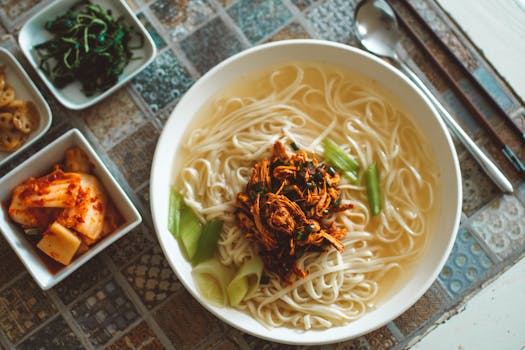
Photo: ROMAN ODINTSOV / Pexels
The diets react (see scores below)
Common Ingredients
- wheat noodles
- anchovy stock
- zucchini
- potato
- scallions
- soy sauce
- garlic
- kimchi
Specific recipes may vary.
Incompatible with 6 of 11 diets
Diet Ratings
Kalguksu is fundamentally incompatible with a ketogenic diet. The defining ingredient is wheat noodles, which are a high-carb grain product delivering roughly 40-50g of net carbs per serving on their own — already at or beyond the entire daily keto carb limit. Potato adds another significant carb load (a medium potato contains ~30g net carbs). Together, these two ingredients alone make a single bowl of kalguksu far exceed the 20-50g daily net carb threshold. The remaining ingredients (anchovy stock, zucchini, scallions, garlic, soy sauce, kimchi) are relatively keto-friendly in small amounts, but they cannot offset the core structural carb sources. There is no reasonable portion size that makes this dish keto-compatible without fundamentally reconstructing it (e.g., replacing wheat noodles with shirataki or zucchini noodles and omitting potato).
Kalguksu as described contains multiple animal-derived ingredients that disqualify it from a vegan diet. Anchovy stock is a fish-based broth, making it a clear animal product. The primary protein listed is chicken or seafood — both animal products. Additionally, traditional kimchi is almost always made with fermented seafood (fish sauce or salted shrimp), which adds another layer of non-vegan ingredients. While the wheat noodles, zucchini, potato, scallions, soy sauce, and garlic are all plant-based, the dish is fundamentally built around animal-derived components. A vegan version could theoretically be constructed using kombu or mushroom-based broth, vegan kimchi, and plant-based protein, but the traditional dish as presented is not vegan-compatible.
Kalguksu is fundamentally built around wheat noodles, which are a grain-based food strictly excluded from the paleo diet. Beyond the noodles, soy sauce is a legume-derived, processed condiment with added salt — also firmly off-limits. Kimchi, while fermented vegetables, typically contains soy sauce, sugar, and added salt, making standard commercial kimchi non-compliant. The anchovy stock, zucchini, potato, scallions, and garlic are paleo-compatible, but the core structural ingredients (wheat noodles, soy sauce, kimchi) make this dish definitively non-paleo. There is no practical way to serve Kalguksu as intended without the wheat noodles, which are the defining characteristic of the dish.
Kalguksu contains several Mediterranean-friendly elements: anchovy-based stock aligns well with the emphasis on seafood and fish flavors, and vegetables like zucchini, potato, scallions, and garlic are encouraged. However, the wheat noodles are likely refined (not whole grain), which conflicts with the Mediterranean preference for whole grains. Kimchi, while a fermented vegetable with probiotic benefits, is a highly processed, sodium-rich condiment not traditional to the Mediterranean pattern. Soy sauce adds significant sodium. The dish lacks olive oil entirely. On balance, it is a relatively wholesome, vegetable- and seafood-forward soup, but its refined noodles, absence of olive oil, and high sodium profile place it in the caution range rather than a clear approve.
Some Mediterranean diet interpreters, particularly those following the broader 'Blue Zone' or plant-forward frameworks, might view this dish more favorably given its seafood stock, vegetable density, and fermented foods component — arguing that the spirit of the diet (whole, minimally processed, plant-and-seafood-forward) is largely honored. Conversely, strict clinical Mediterranean diet protocols (e.g., PREDIMED guidelines) would flag refined wheat noodles and high sodium as meaningful deviations.
Kalguksu is fundamentally incompatible with the carnivore diet. The dish is built around wheat noodles as its primary component — a grain-based carbohydrate that is strictly excluded. Beyond the noodles, virtually every other ingredient is plant-derived: zucchini, potato, scallions, garlic, soy sauce (fermented soy/wheat), and kimchi (fermented vegetables). The anchovy stock base is the only carnivore-compatible element, and even that is undermined by the soy sauce and plant additives mixed into it. This dish is essentially a plant-forward Korean noodle soup with a minor animal-derived broth component. There is no meaningful animal protein or fat as a primary driver of the dish.
Kalguksu contains multiple excluded ingredients that make it clearly non-compliant with Whole30. The most fundamental issue is the wheat noodles — 'kalguksu' literally means 'knife-cut noodles,' and the dish is defined by its hand-cut wheat flour noodles, which are a grain product explicitly excluded from Whole30. Additionally, soy sauce is a soy-based condiment (legume-derived) that is excluded; coconut aminos would be the compliant substitute. Kimchi, while often made from vegetables, typically contains fish sauce or salted shrimp and sometimes sugar, and many commercial versions contain additives — but even setting that aside, the wheat noodles and soy sauce alone disqualify this dish. There is no compliant version of kalguksu because the wheat noodles are the defining, irreplaceable element of the dish.
Kalguksu contains multiple high-FODMAP ingredients that make it unsuitable during the elimination phase. The most significant offenders are: (1) wheat noodles — the primary base of the dish, wheat is high in fructans and unavoidable at any standard serving size; (2) garlic — one of the highest-FODMAP foods tested by Monash, even small amounts are high in fructans; (3) kimchi — traditionally fermented with garlic, onion/scallion paste, and chili, making it high-FODMAP due to fructans and GOS. Scallion bulbs (white parts) also contribute fructans, though green tops are low-FODMAP. Anchovy stock, zucchini (up to ~65g), potato (up to ~75g), and soy sauce are generally low-FODMAP at standard servings and would otherwise be acceptable. However, the combination of wheat noodles, garlic, and kimchi creates an unavoidably high-FODMAP dish with no practical substitution that would preserve the dish's identity.
Kalguksu contains several DASH-friendly ingredients — zucchini, potato, scallions, and garlic are excellent DASH vegetables, and the lean protein (chicken or seafood) aligns well with DASH recommendations. However, the dish has significant sodium concerns. Anchovy stock is naturally high in sodium, soy sauce adds considerable additional sodium (typically 800-1,000mg per tablespoon), and kimchi is a fermented, salted food that can contribute 300-500mg sodium per serving. Combined, this soup could easily exceed 1,500-2,000mg of sodium per bowl, approaching or exceeding the entire daily sodium budget on either the standard (<2,300mg) or low-sodium (<1,500mg) DASH protocol. The wheat noodles are refined, not whole grain, which is a lesser concern but still not ideal for DASH. The dish is not inherently high in saturated fat or added sugar, so it avoids the worst DASH pitfalls, but its sodium load is the primary barrier. A DASH-modified version using low-sodium soy sauce, reduced anchovy stock, and limiting or omitting kimchi could score 6-7.
NIH DASH guidelines emphasize strict sodium limits that this dish likely exceeds in traditional preparation. However, updated clinical interpretations note that for non-hypertensive individuals on standard DASH (<2,300mg), a carefully portioned bowl with reduced soy sauce and minimal kimchi could fit within daily limits, and the potassium-rich vegetables and lean protein provide meaningful DASH benefits that some clinicians weigh favorably.
Kalguksu presents a mixed Zone profile. On the positive side, it contains excellent Zone-friendly ingredients: zucchini (low-glycemic vegetable), scallions, garlic, kimchi (polyphenol-rich fermented food Sears endorses for anti-inflammatory benefits), and anchovy stock (omega-3 rich, anti-inflammatory). If chicken or seafood is included as the protein, the dish can contribute a lean protein block. However, the core structural problem is the wheat noodles, which are the dominant carbohydrate source and are high-glycemic, placing them in Zone's 'unfavorable' carbohydrate category. Potato is an additional concern — Sears explicitly lists potatoes as a high-glycemic carb to avoid. Together, wheat noodles and potato create a carbohydrate load that is difficult to balance into a proper Zone block ratio without dramatically reducing portion size. The dish also lacks a clear fat component (monounsaturated fat would need to be added). To make this more Zone-compliant, one would need to significantly reduce noodle and potato portions, increase the protein component, and add a monounsaturated fat source. As typically served, the noodle and potato content dominate the carbohydrate profile unfavorably.
Some Zone practitioners note that wheat noodles, while unfavorable, are not categorically banned — they simply require strict portion control to fit within carb blocks. Sears' block system allows 'unfavorable' carbs in very small amounts. A half-cup noodle portion with generous protein and added avocado could technically be Zone-balanced. Kimchi's probiotic and polyphenol content aligns well with Sears' later anti-inflammatory writings, adding redemptive value to the dish.
Kalguksu is a Korean knife-cut noodle soup with a mixed anti-inflammatory profile. On the positive side, anchovy stock provides omega-3 fatty acids and is rich in minerals; garlic and scallions offer well-documented anti-inflammatory polyphenols and organosulfur compounds; zucchini contributes antioxidants and fiber; and kimchi — a fermented food — provides probiotics and bioactive compounds (including capsaicin from chili) associated with reduced inflammatory markers and improved gut health. These are genuine anti-inflammatory assets. The main limitation is the wheat noodles: refined wheat noodles are a source of refined carbohydrates with minimal fiber, which can modestly elevate blood glucose and contribute to low-grade inflammation when consumed regularly. The dish is otherwise low in saturated fat, avoids seed oils and processed additives, and is broth-based rather than cream- or butter-based, keeping its overall profile reasonably clean. Soy sauce adds sodium but is used in modest seasoning quantities typical of Korean cooking. If made with whole wheat or buckwheat noodles, the score would rise to the approve range. As prepared with standard refined wheat noodles, this is a nutritionally decent, mostly whole-food dish that leans toward the better end of 'caution' — acceptable regularly as part of a broader anti-inflammatory dietary pattern.
Some anti-inflammatory practitioners, particularly those following AIP or gluten-sensitive protocols, would flag wheat noodles as a concern beyond just refined carbohydrates — citing gluten as a potential intestinal permeability trigger that could promote systemic inflammation in predisposed individuals. Additionally, a minority view holds that fermented foods like kimchi, while broadly beneficial, may provoke histamine-related responses in sensitive populations. Mainstream anti-inflammatory frameworks (including Dr. Weil's) would likely view this dish as a reasonable, whole-food-forward meal.
Kalguksu is a Korean wheat noodle soup that has meaningful strengths for GLP-1 patients but also notable limitations. On the positive side, it is broth-based (easy to digest, high water content, supports hydration), low in fat, warm and gentle on the stomach, and loaded with fiber-supporting vegetables like zucchini, potato, scallions, and garlic. Kimchi adds probiotics and fiber, which can help with the constipation that is a common GLP-1 side effect. The anchovy-based stock provides a nutrient-dense, low-fat flavor base. However, the primary macronutrient in a standard serving is refined wheat noodles — a relatively low-fiber, low-protein carbohydrate that scores poorly on nutrient density per calorie. Protein content depends heavily on how much chicken or seafood is added; a modest portion may only deliver 10-15g of protein, falling short of the 15-30g per meal target without deliberate portioning. The sodium from soy sauce, anchovy stock, and kimchi may also be a consideration. This dish is best treated as a protein-delivery vehicle — it earns a higher score when the protein component (chicken breast or shellfish) is generous. As served in many restaurants, the noodle-to-protein ratio is unfavorable for GLP-1 patients.
Some GLP-1-focused dietitians would rate this more favorably, noting that broth-heavy soups are among the most tolerated food formats for patients managing nausea and slow gastric emptying, and that the fermented kimchi may actively support gut microbiome health during dietary transition. Others would flag the refined wheat noodles and high sodium more firmly, recommending the dish only when modified with extra protein and reduced noodle volume.
*See how scores were generated at our methodology page.
Nutritional profile
Six traits that cut across every diet.
Fiber & Plants
How much whole-plant food and fiber it delivers.
Healthy Fats
The quality of its fats (unsaturated, omega-3).
Whole / Unprocessed
How close it is to its natural, unprocessed form.
Gut Gentle
How easy it is on digestion (low FODMAP, few irritants).
Low Glycemic
How little it spikes your blood sugar.
Protein Density
How much protein it packs per calorie.
Controversy Index
Higher controversy = more disagreement between diets.
Diet-Specific Tips
 Mediterranean — 5/10
View tips
- Refined wheat noodles rather than whole grain — conflicts with Mediterranean grain guidance
- Anchovy stock is a positive seafood-based element aligned with Mediterranean fish emphasis
- Vegetables (zucchini, potato, scallions, garlic) are strongly encouraged components
- No olive oil present — a core Mediterranean fat source is absent
- Kimchi and soy sauce contribute high sodium and are non-traditional fermented/processed condiments
- Overall dish is minimally processed and vegetable-forward, which is directionally Mediterranean
 DASH — 4/10
View tips
- High sodium from anchovy stock — a primary DASH concern
- Soy sauce adds significant sodium (800-1,000mg per tablespoon)
- Kimchi contributes additional sodium (fermented/salted)
- Combined sodium per bowl likely approaches or exceeds daily DASH limits
- DASH-positive vegetables: zucchini, potato, scallions, garlic
- Lean protein (chicken or seafood) aligns with DASH guidelines
- Refined wheat noodles — not whole grain, less ideal for DASH
- Low in saturated fat and added sugar — avoids worst DASH violations
- Low-sodium soy sauce and reduced stock would significantly improve DASH compatibility
 Zone — 4/10
View tips
- Wheat noodles are a high-glycemic 'unfavorable' carbohydrate in Zone terminology
- Potato is explicitly listed by Sears as a high-glycemic carb to minimize or avoid
- Zucchini, scallions, and garlic are favorable low-glycemic Zone vegetables
- Kimchi aligns with Sears' anti-inflammatory polyphenol recommendations
- Anchovy stock provides omega-3 anti-inflammatory benefits
- Lean protein (chicken or seafood) can provide a proper Zone protein block
- No inherent monounsaturated fat source — fat block must be added separately
- As traditionally served, carbohydrate ratio is skewed toward high-glycemic sources
- Portion control of noodles and elimination or reduction of potato would improve Zone compatibility
 Anti-Inflammatory — 6/10
View tips
- Anchovy stock provides omega-3 fatty acids and anti-inflammatory minerals
- Refined wheat noodles are the primary limitation — low fiber, higher glycemic impact
- Garlic and scallions offer anti-inflammatory organosulfur compounds and polyphenols
- Kimchi contributes probiotics, capsaicin, and fermentation-derived anti-inflammatory compounds
- Zucchini adds antioxidants and fiber
- Low in saturated fat, no processed additives or seed oils
- Broth-based preparation is favorable for anti-inflammatory eating
- Whole wheat or buckwheat noodle substitution would significantly improve the profile
 GLP-1 Friendly — 5/10
View tips
- Low fat — broth-based preparation is well-tolerated on GLP-1 medications
- High water content supports hydration, which GLP-1s can compromise
- Protein content is highly variable and portion-dependent — inadequate without a generous chicken or seafood addition
- Wheat noodles are refined carbohydrates with low fiber and low protein density per calorie
- Kimchi provides probiotics and fiber, supporting digestion and GLP-1-related constipation prevention
- High sodium from anchovy stock, soy sauce, and kimchi — relevant for patients with cardiovascular risk
- Vegetable content (zucchini, scallion, potato) adds micronutrients and some fiber
- Easy to digest — warm broth format is among the most GI-friendly for GLP-1 side effect management