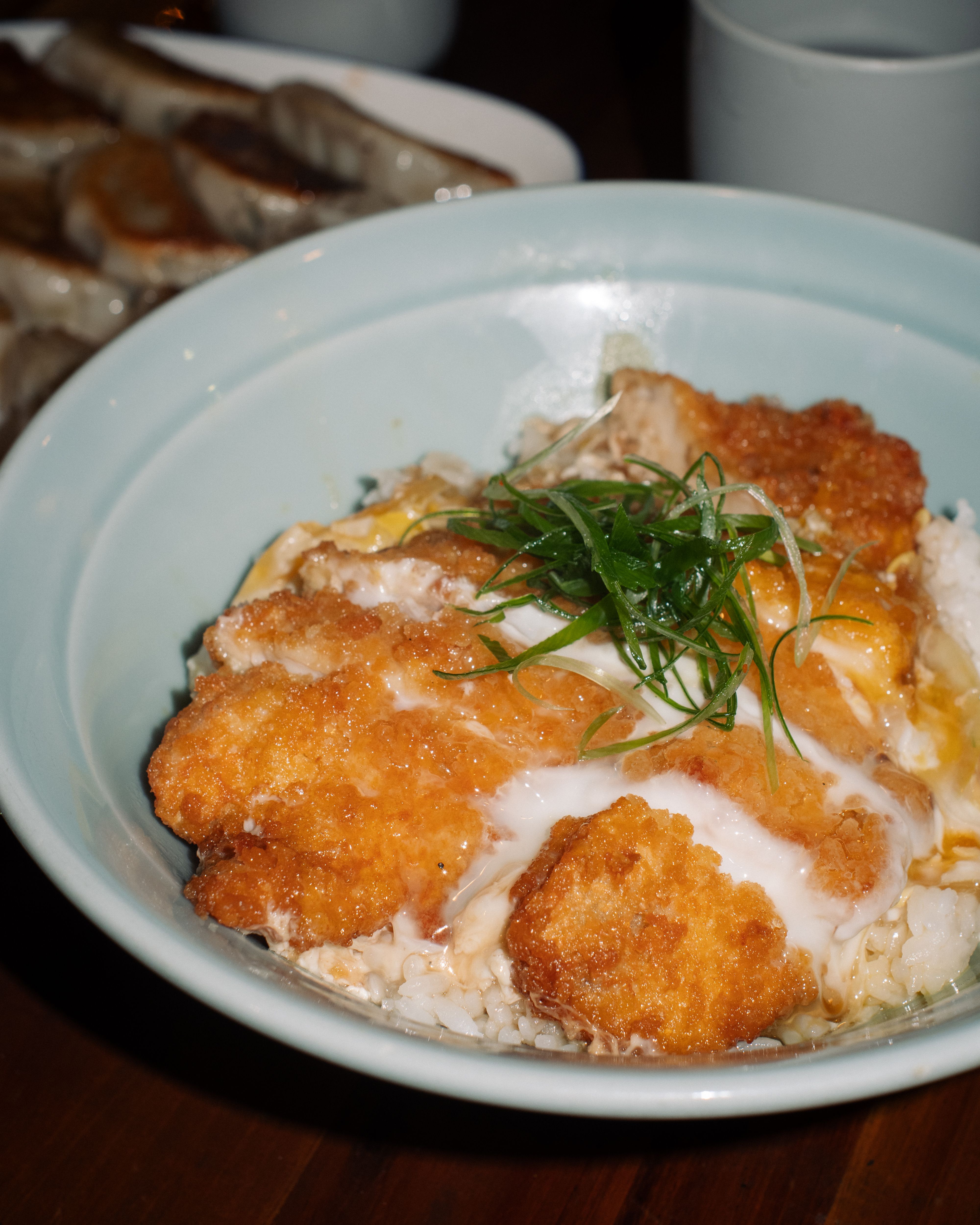
Photo: Josh Eleazar / Pexels
The diets react (see scores below)
Common Ingredients
- pork cutlet
- panko breadcrumbs
- eggs
- yellow onion
- short-grain rice
- dashi
- soy sauce
- mirin
Specific recipes may vary.
Incompatible with 8 of 11 diets
Diet Ratings
Katsudon is fundamentally incompatible with a ketogenic diet due to multiple high-carb components. Short-grain rice alone contains approximately 45g of net carbs per serving, which exceeds the entire daily keto carb limit on its own. Additionally, panko breadcrumbs used to coat the pork cutlet add significant carbs and are grain-based. Mirin is a sweet rice wine that adds sugar. The combination of rice, breadcrumbs, and mirin makes this dish a carbohydrate-dense meal with virtually no redeeming keto-friendly adjustments possible without completely reconstructing the dish. The eggs, dashi, soy sauce, onion, and pork cutlet themselves would be acceptable or manageable, but the core structural ingredients make this dish a clear avoid.
Katsudon contains multiple animal products that make it entirely incompatible with a vegan diet. The dish features pork cutlet (meat) and eggs as core structural ingredients, and dashi is traditionally made from katsuobushi (dried bonito fish flakes) or other animal-based stocks. There is no plant-based component that could offset these direct animal-derived ingredients. This is an unambiguous non-vegan dish.
Katsudon is fundamentally incompatible with the Paleo diet. It contains multiple core non-Paleo ingredients: short-grain rice (a grain, excluded by all paleo authorities), panko breadcrumbs (wheat-based grain product), soy sauce (contains wheat and soy — both a grain and a legume derivative), and mirin (a sweet rice wine — grain-based alcohol with added sugar). These are not peripheral or debated ingredients; they are the structural backbone of the dish. The pork cutlet and eggs would otherwise be Paleo-approved, and yellow onion is perfectly fine, but the remaining ingredients make this dish a clear avoid with no meaningful path to a gray area verdict.
Katsudon conflicts with Mediterranean diet principles on multiple fronts. The primary protein is pork cutlet (red/processed meat), which should be limited to a few times per month. It is breaded with panko breadcrumbs (refined grain coating) and deep-fried, adding poor-quality fats rather than olive oil. The base is short-grain white rice (refined grain), not a whole grain. The dish contains no vegetables, legumes, or plant-forward components. The cooking method (deep-frying in neutral oil) directly contradicts the Mediterranean emphasis on olive oil as the primary fat. Virtually every core component of this dish runs counter to Mediterranean dietary guidelines.
Katsudon is fundamentally incompatible with the carnivore diet. While the pork cutlet and eggs are animal-derived and would otherwise be acceptable, the dish is overwhelmingly plant-based in its composition. Short-grain rice is a grain and a primary component of the dish. Panko breadcrumbs are a grain-based coating applied directly to the pork. Yellow onion is a plant vegetable. Dashi may contain plant-derived kombu seaweed. Soy sauce is a fermented plant product (soybeans and wheat). Mirin is a plant-derived rice wine condiment containing sugar. The pork and eggs cannot be separated from these disqualifying ingredients in this dish as prepared — the breadcrumb coating is integral to the cutlet, and the rice forms the base of the entire dish. There is no meaningful carnivore-compatible version of katsudon without completely deconstructing and rebuilding it.
Katsudon contains multiple excluded ingredients that make it clearly non-compliant with Whole30. Panko breadcrumbs are made from wheat (a grain), short-grain rice is a grain, soy sauce contains soy (a legume) and often wheat, and mirin is a sweet rice wine (alcohol + grain). Any one of these would disqualify the dish; this recipe contains at least four separate violations.
Katsudon contains multiple high-FODMAP ingredients that make it unsuitable during the elimination phase. Panko breadcrumbs are made from wheat, which is high in fructans — a major FODMAP concern. Yellow onion is one of the highest-FODMAP foods tested by Monash University, extremely high in fructans even in small amounts. Dashi, if made from a commercial dashi stock or dashi powder, frequently contains onion and/or garlic extracts. Together, the wheat-based panko and yellow onion alone are disqualifying. Short-grain rice is low-FODMAP, plain pork cutlet is low-FODMAP, eggs are low-FODMAP, and soy sauce and mirin are generally low-FODMAP at standard culinary amounts. However, the two high-FODMAP components (panko and onion) are structurally integral to the dish and cannot be easily removed without fundamentally changing the recipe.
Katsudon is problematic for the DASH diet on multiple fronts. The pork cutlet is breaded and deep-fried in panko breadcrumbs, making it high in total fat and saturated fat — red/fatty meat fried in oil directly conflicts with DASH guidelines to limit saturated fat and red meat. The soy sauce and dashi (typically made with kombu and bonito) contribute substantial sodium; a standard katsudon serving can easily contain 1,000–1,500mg of sodium in the sauce alone, pushing close to or exceeding the entire daily DASH sodium target (1,500–2,300mg). Short-grain white rice is a refined grain rather than a whole grain, providing minimal fiber. The dish is also calorie-dense from deep frying. While eggs and onion are DASH-acceptable ingredients, they cannot offset the dish's core problems. Overall, katsudon is a high-sodium, high-saturated-fat, deep-fried refined-grain dish that conflicts with nearly every key DASH dietary principle.
Katsudon presents significant Zone Diet challenges. The dish is built around a large serving of short-grain white rice (high-glycemic, rapidly digested starch) topped with a deep-fried pork cutlet coated in panko breadcrumbs (additional refined carbs plus saturated fat from frying). Mirin adds sugar. The macro ratio is heavily skewed toward carbohydrates and fat, with the carbs being predominantly high-glycemic — the opposite of what Zone favors. The pork cutlet itself provides reasonable protein, and eggs contribute lean protein and some fat, but the cooking method (deep frying) adds saturated/omega-6 fat. The dish as traditionally prepared would need radical deconstruction to approach Zone balance: dramatically reducing rice, eliminating the deep-fry coating, and adding low-glycemic vegetables. As a ready dish ordered or prepared traditionally, it scores at the lower end of caution — technically not pure sugar/soda-level 'avoid,' because it does contain protein and eggs, but it is very difficult to portion into Zone compliance without fundamentally changing the dish. A score of 3 reflects that while the protein components (pork, egg) have Zone-usable elements, the overall dish structure is antithetical to Zone principles.
Katsudon is a Japanese comfort dish with a mixed anti-inflammatory profile. On the positive side, it contains eggs (choline, selenium), onion (quercetin, a potent anti-inflammatory flavonoid), dashi (typically made from kombu/bonito, providing some omega-3s and umami compounds), soy sauce and mirin (fermented/traditional condiments in modest amounts), and the dish is a whole, minimally processed home-cooked meal. However, several elements raise concern: (1) Pork cutlet is a red/processed-adjacent meat — lean pork is moderate, but the deep-frying method typical of tonkatsu adds significant refined oil (usually high-omega-6 vegetable or canola oil, though the ingredient list doesn't specify). (2) Panko breadcrumbs represent refined carbohydrates with low nutritional value. (3) Short-grain white rice is a refined grain with a high glycemic index, contributing to potential postprandial glucose spikes and downstream inflammatory signaling. (4) The dish is typically calorie-dense and fried, which is not consistent with anti-inflammatory eating patterns. The combination of refined grains, deep-fried protein, and likely omega-6-heavy frying oil tips the dish into 'caution' territory. It is not inherently toxic or pro-inflammatory in the way processed foods are, but it lacks the anti-inflammatory virtues of emphasized foods and contains several moderately problematic elements.
Katsudon presents a mixed nutritional profile for GLP-1 patients. The dish does provide meaningful protein from the breaded pork cutlet and eggs, and the dashi-based broth adds some hydration. However, the pork cutlet is deep-fried in panko breadcrumbs, which significantly raises the fat content and makes it harder to digest — directly conflicting with the GLP-1 guideline to avoid fried, high-fat foods that worsen nausea, bloating, and reflux. The short-grain white rice is a refined carbohydrate with low fiber and low protein density, contributing empty calories that GLP-1 patients can ill afford given their reduced appetite. The soy sauce and mirin add sodium and sugar respectively, though in moderate amounts typical of the dish. The overall fat load from frying, combined with the low-fiber, refined-grain base, makes this a poor fit as a regular meal for GLP-1 patients. It is not categorically off-limits — the egg and pork protein content provides some value — but the preparation method is the primary disqualifier.
*See how scores were generated at our methodology page.
Nutritional profile
Six traits that cut across every diet.
Fiber & Plants
How much whole-plant food and fiber it delivers.
Healthy Fats
The quality of its fats (unsaturated, omega-3).
Whole / Unprocessed
How close it is to its natural, unprocessed form.
Gut Gentle
How easy it is on digestion (low FODMAP, few irritants).
Low Glycemic
How little it spikes your blood sugar.
Protein Density
How much protein it packs per calorie.
Controversy Index
Higher controversy = more disagreement between diets.
Diet-Specific Tips
 Zone — 5/10
View tips
- Short-grain white rice is a high-glycemic carbohydrate, unfavorable in Zone terminology
- Panko breadcrumbs add additional refined, high-glycemic carbs
- Deep-frying introduces saturated and omega-6 fats — not Zone-preferred monounsaturated fats
- Mirin contributes added sugars, raising glycemic load
- Pork cutlet and eggs do provide protein blocks, the one Zone-positive element
- Dish macro ratio skews heavily carb-and-fat with high-GI carbs, far from 40/30/30
- Would require radical portion reduction of rice and removal of frying to fit Zone blocks
 Anti-Inflammatory — 4/10
View tips
- Pork cutlet is a moderate protein — acceptable occasionally but not emphasized in anti-inflammatory diets
- Deep-frying in likely high-omega-6 refined oil is a concern
- Panko breadcrumbs are refined carbohydrates with minimal nutritional value
- White short-grain rice is a refined grain with high glycemic index
- Eggs contribute beneficial choline and selenium
- Onion provides quercetin, a well-studied anti-inflammatory flavonoid
- Dashi adds depth and trace beneficial compounds (omega-3s from bonito, iodine from kombu)
- Soy sauce and mirin are fermented/traditional condiments used in small amounts — acceptable
- Overall dish is calorie-dense and fried — not consistent with anti-inflammatory dietary patterns
 GLP-1 Friendly — 4/10
View tips
- Pork cutlet is deep-fried in panko — high fat content worsens GLP-1 GI side effects including nausea and bloating
- Short-grain white rice is a refined carbohydrate with minimal fiber and low nutrient density per calorie
- Eggs contribute quality protein and improve the dish's nutritional profile somewhat
- Pork itself provides protein but is a fattier cut compared to GLP-1-preferred lean proteins like chicken breast or fish
- Dashi broth base adds mild hydration support and umami without significant fat
- Mirin adds sugar with no nutritional benefit; soy sauce adds sodium
- Overall dish is portion-sensitive — a small serving reduces fat and refined carb load but also reduces protein intake