African
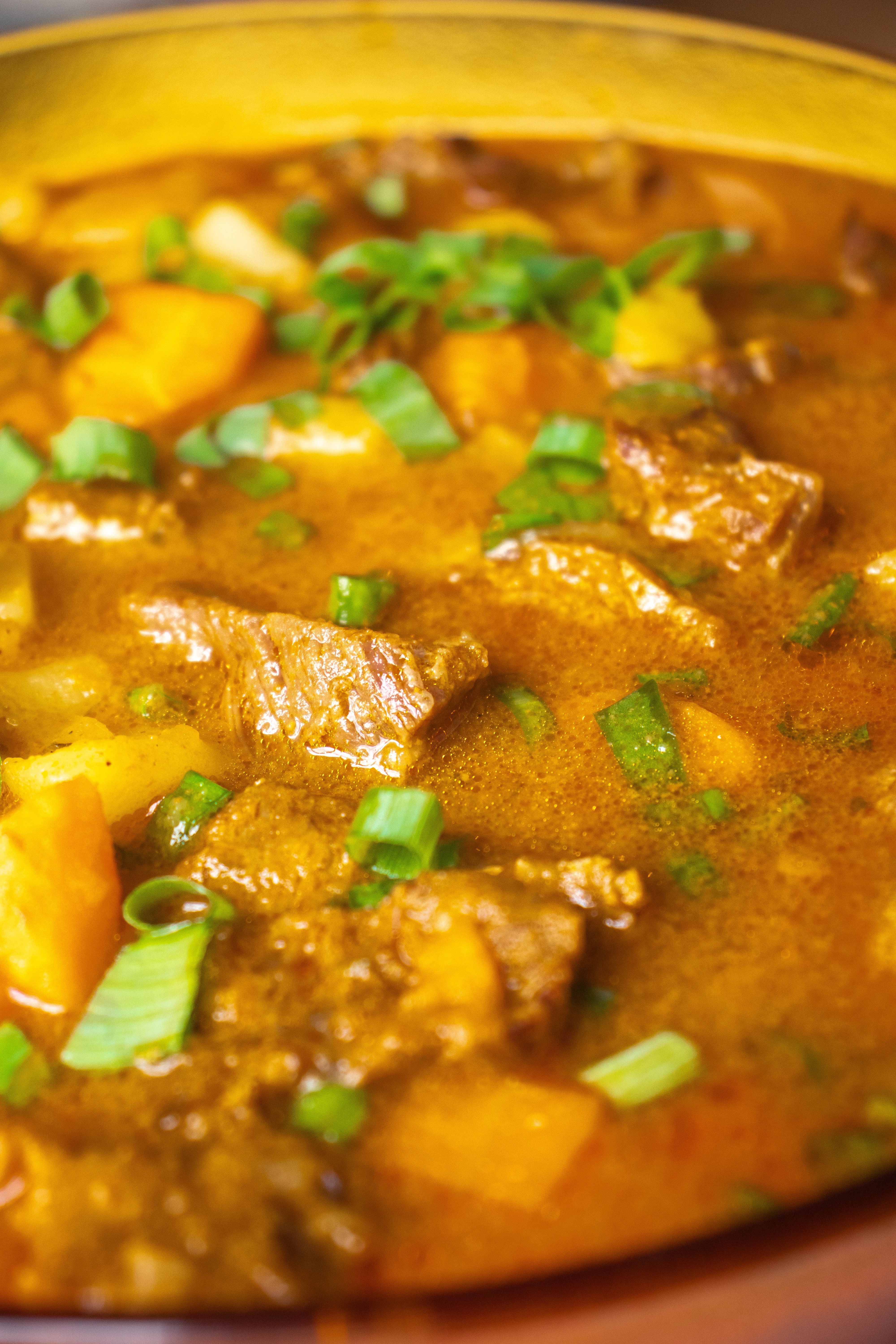
Ugali and Stew
The diets react (see scores below)
Common Ingredients
- white cornmeal
- beef
- tomatoes
- onion
- garlic
- cilantro
- sukuma wiki
- cumin
Specific recipes may vary.
Incompatible with 7 of 11 diets
Diet Ratings
Ugali is the primary and defining component of this dish, made from white cornmeal, which is one of the most keto-incompatible foods possible. A standard serving of ugali (roughly 200g cooked) contains approximately 35-45g of net carbs on its own, easily exceeding the entire daily keto carb budget. White cornmeal is a refined grain with a high glycemic index that will immediately knock the body out of ketosis. The beef stew component with tomatoes, onion, garlic, sukuma wiki (kale), and spices would be perfectly acceptable on keto in isolation, but the ugali base makes this dish entirely incompatible. There is no practical portion size of ugali that fits within a ketogenic framework.
This dish contains beef as the primary protein, which is an animal product and therefore incompatible with a vegan diet. Beef is unambiguously excluded under all vegan frameworks. The ugali base (white cornmeal) and all other ingredients — tomatoes, onion, garlic, cilantro, sukuma wiki (collard greens), and cumin — are fully plant-based and would score highly on their own, but the inclusion of beef makes the dish as a whole non-vegan.
Ugali is made from white cornmeal, which is a grain and a clear violation of paleo principles. Corn is explicitly excluded from the paleo diet as a grain that was not available in its domesticated, processed form to Paleolithic humans. The stew components — beef, tomatoes, onion, garlic, cilantro, sukuma wiki (collard greens), and cumin — are all paleo-compliant, but the ugali base is the defining and dominant element of this dish and cannot be substituted without fundamentally changing it. The dish as presented cannot be considered paleo.
Ugali and beef stew presents multiple conflicts with Mediterranean diet principles. The base is white cornmeal (ugali), a refined grain that lacks the fiber and nutrients of whole grains emphasized in the Mediterranean diet. Beef is the primary protein, which should be limited to a few times per month under Mediterranean guidelines. On the positive side, the stew contains several Mediterranean-friendly ingredients: tomatoes, onion, garlic, and sukuma wiki (collard greens) are all plant-based vegetables strongly encouraged in the diet, and cumin and cilantro are acceptable spices. However, the combination of a refined grain base with red meat as the primary protein makes this dish difficult to reconcile with core Mediterranean principles, even acknowledging its nutritious vegetable components.
Some Mediterranean diet interpreters would note that the vegetable-rich stew component — tomatoes, onions, garlic, and leafy sukuma wiki — aligns well with the diet's plant-forward emphasis, and if beef were replaced with legumes or fish, or used only as a minor flavoring, the dish could approach 'caution' territory. Additionally, whole-grain cornmeal substitutions exist and are used in some traditional preparations.
Ugali and Stew is fundamentally incompatible with the carnivore diet. The dish is built around ugali, a staple porridge made from white cornmeal — a grain-based plant food that is strictly excluded on any tier of carnivore. The stew component contains beef, which is carnivore-approved, but is heavily loaded with plant ingredients: tomatoes, onion, garlic, cilantro, sukuma wiki (collard greens), and cumin (a plant spice). The only carnivore-compatible ingredient in the entire dish is the beef itself. The overwhelming majority of ingredients are plant-derived, making this dish a clear avoid with no ambiguity across the carnivore community.
Ugali is made from white cornmeal, which is corn — a grain explicitly excluded on the Whole30 program. Although the stew component (beef, tomatoes, onion, garlic, cilantro, sukuma wiki/collard greens, and cumin) is fully Whole30-compliant, the ugali base disqualifies the dish as a whole. Corn in any form — including cornmeal, cornstarch, corn tortillas, or popcorn — is not permitted on Whole30.
This dish contains two major high-FODMAP ingredients that make it unsuitable during the elimination phase: onion and garlic. Both are among the highest-FODMAP foods tested by Monash University, rich in fructans, and there is no safe serving size for either during elimination. Even small amounts of onion and garlic — including cooked into a stew — contribute enough fructans to trigger symptoms. The remaining ingredients are generally low-FODMAP: white cornmeal (ugali base) is low-FODMAP at standard servings, plain beef is FODMAP-free, tomatoes are low-FODMAP at up to 1 medium tomato, cilantro is low-FODMAP, cumin is low-FODMAP as a spice in typical culinary amounts, and sukuma wiki (collard greens/kale) is low-FODMAP at approximately 1 cup servings per Monash. However, the presence of both onion and garlic as structural stew ingredients — not incidental traces — firmly places this dish in the avoid category. The dish could be made low-FODMAP by substituting garlic-infused oil for garlic, omitting onion, and using the green tops of spring onions instead.
Ugali and Stew has a mixed DASH profile. The stew components are largely DASH-friendly: tomatoes, onion, garlic, cilantro, sukuma wiki (collard greens), and cumin are all vegetables/herbs rich in potassium, magnesium, and fiber that DASH strongly endorses. However, two elements introduce concern. First, ugali is made from white cornmeal (refined grain), not a whole grain — DASH emphasizes whole grains, and refined grains offer less fiber, magnesium, and potassium. Second, beef is a red meat, which DASH limits due to saturated fat and cholesterol concerns; the fat content depends heavily on cut and preparation (lean beef is more acceptable than fatty cuts). The dish as commonly prepared in East African households is relatively low in sodium (no processed ingredients listed), which is a significant DASH positive. The abundance of vegetables and greens partially offsets the refined grain and red meat concerns. Overall, this dish is acceptable in moderation with DASH modifications: substitute whole-grain or high-fiber ugali (e.g., using whole-grain maize flour), and use lean beef cuts or substitute with legumes, fish, or poultry.
NIH DASH guidelines explicitly recommend limiting red meat and refined grains, which would push this dish toward a lower score. However, updated clinical interpretations note that lean red meat in modest portions (≤3 oz) can fit within DASH targets, and the vegetable density of this dish — particularly the sukuma wiki — provides meaningful potassium, calcium, and fiber that partially compensate for the refined grain base.
Ugali and Stew presents a mixed Zone picture. The stew component is actually quite Zone-friendly: beef provides lean protein (ideally lean cuts), tomatoes, onions, garlic, cilantro, and sukuma wiki (collard greens) are excellent low-glycemic, polyphenol-rich Zone carbohydrate sources, and cumin adds anti-inflammatory benefit. However, the foundation of the dish — ugali made from white cornmeal — is a high-glycemic, refined carbohydrate that Dr. Sears explicitly classifies as an 'unfavorable' carb. White cornmeal has a high glycemic index, spikes insulin, and provides little fiber relative to its carbohydrate load. In traditional serving proportions, ugali typically dominates the plate (60-70% of the meal by volume), creating a heavily carb-skewed macronutrient ratio that is far from the Zone's 40/30/30 target. To bring this meal into the Zone, one would need to dramatically reduce ugali portions (a very small serving as a minor carb block), increase the stew's vegetable content significantly, ensure lean beef portions (~25g protein), and add a monounsaturated fat source. The dish as traditionally served is carb-heavy and high-glycemic, earning a caution rating. The excellent stew vegetables prevent a lower score.
Ugali and Stew is a mixed dish from an anti-inflammatory standpoint. The stew components are largely positive: tomatoes provide lycopene and antioxidants, garlic is a well-established anti-inflammatory ingredient, onion contains quercetin, cumin is a beneficial anti-inflammatory spice, cilantro adds polyphenols, and sukuma wiki (collard greens/kale) is a standout anti-inflammatory ingredient rich in vitamins K, C, and carotenoids. However, the dish has two meaningful concerns. First, the primary protein is beef — anti-inflammatory frameworks generally recommend limiting red meat due to saturated fat content and its association with elevated inflammatory markers (CRP, IL-6). The inflammatory impact depends heavily on the cut and fat content; leaner cuts are less problematic. Second, ugali is made from refined white cornmeal, a refined carbohydrate that ranks poorly in anti-inflammatory frameworks due to its high glycemic index and lack of fiber — whole-grain cornmeal would be significantly preferable. The dish is not aggressively pro-inflammatory, as it contains no processed ingredients, seed oils, added sugars, or trans fats, and the vegetable and spice components are genuinely beneficial. But the combination of red meat and refined starch keeps this in the 'caution' range.
Some anti-inflammatory practitioners, particularly those influenced by traditional food systems, would note that this dish contains no processed foods, artificial additives, or seed oils, making it substantially better than most modern 'neutral' foods. Dr. Weil's framework allows red meat in moderation, and grassfed beef contains a more favorable omega-6 to omega-3 ratio. On the other hand, stricter anti-inflammatory protocols (e.g., Wahl's Protocol, AIP-adjacent frameworks) would flag both the red meat and refined cornmeal as actively problematic and rate this dish lower.
Ugali and beef stew is a traditional East African staple with a mixed nutritional profile for GLP-1 patients. The beef stew component offers meaningful protein and the sukuma wiki (collard greens), tomatoes, onion, and garlic contribute fiber, micronutrients, and antioxidants. However, ugali made from white cornmeal is a refined grain with low fiber, high glycemic index, and minimal protein — essentially empty starchy calories, which is problematic given the critical importance of nutrient density on GLP-1 medications. Beef as the primary protein is acceptable but depends heavily on the cut: lean cuts (sirloin, round) are reasonable, while fatty cuts (chuck, brisket) add saturated fat that worsens GLP-1 side effects like nausea and bloating. The spice profile (cumin, garlic, cilantro) is mild and well-tolerated. The dish is not fried and the stew base is water/tomato, keeping fat relatively manageable if a lean cut is used. The main concerns are the refined cornmeal base, uncertainty about beef fat content, and the fact that ugali is typically eaten in large portions to feel satisfying — conflicting with small-portion-friendly guidance. The sukuma wiki is a genuine positive: high fiber, iron-rich leafy green that partially offsets the stew's nutritional gaps.
Some GLP-1-focused dietitians may rate this more favorably if a lean beef cut is confirmed and portion size is controlled, arguing the overall meal provides adequate protein and the vegetable-rich stew compensates for the refined grain base. Others would flag the white cornmeal ugali more strongly as a near-empty calorie staple that crowds out protein and fiber capacity in an already appetite-suppressed patient, recommending substitution with a whole-grain or legume-based alternative.
*See how scores were generated at our methodology page.
Nutritional profile
Six traits that cut across every diet.
Fiber & Plants
How much whole-plant food and fiber it delivers.
Healthy Fats
The quality of its fats (unsaturated, omega-3).
Whole / Unprocessed
How close it is to its natural, unprocessed form.
Gut Gentle
How easy it is on digestion (low FODMAP, few irritants).
Low Glycemic
How little it spikes your blood sugar.
Protein Density
How much protein it packs per calorie.
Controversy Index
Higher controversy = more disagreement between diets.
Diet-Specific Tips
 DASH — 5/10
View tips
- White cornmeal (refined grain) reduces fiber and micronutrient density vs. whole grain alternative
- Beef is a red meat limited by DASH; score improves significantly with lean cuts or substitution
- Sukuma wiki (collard greens) is a DASH-ideal vegetable rich in calcium, potassium, and fiber
- Tomatoes, onion, garlic, and cumin are all DASH-compatible with no sodium concerns
- No processed or high-sodium ingredients listed — sodium profile is favorable
- Dish can be DASH-optimized by using whole-grain maize flour and lean or plant-based protein
 Zone — 4/10
View tips
- White cornmeal (ugali) is a high-glycemic refined carbohydrate — explicitly 'unfavorable' in Zone terminology
- Traditional serving ratios heavily skew toward ugali, breaking the 40/30/30 macro balance
- Stew vegetables (sukuma wiki, tomatoes, onions, garlic) are ideal Zone-favorable low-glycemic carb sources
- Beef is acceptable Zone protein if lean cuts are used; fatty cuts add saturated fat concern
- No inherent monounsaturated fat source in the dish — would need olive oil or avocado added
- Anti-inflammatory spices (cumin, garlic, cilantro) align with Sears' polyphenol emphasis
- Dish can be made more Zone-compatible by minimizing ugali and maximizing stew vegetables
 Anti-Inflammatory — 5/10
View tips
- Beef (red meat): pro-inflammatory at regular consumption — saturated fat raises CRP and IL-6; lean cuts moderate the concern
- White cornmeal (ugali): refined carbohydrate with high glycemic index, low fiber — anti-inflammatory frameworks prefer whole grains
- Sukuma wiki (collard greens): strongly anti-inflammatory — rich in vitamin K, carotenoids, and fiber
- Garlic: well-established anti-inflammatory properties via allicin and organosulfur compounds
- Tomatoes: lycopene and vitamin C are antioxidant and anti-inflammatory
- Cumin: anti-inflammatory spice with antioxidant properties
- No processed ingredients, seed oils, added sugars, or artificial additives — a meaningful positive
- Overall: beneficial vegetables and spices partially offset by red meat and refined grain base
 GLP-1 Friendly — 5/10
View tips
- White cornmeal ugali is a refined grain — low fiber, high glycemic index, low protein density
- Beef protein content is meaningful but fat level is cut-dependent and unspecified
- Sukuma wiki (collard greens) adds fiber, iron, and micronutrients — a strong positive
- Tomato-based stew with aromatics is easy to digest and low in fat
- Cumin and mild spice profile is generally well-tolerated on GLP-1 medications
- Ugali typically requires large volume to be satisfying — conflicts with small-portion guidance
- Dish can be improved by reducing ugali portion, increasing stew/sukuma wiki ratio, and choosing a lean beef cut