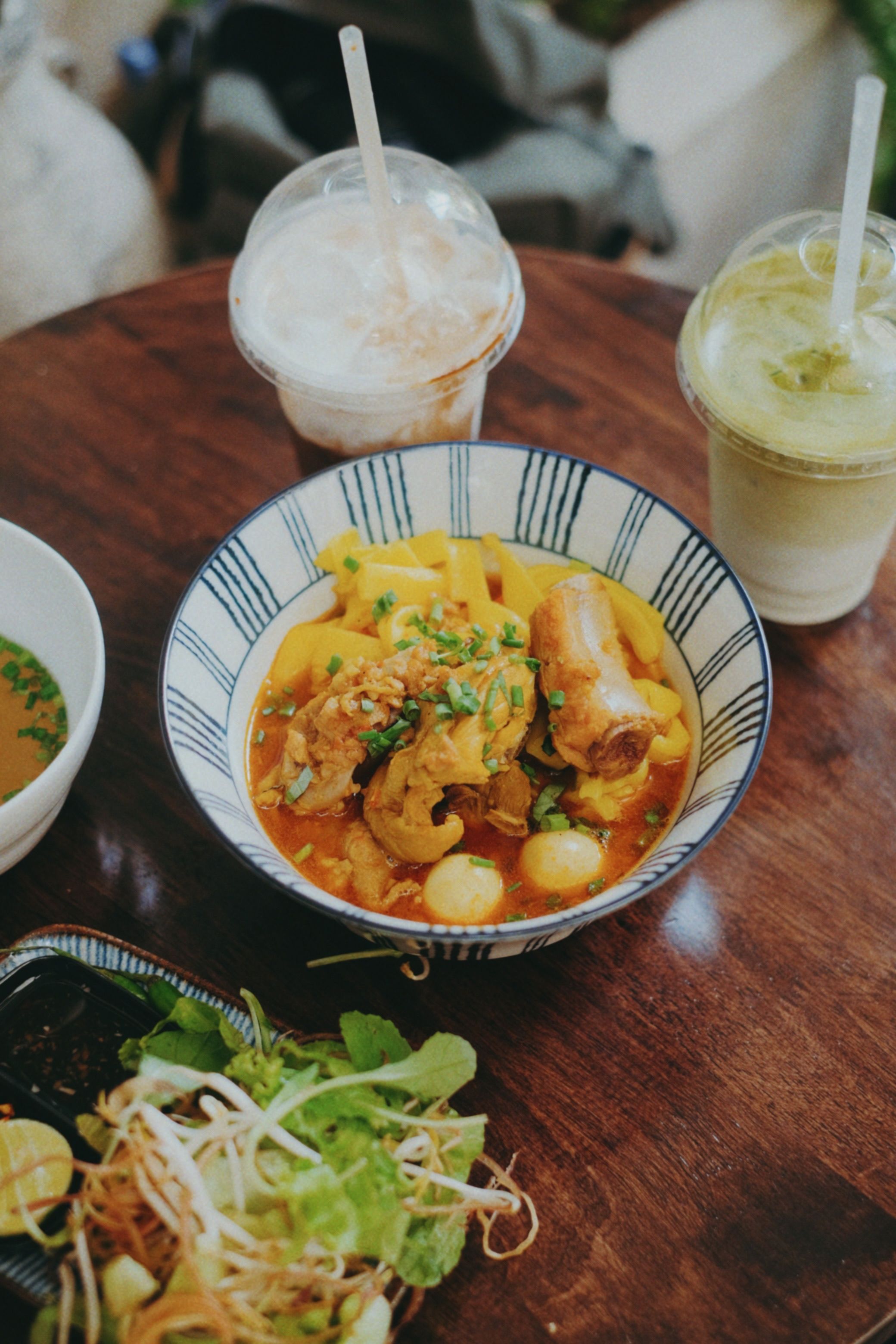
Photo: Pew Nguyen / Pexels
The diets react (see scores below)
Common Ingredients
- egg noodles
- chicken
- coconut milk
- curry paste
- pickled mustard greens
- shallots
- lime
- fried noodles
Specific recipes may vary.
Incompatible with 8 of 11 diets
Diet Ratings
Khao Soi is fundamentally incompatible with ketogenic eating due to its core structural components. Egg noodles are a wheat-based grain product, contributing approximately 40-50g of net carbs per serving on their own — already exceeding or maxing out the entire daily keto carb budget. The fried noodle garnish adds additional carb load on top of this. While several individual ingredients are keto-friendly (coconut milk is high in fat, chicken is a quality protein, curry paste is low-carb in small amounts, pickled mustard greens are acceptable), the dish's identity is built around noodles, making it impossible to consume in standard form on a ketogenic diet. A keto adaptation would require replacing both the boiled and fried egg noodles entirely (e.g., zucchini noodles or shirataki noodles), at which point it would no longer be Khao Soi in any traditional sense.
Khao Soi as described contains multiple animal products that disqualify it from a vegan diet. Chicken is a direct animal product (poultry), and egg noodles contain eggs, another excluded animal product. Both are core, non-optional components of this dish as presented. The remaining ingredients — coconut milk, curry paste, pickled mustard greens, shallots, lime, and fried noodles — are plant-based, but the presence of chicken and egg noodles makes this dish clearly non-vegan. A vegan version of Khao Soi can be made by substituting tofu or chickpeas for the chicken and using rice noodles or egg-free wheat noodles in place of egg noodles.
Khao Soi is fundamentally incompatible with the paleo diet. The dish is built around egg noodles — a wheat-based grain product — which are strictly excluded from all paleo frameworks. Fried noodles (also wheat-based) served as a garnish compound the problem. Pickled mustard greens are a processed/fermented food that typically contains added salt and may include preservatives. While several ingredients are paleo-friendly — chicken, coconut milk, curry paste (in its unprocessed form), shallots, and lime — the non-negotiable grain components make this dish an avoid regardless of interpretation. There is no version of Khao Soi that removes the noodles and remains Khao Soi.
Khao Soi conflicts with Mediterranean diet principles on multiple fronts. Coconut milk is high in saturated fat and is not a traditional Mediterranean fat source — extra virgin olive oil is the canonical fat. Egg noodles are refined grain pasta, not whole grain. Fried noodles add additional unhealthy fat and represent the processed/fried foods the diet discourages. Curry paste, while vegetable-based, is not a Mediterranean ingredient per se, but that alone is not disqualifying. The chicken is acceptable in moderation, and shallots and lime are positive plant elements, but they are minor components. The dominant profile — coconut milk base, refined and fried noodles, absence of olive oil or whole grains or legumes — firmly places this dish outside Mediterranean dietary principles.
Khao Soi is almost entirely incompatible with the carnivore diet. The dish is built around egg noodles (grain-based) and fried noodles (grain-based, plant oil-fried), which are strictly excluded. Coconut milk is a plant-derived fat source, excluded on carnivore. Curry paste contains a blend of plant spices, herbs, and often plant oils — entirely off-limits. Pickled mustard greens are a plant food. Shallots and lime are plant foods. The only carnivore-compatible element is the chicken itself, which represents a small fraction of this dish's identity and flavor profile. This is a quintessentially plant-heavy Thai dish with virtually no path to carnivore adaptation without a complete reconstruction.
Khao Soi is fundamentally incompatible with Whole30. The dish contains two grain-based noodle components: egg noodles (wheat-based pasta) and fried noodles (also wheat-based), both of which are explicitly excluded as grains. These are not optional garnishes — they are defining, structural elements of the dish. Even if every other ingredient (chicken, coconut milk, curry paste, pickled mustard greens, shallots, lime) were compliant, the grain-based noodles alone disqualify the dish entirely. Additionally, fried noodles fall into the 'no recreating junk food' category (rule 4 explicitly lists noodles and chips/fried items). The pickled mustard greens may also contain added sugar or sulfites depending on preparation, and commercial curry pastes sometimes contain non-compliant additives, but these are secondary concerns given the primary grain violations.
Khao Soi contains multiple high-FODMAP ingredients that make it unsuitable during the elimination phase. Egg noodles are wheat-based, making them high in fructans — a major FODMAP trigger. Shallots are high-FODMAP (fructans/GOS) and a significant concern even in small amounts. Most Thai curry pastes contain garlic and/or shallots as base ingredients, adding further fructan load. Pickled mustard greens can contain onion or garlic in their preparation and are not well-characterized in Monash data. Coconut milk is low-FODMAP at small servings (up to 1/2 cup) but may exceed safe thresholds in a soup dish. Chicken, lime, and fried noodles (if wheat-based) round out a dish that is substantially high-FODMAP at any realistic serving size. The combination of wheat noodles, shallots, and curry paste alone makes this dish very likely to trigger symptoms during elimination.
Some clinical FODMAP practitioners note that Khao Soi could theoretically be modified — substituting rice noodles for egg noodles, using a homemade garlic/onion-free curry paste, and omitting shallots — but as traditionally prepared, the dish contains several independent high-FODMAP ingredients. Monash University has not tested Khao Soi as a composite dish, so individual ingredient assessments must guide the verdict.
Khao Soi presents multiple red flags under DASH dietary guidelines. The dominant concern is coconut milk, a tropical oil-based ingredient high in saturated fat, which DASH explicitly limits. A single serving of Khao Soi can contain 15-25g of saturated fat from coconut milk alone, far exceeding the DASH target of keeping saturated fat to under 6% of total calories. Curry paste typically contains significant sodium, and pickled mustard greens are a high-sodium fermented ingredient, pushing the dish's sodium content well above DASH thresholds. Fried noodles add trans and saturated fats along with excess calories. Egg noodles are refined carbohydrates rather than the whole grains DASH emphasizes. While the chicken provides lean protein and lime and shallots are DASH-friendly components, these positives are overwhelmed by the saturated fat load, sodium burden, and refined/fried carbohydrates. Even modest portion sizes would likely exceed DASH limits for both sodium and saturated fat in a single meal.
Khao Soi presents significant Zone Diet challenges but is not a complete write-off. The dish combines several problematic elements: egg noodles are a moderate-to-high glycemic carbohydrate that Zone classifies as 'unfavorable,' and the fried noodle garnish adds additional refined carbs along with likely omega-6-heavy frying oil. Coconut milk introduces substantial saturated fat rather than the preferred monounsaturated fats, pushing the fat profile away from Zone ideals. However, the chicken protein is lean and Zone-friendly, curry paste and pickled mustard greens contribute polyphenols and anti-inflammatory compounds (a Zone positive), shallots and lime are low-glycemic vegetables/acids, and the overall dish does contain a protein anchor. The macronutrient ratio skews problematic: the noodles dominate carb blocks with high glycemic load, the coconut milk inflates the fat block with saturated fat, and the carb-to-protein-to-fat ratio likely runs closer to 60/20/20 or worse in a standard restaurant portion. With heavy modification — reduced noodles, extra vegetables, light coconut milk, no fried noodle topping, and controlled portion — it could be nudged toward Zone compliance, but as standardly prepared it falls into caution territory.
Some Zone practitioners following Sears' later anti-inflammatory writings (The Anti-Inflammation Zone, 2005) might be slightly more permissive on coconut milk's saturated fat given its medium-chain triglyceride content and the presence of anti-inflammatory spices (turmeric, chili in curry paste) and polyphenol-rich ingredients. The dish's spice base and pickled vegetables are genuinely beneficial from a polyphenol standpoint that Sears' later work emphasizes.
Khao Soi presents a mixed anti-inflammatory profile with genuine positives and negatives. On the beneficial side, the curry paste typically contains turmeric, ginger, galangal, lemongrass, and chili — all potent anti-inflammatory spices with strong research backing. Chicken is a lean protein generally considered acceptable in anti-inflammatory frameworks. Shallots and lime add flavonoids and vitamin C. Pickled mustard greens provide probiotics and glucosinolates. However, the dish has meaningful concerns: coconut milk is high in saturated fat (lauric acid), which is debated — some anti-inflammatory authorities consider it neutral-to-mildly-inflammatory at regular intake, while others argue medium-chain triglycerides are metabolically distinct. Egg noodles are refined carbohydrates, offering little fiber and a moderate glycemic load. The fried noodle garnish adds oxidized oils and additional refined carbs, which is a clear negative. The overall dish is calorie-dense and coconut milk-heavy. The spice base is genuinely anti-inflammatory, but the refined carbs, full-fat coconut milk, and fried elements prevent this from being approved. As a moderate, occasional dish rather than a dietary staple, it lands in the caution zone.
Some anti-inflammatory frameworks, including those influenced by Dr. Mary Newport's and others' research on medium-chain triglycerides (MCTs) in coconut products, argue that coconut milk's lauric acid and MCT content may actually reduce inflammation and support metabolic health, which would push this dish slightly more favorable. Conversely, stricter anti-inflammatory protocols (and Dr. Weil's pyramid) emphasize limiting saturated fat from sources like coconut milk, and would be more critical of the refined egg noodles and fried garnish, potentially rating this closer to a 4.
Khao Soi is a Northern Thai coconut curry noodle soup with meaningful protein from chicken, but several ingredients create real concerns for GLP-1 patients. Coconut milk is high in saturated fat and contributes significantly to the fat load per serving — a full bowl can easily contain 20-35g of fat, which is likely to worsen GLP-1 side effects like nausea, bloating, and reflux given slowed gastric emptying. The fried noodle garnish adds additional fat and is a category that should be avoided. Egg noodles are refined carbohydrates with low fiber and low protein density. The curry paste and spice level may trigger GI discomfort in sensitive patients. On the positive side, chicken provides meaningful protein, lime adds hydration-supportive acidity, pickled mustard greens offer some fiber and gut benefit, and the broth base supports hydration. This dish is not without merit but the high saturated fat from coconut milk and the fried topping make it a poor fit as a regular GLP-1 meal. A modified version — reduced coconut milk, lighter broth, no fried noodles, extra chicken, added vegetables — would score considerably higher.
Some GLP-1-focused dietitians note that moderate amounts of coconut milk in a soup context are diluted enough to be tolerable for patients not experiencing active GI side effects, and emphasize that the warm broth and chicken protein make this more acceptable than dry or heavily fried alternatives. Others maintain that saturated fat from coconut milk is a consistent nausea trigger for GLP-1 patients regardless of dilution and recommend avoiding coconut-based curries entirely during active treatment.
*See how scores were generated at our methodology page.
Nutritional profile
Six traits that cut across every diet.
Fiber & Plants
How much whole-plant food and fiber it delivers.
Healthy Fats
The quality of its fats (unsaturated, omega-3).
Whole / Unprocessed
How close it is to its natural, unprocessed form.
Gut Gentle
How easy it is on digestion (low FODMAP, few irritants).
Low Glycemic
How little it spikes your blood sugar.
Protein Density
How much protein it packs per calorie.
Controversy Index
Higher controversy = more disagreement between diets.
Diet-Specific Tips
 Zone — 4/10
View tips
- Egg noodles are 'unfavorable' high-glycemic carbohydrates in Zone terminology
- Fried noodle garnish adds refined carbs and likely omega-6 oils
- Coconut milk is high in saturated fat, not the preferred monounsaturated fat
- Chicken is a lean, Zone-approved protein source
- Curry paste and pickled mustard greens provide anti-inflammatory polyphenols
- Standard portions likely produce a carb-heavy macronutrient ratio far from 40/30/30
- Dish could be modified (noodle reduction, vegetable additions) to improve Zone compliance
 Anti-Inflammatory — 5/10
View tips
- Curry paste contains turmeric, ginger, galangal, chili — strong anti-inflammatory spice profile
- Coconut milk is high in saturated fat — debated in anti-inflammatory nutrition
- Egg noodles are refined carbohydrates with low fiber
- Fried noodle garnish adds oxidized oils and empty refined carbs
- Chicken is a lean, acceptable protein in anti-inflammatory frameworks
- Pickled mustard greens contribute probiotics and beneficial phytochemicals
- Shallots and lime add flavonoids and vitamin C
- High caloric density from coconut milk and fried elements limits frequency of consumption
 GLP-1 Friendly — 4/10
View tips
- High saturated fat from coconut milk — primary concern for GLP-1 GI side effects
- Fried noodle garnish adds avoidable fat and should be omitted
- Egg noodles are refined carbohydrates with low fiber and low protein density
- Chicken provides moderate protein but overall protein density per calorie is low in this dish
- Curry paste may cause GI irritation in GLP-1 patients with reflux or nausea
- Broth base supports hydration, a positive for GLP-1 patients
- Pickled mustard greens offer minor fiber benefit
- Portion-sensitive: a small serving is more tolerable than a full restaurant bowl