This dish contains raw or undercooked ingredients. Consume at your discretion.
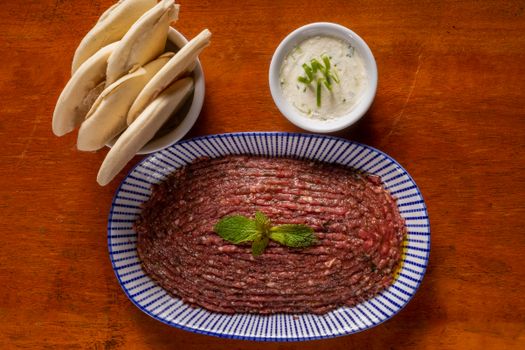
Photo: Guto Macedo / Pexels
Middle-Eastern
Kibbeh Nayyeh (Raw)
The diets react (see scores below)
Common Ingredients
- raw lamb
- bulgur
- onion
- cumin
- allspice
- mint
- olive oil
- pita bread
Specific recipes may vary.
Incompatible with 9 of 11 diets
Diet Ratings
Kibbeh Nayyeh is fundamentally incompatible with a ketogenic diet due to two core ingredients: bulgur (cracked wheat) and pita bread. Bulgur is a whole grain with approximately 25-30g net carbs per quarter cup, and pita bread adds another 30+ grams of net carbs per piece. Together, these two ingredients alone would blow the entire daily carb budget in a single snack serving. While the raw lamb is keto-friendly and the spices/olive oil are acceptable, the grain-based components are non-negotiable structural elements of this dish. Without bulgur, it would not be Kibbeh Nayyeh — it would be a different preparation entirely. The dish cannot be meaningfully adapted without losing its identity.
Kibbeh Nayyeh is a traditional Middle Eastern dish built around raw lamb (or beef) as its primary and defining ingredient. Raw meat is an unambiguous animal product, making this dish completely incompatible with a vegan diet. While several other ingredients — bulgur, onion, cumin, allspice, mint, olive oil, and pita bread — are plant-based, the presence of raw lamb disqualifies the dish entirely. There is no meaningful debate within the vegan community about whether raw lamb is acceptable; it is straightforwardly excluded under all definitions of veganism.
Kibbeh Nayyeh is fundamentally incompatible with the paleo diet due to two core non-paleo ingredients. Bulgur is a processed whole wheat grain — one of the most clearly excluded foods in paleo — and pita bread is a refined wheat product, equally off-limits. While the remaining ingredients are largely paleo-approved (raw lamb is an excellent paleo protein, onion, cumin, allspice, mint, and olive oil are all permitted), the structural role of bulgur in this dish means it cannot be modified into a paleo version without fundamentally changing what the dish is. This is not a gray-area case — grains are among the most unambiguously excluded food categories across all paleo frameworks.
Kibbeh Nayyeh features raw lamb as its primary ingredient, which is red meat — limited to a few times per month in Mediterranean diet guidelines. The raw preparation does not change the nutritional profile, but the dish is fundamentally red-meat-centric. Bulgur and olive oil are positive Mediterranean elements, and the spices and herbs align well, but these cannot offset the central role of raw lamb. Red meat in any form scores poorly under Mediterranean diet principles, and raw red meat carries additional food safety concerns not addressed by the diet framework itself.
Kibbeh Nayyeh is a centuries-old Levantine dish deeply embedded in the traditional foodways of Lebanon, Syria, and the broader Eastern Mediterranean. Some Mediterranean diet scholars argue that traditional regional dishes like this, consumed occasionally and in small portions alongside abundant plant foods, are compatible with the cultural and holistic spirit of the Mediterranean dietary pattern — even if red meat is the primary protein.
Kibbeh Nayyeh is fundamentally incompatible with the carnivore diet. While the raw lamb itself is an excellent carnivore food, the dish is built around bulgur (cracked wheat), which is a grain and a primary plant-based ingredient — an automatic disqualifier. Additional plant-based components include onion, cumin, allspice, mint, olive oil, and pita bread. The majority of this dish's ingredients are explicitly excluded from the carnivore framework. Only the raw lamb component would be acceptable; the dish as prepared cannot be considered carnivore-compatible in any tier.
Kibbeh Nayyeh as prepared contains two excluded ingredients: bulgur (a wheat-based grain, which is explicitly excluded on Whole30) and pita bread (also a wheat grain product, and additionally falls under the 'no recreating baked goods/bread' rule). The remaining ingredients — raw lamb, onion, cumin, allspice, mint, and olive oil — are all fully Whole30-compliant. However, the presence of bulgur and pita bread makes this dish incompatible with the program in its traditional form. A heavily modified version using only the compliant ingredients could be made, but that would no longer be Kibbeh Nayyeh.
Kibbeh Nayyeh contains multiple high-FODMAP ingredients that make it unsuitable during the elimination phase. Bulgur wheat is high in fructans — it is a cracked wheat product and a significant FODMAP source. Onion is one of the highest-FODMAP foods tested by Monash University, rich in fructans, and is problematic at any meaningful quantity. Pita bread is wheat-based and also high in fructans. The combination of bulgur, onion, and pita bread creates a cumulative FODMAP load that makes this dish clearly incompatible with the elimination phase. Raw lamb and olive oil are low-FODMAP, as are the spices (cumin, allspice, mint) in typical culinary quantities, but the three high-fructan components override these safe ingredients entirely.
Kibbeh Nayyeh contains raw lamb or beef as its primary protein, which is a red meat that DASH guidelines explicitly limit due to its saturated fat and cholesterol content. Raw red meat is particularly problematic for DASH compliance: it contains higher levels of saturated fat than lean poultry or fish, and DASH guidelines recommend limiting red meat to no more than one or two small servings per week of lean cuts — and those should be cooked, not raw. Beyond the DASH nutritional concerns, consuming raw meat carries significant food safety risks (Salmonella, E. coli, Toxoplasma) that make it inappropriate for any health-oriented dietary recommendation. The bulgur component is a positive whole grain element, and the olive oil, herbs, and spices are DASH-friendly, but the dominant ingredient — raw fatty lamb — is fundamentally incompatible with the DASH eating plan. Pita bread, typically made from refined flour, adds modest concern. The dish as traditionally prepared cannot be made DASH-compliant without fundamentally altering its defining characteristic (the raw meat).
Kibbeh Nayyeh presents a mixed Zone Diet profile with several competing factors. On the positive side, raw lamb is a protein source that can be portioned into Zone blocks (approximately 1 oz raw lamb yields ~7g protein), and olive oil provides favorable monounsaturated fat. The spices (cumin, allspice, mint) and onion are Zone-friendly additions with polyphenol benefits. However, several factors complicate Zone compatibility: (1) Lamb is a fattier red meat than Zone-preferred lean proteins like chicken breast or fish — it carries more saturated fat, making it an 'unfavorable' protein that requires careful selection of leaner cuts. (2) Bulgur is a moderate-glycemic grain that counts as an 'unfavorable' carbohydrate block in Zone terms — usable but not ideal. (3) Pita bread adds refined, higher-glycemic carbohydrate load, which would push the meal toward carb excess if not carefully controlled. Together, the bulgur and pita create a significant carbohydrate burden that would need to be offset by substantially reduced portions. As a snack specifically, the combined carb sources (bulgur + pita) make macro balancing quite difficult without practically eliminating one. The dish can be Zone-adapted by skipping or minimizing pita, controlling bulgur portions tightly, and choosing the leanest lamb cuts, but in its traditional form it trends toward carb-heavy and higher saturated fat.
Later Zone writings (e.g., The Mediterranean Zone) place greater emphasis on polyphenol-rich, anti-inflammatory Mediterranean and Middle Eastern foods. Bulgur has a relatively low glycemic index compared to white rice or bread (~48 GI), and Sears' later work acknowledges that whole-grain carbohydrates in modest blocks are acceptable. Some Zone practitioners would view the bulgur here more favorably than early Zone 'unfavorable carb' classification suggests, and the olive oil plus lean lamb combination aligns reasonably with Mediterranean Zone principles if pita is omitted.
Kibbeh Nayyeh presents a genuinely mixed anti-inflammatory profile. On the positive side, it contains several anti-inflammatory components: extra virgin olive oil (oleocanthal, polyphenols), bulgur wheat (whole grain fiber, lower glycemic than refined carbs), aromatic spices (cumin, allspice, mint — all with documented antioxidant and mild anti-inflammatory properties), and onion (quercetin, flavonoids). The raw preparation preserves heat-sensitive nutrients in the herbs and spices. However, the dish's primary protein is raw lamb or beef — red meat is in the 'limit' category in anti-inflammatory frameworks due to saturated fat content and arachidonic acid, which can drive eicosanoid-mediated inflammation. Raw red meat also carries a meaningful food safety risk (E. coli, Salmonella, Toxoplasma), which while not an inflammatory nutrition concern per se, is worth noting. The pita bread is a minor negative — refined white pita adds refined carbohydrates, though in typical serving quantities the impact is modest. The anti-inflammatory positives (EVOO, whole grain bulgur, spice blend, alliums) partially offset the pro-inflammatory concern of red meat. Overall, this dish lands in cautious territory: the anti-inflammatory ingredients are genuine, but the red meat foundation and refined carb component prevent a clear approve verdict.
Some anti-inflammatory practitioners (including interpretations aligned with Dr. Weil's Mediterranean-influenced framework) would argue that lean, minimally processed lamb in moderate portions, combined with a strong array of anti-inflammatory spices, olive oil, and whole grain bulgur, makes this an acceptable occasional dish — particularly in a Mediterranean dietary context where such dishes are traditional. Conversely, stricter anti-inflammatory protocols would flag any red meat as pro-inflammatory due to saturated fat and arachidonic acid content, and would recommend substituting with fish or poultry.
Kibbeh Nayyeh is a raw meat dish, and food safety is the overriding concern that places it firmly in the avoid category regardless of its other nutritional properties. GLP-1 medications slow gastric emptying significantly, meaning food — including any pathogens present in raw meat — remains in the digestive tract far longer than usual. This dramatically increases the risk of serious foodborne illness from bacteria such as E. coli O157:H7, Salmonella, and Toxoplasma, which are documented risks of consuming raw lamb or beef. Beyond food safety, the dish has additional GLP-1-specific drawbacks: lamb is a fatty red meat with meaningful saturated fat content, which worsens GLP-1 side effects including nausea and bloating; olive oil adds further fat per serving; and the pita bread component is a refined grain that contributes low-fiber, low-protein calories. The bulgur is a positive element — it is a whole grain with decent fiber — and raw lamb does contain complete protein, but neither benefit comes close to offsetting the food safety risk or the fat load. This dish should not be recommended to any patient on a GLP-1 medication.
*See how scores were generated at our methodology page.
Nutritional profile
Six traits that cut across every diet.
Fiber & Plants
How much whole-plant food and fiber it delivers.
Healthy Fats
The quality of its fats (unsaturated, omega-3).
Whole / Unprocessed
How close it is to its natural, unprocessed form.
Gut Gentle
How easy it is on digestion (low FODMAP, few irritants).
Low Glycemic
How little it spikes your blood sugar.
Protein Density
How much protein it packs per calorie.
Controversy Index
Higher controversy = more disagreement between diets.
Diet-Specific Tips
 Zone — 5/10
View tips
- Lamb is a higher-fat, higher-saturated-fat protein compared to Zone-preferred lean proteins like chicken or fish
- Bulgur is a moderate-GI carbohydrate classified as 'unfavorable' in classic Zone methodology but has a relatively low GI in practice
- Pita bread adds a second high-glycemic carbohydrate source, compounding carb load and making snack-sized Zone balancing difficult
- Olive oil is an ideal Zone fat source providing favorable monounsaturated fat
- Spices and onion contribute polyphenols supportive of Sears' anti-inflammatory Zone goals
- As a snack, the dual carb sources (bulgur + pita) make achieving 40/30/30 ratio challenging without significant modification
- Raw meat preparation does not affect Zone macronutrient classification but may raise food safety concerns independent of Zone methodology
 Anti-Inflammatory — 5/10
View tips
- Red meat (lamb/beef) is in the 'limit' category — saturated fat and arachidonic acid are pro-inflammatory
- Extra virgin olive oil is a strong anti-inflammatory contributor (oleocanthal, monounsaturated fats)
- Bulgur is a whole grain with fiber — preferable to refined grains, modest anti-inflammatory benefit
- Spice blend (cumin, allspice, mint) provides antioxidants and mild anti-inflammatory phytochemicals
- Onion contributes quercetin and flavonoids — anti-inflammatory
- Pita bread (typically refined wheat) adds refined carbohydrates — minor negative
- Raw preparation is a food safety consideration but does not alter the inflammatory profile per se