Photo: NGUYỄN THÀNH NHƠN / Pexels
Korean
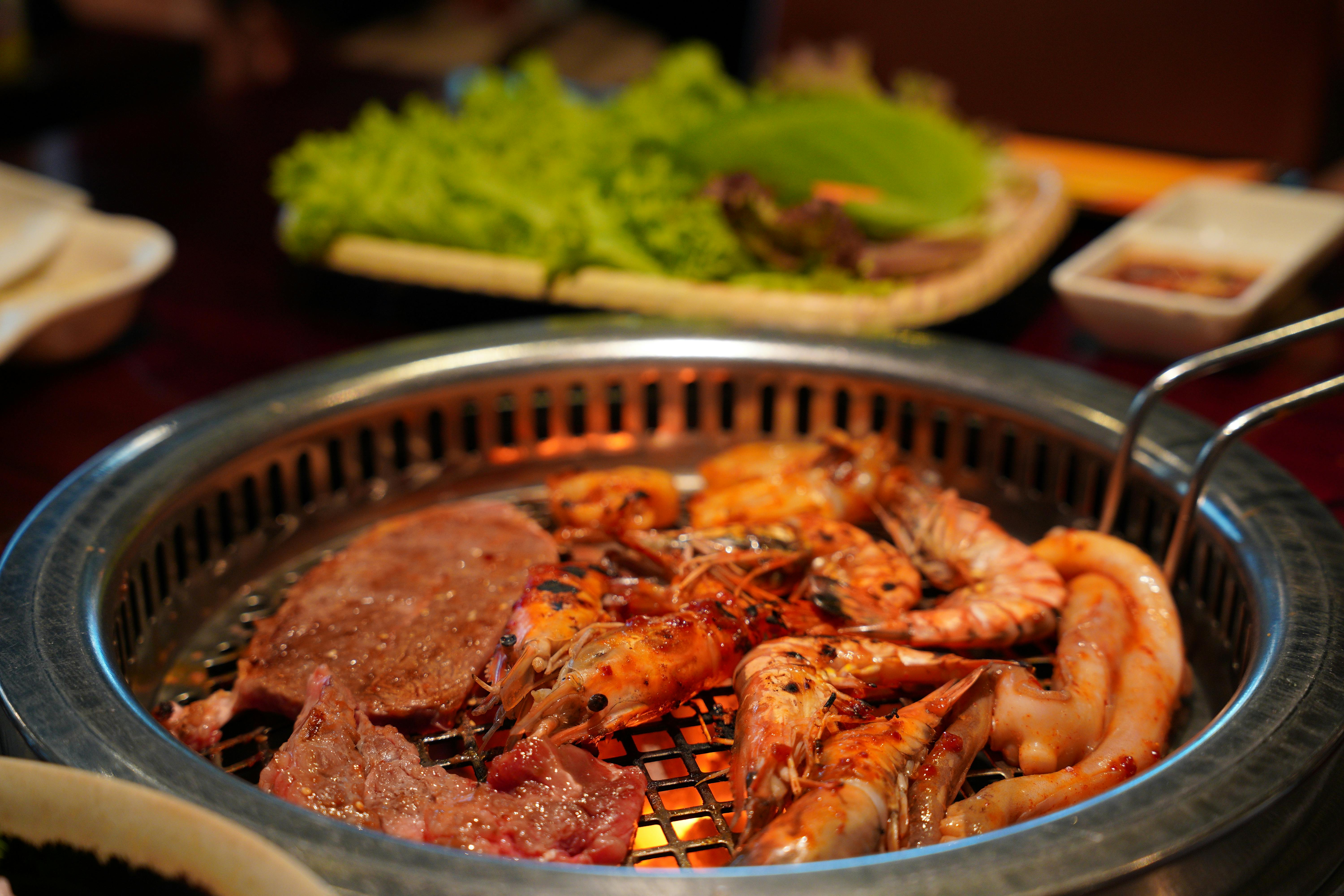
Korean BBQ Set
The diets react (see scores below)
Common Ingredients
- beef
- pork belly
- lettuce
- ssamjang
- kimchi
- garlic
- scallions
- sesame oil
Specific recipes may vary.
Incompatible with 8 of 11 diets
Diet Ratings
Korean BBQ Set has several keto-friendly components but requires careful management of high-carb elements. Beef and pork belly are excellent keto proteins and fat sources. Lettuce wraps replace rice/grains effectively. Sesame oil is keto-approved. However, ssamjang (fermented soybean paste with added sugar and gochujang) is a notable carb source with roughly 3-5g net carbs per tablespoon, and it's easy to over-consume. Kimchi is generally low-carb (~1-2g net carbs per serving) but commercially prepared versions often contain added sugar. Garlic and scallions add minor carbs. The set as traditionally served, with multiple pieces of meat, liberal ssamjang, and kimchi sides, can push net carbs to the 15-25g range — manageable within keto limits but requiring deliberate portion control on condiments. The meats themselves are fully keto-approved; the condiment and fermented components are the limiting factors.
Some strict keto practitioners avoid ssamjang and commercial kimchi entirely due to added sugars and the potential for fermented grain-based pastes to spike insulin, opting instead for plain salt or sesame oil as the only condiment. Conversely, lazy keto adherents often approve the full set without modification, arguing the protein and fat load keeps the meal well within daily macros.
Korean BBQ Set contains beef and pork belly as primary proteins, both of which are animal flesh and strictly excluded under vegan dietary rules. All other ingredients (lettuce, ssamjang, kimchi, garlic, scallions, sesame oil) are plant-based, but the presence of meat makes this dish entirely incompatible with a vegan diet. Note that kimchi sometimes contains fish sauce or shrimp paste in traditional preparations, adding a secondary animal-derived concern.
While the Korean BBQ Set contains several paleo-approved ingredients — beef, pork belly, lettuce, garlic, and scallions are all unprocessed and hunter-gatherer compatible — two ingredients disqualify the dish. Ssamjang is a fermented paste made from doenjang (fermented soybean paste) and gochujang (which typically contains rice flour and sometimes sugar), making it a legume- and grain-based condiment that is firmly off-limits on paleo. Sesame oil is a seed oil, explicitly excluded under paleo guidelines. Kimchi in its traditional form also commonly contains fish sauce (acceptable) but is often prepared with added salt and sometimes sugar, and the fermentation process itself is generally tolerated by the paleo community — however, kimchi's paleo status is secondary to the more clear-cut violations. The presence of ssamjang and sesame oil alone are sufficient to push this dish into 'avoid' territory.
Korean BBQ Set is centered on red meat (beef and pork belly), both of which are explicitly limited in the Mediterranean diet to a few times per month at most. Pork belly is particularly problematic due to its very high saturated fat content. While some individual ingredients align well with Mediterranean principles — lettuce, garlic, scallions, and sesame oil are plant-based and nutritious, and kimchi offers fermented vegetable benefits — these supportive elements do not offset the dominant protein sources. The dish is fundamentally built around frequent, generous portions of red meat, which directly contradicts Mediterranean dietary guidelines. Sesame oil, though a plant-based fat, is not the preferred fat (extra virgin olive oil is canonical). Overall, this dish conflicts with core Mediterranean diet principles at its foundation.
Korean BBQ Set contains beef and pork belly which are fully carnivore-approved, but the dish as a whole is fundamentally incompatible with the carnivore diet due to the majority of its components being plant-derived. Lettuce wraps (ssamjang), kimchi (fermented vegetables), garlic, scallions, and sesame oil are all plant-based ingredients that are explicitly excluded from the carnivore diet. Ssamjang is a fermented paste made from doenjang (soybean paste) and gochujang (chili paste) — both plant-based and processed. Kimchi is fermented cabbage with additional vegetables and seasonings. Sesame oil is a plant-derived oil. The dish cannot be partially adapted; it is structurally built around plant accompaniments. Only the raw beef and pork belly components could be salvaged in isolation.
This Korean BBQ set contains two major non-compliant ingredients. Ssamjang is a fermented paste typically made from doenjang (fermented soybean paste) and gochujang (which contains rice flour and sometimes sugar), making it a legume/grain-based condiment that is excluded. Kimchi, while often vegetables-based, is traditionally made with fish sauce or salted shrimp and can be compliant, but commercially prepared kimchi frequently contains sugar and sometimes soy — requiring very careful label reading. The meats (beef, pork belly), lettuce, garlic, scallions, and sesame oil are all Whole30-compliant on their own. However, the ssamjang is a dealbreaker as commonly prepared — it contains soy and often sugar — making this dish as typically served non-compliant.
Korean BBQ Set contains multiple high-FODMAP ingredients that make it unsuitable during the elimination phase. Garlic is one of the highest-FODMAP foods tested by Monash University (high in fructans even in tiny amounts). Ssamjang is a fermented paste made primarily from doenjang (fermented soybean paste) and gochujang, both of which contain high-FODMAP ingredients including GOS from soybeans and fructans from wheat in gochujang. Kimchi is high-FODMAP due to garlic and scallion content used in its preparation — Monash rates kimchi as high-FODMAP. Scallions (spring onion bulb/white part) are high in fructans; only the green tops are low-FODMAP. The grilled beef and pork belly themselves are low-FODMAP proteins, and lettuce and sesame oil are also safe. However, the combination of garlic, ssamjang, kimchi, and scallion whites creates an unavoidable high-FODMAP dish as typically served. Even if garlic and ssamjang were omitted, standard kimchi alone disqualifies this dish during elimination.
Korean BBQ Set presents multiple significant conflicts with DASH diet guidelines. Pork belly is extremely high in saturated fat, which DASH explicitly limits. Ssamjang is a fermented paste (combining doenjang and gochujang) that is very high in sodium, and kimchi — while rich in beneficial vegetables — is also high in sodium due to the fermentation and salting process. Together, these two condiments alone can contribute 800–1,500mg of sodium per serving, a substantial portion of even the standard DASH sodium ceiling of 2,300mg/day. Red and processed meats (beef and pork belly) are explicitly limited under DASH guidelines due to saturated fat and cholesterol content. The combination of high-sodium condiments, fatty pork belly, and red meat makes this dish fundamentally incompatible with DASH principles. The lettuce, garlic, scallions, and sesame oil are DASH-friendly components, but they are insufficient to offset the dominant negative factors. This is a high-sodium, high-saturated-fat meal as commonly consumed.
Korean BBQ is a mixed picture from a Zone perspective. The dish has genuine strengths: lettuce wraps replace bread/rice, keeping carbs low-glycemic; kimchi and garlic provide excellent polyphenols and anti-inflammatory benefits; sesame oil (though omega-6 rich) is used in small amounts; and ssamjang adds flavor with modest carb load. However, pork belly is the primary concern — it is very high in saturated fat, making it an 'unfavorable' Zone protein. A Zone-ideal Korean BBQ would use leaner cuts (brisket, sirloin, chicken) and minimize pork belly. Beef in this set can range from lean to fatty depending on cut. Achieving the 30% protein / 30% fat ratio is challenging when pork belly is the centerpiece, as fat calories will likely exceed Zone targets significantly. The carbohydrate side is actually well-structured for Zone — lettuce, kimchi, garlic, and scallions are all low-glycemic favorable carbs. If a diner selects leaner beef cuts, uses lettuce wraps generously, controls pork belly portions, and loads up on kimchi and vegetable accompaniments, this meal can approximate Zone ratios. But as typically served, the high saturated fat from pork belly pulls it toward caution.
Early Zone writings (Enter the Zone) strictly discouraged fatty red meat and saturated fat sources like pork belly. However, Sears' later anti-inflammatory framework (The OmegaRx Zone, Zone Perfect Meals in Minutes) softened somewhat on saturated fat when overall meal balance is maintained. Some Zone practitioners argue that if pork belly is eaten in a small block portion within a lettuce wrap loaded with kimchi and vegetables, the overall meal ratio can still approximate 40/30/30. The protein/fat density of pork belly does make block calculation difficult, as the fat blocks will dominate — but it is not categorically excluded.
Korean BBQ is a mixed bag from an anti-inflammatory standpoint. On the positive side, the dish includes several genuinely anti-inflammatory components: garlic is rich in allicin and has well-documented anti-inflammatory effects; kimchi is a fermented food providing probiotics and beneficial lactobacillus strains that support gut health and reduce systemic inflammation; lettuce wraps (ssamjang served in whole lettuce leaves) add fiber and phytonutrients; scallions provide quercetin and flavonoids; and sesame oil, while relatively high in omega-6, also contains sesamol and sesaminol — lignans with antioxidant activity. However, the primary proteins are beef and pork belly, both of which are red/fatty meats that anti-inflammatory frameworks consistently flag for limitation. Pork belly in particular is high in saturated fat, which can elevate inflammatory markers like CRP and IL-6 at regular intake. Beef contains arachidonic acid, a precursor to pro-inflammatory eicosanoids. The Korean BBQ preparation (grilled at high heat) also introduces potential advanced glycation end-products (AGEs) and heterocyclic amines, both associated with increased inflammatory burden. Ssamjang (fermented soybean and chili paste) is a net positive — fermented soy and chili are both anti-inflammatory — but commercial versions may contain added sugars or sodium. Overall, the dish sits squarely in 'caution': the anti-inflammatory accompaniments partially offset the pro-inflammatory protein base, but this is not a dish an anti-inflammatory diet would emphasize. Occasional consumption in moderate portions is acceptable; regular consumption is not recommended.
Some integrative nutrition practitioners, including those following Dr. Weil's broader dietary philosophy, would note that grass-fed beef in moderate portions can be acceptable in an anti-inflammatory diet due to a better omega-3:omega-6 ratio and CLA content — this perspective would rate the dish slightly more favorably. Conversely, stricter anti-inflammatory and autoimmune protocols (e.g., AIP-adjacent frameworks) would rate it more harshly, flagging both red meat and pork belly as consistently pro-inflammatory regardless of accompaniments.
Korean BBQ sets are centered on fatty grilled meats — pork belly in particular is one of the highest-fat proteins available, with a typical serving delivering 25-35g of fat, much of it saturated. Even the beef component (galbi or bulgogi cuts) tends toward fattier cuts. High-fat meals are a primary driver of GLP-1 side effects including nausea, bloating, and reflux due to slowed gastric emptying compounding the already delayed fat digestion. Sesame oil adds additional fat. Ssamjang is moderately high in sodium, which can be a concern for fluid retention. On the positive side, the lettuce wraps provide some fiber and hydration, kimchi offers probiotics and fiber, and garlic and scallions are nutrient-dense. However, the pork belly component is significant enough to push this into avoid territory as typically served. If beef-only (lean cuts like sirloin or brisket, trimmed) were substituted and pork belly excluded entirely, this dish would move to caution territory.
Some GLP-1-experienced dietitians note that Korean BBQ can be made more GLP-1-compatible by selecting lean beef cuts and controlling portion size of the meat, pointing to the high protein density and the vegetable-forward accompaniments (lettuce, kimchi, scallions) as genuinely beneficial. The disagreement centers on whether the dish should be rated on its typical as-served composition — which prominently features pork belly — or on its modifiable best-case version.
*See how scores were generated at our methodology page.
Nutritional profile
Six traits that cut across every diet.
Fiber & Plants
How much whole-plant food and fiber it delivers.
Healthy Fats
The quality of its fats (unsaturated, omega-3).
Whole / Unprocessed
How close it is to its natural, unprocessed form.
Gut Gentle
How easy it is on digestion (low FODMAP, few irritants).
Low Glycemic
How little it spikes your blood sugar.
Protein Density
How much protein it packs per calorie.
Controversy Index
Higher controversy = more disagreement between diets.
Diet-Specific Tips
 Keto — 5/10
View tips
- Pork belly and beef are high-fat, zero-carb proteins — ideal for keto
- Ssamjang contains added sugar and fermented grains, ~3-5g net carbs per tablespoon
- Kimchi is low-carb but commercial versions often contain added sugar
- Lettuce wraps are a keto-friendly substitution for rice
- Garlic and scallions add minor but non-negligible carbs
- Total net carbs highly dependent on condiment portions
- Sesame oil is keto-approved healthy fat
 Zone — 5/10
View tips
- Pork belly is very high in saturated fat, pushing fat calories well above the Zone's 30% target
- Lettuce wraps are an excellent low-glycemic carb vehicle, Zone-favorable
- Kimchi, garlic, and scallions are anti-inflammatory polyphenol-rich Zone-favorable carbs
- Sesame oil is omega-6 dominant — less ideal than olive oil or avocado oil in Zone framework
- Leaner beef cuts in the set are acceptable Zone proteins if fat is trimmed
- No high-glycemic carbs (no rice or bread base) is a strong Zone-positive feature
- Ssamjang adds modest carbs but is used in small quantities — manageable in Zone blocks
- Portion control of pork belly is essential to approach Zone macro ratios
 Anti-Inflammatory — 4/10
View tips
- Pork belly is high in saturated fat — a consistently flagged pro-inflammatory fat in anti-inflammatory frameworks
- Beef provides arachidonic acid and saturated fat; both red meats are in the 'limit' category
- Kimchi contributes probiotics and fermented vegetables — genuinely anti-inflammatory
- Garlic is a well-supported anti-inflammatory ingredient (allicin, organosulfur compounds)
- High-heat grilling generates AGEs and heterocyclic amines, adding to inflammatory load
- Sesame oil has mixed omega-6 profile but contains anti-inflammatory lignans (sesamol, sesaminol)
- Fermented soybean paste (ssamjang) provides anti-inflammatory benefits from soy and chili; watch for added sugar in commercial versions
- Lettuce wraps and scallions add fiber and flavonoids that partially offset the red meat base