Korean
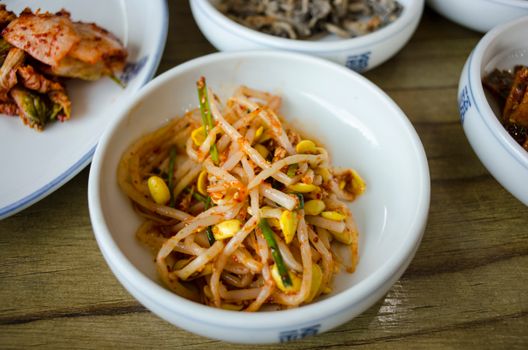
Korean Bean Sprouts
The diets react (see scores below)
Common Ingredients
- soybean sprouts
- sesame oil
- garlic
- scallions
- soy sauce
- sesame seeds
- salt
- gochugaru
Specific recipes may vary.
Incompatible with 4 of 11 diets
Diet Ratings
Korean bean sprouts (kongnamul) are a relatively low-carb vegetable side dish. Soybean sprouts contain roughly 3-4g net carbs per 100g serving, making a modest portion compatible with keto. Sesame oil adds healthy fat, and most other ingredients (garlic, scallions, soy sauce, sesame seeds, gochugaru) are used in small amounts contributing minimal carbs. However, soy sauce contains a small amount of wheat and sugar, and soybean sprouts are higher in carbs than many leafy greens. Gochugaru (Korean red pepper flakes) is generally low-carb in typical quantities. The dish is keto-friendly in small portions but the carbs can add up if consumed in larger amounts. Additionally, soy-based foods generate some debate in the keto community regarding their phytoestrogen content and inflammatory potential.
Some stricter keto practitioners flag soy-based foods entirely due to phytoestrogen content and potential hormonal effects, and others avoid soy sauce due to its wheat content and trace sugars; these camps would recommend avoiding this dish regardless of portion size.
Korean Bean Sprouts (kongnamul muchim) is a fully plant-based dish. Every ingredient — soybean sprouts, sesame oil, garlic, scallions, soy sauce, sesame seeds, salt, and gochugaru — is derived entirely from plants. It is also a whole-food preparation with minimal processing, which scores highly under whole-food plant-based standards. There are no animal products, animal-derived additives, or ethically contested ingredients present.
This dish contains multiple paleo-incompatible ingredients that make it clearly off-limits. Soybean sprouts are derived from soybeans, a legume explicitly excluded from the paleo diet regardless of sprouting stage. Soy sauce is doubly problematic — it contains both soy (legume) and wheat (grain), and is a processed, fermented condiment. Sesame oil is a seed oil on the excluded list. Salt is also discouraged on strict paleo. The only paleo-compliant ingredients in this dish are garlic, scallions, sesame seeds (whole seeds are generally accepted), and gochugaru. The core ingredients — soybean sprouts, soy sauce, and sesame oil — are foundational to this dish and cannot simply be omitted without fundamentally changing it.
Korean Bean Sprouts (kongnamul muchim) is a plant-forward dish built around soybean sprouts, a legume-derived vegetable that aligns perfectly with Mediterranean diet principles emphasizing vegetables and legumes consumed multiple times daily. Garlic, scallions, and sesame seeds are all wholesome, minimally processed ingredients consistent with the diet. The primary fat is sesame oil rather than olive oil, which is the one meaningful departure from Mediterranean convention, but it is still a healthy plant-based fat used in small quantities. Soy sauce adds sodium but in modest culinary amounts typical of a seasoning. Gochugaru (Korean chili flakes) is simply a dried spice with no compatibility issues. Overall, this is a whole-food, plant-based vegetable side with no red meat, refined grains, added sugars, or processed ingredients.
Some strict Mediterranean diet interpretations would note that sesame oil, while healthful, is not the canonical fat of the Mediterranean and that traditional guidelines explicitly center extra virgin olive oil; a purist view would prefer substituting or supplementing sesame oil with olive oil to better align with the dietary pattern.
Korean Bean Sprouts is entirely plant-derived with zero animal products. Every single ingredient — soybean sprouts, sesame oil, garlic, scallions, soy sauce, sesame seeds, salt, and gochugaru — is plant-based or a plant-derived condiment. Soybean sprouts are legumes, which are explicitly excluded from the carnivore diet. Sesame oil and seeds are plant oils and seeds. Soy sauce is a fermented grain/legume product. Garlic, scallions, and gochugaru are plant aromatics and spices. This dish has no qualifying animal-derived components whatsoever and is fundamentally incompatible with carnivore principles at every level.
This dish contains soy sauce, which is a soy-based product and therefore excluded on Whole30. Soy in all forms (soy sauce, tamari, soy lecithin, edamame, etc.) is explicitly prohibited as a legume derivative. The remaining ingredients — soybean sprouts, sesame oil, garlic, scallions, sesame seeds, salt, and gochugaru — are all Whole30-compliant, but the soy sauce alone disqualifies the dish as traditionally prepared. A compliant version could be made by substituting coconut aminos for the soy sauce.
This dish contains two significant high-FODMAP ingredients that make it unsuitable during the elimination phase. Garlic is one of the highest FODMAP foods tested by Monash University, containing high levels of fructans even in tiny amounts — there is no safe serving size for garlic cloves. Scallions (green onions) are a split food: the green tops are low-FODMAP but the white bulb portions are high in fructans. In Korean cooking, both parts are typically used, making scallions problematic unless explicitly prepared with green tops only. Soybean sprouts (kongnamul) are also a concern — while mung bean sprouts are low-FODMAP, soybean sprouts have higher GOS content and Monash rates them as high-FODMAP even at moderate servings. Sesame oil, sesame seeds, salt, and gochugaru (red pepper flakes, no onion/garlic powder added) are all low-FODMAP. Soy sauce in small amounts (1 tablespoon) is generally considered low-FODMAP. However, the combination of garlic, potentially high-FODMAP scallion bulbs, and soybean sprouts creates multiple FODMAP triggers that collectively make this dish a clear avoid during elimination.
Korean bean sprouts (kongnamul muchim) is built on a DASH-friendly base of soybean sprouts, which are rich in potassium, fiber, and plant protein — all nutrients DASH emphasizes. Garlic, scallions, gochugaru, and sesame seeds are wholesome additions. However, the combination of soy sauce and added salt creates a meaningful sodium concern. A typical serving of this banchan can contain 400–700mg of sodium depending on preparation, primarily from soy sauce (roughly 900mg sodium per tablespoon) and added salt. DASH's standard target is <2,300mg/day total, and the stricter low-sodium DASH is <1,500mg/day, meaning this side dish could consume a significant fraction of the daily sodium budget. Sesame oil is unsaturated and acceptable in small amounts. The dish is not high in saturated fat, added sugar, or heavily processed ingredients, so it avoids the worst DASH offenders — but the sodium load prevents a full approval.
NIH DASH guidelines focus on overall dietary patterns and daily sodium totals rather than individual dishes; some DASH-oriented clinicians would approve this dish in typical banchan-sized portions (small side) since the vegetable base is nutrient-dense. However, reduced-sodium soy sauce and omitting added salt would substantially improve compatibility with the low-sodium DASH target.
Korean Bean Sprouts (kongnamul muchim) is an excellent Zone-compatible side dish. Soybean sprouts are a very low-glycemic vegetable with minimal net carbs, making them a favorable Zone carbohydrate source. The sesame oil provides monounsaturated and polyunsaturated fats in small quantities, which aligns well with Zone fat guidelines — though sesame oil contains some omega-6, the amount used in this dish is modest. Garlic, scallions, and gochugaru are polyphenol-rich ingredients that Sears explicitly champions in his anti-inflammatory framework. Soy sauce adds sodium but negligible macronutrient impact. The dish lacks protein, so as a standalone it needs to be paired with a lean protein source to complete a Zone meal, but as a vegetable side dish component it is nearly ideal — it fills the carbohydrate block requirement efficiently with very low glycemic load. Sesame seeds contribute a small amount of fat and protein. Overall this dish exemplifies the kind of colorful, low-glycemic vegetable preparation the Zone Diet encourages.
Korean bean sprouts (kongnamul muchim) is a strongly anti-inflammatory side dish. Soybean sprouts are a whole soy food — a category explicitly emphasized in anti-inflammatory frameworks for their isoflavones, fiber, and plant protein. Garlic is well-documented for its anti-inflammatory sulfur compounds (allicin). Gochugaru (Korean red pepper flakes) contains capsaicin, which has demonstrated anti-inflammatory effects in research and is consistent with the emphasis on chili peppers in Dr. Weil's pyramid. Sesame seeds provide lignans and antioxidants. Scallions add additional flavonoids. Soy sauce is high in sodium and contains some additives depending on brand, which is a minor concern, but the quantity used as a seasoning is small. Sesame oil does have a relatively high omega-6 content, but is used in small amounts as a finishing oil and contains sesamol and sesamin — lignans with antioxidant and anti-inflammatory properties — which distinguishes it from industrially refined seed oils. Overall, this dish is predominantly whole plant foods with anti-inflammatory spices and condiments used in culinary (not excessive) quantities.
Korean bean sprouts (kongnamul muchim) is a light, vegetable-based side dish that offers meaningful fiber, high water content, and easy digestibility — all positives for GLP-1 patients. Soybean sprouts provide modest plant protein (~2-3g per serving) and are low in calories, making them nutrient-dense per calorie. However, the dish has no significant primary protein source, limiting its standalone value for meeting the 15-30g protein-per-meal target. Sesame oil adds small amounts of heart-healthy unsaturated fat, which is acceptable in the modest quantities typical of this dish. Gochugaru (Korean chili flakes) is a mild-to-moderate heat spice that may trigger reflux or nausea in GLP-1 patients with heightened GI sensitivity, though it is generally far less irritating than hot sauces. Soy sauce contributes sodium, which warrants attention for patients managing blood pressure. Overall, this is a reasonable GLP-1-friendly side when portioned appropriately and paired with a high-protein main, but it should not anchor a meal nutritionally.
Some GLP-1-focused dietitians would rate this more favorably given its light texture, high water content, and digestibility — qualities especially valued on high-side-effect days when patients struggle to eat at all. Others caution that even mild spice from gochugaru can unpredictably worsen nausea or reflux in GLP-1 patients, making individual tolerance the key variable here.
*See how scores were generated at our methodology page.
Nutritional profile
Six traits that cut across every diet.
Fiber & Plants
How much whole-plant food and fiber it delivers.
Healthy Fats
The quality of its fats (unsaturated, omega-3).
Whole / Unprocessed
How close it is to its natural, unprocessed form.
Gut Gentle
How easy it is on digestion (low FODMAP, few irritants).
Low Glycemic
How little it spikes your blood sugar.
Protein Density
How much protein it packs per calorie.
Controversy Index
Higher controversy = more disagreement between diets.
Diet-Specific Tips
 Keto — 5/10
View tips
- Soybean sprouts have ~3-4g net carbs per 100g — manageable in small servings
- Sesame oil provides healthy fat content
- Soy sauce contains trace wheat and sugar — concern for strict keto
- Gochugaru and garlic contribute minimal carbs in typical quantities
- Scallions add a small carb load — portion-sensitive
- Soy foods debated in keto community due to phytoestrogens
- Overall dish is low-fat with no significant protein — not an ideal keto macro profile
 Vegan — 9/10
View tips
- Soybean sprouts are 100% plant-based
- Sesame oil and sesame seeds are plant-derived fats
- Soy sauce is fermented from soybeans and wheat — no animal ingredients
- Gochugaru (Korean red pepper flakes) is a plant-based spice
- No animal products, dairy, eggs, or animal-derived additives in any ingredient
- Minimal processing — predominantly whole plant foods
 Mediterranean — 8/10
View tips
- Soybean sprouts are a legume-derived vegetable, strongly encouraged in the Mediterranean diet
- All ingredients are whole and minimally processed
- Sesame oil is a healthy plant fat but not the Mediterranean-canonical extra virgin olive oil
- Garlic, scallions, and sesame seeds are fully compatible staples
- No red meat, refined grains, added sugars, or highly processed components
- Sodium from soy sauce is moderate and within acceptable culinary use
 DASH — 5/10
View tips
- Soybean sprouts are a DASH-positive vegetable: high in potassium, fiber, and plant protein
- Soy sauce is a high-sodium ingredient (~900mg per tablespoon) — primary concern
- Added salt compounds the sodium load
- Sesame oil is heart-healthy unsaturated fat, acceptable in moderation
- Garlic, scallions, and gochugaru are DASH-neutral to positive additions
- No saturated fat, trans fat, added sugar, or heavy processing
- Low-sodium soy sauce substitution would raise the score to 7–8
 Zone — 8/10
View tips
- Soybean sprouts are very low-glycemic, favorable Zone carbohydrate
- Garlic, scallions, and gochugaru are polyphenol-rich, supporting anti-inflammatory Zone goals
- Sesame oil provides mostly unsaturated fat in small quantity — acceptable Zone fat
- No protein source present; must be paired with lean protein to complete a Zone-balanced meal
- Soy sauce adds sodium but does not meaningfully affect macronutrient balance
- Overall macronutrient profile is carbohydrate-dominant but very low in total calories, making it easy to balance within Zone blocks
 Anti-Inflammatory — 8/10
View tips
- Soybean sprouts are a whole soy food emphasized in anti-inflammatory frameworks for isoflavones and fiber
- Garlic provides allicin and sulfur compounds with well-documented anti-inflammatory effects
- Gochugaru (chili pepper) contributes capsaicin, an anti-inflammatory compound endorsed in Dr. Weil's pyramid
- Sesame seeds add lignans (sesamol, sesamin) with antioxidant properties
- Sesame oil used as a finishing oil in small quantities; its lignans partially offset omega-6 concerns
- Soy sauce adds sodium but is used in small seasoning amounts — a minor concern
- Dish is entirely plant-based with no processed ingredients, refined carbs, or added sugars
 GLP-1 Friendly — 5/10
View tips
- Low protein — no primary protein source; soybean sprouts contribute only ~2-3g protein per serving
- Good fiber contribution from soybean sprouts supports digestion and helps counter GLP-1-related constipation
- High water content supports hydration, which is a priority given reduced thirst on GLP-1 medications
- Sesame oil is an unsaturated fat used in small amounts — acceptable but adds calorie density with minimal nutritional return at scale
- Gochugaru may worsen nausea or reflux in GLP-1 patients with GI sensitivity — individual tolerance varies
- Soy sauce adds sodium — relevant for patients with hypertension or fluid retention
- Excellent as a side paired with lean protein; poor as a standalone nutritional contributor
- Easy to digest — well-suited to slowed gastric emptying on GLP-1 medications