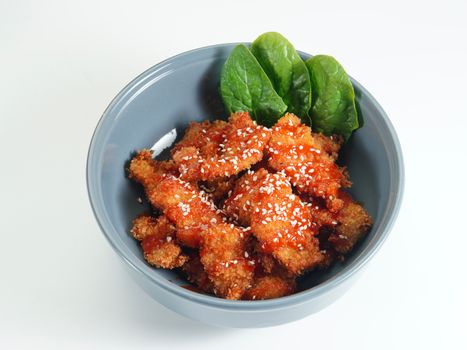
Korean
Korean Chicken Katsu
The diets react (see scores below)
Common Ingredients
- chicken
- panko
- egg
- flour
- cabbage
- katsu sauce
- rice
- sesame seeds
Specific recipes may vary.
Incompatible with 8 of 11 diets
Diet Ratings
Korean Chicken Katsu is fundamentally incompatible with a ketogenic diet. The dish contains multiple high-carb ingredients: panko breadcrumbs (used as coating), all-purpose flour (for dredging), rice (a staple grain), and katsu sauce (typically high in sugar). Rice alone can contain 40-50g of net carbs per serving, immediately exceeding most people's daily keto limit. The flour and panko coating add additional significant carbs, and katsu sauce is loaded with sugar. While the chicken itself is keto-friendly and cabbage in small amounts is acceptable, the overall dish is dominated by grain-based and sugar-containing components that make ketosis maintenance impossible with a standard serving.
Korean Chicken Katsu contains multiple animal-derived ingredients that make it entirely incompatible with a vegan diet. Chicken is direct animal flesh, egg is used in the breading process as a binder, and these two ingredients alone are clear disqualifiers. There is no ambiguity here — this dish is built around animal products at its core.
Korean Chicken Katsu contains multiple non-paleo ingredients that are strictly excluded from the diet. Panko (breadcrumbs) and flour are grain-based coatings — grains are a core exclusion in all paleo frameworks. Rice is a grain and clearly off-limits under standard paleo rules. Katsu sauce is a processed condiment typically containing sugar, soy sauce (a legume derivative), and other additives. Sesame seeds are technically paleo-acceptable, and chicken, egg, and cabbage are fully approved — but the dish as a whole is dominated by grain-based and processed components that make it incompatible with a paleo diet.
Korean Chicken Katsu conflicts with several Mediterranean diet principles. The dish is deep-fried in (likely non-olive-oil) fat using refined panko breading and flour, representing the kind of heavily processed, refined-grain cooking method the Mediterranean diet discourages. The katsu sauce typically contains added sugars and is highly processed. White rice is a refined grain, not a whole grain. While chicken itself is an acceptable moderate protein and cabbage is a positive vegetable element, the overall preparation method — deep-frying with refined breading and a sugary processed sauce — makes this dish poorly aligned with Mediterranean principles. The combination of refined grains (panko, flour, white rice), processed condiments, and deep-frying outweighs the benefits of the chicken and cabbage.
Some Mediterranean diet practitioners argue that chicken-based dishes can be acceptable in moderation regardless of preparation style, and cabbage and sesame seeds do contribute plant-forward elements. A more flexible modern interpretation might rate this as 'caution' rather than 'avoid' if portion sizes are controlled and the dish is consumed infrequently, noting that some traditional Mediterranean cooking also uses breadcrumbs (e.g., Italian cotoletta) in similar fashion.
Korean Chicken Katsu is fundamentally incompatible with the carnivore diet. While chicken and egg are animal-derived, the dish is heavily built around plant-based and grain-based ingredients. Panko breadcrumbs and flour are grain products entirely excluded from carnivore. Rice is a grain staple — completely off-limits. Cabbage is a plant vegetable. Katsu sauce is a processed condiment containing sugar, fruit, and plant-derived additives. Sesame seeds are plant seeds. The animal components (chicken, egg) are buried under multiple layers of excluded ingredients, and the cooking method (breading and frying in plant oil is implied) further disqualifies this dish. There is no version of this dish that could be considered carnivore-compatible without a complete reconstruction.
Korean Chicken Katsu contains multiple Whole30-excluded ingredients. Panko and flour are grain-based (wheat), making them excluded. Rice is also an excluded grain. Katsu sauce typically contains sugar, soy, and other non-compliant additives. Additionally, even if individual ingredients could somehow be swapped, the dish itself — breaded and fried chicken served over rice — is structurally a recreated comfort/junk food format that violates Whole30 rules against breaded preparations. This dish fails on multiple counts simultaneously.
Korean Chicken Katsu contains multiple high-FODMAP ingredients that make it problematic during the elimination phase. The most significant concerns are: (1) Panko breadcrumbs are wheat-based and high in fructans — a standard coating amount (30-50g) would exceed safe fructan thresholds. (2) All-purpose flour used for dredging is also wheat-based and adds additional fructan load. (3) Katsu sauce (tonkatsu-style) typically contains onion, garlic, apple, and/or Worcestershire sauce — all high-FODMAP ingredients. Commercial katsu sauce is especially problematic as it nearly always contains garlic and onion powder or puree. The chicken itself, egg, rice, sesame seeds, and cabbage are all low-FODMAP at standard servings, so the protein and grain base is fine. However, the wheat-based coating and katsu sauce create unavoidable FODMAP exposure that would disqualify this dish during elimination phase without significant modification.
Monash University rates small amounts of wheat-based coatings as potentially tolerable if the total fructan load stays low, but clinical FODMAP practitioners generally advise avoiding wheat-based breadings entirely during elimination due to the difficulty of controlling portion size and cumulative fructan stacking. The dish could theoretically be made low-FODMAP by substituting gluten-free panko and flour, and using a homemade FODMAP-safe sauce, but as traditionally prepared it should be avoided.
Korean Chicken Katsu presents a mixed DASH profile. The lean chicken breast is DASH-compatible, and cabbage provides beneficial fiber and micronutrients. However, the dish is deep-fried in panko breading, which significantly increases total fat content and calories. The katsu sauce (typically a Worcestershire-based condiment like Bulldog or similar) is notably high in sodium and added sugars, which conflicts with DASH sodium and added sugar limits. White rice, while not prohibited, lacks the fiber benefit of whole grains that DASH emphasizes. The egg and flour breading add minimal nutritional concern on their own, but the overall preparation method (deep frying) and the high-sodium sauce push this dish into 'caution' territory. Sesame seeds offer a small benefit with magnesium and healthy fats. With modifications — baked or air-fried preparation, low-sodium or reduced sauce, and substituting brown rice — this dish could score higher.
NIH DASH guidelines emphasize limiting total and saturated fat and sodium, which this fried, sauced dish exceeds in standard preparation. However, some updated clinical interpretations note that lean poultry remains a core DASH protein, and if prepared with air-frying and a reduced-sodium sauce, the dish can be adapted to fit within DASH parameters — making preparation method the critical variable rather than the dish itself being categorically excluded.
Korean Chicken Katsu presents several Zone Diet challenges. The chicken itself is an excellent lean protein source, and the cabbage is a favorable low-glycemic vegetable. However, the dish as traditionally prepared stacks multiple high-glycemic, unfavorable carbohydrate sources: white rice is a high-glycemic carb that Sears explicitly discourages, panko breadcrumb coating adds refined starch, and flour dredging adds further high-GI carbohydrates. Katsu sauce is typically sweetened (sugar, Worcestershire, fruit puree), contributing additional glycemic load. The combination of rice + panko + flour + sweet sauce creates a carbohydrate profile that is heavily skewed toward unfavorable, high-glycemic sources rather than the preferred low-glycemic vegetables and modest whole grains the Zone recommends. The frying method also introduces omega-6 heavy oils (typically vegetable or canola oil), contrary to Zone's anti-inflammatory fat principles. While the 40/30/30 ratio could theoretically be hit by controlling rice portion and increasing cabbage, in practice the carbohydrate quality is poor and the dish would require significant modification — eliminating or drastically reducing rice, skipping the coating, and replacing katsu sauce — to become Zone-compliant. As served in a standard restaurant or home preparation, this dish is a caution at best.
Korean Chicken Katsu is a fried, breaded chicken dish with a mixed anti-inflammatory profile. On the positive side, it contains lean chicken (a 'moderate' protein in anti-inflammatory frameworks), cabbage (a cruciferous vegetable with anti-inflammatory glucosinolates and vitamin C), sesame seeds (contain sesamin and sesamol, anti-inflammatory lignans, plus some omega-3s), and rice (a whole grain if brown, neutral if white). However, the preparation method raises concerns: deep-frying in oil — likely a refined seed oil such as vegetable or canola — introduces significant omega-6 fatty acids and oxidized lipids, both pro-inflammatory. The panko-flour breading is a refined carbohydrate with minimal nutritional value. Katsu sauce (typically a Worcestershire-style condiment) commonly contains added sugars, high-fructose corn syrup, and artificial additives depending on the brand, pushing the dish in a pro-inflammatory direction. The egg used in breading is neutral-to-mildly beneficial. Overall, this is a modestly nutritious meal undermined by the frying method and processed sauce. It is not inherently 'anti-inflammatory' but is acceptable occasionally, especially if baked rather than fried and the sauce is clean-label.
Some anti-inflammatory practitioners would score this higher if the frying oil is avocado or light olive oil and the katsu sauce is a low-sugar, clean-label variety — in that context, the lean protein, cruciferous cabbage, and sesame seeds make it a reasonable meal. Conversely, stricter anti-inflammatory protocols (e.g., Dr. Weil's emphasis on avoiding refined carbs and processed condiments) would push the score lower, noting that fried breaded foods should be a rare indulgence rather than a regular part of the diet.
Korean Chicken Katsu is a breaded, deep-fried chicken dish that presents multiple significant concerns for GLP-1 patients. The panko breading and deep-frying process substantially increases the fat content and makes this a greasy, heavy meal — exactly the category known to worsen GLP-1 side effects including nausea, bloating, and reflux. Slowed gastric emptying means fried, heavy foods sit in the stomach far longer, amplifying discomfort. The katsu sauce is typically high in sugar, adding empty calories with minimal nutritional value. White rice is a refined carbohydrate with low fiber and low protein density per calorie, further diluting the nutritional quality of the meal. While chicken is an excellent protein source in principle, the breading and frying method largely negate its GLP-1 suitability. The cabbage and sesame seeds offer minor fiber and nutrient benefits but are insufficient to offset the core issues. The combination of fried protein, refined starch, and sugary sauce makes this a poor fit for GLP-1 patients, particularly those managing GI side effects.
*See how scores were generated at our methodology page.
Nutritional profile
Six traits that cut across every diet.
Fiber & Plants
How much whole-plant food and fiber it delivers.
Healthy Fats
The quality of its fats (unsaturated, omega-3).
Whole / Unprocessed
How close it is to its natural, unprocessed form.
Gut Gentle
How easy it is on digestion (low FODMAP, few irritants).
Low Glycemic
How little it spikes your blood sugar.
Protein Density
How much protein it packs per calorie.
Controversy Index
Higher controversy = more disagreement between diets.
Diet-Specific Tips
 DASH — 4/10
View tips
- Deep-fried preparation increases total fat content beyond DASH recommendations
- Katsu sauce is high in sodium and added sugar, conflicting with DASH limits
- Lean chicken breast is a DASH-approved protein source
- Cabbage provides DASH-favorable fiber and micronutrients
- White rice is less preferable to whole grains under DASH guidelines
- Sesame seeds contribute small amounts of magnesium and healthy fats
- Dish can be significantly improved by air-frying and using low-sodium sauce
 Zone — 4/10
View tips
- White rice is a high-glycemic unfavorable carb explicitly discouraged by Sears
- Panko breadcrumb coating and flour dredging add refined starch
- Katsu sauce contributes added sugars, increasing glycemic load
- Frying likely uses omega-6 seed oils, contrary to Zone anti-inflammatory principles
- Chicken is an ideal Zone lean protein
- Cabbage is a favorable low-glycemic Zone vegetable
- Dish could be partially salvaged by portion-controlling rice and increasing cabbage
- Sesame seeds provide small amounts of beneficial monounsaturated fat
 Anti-Inflammatory — 4/10
View tips
- Deep-frying likely in refined seed oil — high omega-6 and oxidized lipid risk
- Panko and flour breading are refined carbohydrates with low nutritional value
- Katsu sauce often contains added sugars and potential artificial additives
- Lean chicken is an acceptable moderate protein in anti-inflammatory frameworks
- Cabbage provides anti-inflammatory cruciferous compounds (glucosinolates, vitamin C)
- Sesame seeds contribute anti-inflammatory lignans (sesamin, sesamol) and some healthy fats
- White rice is nutritionally neutral; brown rice would be preferable
- Egg is neutral to mildly beneficial (choline, selenium)