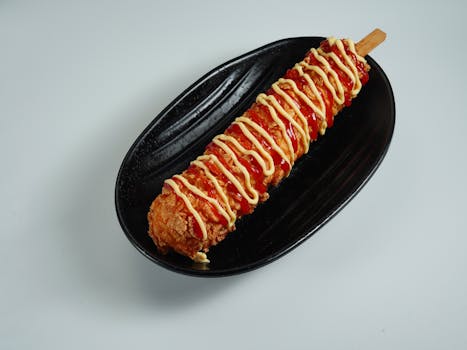
Korean
Korean Corn Cheese
The diets react (see scores below)

That’s a heavy plate — want to see the leaner version?
Common Ingredients
- corn
- mozzarella
- mayonnaiseGreek yogurt (plain, nonfat)
Nonfat Greek yogurt keeps the creamy body of mayonnaise with more protein and far less fat.
- butterExtra virgin olive oil
Extra-virgin olive oil swaps saturated fat for monounsaturated fat in place of butter.
- sugarMonk fruit sweetener
Monk fruit sweetener removes the added-sugar load of sugar while keeping sweetness.
- scallions
- black pepper
- bell pepper
Specific recipes may vary.
Incompatible with 10 of 11 diets
Diet Ratings
Korean Corn Cheese is fundamentally incompatible with ketogenic eating. Corn is a starchy grain-adjacent vegetable with extremely high net carbs (roughly 25-30g net carbs per half cup), and the dish includes added sugar on top of that. A standard serving would almost certainly consume or exceed an entire day's keto carb budget in one snack. While mozzarella, mayonnaise, and butter are keto-friendly ingredients, they cannot offset the dominant carb load from corn and sugar. Bell pepper and scallions add minor additional carbs. There is no meaningful way to portion-control this dish into keto compliance without fundamentally changing its character.
Korean Corn Cheese contains multiple animal-derived ingredients that disqualify it from a vegan diet. Mozzarella is a dairy cheese, butter is a dairy product, and standard mayonnaise is made with eggs. These three ingredients are all clearly animal-derived, making this dish incompatible with veganism. The remaining ingredients — corn, sugar, scallions, black pepper, and bell pepper — are fully plant-based, but they cannot offset the non-vegan components. A vegan version is theoretically achievable by substituting vegan mozzarella, vegan butter, and egg-free mayonnaise (such as those made from aquafaba or soy), but the traditional dish as described here is not vegan.
Korean Corn Cheese is fundamentally incompatible with the Paleo diet. Corn is a grain and strictly excluded. Mozzarella is dairy, also excluded. Mayonnaise is typically made with seed oils (soybean or canola oil), making it a double violation. Sugar is refined and excluded. Butter is dairy. The only Paleo-compliant ingredients in this dish are scallions, black pepper, and bell pepper — vegetables that are otherwise fully approved but constitute a tiny fraction of this dish. Nearly every primary component violates core Paleo principles.
Korean Corn Cheese is largely incompatible with Mediterranean diet principles. The dish relies on mayonnaise (processed, omega-6-heavy fat replacing olive oil) and butter (saturated animal fat, not the canonical Mediterranean fat source) as its primary fat components. Added sugar further contradicts Mediterranean guidelines around minimal refined/added sugars. Mozzarella in large quantities pushes dairy well beyond the moderate, incidental role it plays in the Mediterranean pattern. While corn, bell pepper, and scallions are plant-based positives, they are minor contributors in a dish dominated by problematic fats and sugar. The overall profile — processed condiment fat, saturated fat, added sugar, heavy cheese — runs counter to Mediterranean principles across multiple dimensions.
Korean Corn Cheese is almost entirely plant-based and incompatible with the carnivore diet. Corn is a grain/vegetable, bell peppers and scallions are plant foods, and sugar is a processed additive — all strictly excluded. Mayonnaise typically contains plant oils (soybean or canola) and is not a carnivore-approved food. While butter and mozzarella are animal-derived dairy products, they are minority ingredients in a dish that is fundamentally built around corn and plant-based components. There is no meaningful animal protein present. This dish fails carnivore criteria on nearly every ingredient.
Korean Corn Cheese contains multiple Whole30-excluded ingredients. Corn is a grain and is explicitly excluded from the Whole30 program. Sugar is a prohibited added sweetener. Butter (regular, not ghee or clarified butter) is a dairy product and is excluded. Mozzarella is also a dairy product and is excluded. Mayonnaise as commonly sold typically contains non-compliant ingredients such as soy or canola with additives, and often sugar. This dish has at least four clear Whole30 violations (corn, sugar, butter, mozzarella), making it definitively non-compliant.
Korean Corn Cheese contains several ingredients that require careful attention during the FODMAP elimination phase. Corn (canned or fresh) is low-FODMAP at around 1/2 cup but becomes high-FODMAP at larger servings due to fructans. Mozzarella is low-FODMAP as a hard/low-lactose cheese. Mayonnaise is generally low-FODMAP in standard servings. Butter is low-FODMAP (negligible lactose). Sugar is low-FODMAP. Bell pepper (red or green) is low-FODMAP at standard servings. Black pepper is fine in culinary amounts. The two main concerns are: (1) scallions — the green tops are low-FODMAP but the white bulb portions are high in fructans, and Korean corn cheese recipes often use the whole scallion; (2) corn quantity — this dish is typically served as a shared snack with a generous corn base, making it easy to consume a high-FODMAP portion. If green scallion tops only are used and corn portions are controlled (~1/2 cup per person), this dish could be tolerated, but as commonly prepared it carries moderate FODMAP risk.
Monash University rates canned corn as low-FODMAP at 1/2 cup (75g) but high-FODMAP at 3/4 cup — since corn cheese is a corn-forward dish, standard portions likely exceed this threshold. Clinical FODMAP practitioners often flag scallion-containing dishes as risky unless the recipe explicitly specifies green tops only, as white bulb portions are a significant fructan source.
Korean Corn Cheese is problematic for DASH diet adherence on multiple fronts. Mozzarella cheese contributes significant saturated fat and sodium. Mayonnaise adds saturated fat, refined oils, and substantial sodium. Butter is a source of saturated fat explicitly limited by DASH guidelines. Added sugar runs counter to DASH's emphasis on minimizing sweets. While corn, bell pepper, and scallions are DASH-friendly vegetables, they are overwhelmed by the combination of full-fat cheese, mayonnaise, and butter. The cumulative saturated fat and sodium load from this dish's primary components (cheese + mayo + butter) clearly places it in the avoid category under standard NIH/NHLBI DASH guidelines.
Korean Corn Cheese is highly problematic for the Zone Diet on multiple fronts. Corn is explicitly listed as an 'unfavorable' high-glycemic carbohydrate in Sears' Zone framework — it spikes insulin significantly. Sugar is added on top of the corn, compounding the glycemic load. Mayonnaise contributes omega-6-heavy seed oils (typically soybean or canola), which directly contradicts Zone's anti-inflammatory emphasis. Butter adds saturated fat. Mozzarella provides some protein but is primarily a fat source with saturated fat. Critically, the dish has no lean protein component, making a 40/30/30 block balance essentially impossible without major reconstruction. The fat profile is dominated by saturated fat and omega-6 seed oils rather than monounsaturated fats. The only Zone-friendly elements are the bell peppers and scallions, which are favorable low-glycemic vegetables but represent a minor portion of the dish. Even with careful portioning, the combination of high-glycemic corn, added sugar, and inflammatory fats makes this dish nearly impossible to fit into a Zone meal without fundamentally changing its character.
Korean Corn Cheese is a highly problematic dish from an anti-inflammatory perspective. Mayonnaise (typically made with soybean or canola oil, high in omega-6) and butter (saturated fat) form a double pro-inflammatory fat base. Full-fat mozzarella adds more saturated fat. Added sugar directly promotes inflammation by spiking insulin and elevating inflammatory markers like CRP and IL-6. The combination of refined fats, dairy fat, high-omega-6 oils, and added sugar makes this dish a textbook anti-inflammatory concern. The only redeeming elements are bell peppers (vitamin C, carotenoids, anti-inflammatory) and scallions (quercetin, flavonoids), but these are minor contributors in a small garnish role. Corn itself is a starchy grain with modest fiber but no significant anti-inflammatory benefit, especially when paired with sugar. This dish essentially combines multiple 'limit' and 'avoid' category ingredients into a single preparation with no meaningful anti-inflammatory offset.
Korean Corn Cheese is a poor fit for GLP-1 patients across nearly every rating criterion. The dish combines mayonnaise and butter as primary binders, making it high in saturated and total fat — a known trigger for GLP-1 side effects including nausea, bloating, and reflux due to slowed gastric emptying. Mozzarella adds additional fat with only modest protein return. Sugar is a direct added-sugar ingredient with no nutritional value. There is no meaningful protein source — the primary protein is listed as none, and the combined contribution from corn and mozzarella in a snack portion falls well short of the 15–30g per meal protein target. Fiber content is minimal despite corn being present, as typical serving sizes are small and corn's fiber contribution is modest. Caloric density is high relative to nutritional return, directly conflicting with the nutrient-density-per-calorie priority. The mayonnaise and butter combination also makes this a high-fat, heavy-feeling dish that sits poorly in a slowed digestive system. The only modest positives are the presence of bell pepper and scallions (micronutrients, minimal fiber) and corn (some complex carbohydrate), neither of which redeems the overall profile.
*See how scores were generated at our methodology page.
Nutritional profile
Six traits that cut across every diet.
Fiber & Plants
How much whole-plant food and fiber it delivers.
Healthy Fats
The quality of its fats (unsaturated, omega-3).
Whole / Unprocessed
How close it is to its natural, unprocessed form.
Gut Gentle
How easy it is on digestion (low FODMAP, few irritants).
Low Glycemic
How little it spikes your blood sugar.
Protein Density
How much protein it packs per calorie.
Controversy Index
Higher controversy = more disagreement between diets.
Diet-Specific Tips
 Low-FODMAP — 5/10
View tips
- Corn is dose-dependent — low-FODMAP at 1/2 cup but high at larger servings typical in this dish
- Scallion white bulbs are high-FODMAP fructans; green tops only should be used
- Mozzarella is low-lactose and low-FODMAP
- Mayonnaise and butter are low-FODMAP in standard amounts
- Bell pepper and black pepper are safe
- Sugar is low-FODMAP
- Portion control is critical — this dish is easy to overeat past FODMAP thresholds