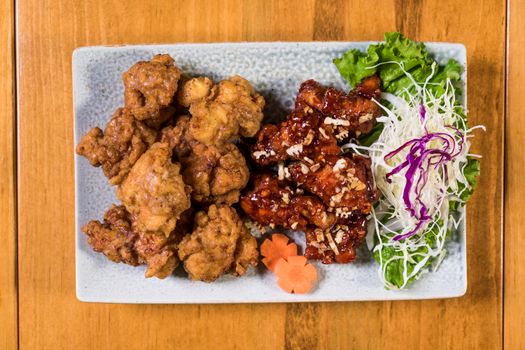
Photo: Luis Becerra Fotógrafo / Pexels
Korean
Korean Fried Chicken
The diets react (see scores below)
Common Ingredients
- chicken
- flour
- cornstarch
- gochujang
- soy sauce
- garlic
- ginger
- sesame seeds
Specific recipes may vary.
Incompatible with 9 of 11 diets
Diet Ratings
Korean Fried Chicken is fundamentally incompatible with a ketogenic diet in its standard form. The coating relies on wheat flour and cornstarch — both high-glycemic, grain-based carbohydrates that spike blood sugar and disrupt ketosis. A typical serving carries 20-35g of net carbs from the batter alone. Gochujang is a fermented chili paste that contains a significant amount of added sugar and rice, adding further carbs. Soy sauce contributes minimal carbs but is a non-issue here given the larger offenders. The chicken itself and sesame seeds are keto-friendly, but the preparation method makes this dish a clear avoid without major recipe reconstruction (e.g., almond flour / pork rind coating, sugar-free chili paste substitute).
Korean Fried Chicken contains chicken as its primary protein, which is poultry — a direct animal product categorically excluded from all vegan diets. There is no ambiguity here: this dish is fundamentally built around animal flesh. All other ingredients (flour, cornstarch, gochujang, soy sauce, garlic, ginger, sesame seeds) are plant-based, but the presence of chicken makes the dish entirely non-vegan regardless of preparation method.
Korean Fried Chicken contains multiple non-paleo ingredients that disqualify it clearly. Flour (wheat) is a grain and a core paleo exclusion. Cornstarch is derived from corn, also a grain. Soy sauce contains both wheat and soy, making it a double violation (grain + legume). Gochujang is a fermented chili paste that typically contains rice flour and soy, adding further grain and legume concerns. Sesame seeds, garlic, and ginger are paleo-approved, and chicken itself is a clean protein — but the batter, sauce base, and marinade components are fundamentally incompatible with paleo principles. This dish cannot be adapted without a near-complete reconstruction of its defining elements.
Korean Fried Chicken significantly contradicts Mediterranean diet principles on multiple fronts. The dish involves deep-frying in oil (not olive oil), uses refined flour and cornstarch as a batter coating, and relies on a heavily processed sauce base (gochujang with added sugars, soy sauce with high sodium). While chicken itself is acceptable in moderation in the Mediterranean diet, the preparation method — deep-frying in refined-grain batter — transforms it into a highly processed, high-fat, refined-carbohydrate dish. The absence of vegetables, whole grains, or legumes as primary components, combined with the deep-frying technique and refined coating, places this firmly in the 'avoid' category. Individual ingredients like garlic, ginger, and sesame seeds are Mediterranean-friendly, but they are minor components that do not redeem the overall nutritional profile.
Korean Fried Chicken is incompatible with the carnivore diet. While chicken itself is an acceptable animal protein, this dish is heavily coated and sauced with plant-derived and processed ingredients. Flour and cornstarch are grain-derived carbohydrates used as breading. Gochujang is a fermented chili paste containing gochugaru (red chili), glutinous rice, and sugar. Soy sauce is a fermented soybean and wheat product. Garlic and ginger are plant-based aromatics. Sesame seeds are plant seeds. The only carnivore-compatible ingredient is the chicken itself. The dish as prepared is essentially a vehicle for multiple categories of excluded foods: grains, legumes, plant spices, and processed condiments.
Korean Fried Chicken contains multiple excluded ingredients that make it incompatible with Whole30. Flour (a grain product) and cornstarch are both explicitly excluded. Soy sauce contains soy (a legume) and typically wheat (a grain), both of which are excluded — coconut aminos would be the compliant substitute. Gochujang paste almost universally contains rice flour and often added sugar, both excluded. Additionally, the dish is essentially fried chicken coated in a batter, which falls into the 'no recreating junk food/comfort food' category even if individual ingredients could theoretically be swapped. Multiple core ingredients are non-compliant, making this a clear avoid.
Korean Fried Chicken as described contains multiple high-FODMAP ingredients that make it unsuitable during the elimination phase. Garlic is one of the highest-FODMAP foods (fructans), problematic even in small amounts. Wheat flour is high in fructans. Gochujang typically contains fermented soybean paste and garlic, making it high-FODMAP. Soy sauce made from wheat is also a fructan concern, though tamari (gluten-free soy sauce) in small amounts may be acceptable. The combination of garlic, wheat flour, and gochujang creates a dish that is definitively high-FODMAP at any standard serving size. While the chicken, cornstarch, ginger, and sesame seeds are individually low-FODMAP, the problematic ingredients are central to the dish's flavor profile and cannot simply be omitted without fundamentally changing the recipe.
Korean Fried Chicken presents multiple DASH diet concerns. The deep-frying method significantly increases total fat content, including saturated fat from the frying oil. Soy sauce is high in sodium (roughly 900mg per tablespoon), and gochujang paste also contributes substantial sodium, pushing the dish well toward or beyond the DASH daily sodium limits in a single serving. The flour and cornstarch coating used for frying adds refined carbohydrates with little nutritional benefit. While the base ingredient (chicken) is lean protein compatible with DASH, the preparation method fundamentally transforms it into a high-sodium, high-fat dish. Garlic, ginger, and sesame seeds are DASH-friendly components, but they do not offset the primary concerns. This dish is not aligned with core DASH principles of low sodium and limited saturated/total fat.
Korean Fried Chicken presents several Zone challenges while retaining some redeemable qualities. The chicken itself is a lean, Zone-favorable protein, but the deep-frying in a flour-cornstarch batter significantly alters the macronutrient profile. The batter adds high-glycemic carbohydrates (refined flour and cornstarch are unfavorable Zone carbs), and deep-frying introduces a substantial fat load — likely in omega-6-heavy seed oils — that skews the fat block away from the preferred monounsaturated sources. Gochujang typically contains added sugar, pushing the glycemic load higher. On the positive side, garlic and ginger are polyphenol-rich Zone-friendly additions, sesame seeds offer some monounsaturated fat, and soy sauce contributes minimal carb load. The dish is protein-anchored, which helps, but the batter-to-chicken ratio and frying method make it structurally difficult to achieve 40/30/30 without radical portion adjustment. A small portion (focusing on the chicken interior over the batter) could fit within a Zone meal if paired with large non-starchy vegetable sides and minimizing the sauce, but as typically served, the carb and omega-6 fat load is problematic.
Some Zone practitioners argue that any dish with a lean protein base can be Zone-adapted by controlling portion size — eating a small amount of the chicken while heavily offsetting with low-GI vegetables could bring the meal ratio into range. Sears' later writing also somewhat softened hard rules around occasional 'unfavorable' carb exposures, emphasizing that consistent overall ratio management matters more than individual food exclusions.
Korean Fried Chicken presents a genuinely mixed anti-inflammatory profile. On the positive side, garlic and ginger are well-established anti-inflammatory spices with meaningful evidence behind them. Gochujang contains capsaicin from chili peppers, which has anti-inflammatory properties, along with fermented components that may support gut health. Sesame seeds offer some omega-6 balanced with lignans and antioxidants. Soy sauce, while high in sodium, is fermented and contributes small amounts of beneficial compounds. However, the dish is fundamentally fried chicken — the frying process is the primary concern. Deep frying typically uses high-omega-6 refined oils (often corn, soybean, or vegetable oil), which are consistently flagged in anti-inflammatory frameworks. The frying process also generates advanced glycation end-products (AGEs) and oxidized lipids that promote inflammatory signaling. Refined flour and cornstarch as coating ingredients contribute negligible nutritional value and represent refined carbohydrates. Gochujang in commercial preparations often contains added sugar and preservatives. Lean poultry itself sits in the 'moderate' tier of anti-inflammatory guidance, but frying elevates its inflammatory burden considerably. The dish is not a nutritional disaster — the spice profile is genuinely beneficial — but the preparation method undermines the positive ingredients significantly.
Some anti-inflammatory nutritionists would argue that if fried in a more neutral or high-oleic oil (e.g., high-oleic sunflower or avocado oil) and consumed occasionally, the anti-inflammatory spice profile (garlic, ginger, chili) partially compensates; the fermented gochujang also adds probiotic-adjacent value. On the stricter end, AIP and paleo-adjacent anti-inflammatory frameworks would flag the refined grain coating, potential seed oils, and added sugars in commercial gochujang as clearly problematic, pushing this closer to an 'avoid.'
Korean Fried Chicken is a deep-fried dish with a flour and cornstarch batter, making it high in fat and difficult to digest — two significant red flags for GLP-1 patients. The frying process dramatically increases fat content and introduces potentially inflammatory oils, which are known to worsen GLP-1 side effects including nausea, bloating, and reflux. While the base ingredient is chicken (a lean protein), the preparation method negates that advantage. Gochujang adds spice and sugar, further risking GI irritation and contributing empty calories. The gochujang-soy glaze also typically adds notable sugar content. Although garlic, ginger, and sesame seeds offer minor nutritional benefits, they do not offset the core issues with this preparation. The battered, fried format is also not small-portion-friendly in a satisfying way — the caloric density is high relative to protein yield per bite. This dish conflicts with at least three core GLP-1 dietary priorities: low fat, easy digestibility, and nutrient density per calorie.
*See how scores were generated at our methodology page.
Nutritional profile
Six traits that cut across every diet.
Fiber & Plants
How much whole-plant food and fiber it delivers.
Healthy Fats
The quality of its fats (unsaturated, omega-3).
Whole / Unprocessed
How close it is to its natural, unprocessed form.
Gut Gentle
How easy it is on digestion (low FODMAP, few irritants).
Low Glycemic
How little it spikes your blood sugar.
Protein Density
How much protein it packs per calorie.
Controversy Index
Higher controversy = more disagreement between diets.
Diet-Specific Tips
 Zone — 4/10
View tips
- Chicken is a lean, Zone-approved protein source
- Deep-frying adds significant omega-6 fat load from seed oils, conflicting with Zone's anti-inflammatory fat preference
- Flour and cornstarch batter are high-glycemic, unfavorable Zone carbohydrates
- Gochujang typically contains added sugar, increasing glycemic load
- Garlic, ginger, and sesame seeds are Zone-friendly polyphenol and fat contributors
- Macronutrient ratio skews heavily toward carbs and fat relative to protein as typically served
- Could be partially Zone-adapted by eating smaller portions focused on the chicken interior
 Anti-Inflammatory — 4/10
View tips
- Deep frying generates AGEs and oxidized lipids — pro-inflammatory preparation method
- Likely use of high-omega-6 refined frying oils (corn, soybean, vegetable)
- Garlic and ginger are well-supported anti-inflammatory spices
- Gochujang contains capsaicin with anti-inflammatory properties; fermented base may support gut health
- Sesame seeds provide lignans and antioxidants
- Refined flour and cornstarch coating adds refined carbohydrates with no anti-inflammatory benefit
- Commercial gochujang often contains added sugars and sodium
- Lean poultry is acceptable in moderation but frying significantly raises inflammatory burden