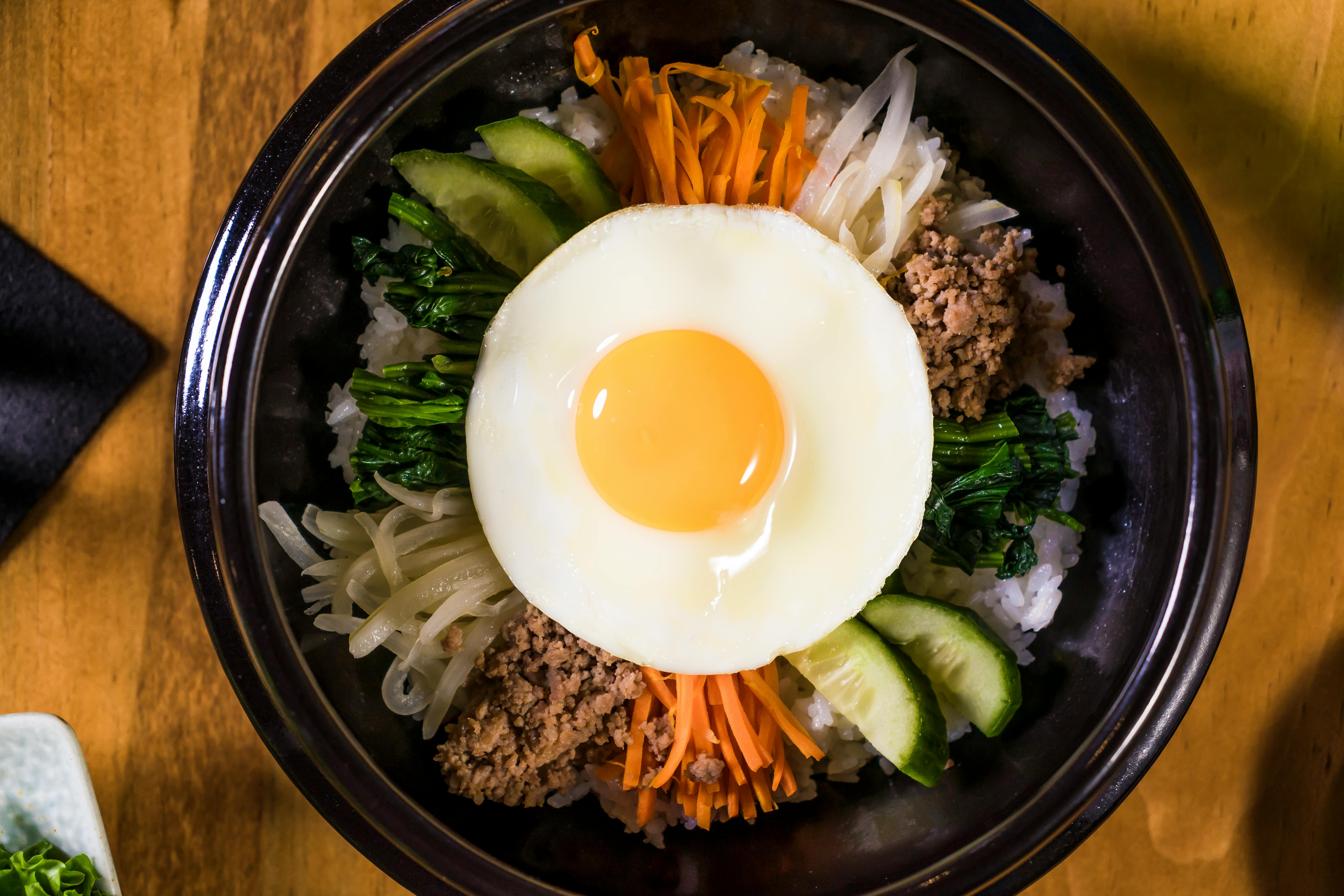
Photo: Luis Becerra Fotógrafo / Pexels
Korean
Mushroom Bibimbap
The diets react (see scores below)
Common Ingredients
- rice
- shiitake
- oyster mushrooms
- spinach
- bean sprouts
- carrots
- egg
- gochujang
Specific recipes may vary.
Incompatible with 6 of 11 diets
Diet Ratings
Mushroom Bibimbap is fundamentally incompatible with a ketogenic diet. The primary ingredient, white rice, is a high-glycemic grain containing approximately 45g of net carbs per cup (cooked), which alone exceeds the entire daily keto carb budget. Gochujang (Korean chili paste) adds additional sugar and starch-based carbs. The remaining vegetables (carrots, bean sprouts, spinach) and mushrooms are relatively low-carb, and the egg is keto-friendly, but these do not offset the massive carbohydrate load from rice and gochujang. There is no realistic portion size that would make this dish keto-compatible without fundamentally reconstructing it (e.g., substituting cauliflower rice and omitting gochujang).
This Mushroom Bibimbap contains egg, a direct animal product, making it incompatible with a vegan diet. All other ingredients — rice, shiitake mushrooms, oyster mushrooms, spinach, bean sprouts, carrots, and gochujang — are fully plant-based. The dish could easily be made vegan by omitting the egg, which is a common substitution in vegan bibimbap preparations.
Mushroom Bibimbap contains multiple non-paleo ingredients that make it incompatible with the diet. Rice is a grain and is excluded under strict paleo rules. Bean sprouts, derived from mung beans, are a legume and are also excluded. Gochujang is a fermented Korean chili paste that typically contains rice flour, fermented soybean paste, and often added sugar — all non-paleo ingredients. The remaining components (shiitake and oyster mushrooms, spinach, carrots, and egg) are paleo-approved, but the foundational ingredients of this dish — rice and gochujang in particular — are firmly off-limits. This dish cannot be considered paleo in its traditional form.
Mushroom Bibimbap is a nutrient-dense, plant-forward dish with multiple Mediterranean-friendly elements: abundant vegetables (spinach, bean sprouts, carrots), protein-rich mushrooms, and a moderate egg. The core concern is the white rice base — refined grains are not ideal under Mediterranean guidelines, which prefer whole grains like farro, barley, or brown rice. Gochujang adds fermented complexity and is low in saturated fat, though it contains added sugar and sodium, which warrants mild caution. The dish lacks olive oil (sesame oil is traditional here, a plant-based fat but not the Mediterranean staple), and is not native to Mediterranean culinary traditions. Overall, the vegetable abundance and plant protein push this toward the favorable end of 'caution,' but the refined rice and non-Mediterranean fat profile prevent a full approval.
Some modern Mediterranean diet practitioners, particularly those influenced by the broader 'plant-based' or 'flexitarian' interpretations (e.g., the EAT-Lancet framework), would approve this dish for its exceptional vegetable density and whole-food ingredients, arguing that the grain type is a secondary concern compared to overall dietary pattern. Traditional Mediterranean diet purists, however, would note the absence of olive oil and the refined grain base as meaningful departures from core principles.
Mushroom Bibimbap is almost entirely plant-based and incompatible with the carnivore diet. The dish is built on a foundation of rice (grain), shiitake and oyster mushrooms (fungi), spinach (leafy vegetable), bean sprouts (legume sprout), and carrots (root vegetable) — all strictly excluded on carnivore. Gochujang is a fermented chili paste made from plant ingredients including red chili, rice, and soybeans, making it doubly off-limits. The only carnivore-compatible ingredient in the entire dish is the egg, which itself is a minor component and debated in strictest protocols. This dish has no meaningful animal protein and is dominated by plant foods across every category the carnivore diet excludes.
Mushroom Bibimbap contains two clearly excluded ingredients: rice (a grain, explicitly banned on Whole30) and gochujang (a Korean fermented chili paste that typically contains rice, barley, and often added sugar — multiple excluded ingredients). Even if the mushrooms, spinach, bean sprouts, carrots, and egg are all individually compliant, the rice base alone is sufficient to disqualify this dish. Gochujang compounds the issue with its grain and sugar content. There is no compliant workaround that would still constitute authentic bibimbap, as rice is the defining base of the dish.
This dish contains multiple high-FODMAP ingredients that make it problematic during the elimination phase. The most significant concerns are: (1) Shiitake mushrooms are high in polyols (mannitol) and are high-FODMAP even at small servings per Monash. (2) Oyster mushrooms are also high in mannitol and rated high-FODMAP. (3) Gochujang (Korean fermented chili paste) typically contains wheat and/or garlic and onion as core ingredients, making it high in fructans. (4) Bean sprouts are borderline — Monash rates them as low-FODMAP at 104g but they can cause issues in larger amounts. Rice, spinach, carrots, and egg are all low-FODMAP and safe. However, the combination of two high-FODMAP mushroom varieties plus gochujang creates a dish that cannot realistically be made low-FODMAP without fundamentally changing its character. Substituting mushrooms with zucchini or eggplant and using a FODMAP-friendly sauce would be necessary for elimination phase compliance.
Some clinical FODMAP practitioners note that if gochujang is used in very small amounts (a teaspoon or less), the fructan load may remain below threshold — however, Monash University has not formally tested gochujang, and the mushroom issue remains unresolved regardless of sauce quantity. The polyol content from two types of mushrooms as the primary protein source makes this dish difficult to rehabilitate even with strict portion control.
Mushroom Bibimbap is largely DASH-friendly, featuring an array of vegetables (spinach, bean sprouts, carrots), mushrooms rich in potassium and fiber, and a modest egg for protein — all well-aligned with DASH principles. The base of white rice is acceptable but less ideal than whole grains like brown rice. The primary concern is gochujang (fermented chili paste), which is a significant source of sodium and added sugar; a typical 1-2 tablespoon serving adds 300–600mg of sodium, pushing the dish into caution territory depending on portion. The overall dish is not inherently unhealthy and contains many DASH-positive ingredients, but sodium management around the gochujang is critical.
NIH DASH guidelines emphasize limiting sodium to 1,500–2,300mg/day and would flag gochujang as a moderate sodium concern requiring portion control. However, updated clinical interpretations note that the vegetable density and potassium-rich profile of this dish (spinach, mushrooms, bean sprouts) may partially offset sodium concerns, and some DASH-oriented clinicians would approve a reduced-gochujang version without hesitation. The egg is similarly debated — conservative DASH approaches historically limited whole eggs, though current dietary guidelines have relaxed cholesterol restrictions.
Mushroom Bibimbap contains a genuinely mixed Zone profile. On the positive side, the vegetable components — shiitake and oyster mushrooms, spinach, bean sprouts, and carrots — are excellent low-glycemic, polyphenol-rich carbohydrate sources that Zone strongly favors. The egg provides a lean, complete protein. However, the dish is built on a rice base, which is a high-glycemic, 'unfavorable' carbohydrate in Zone terminology. A traditional serving of bibimbap uses a substantial rice portion (150-200g cooked), which would dramatically skew the carbohydrate blocks toward high-GI sources and make the 40/30/30 ratio difficult to achieve with balanced macros. The gochujang paste adds fermented complexity and polyphenols (a Zone positive), but commercial versions typically contain added sugar, contributing additional high-GI carbs. The protein base of mushrooms and a single egg is also relatively weak for a main meal — mushrooms provide minimal protein, and the dish would likely fall short of the ~25g lean protein target per Zone meal without significant egg addition or a protein supplement. To make this Zone-compatible, one would need to substantially reduce the rice portion, increase egg or add another lean protein, ensure favorable fat is added (sesame oil is present in most bibimbap but is omega-6 heavy — a Zone concern), and moderate the gochujang. With those modifications it becomes reasonable, but as traditionally prepared it leans unfavorable.
Some Zone practitioners and later Sears writings emphasize the anti-inflammatory and polyphenol benefits of fermented foods like gochujang and the broad vegetable variety in bibimbap. The dish's vegetable density is genuinely Zone-positive, and a practitioner focused on polyphenol intake might argue the overall anti-inflammatory profile partially offsets the rice's glycemic impact if the rice portion is reduced to one Zone carb block (~1/3 cup cooked). The dish's structure also makes it easy to 'Zone-ify' by adjusting ratios at assembly.
Mushroom Bibimbap is a strong anti-inflammatory dish overall. The star proteins — shiitake and oyster mushrooms — are explicitly emphasized in anti-inflammatory frameworks (including Dr. Weil's pyramid) for their beta-glucans, eritadenine, and immune-modulating polysaccharides that have been shown to reduce inflammatory markers. The vegetable base (spinach, bean sprouts, carrots) contributes a broad spectrum of antioxidants, carotenoids (beta-carotene from carrots), and polyphenols. The egg adds moderate nutrition with some anti-inflammatory selenium and choline, though arachidonic acid content places it in the 'moderate' category. Gochujang introduces capsaicin from chili pepper — a recognized anti-inflammatory spice — though commercial gochujang pastes typically contain added sugar and sometimes refined additives, which temper its benefit slightly. White rice is a refined carbohydrate with a moderate glycemic index and minimal fiber, which is the dish's main anti-inflammatory weakness; it's neutral-to-mildly pro-inflammatory compared to a whole grain alternative. The dish is free from red meat, processed ingredients, trans fats, seed oils, or high-fructose corn syrup. On balance, the exceptional mushroom and vegetable content more than compensates for the white rice and processed gochujang.
Most anti-inflammatory authorities would approve this dish given its mushroom and vegetable density. However, some stricter protocols would flag two elements: white rice as a high-glycemic refined carbohydrate that can spike blood sugar and promote inflammatory pathways (swapping for brown rice or cauliflower rice is often recommended), and commercial gochujang, which typically contains added sugar and fermented soybean paste that some AIP-adjacent practitioners flag for lectin and sugar content — though mainstream anti-inflammatory nutrition considers fermented soy and chili beneficial.
Mushroom Bibimbap has several GLP-1-friendly qualities — it's rich in fiber from vegetables (spinach, bean sprouts, carrots, shiitake and oyster mushrooms), easy to digest, low in fat, nutrient-dense per calorie, and the egg adds some protein. However, the primary protein source is mushrooms, which are low in protein density, making it difficult to hit the 15-30g per meal protein target from this dish alone. White rice is a refined grain with low fiber and high glycemic impact, and gochujang — while used in small amounts — is a spicy fermented chili paste that may worsen reflux or nausea in GLP-1 patients sensitive to spicy food. The dish is portion-friendly and digestibility is generally good, but the protein gap is a meaningful drawback for GLP-1 patients prioritizing muscle preservation.
Some GLP-1-focused dietitians would rate this higher, noting that the egg plus mushrooms still contribute meaningful amino acids and that the dish's high vegetable volume and fiber content support satiety and gut motility — both priority concerns on GLP-1s. Others would rate it lower, flagging white rice as an empty-calorie carbohydrate that crowds out more nutrient-dense options in a reduced-appetite context, and recommending substitution with cauliflower rice or a brown rice blend.
*See how scores were generated at our methodology page.
Nutritional profile
Six traits that cut across every diet.
Fiber & Plants
How much whole-plant food and fiber it delivers.
Healthy Fats
The quality of its fats (unsaturated, omega-3).
Whole / Unprocessed
How close it is to its natural, unprocessed form.
Gut Gentle
How easy it is on digestion (low FODMAP, few irritants).
Low Glycemic
How little it spikes your blood sugar.
Protein Density
How much protein it packs per calorie.
Controversy Index
Higher controversy = more disagreement between diets.
Diet-Specific Tips
 Mediterranean — 6/10
View tips
- High vegetable diversity — spinach, bean sprouts, carrots, and mushrooms are strongly Mediterranean-aligned
- White rice is a refined grain, not preferred under Mediterranean guidelines
- Egg is acceptable in moderation (once daily), fits within Mediterranean framework
- Gochujang contains added sugar and sodium — minimally processed but not ideal
- Sesame oil (implied by cuisine) is a plant fat but not the Mediterranean-canonical olive oil
- No red meat or saturated fat sources — a significant positive
- Dish is plant-forward in protein, using mushrooms as the primary protein source
 DASH — 6/10
View tips
- High vegetable content (spinach, carrots, bean sprouts) is strongly DASH-positive
- Mushrooms provide potassium, fiber, and plant-based protein
- Gochujang adds meaningful sodium and some added sugar — portion control essential
- White rice is less optimal than brown rice or other whole grains
- Egg is a lean protein source; cholesterol concern is now considered low-to-moderate under updated guidelines
- Overall sodium depends heavily on gochujang quantity and any added soy sauce
- Low-sodium gochujang or reduced portion would improve the score significantly
 Zone — 5/10
View tips
- Rice is a high-glycemic 'unfavorable' carbohydrate; traditional portions are too large for Zone balance
- Vegetables (mushrooms, spinach, bean sprouts, carrots) are ideal low-GI Zone carb sources
- Protein content is weak — mushrooms contribute minimal protein, single egg insufficient for ~25g meal target
- Gochujang adds fermented polyphenols (Zone-positive) but contains added sugar (Zone-negative)
- Sesame oil commonly used in bibimbap is omega-6 heavy, conflicting with Zone's anti-inflammatory fat priorities
- Dish is highly modifiable: reduced rice, added egg whites or lean protein, and olive/macadamia oil can bring it into Zone compliance
 Anti-Inflammatory — 8/10
View tips
- Shiitake and oyster mushrooms are explicitly anti-inflammatory foods with beta-glucans and immune-modulating polysaccharides
- Rich vegetable variety (spinach, carrots, bean sprouts) provides antioxidants, carotenoids, and fiber
- Gochujang contributes anti-inflammatory capsaicin but commercial versions contain added sugar
- White rice is a refined carbohydrate — the primary anti-inflammatory weakness of this dish
- Egg is moderate: beneficial selenium and choline offset by some arachidonic acid
- No red meat, trans fats, seed oils, or highly processed ingredients
- Dish is naturally low in saturated fat
 GLP-1 Friendly — 5/10
View tips
- Low protein density — mushrooms and one egg likely yield under 10g protein per serving, falling short of the 15-30g per meal target
- High vegetable variety supports fiber intake and gut motility, which counters GLP-1-related constipation
- White rice is a refined carbohydrate with low fiber and moderate glycemic load — a nutritional trade-off
- Gochujang may trigger nausea, reflux, or GI discomfort in GLP-1 patients sensitive to spicy foods
- Low overall fat content is a positive — aligns with GLP-1 tolerance needs
- Easy digestibility overall, small-portion friendly
- Recommend pairing with added lean protein (edamame, tofu, chicken) to reach meal protein targets