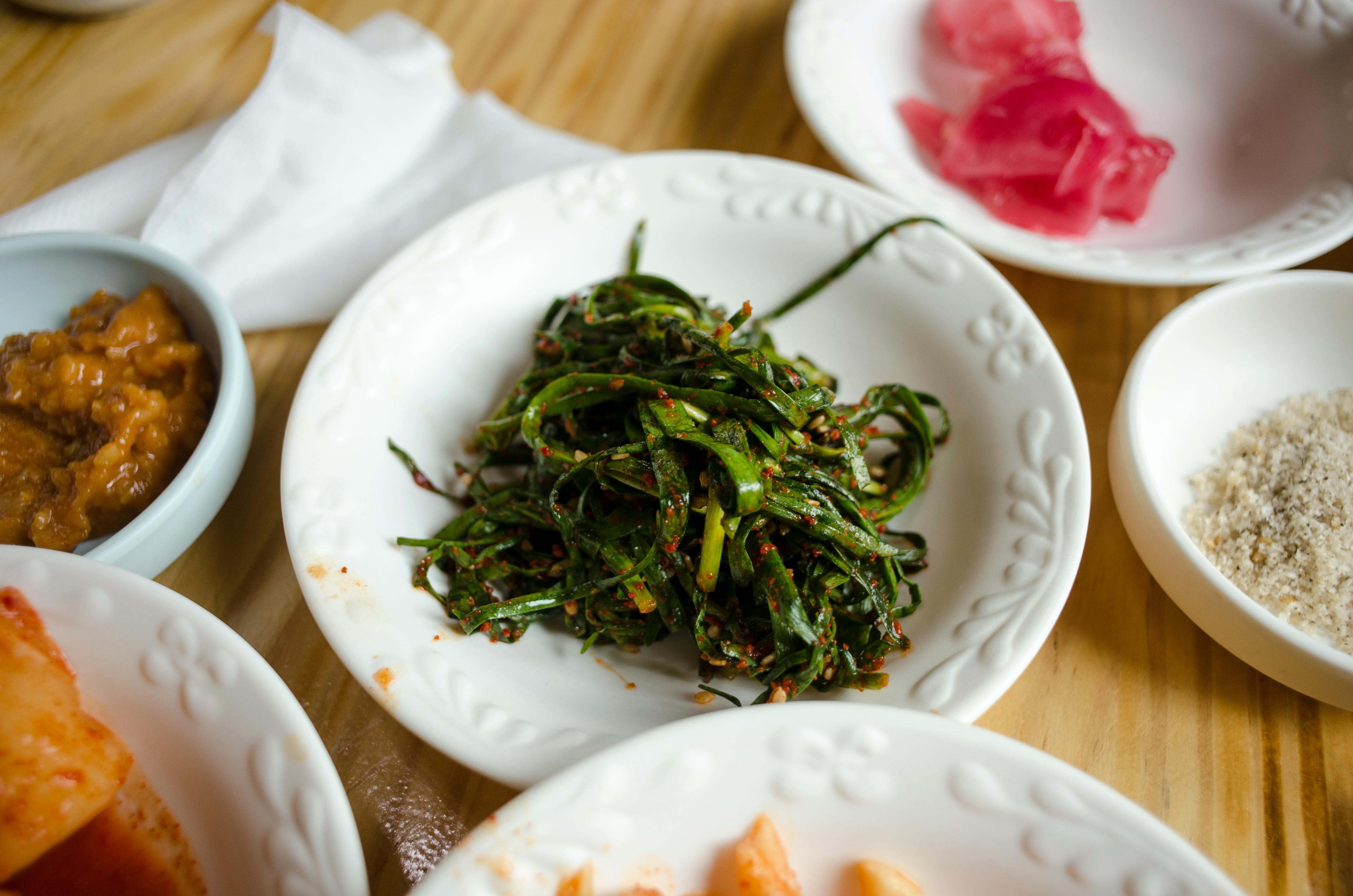
Korean
Sigeumchi Namul (Spinach Side)
The diets react (see scores below)
Common Ingredients
- spinach
- sesame oil
- garlic
- scallions
- soy sauce
- sesame seeds
- salt
- sugar
Specific recipes may vary.
Incompatible with 4 of 11 diets
Diet Ratings
Sigeumchi Namul is primarily spinach dressed with sesame oil, garlic, scallions, soy sauce, and sesame seeds — most of which are keto-friendly. Spinach is a low-carb leafy green, sesame oil is an excellent keto fat, and garlic/scallions add minimal carbs in typical seasoning quantities. The two concerns are: (1) sugar is listed as an ingredient — even a small pinch adds unnecessary carbs and violates strict keto's zero-tolerance for added sugars; (2) soy sauce contains a small amount of carbs and some versions have added sugar. As a small side dish, the net carb impact is likely modest (2-4g per serving), but the presence of added sugar makes it a caution rather than an approve. Omitting or substituting the sugar and using tamari (lower carb soy sauce) would push this to a clear approve.
Strict keto practitioners argue that any added sugar — even trace amounts — has no place in a ketogenic diet and sets a poor precedent for food choices; they would rate this avoid until the sugar is explicitly removed. More flexible lazy-keto adherents counter that the total sugar in a standard serving is negligible (<1g) and well within daily limits.
Sigeumchi Namul is a traditional Korean blanched spinach side dish seasoned entirely with plant-based ingredients. Every component — spinach, sesame oil, garlic, scallions, soy sauce, sesame seeds, salt, and sugar — is fully plant-derived with no animal products or animal-derived additives. It is also a whole-food preparation with minimal processing, making it exemplary from both a strict vegan and whole-food plant-based perspective. The only minor note is that some commercial soy sauces contain trace additives, but the category itself is plant-based.
Sigeumchi Namul contains multiple non-paleo ingredients that make it incompatible with the diet. Soy sauce is a fermented soy and wheat product — both legume and grain — and is strictly excluded. Sesame oil is a seed oil, which is explicitly excluded from paleo in favor of animal fats, olive oil, coconut oil, or avocado oil. Added salt and sugar are also excluded. The base ingredients (spinach, garlic, scallions, sesame seeds) are paleo-friendly, but the dish as traditionally prepared cannot be considered paleo due to these core non-compliant components.
Sigeumchi Namul is a lightly blanched spinach dish that is fundamentally plant-forward and aligns well with Mediterranean diet principles. Spinach is an excellent leafy green, garlic and scallions are aromatic vegetables encouraged in the diet, and sesame seeds provide healthy fats and minerals. The small amount of sugar is negligible. The primary divergence from Mediterranean tradition is the use of sesame oil rather than extra virgin olive oil as the fat source — sesame oil is healthy but not the canonical Mediterranean fat. Soy sauce is also a non-traditional sodium source. Overall, the dish is nutrient-dense, vegetable-centered, and minimally processed, making it strongly compatible.
Some strict Mediterranean diet interpretations would flag sesame oil as a non-traditional fat, preferring EVOO exclusively; however, sesame oil is a predominantly unsaturated fat with a favorable nutritional profile, and many modern Mediterranean diet practitioners accept diverse plant-based oils in non-dominant roles.
Sigeumchi Namul is entirely plant-based with zero animal-derived ingredients. Every single component — spinach, sesame oil, garlic, scallions, soy sauce, sesame seeds, salt, and sugar — is either plant-derived or a processed plant product. This dish is fundamentally incompatible with the carnivore diet at every level. Spinach is a leafy green (excluded), sesame oil is a plant oil (excluded), soy sauce is a fermented grain/legume product (excluded), sesame seeds are seeds (excluded), garlic and scallions are vegetables (excluded), and sugar is a refined carbohydrate (excluded). There is no animal product present whatsoever, making this one of the clearest possible 'avoid' verdicts.
This dish contains two excluded ingredients: soy sauce (which contains soy, a legume, and often wheat/grain) and sugar (an added sweetener explicitly banned on Whole30). Both are clear violations of the program's rules. The remaining ingredients — spinach, sesame oil, garlic, scallions, sesame seeds, and salt — are all Whole30-compliant, but the presence of soy sauce and sugar makes this dish non-compliant as written. A compliant version could substitute coconut aminos for soy sauce and omit the sugar entirely.
Sigeumchi Namul contains two high-FODMAP ingredients that make it unsuitable during the elimination phase: garlic and scallions. Garlic is one of the highest-FODMAP foods tested by Monash University, containing significant fructans even in very small amounts (1/2 clove is already high-FODMAP). Scallions/green onions present a nuanced picture — the green tops are low-FODMAP but the white bulb portions are high in fructans. In traditional Sigeumchi Namul preparation, both parts are typically used. The remaining ingredients are generally low-FODMAP: spinach is low-FODMAP at standard servings (~75g), sesame oil is safe (FODMAPs are water-soluble, not fat-soluble), soy sauce is low-FODMAP at typical amounts (~2 tbsp), sesame seeds are low-FODMAP at 1 tbsp, and small amounts of sugar and salt are fine. However, the presence of garlic alone is sufficient to classify this dish as high-FODMAP and unsuitable for the elimination phase without significant modification.
Sigeumchi Namul starts from an excellent DASH foundation — spinach is one of the most DASH-approved vegetables, rich in potassium, magnesium, calcium, and fiber. Garlic, scallions, sesame seeds, and a small amount of sesame oil are all consistent with DASH principles. However, the combination of soy sauce and added salt raises significant sodium concerns. A typical serving of sigeumchi namul can contain 300–600mg of sodium depending on the ratio of soy sauce to salt used, which is substantial for a small side dish in the context of a DASH daily sodium budget of 1,500–2,300mg. The small amount of sugar is minimally concerning. The dish is not categorically excluded from DASH eating, but the sodium load from dual-seasoning with both soy sauce and salt requires portion awareness and ideally ingredient modification (low-sodium soy sauce, reduced or eliminated added salt).
NIH DASH guidelines emphasize vegetables broadly and would classify spinach-based dishes favorably, but the sodium from soy sauce and salt is a direct conflict with DASH's sodium restriction goals. Some DASH-oriented clinicians note that with low-sodium soy sauce and salt reduction, this dish could easily shift to an 'approve' rating, and argue that the micronutrient density of spinach outweighs moderate sodium in the context of an otherwise compliant DASH day.
Sigeumchi Namul is an excellent Zone Diet side dish. Spinach is a top-tier Zone carbohydrate — a colorful, low-glycemic vegetable that Sears explicitly favors. The sesame oil provides monounsaturated and polyunsaturated fat, which aligns with Zone fat recommendations (though sesame oil has a moderate omega-6 content, it is used in small quantities here). Garlic, scallions, soy sauce, and sesame seeds are all favorable Zone-compatible flavor agents with minimal macro impact. The only minor concern is the small amount of sugar in the seasoning, but the quantity is negligible and does not meaningfully spike the glycemic load of the dish. As a side dish, it pairs cleanly with a lean protein source (e.g., tofu, grilled chicken, fish) and a monounsaturated fat addition to complete a Zone-balanced meal. This dish contributes primarily to the carbohydrate block in a very favorable, low-glycemic way.
Sigeumchi Namul is a classic Korean banchan built on a foundation of strongly anti-inflammatory ingredients. Spinach is rich in vitamins K and C, folate, magnesium, and antioxidants including lutein and kaempferol, all associated with reduced inflammatory markers. Garlic contains allicin and other organosulfur compounds with well-documented anti-inflammatory and immunomodulatory effects. Sesame oil and sesame seeds provide lignans (sesamin, sesamolin) and vitamin E with antioxidant properties; while sesame oil has a moderate omega-6 content, the quantity used in this dish as a flavoring is small enough not to be a meaningful concern. Scallions contribute quercetin and other flavonoids. Soy sauce in small seasoning amounts is acceptable. The only minor reservations are the small amount of added sugar and the sodium from soy sauce and salt — neither is present in amounts that would significantly undermine the dish's overall anti-inflammatory profile. This is a lightly dressed whole-food vegetable dish with no refined carbohydrates, no processed ingredients, and no saturated fat, making it a strong choice within an anti-inflammatory dietary pattern.
Sigeumchi Namul is a lightly blanched and seasoned spinach side dish that aligns well with GLP-1 dietary priorities. Spinach is low in calories, high in micronutrients (iron, folate, vitamin K), and provides meaningful fiber for gut motility — supporting GLP-1's #2 priority. Sesame oil is an unsaturated fat used in small amounts as a dressing, which is acceptable. Garlic, scallions, soy sauce, and sesame seeds add flavor and trace nutrients without significant caloric load. The dish is soft-textured and easy to digest, which suits the slowed gastric emptying common on GLP-1 medications. The small amount of sugar in the seasoning is negligible at typical serving sizes. The primary limitation is the complete absence of protein, meaning this should always be paired with a protein-dense main or side rather than eaten alone. As a supporting side dish in a balanced GLP-1-friendly meal, it earns a solid approve.
*See how scores were generated at our methodology page.
Nutritional profile
Six traits that cut across every diet.
Fiber & Plants
How much whole-plant food and fiber it delivers.
Healthy Fats
The quality of its fats (unsaturated, omega-3).
Whole / Unprocessed
How close it is to its natural, unprocessed form.
Gut Gentle
How easy it is on digestion (low FODMAP, few irritants).
Low Glycemic
How little it spikes your blood sugar.
Protein Density
How much protein it packs per calorie.
Controversy Index
Higher controversy = more disagreement between diets.
Diet-Specific Tips
 Keto — 5/10
View tips
- Spinach is a keto-approved low-net-carb leafy green
- Sesame oil is a high-quality fat, strongly keto-positive
- Added sugar is a red flag under strict keto rules
- Soy sauce contributes minor carbs; tamari is a lower-carb alternative
- Garlic and scallions add minimal carbs at seasoning quantities
- Overall net carbs per serving are likely low but added sugar disqualifies a clean approve
 Vegan — 9/10
View tips
- All ingredients are 100% plant-derived
- Whole-food preparation with no processed substitutes
- Sesame oil and sesame seeds provide healthy plant-based fats
- Soy sauce is plant-based (fermented from soybeans and wheat)
- No hidden animal-derived ingredients typical in some Korean dishes (e.g., fish sauce, anchovy stock) are present in this listed recipe
- High nutritional value: spinach provides iron, calcium, and vitamins
 Mediterranean — 8/10
View tips
- Spinach is a core Mediterranean leafy green, eaten frequently
- Garlic is a staple Mediterranean aromatic
- Sesame oil is healthy but not the traditional Mediterranean fat (EVOO)
- Small amount of added sugar is negligible
- Soy sauce is non-traditional but used in a minor seasoning role
- No animal products, refined grains, or processed ingredients
- Sesame seeds contribute healthy fats and micronutrients
 DASH — 5/10
View tips
- Spinach is a core DASH vegetable — high in potassium, magnesium, calcium, and fiber
- Soy sauce is high in sodium; combined with added salt, this dish can deliver 300–600mg+ sodium per serving
- Small amount of sesame oil is acceptable within DASH fat guidelines
- Sesame seeds contribute healthy unsaturated fats and minerals
- Garlic and scallions are DASH-friendly aromatics
- Added sugar is minimal and not a primary concern
- Low-sodium soy sauce and eliminating added salt would significantly improve DASH compatibility
- As commonly prepared in Korean cuisine, sodium content is the limiting factor
 Zone — 8/10
View tips
- Spinach is a top-tier Zone-favorable low-glycemic vegetable
- Sesame oil provides acceptable fat though has moderate omega-6 content — used sparingly
- Garlic and scallions are Zone-favorable low-GI aromatics
- Small amount of sugar is negligible in terms of glycemic impact
- No protein present — must be paired with lean protein to complete a Zone meal
- Sesame seeds add small amounts of fat and micronutrients favorably
- Soy sauce adds minimal carbs and sodium — not a Zone concern in small amounts
 Anti-Inflammatory — 8/10
View tips
- Spinach: high in antioxidants (lutein, kaempferol), vitamins K and C, folate, and magnesium — well-established anti-inflammatory vegetable
- Garlic: allicin and organosulfur compounds are among the most researched anti-inflammatory food components
- Sesame oil and seeds: lignans (sesamin) and vitamin E contribute antioxidant protection; used in small flavoring quantities minimizing omega-6 concern
- Scallions: source of quercetin and other flavonoids with anti-inflammatory properties
- Minimal added sugar: small amount present but insufficient to meaningfully raise inflammatory burden
- Soy sauce and salt: moderate sodium, not problematic at typical banchan serving sizes
- No processed ingredients, trans fats, refined carbohydrates, or saturated fat
- Whole-food, plant-based dish aligned with anti-inflammatory diet principles
 GLP-1 Friendly — 7/10
View tips
- High fiber, nutrient-dense leafy green supports gut motility and GLP-1 side effect management
- Sesame oil is an unsaturated fat used in small quantities — acceptable at typical serving size
- Soft texture and easy digestibility suits slowed gastric emptying
- Zero protein — must be paired with a protein source to meet GLP-1 meal targets
- Trace sugar in seasoning is negligible at standard serving
- Low calorie density makes it a good volume companion in a small-meal eating pattern